

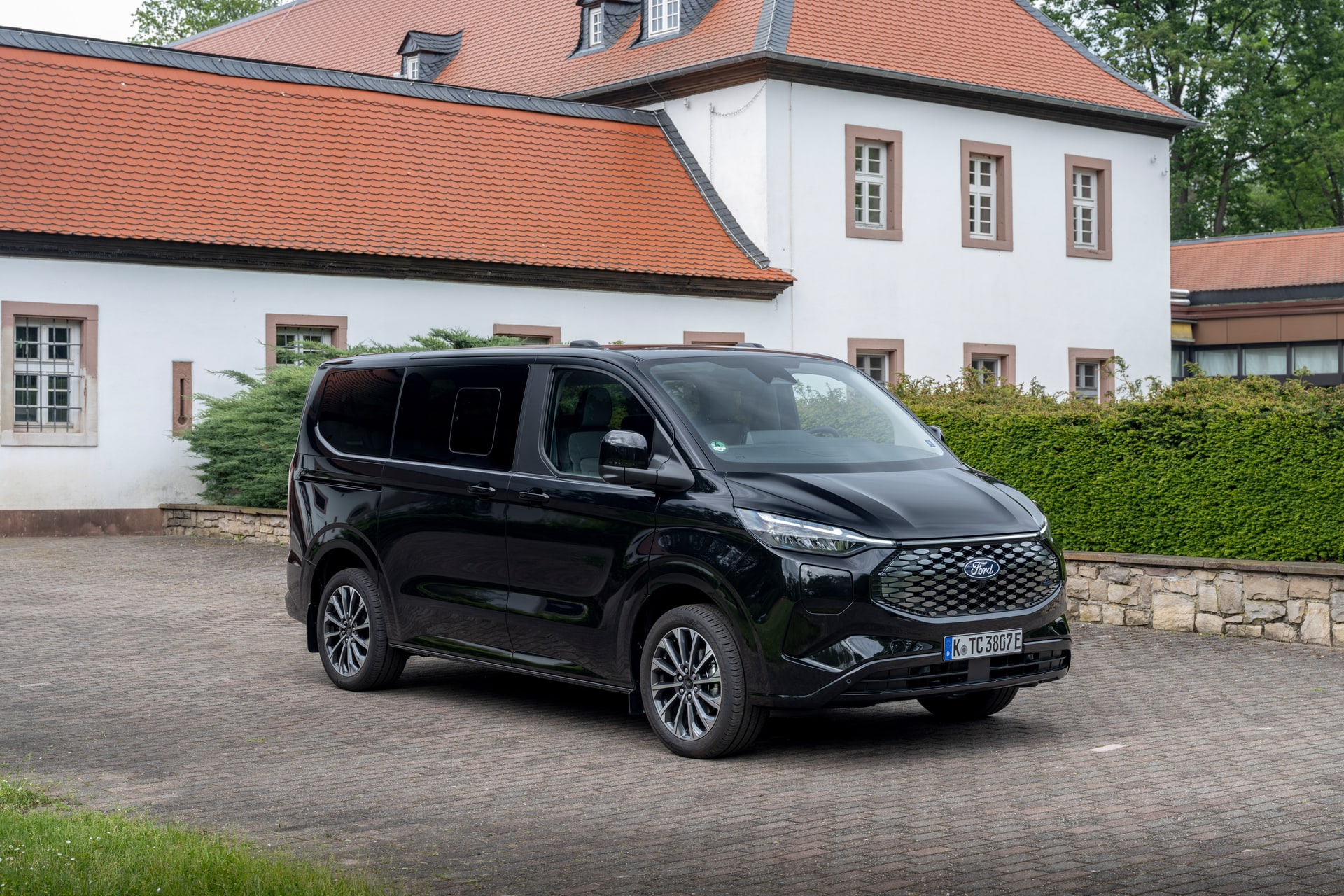
The choice between Ford Tourneo Custom and Volkswagen Multivan is rarely a matter of taste. In premium VTC fleets, hotel shuttles or corporate transfers, the purchase is decided by three things: cost per kilometre, how the customer perceives the car when they sit in the back, and how long the vehicle lasts before needing the workshop. That is where it pays to look closely at both, because the British model has made a leap that places it closer to the German one than many fleet managers believe.
Why compare the Tourneo Custom with the Multivan now
Ford redesigned the Tourneo Custom from top to bottom, with a new platform and an interior that no longer looks like a commercial van with seats. The Multivan, for its part, left behind the T6.1 generation and adopted an architecture related to the group’s passenger cars. The result: two vehicles that, on paper, compete for the same professional customer but with different philosophies. Ford bets on muscle and space; Volkswagen, on refinement and brand.
Ford Tourneo Custom 2.0 EcoBlue 136 Trend — from ≈55,300 €
Access to the Tourneo Custom with the 2.0 EcoBlue engine of 140 CV and Trend trim starts at a figure that, in this segment, is welcome. It is not cheap in absolute terms — we are talking about eight-seat vans for professional use — but it is cheaper than its German rival.
| Power kW | Power CV | Consumption | Fuel |
|---|---|---|---|
| ≈100 kW | ≈140 CV | ≈7.5 l/100 km | Diesel |
On the road, the 140 CV move the whole vehicle with solidity even with all eight seats occupied and luggage on board. It is not a fast car and does not aim to be. What it offers is the feel of a modern van: lighter steering than before, good frontal visibility and a high driving position that spares the professional driver fatigue on long days.
The entry Trend already comes with air conditioning, a central screen with smartphone connectivity and the ADAS suite mandated by regulation, although for premium VTC fleets it is worth looking at higher trims: the standard driver’s seat falls short in adjustments for routes of 400 km a day.
Volkswagen Multivan 2.0 TDI 150 DSG7 — from ≈57,100 €
The Multivan plays a different game. The 2.0 TDI version of 150 CV with seven-speed DSG gearbox is the configuration that makes most sense for professional road use, and its price reflects the brand’s positioning.
| Power kW | Power CV | Top speed | Consumption | Fuel |
|---|---|---|---|---|
| ≈110 kW | ≈150 CV | ≈190 km/h | ≈6.5 l/100 km | Diesel |
Where the Ford feels like a well-insulated van, the Multivan feels like an expensive people carrier. It is a difference the customer sitting in the back perceives. The DSG7 shifts smoothly, the engine filters vibrations better at idle — a detail that matters when the car waits for a client at the hotel entrance with the engine running — and a homologated consumption one litre lower than the Ford translates, in practice, into real savings at 100,000 km a year.
That refinement, however, comes at a price. And the Multivan’s options list is long, expensive and tempting.
Where each one clearly wins
Ford Tourneo Custom, objective strengths:
- Entry price ≈1,800 € below the equivalent Multivan, a gap that widens considerably when moving up trim levels.
- Greater useful load capacity and cabin modularity for bulky luggage configurations, something we already pointed out compared with the Vito Tourer.
Volkswagen Multivan, objective strengths:
- Homologated consumption ≈1 l/100 km lower (≈6.5 versus ≈7.5), a difference that at 60,000 km/year amounts to about 600 € in diesel.
- Clearly superior perceived cabin quality, a decisive factor in premium VTC and executive-profile corporate transfers.
Summary table and score
| Model | Power | Consumption | Price from | Professional use | Score |
|---|---|---|---|---|---|
| Ford Tourneo Custom 2.0 EcoBlue 136 Trend | ≈140 CV | ≈7.5 l/100 | ≈55,300 € | Shuttle, group transfer | 8.0/10 |
| Volkswagen Multivan 2.0 TDI 150 DSG7 | ≈150 CV | ≈6.5 l/100 | ≈57,100 € | Premium VTC, executive | 8.5/10 |
Prices are the manufacturer’s recommended RRP, without dealer discounts, one-off campaigns or aid such as the Plan Auto+.
Verdict by use case
- For hotel shuttles, group transfers and airport transport with luggage: Ford Tourneo Custom. Cheaper to start with, more car for the money, and the refinement gap is not noticed by the average passenger on 30–60 minute journeys.
- For premium VTC and executive corporate transfers: Volkswagen Multivan. The customer paying a high fare expects a door that closes with the sound of a German saloon and a well-finished dashboard. That is where the Ford does not yet arrive.
- Best price-performance ratio without giving up image: Ford Tourneo Custom in a mid-to-high trim. With the price difference you invest in leather seats and prepaid maintenance, and the result competes head to head.
If the end customer is a tourist with a suitcase, the British one. If it is an executive who books the service weekly, the German one.
Frequently asked questions
How much real consumption difference is there between the two at 100,000 km/year?
With the homologated figures (≈7.5 vs ≈6.5 l/100 km) and diesel at around 1.50 €/l, the Multivan saves approximately 1,500 € a year in fuel compared with the Tourneo Custom. In practice the real difference is usually somewhat smaller because the Ford holds its figures well on flat motorway.
Does the Ford Tourneo Custom have DSG or an equivalent automatic gearbox?
Ford offers the Tourneo Custom with an automatic gearbox in higher versions, but the entry Trend variant analysed here fits a manual gearbox. If the use is intensive VTC or shuttle, it is worth moving up a trim to access the automatic.
Which one holds its residual value better at 4–5 years?
Historically the Multivan retains a higher residual value in the Spanish used market thanks to the Volkswagen brand and its positioning. The new Tourneo Custom does not yet have enough history for this generation, but previous ones depreciated somewhat faster.
Do both qualify for the DGT’s C environmental label?
Yes. The two Euro 6 diesel engines analysed obtain the C label, enough to operate in most Spanish ZBEs with age-based restrictions, but not in the stricter cases that require ECO or 0.

1 Comment
Pingback: Los 5 furgonetas de pasajeros diésel con menor consumo real en autovía para VTC en 2026 – Comparativa de Coches