

Buying a family PHEV SUV in 2026 takes some know-how. It is neither a fully electric car nor a conventional hybrid: it only performs well if you plug it in. And “plugging it in” does not mean doing it once a month at a public station, but connecting it every night, or almost every night, at home or at work. If that habit does not fit your routine, forget the PHEV and look at a HEV or a modern diesel instead, because you will be paying a premium for a battery you carry as dead weight.
From the initial shortlist we have deliberately ruled out the BYD and Nissan offerings in this segment. Not because of lack of commercial volume, but because, according to our editorial criteria focused on real electric range, on-board technology, comfort, safety and value for money, European and Korean rivals currently suit the typical Spanish family better. With that clarified, here are the ones that do make the cut.
What “using the plug during the week” really means
A family PHEV SUV is homologated for between 50 and 100 km of WLTP electric range. In practice, you should expect 25-30% less: 40-70 km real-world, depending on temperature, speed and route profile. For a family driving 30-50 km a day for school, work and errands, that covers the whole day without touching the petrol tank, provided there is a wallbox at home. Without a wallbox, the PHEV becomes a heavy and expensive hybrid.
The quick rule: if you charge 5 nights a week at a 7.4 kW point, the PHEV pays off. If you charge 1-2 nights, it does not. This matters more than any spec sheet.
The three contenders on the table
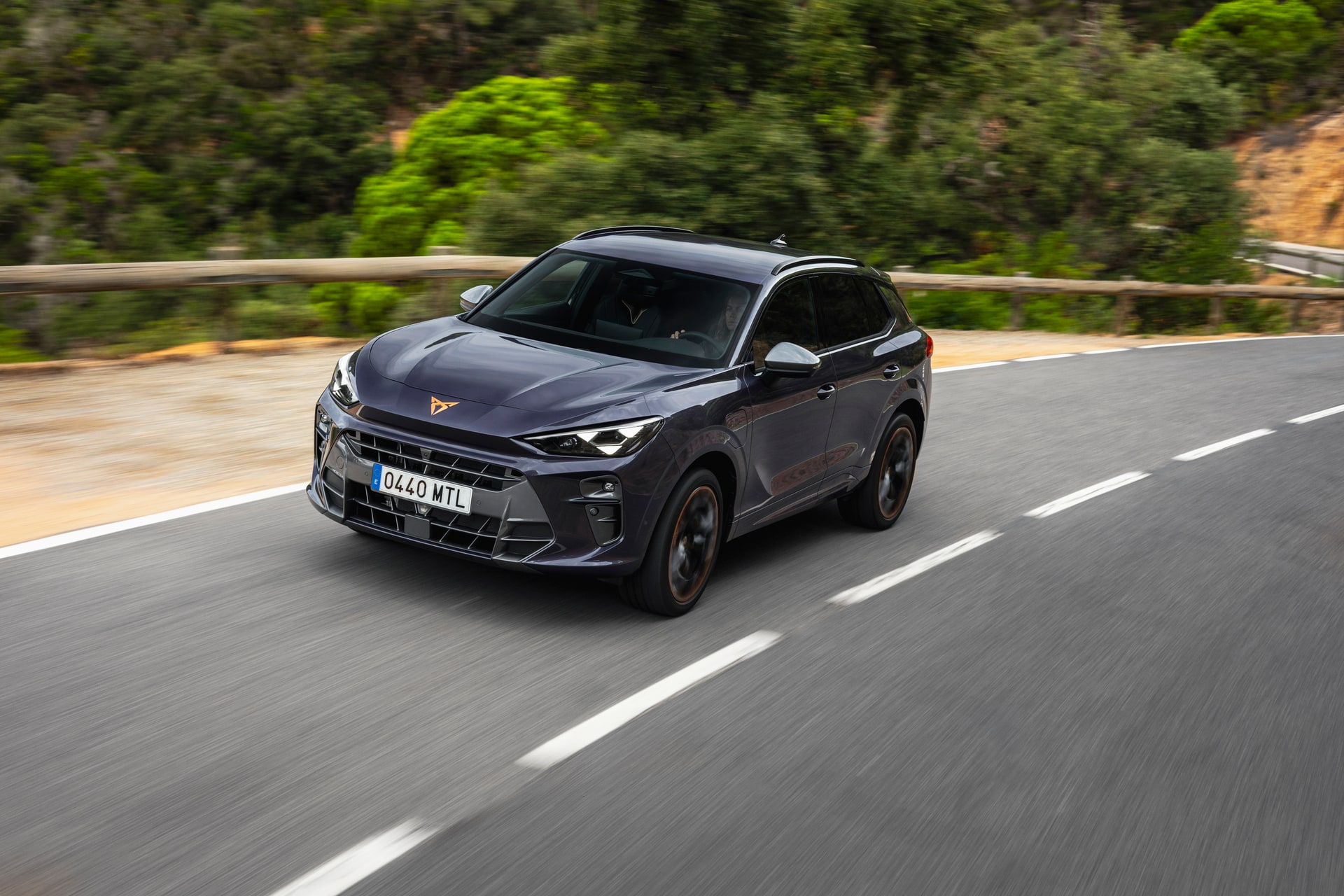
Cupra Formentor e-Hybrid VZ (from €48,900)
The PHEV Formentor, with its 1.5 TSI block and electric motor, delivers a combined 272 hp and a 19.7 kWh usable battery giving around 100 km WLTP. In real use, 70-75 km during the week are achievable with calm driving. On paper, it offers the greatest effective electric range of this trio. The trade-off? A boot that is tight for a family (345 litres) and a suspension that, in the VZ trim, favours sporty feel over pure family comfort.
| Power | WLTP electric range | WLTP consumption | Label | Fuel |
|---|---|---|---|---|
| 204 kW / 272 hp | ~100 km | 0.9 l/100 km | 0 emissions | PHEV |
Kia Sorento PHEV (from €59,950)
The Sorento is a different animal: a 4.81 m mid-size SUV with seven seats as standard and a presence that does not go unnoticed. Its PHEV powertrain combines the 1.6 T-GDi with an electric motor for a total of 265 hp, a 13.8 kWh battery and around 57 km WLTP electric range, which in real use amounts to 40-45 km. Less than the Cupra, yes, but still enough for most family daily journeys. In return: 604 litres of boot space with both rows in use, seven genuinely usable seats and everyday robustness that the Formentor cannot match.
| Power | WLTP electric range | WLTP consumption | Label | Fuel |
|---|---|---|---|---|
| 195 kW / 265 hp | ~57 km | 1.6 l/100 km | 0 emissions | PHEV |
Hyundai Tucson PHEV (from €42,350)
The technical cousin of the Sportage comes across as the most sensible of the group. 265 hp combined from the same 1.6 T-GDi, a 13.8 kWh battery, around 62 km WLTP (45 real-world) and a very usable 558-litre boot. The Maxx trim includes a panoramic roof, 360º camera and ventilated seats; with 7 years of warranty, it offers the best price-equipment-peace of mind ratio. It does not have the Cupra’s electric range or the Sorento’s seven seats, but it more than meets the needs of a family as a single car.
| Power | WLTP electric range | WLTP consumption | Label | Fuel |
|---|---|---|---|---|
| 195 kW / 265 hp | ~62 km | 1.4 l/100 km | 0 emissions | PHEV |
Two alternatives worth keeping on the radar
The Peugeot 3008 Hybrid PHEV (from €44,900) plays in a different aesthetic league with its panoramic i-Cockpit and an electric range similar to the Tucson. More striking interior, decent dynamics, and a good option if you are already in the Stellantis group, something we already analysed in the internal duel with the C5 Aircross.
The Volkswagen Tiguan eHybrid (from €48,100) debuts the MQB evo platform with a 19.7 kWh battery and around 100 km WLTP, just like the Formentor but in a more family-oriented and less sporty format. In our view, it is the most balanced PHEV in the compact segment for those who do not need seven seats.
Where each one wins (without false equivalences)
- Cupra Formentor e-Hybrid: wins on effective electric range and performance. Loses on space and family comfort.
- Kia Sorento PHEV: wins on practicality (seven genuine seats) and large SUV presence. Loses on electric range and entry price.
- Hyundai Tucson PHEV: wins on equipment-to-price ratio and the 7-year warranty. Loses some character against European rivals.
Summary table with scores
| Model | Power | WLTP electric range | Boot | Price from | Warranty | Daily use score /10 |
|---|---|---|---|---|---|---|
| Cupra Formentor e-Hybrid VZ | 272 hp | ~100 km | 345 l | €48,900 | 2 years | 8.5 |
| Kia Sorento PHEV | 265 hp | ~57 km | 604 l | €59,950 | 7 years | 7.8 |
| Hyundai Tucson PHEV Maxx | 265 hp | ~62 km | 558 l | €42,350 | 7 years | 8.7 |
| Peugeot 3008 Hybrid | 195 hp | ~85 km | 520 l | €44,900 | 3 years | 8.0 |
| VW Tiguan eHybrid | 204 hp | ~100 km | 490 l | €48,100 | 2 years | 8.4 |
Verdict by use case
- For the urban family that charges every night at home and drives 40-60 km a day: Cupra Formentor e-Hybrid VZ or VW Tiguan eHybrid. They are the only ones that, in real life, let you go whole weeks without refuelling.
- For the large family or with grandparents on board (seven seats): Kia Sorento PHEV. It is the only one in the group offering this. The premium over the Tucson exceeds 40%, so it only pays off if you genuinely need the third row.
- Best price-performance ratio: Hyundai Tucson PHEV Maxx. It is the cheapest in the group, comes with 7 years of warranty as standard, and its electric range covers everyday family use without pretension. For most Spanish families with a home wallbox, it is our default recommendation.
And a warning that should not need repeating: if you will not have a wallbox at home or at work, none of these cars makes sense for you. Look at a conventional hybrid and save €8,000-15,000.
Frequently asked questions
How many real electric kilometres can I expect during the week?
Between 25 and 30% less than the WLTP figure. A Tucson PHEV homologated at 62 km delivers 42-45 km real-world in winter with mixed urban and interurban driving, and up to 50-55 km in spring at a calm pace.
Does a PHEV SUV make sense if I only charge at public points?
No. AC charging speed (3.7-7.4 kW on most PHEVs) means a full charge takes 3-5 hours, time you rarely have at a public charger. The PHEV is designed for overnight home charging.
What real consumption does a PHEV SUV have when the battery is depleted?
Between 7 and 9 l/100 km depending on model and use. The extra battery weight (150-250 kg) penalises it compared with an equivalent HEV, which usually runs at 5-6 l/100 km. That is why plugging it in during the week is decisive for cost-effectiveness.
Are there public grants for buying a PHEV SUV in 2026?
Yes, through the Plan Auto+, the current national programme of aid for electric and plug-in hybrid mobility. Specific amounts and conditions are updated periodically, so it is worth checking the official IDAE website before finalising the purchase.
