

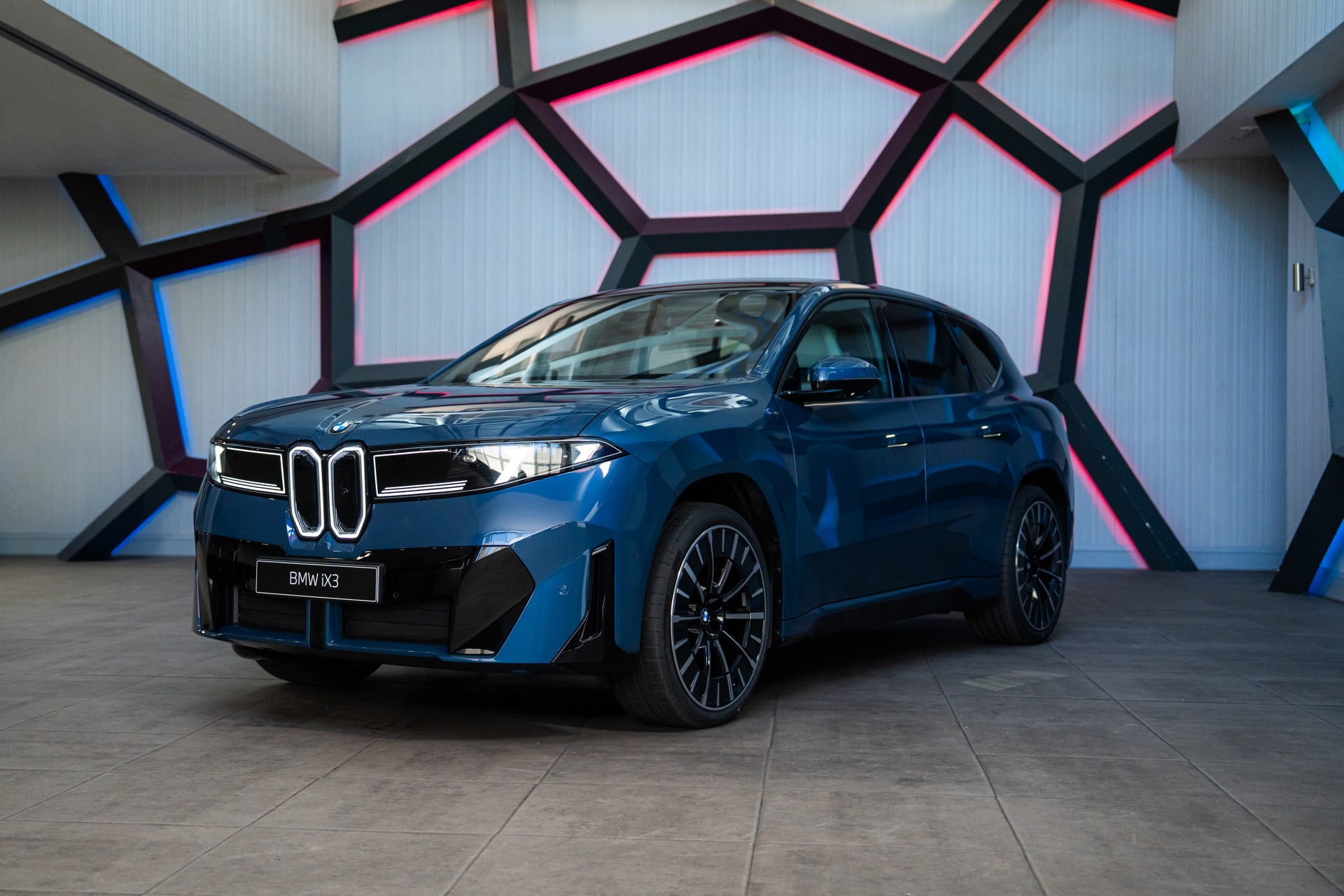
Choosing a high-end premium electric SUV in Spain in 2025 is no longer about choosing between "the good one" and "the less good one": it is about deciding which philosophy you want to pay for. The BMW iX3 debuts a new generation with the Neue Klasse platform, a huge battery and two motors that promise to be a dynamic benchmark. The Mercedes EQE SUV, for its part, bets on comfort, refinement and that three-pointed star aura that still sells on its own. On paper they share a segment, but their approach — and their price — are further apart than they seem.
The context: two opposite ways of understanding the premium electric SUV
The iX3 xDrive50 represents BMW’s generational leap into pure electric: a native 800V architecture, permanent-magnet synchronous motors on both axles and a 113.5 kWh battery that pursues range figures until now reserved for aerodynamic saloons. The EQE SUV 300, on the other hand, is the entry version of a family that has been on the market for a couple of years: a single motor, rear-wheel drive and a setup clearly oriented towards comfort.
It is not the same hand of cards. And that shows as much on the road as on the bill.
BMW iX3 xDrive50 — from approximately €69,900
The iX3 xDrive50 delivers 350 kW (470 hp) with all-wheel drive, a top speed of 210 km/h and a WLTP range of around 790 km thanks to its 113.5 kWh battery. It is, today, one of the electric SUVs with the most homologated kilometres on the market, and all of this without giving up sports car performance.
| Power kW | Power hp | Top speed | Range | Consumption | Label | Fuel |
|---|---|---|---|---|---|---|
| 350 kW | 470 hp | 210 km/h | ≈790 km | ≈15-16 kWh/100 km | ZERO | Electric |
Where it objectively wins: real range for long journeys (with 790 km WLTP, expect an easy 550-600 km in real driving) and performance — 470 hp with all-wheel drive play in a different league from the EQE 300.
Mercedes EQE SUV 300 — from approximately €83,400
The EQE SUV 300 Edition fits a single rear motor of 200 kW (270 hp), a 90.5 kWh battery and a WLTP range close to 580 km. Its top speed also stands at 210 km/h, electronically limited as on all Mercedes electric models. Here Mercedes is not chasing a performance record: it seeks a smooth ride, isolation for the occupants and an interior dressed in the language of the optional Hyperscreen.
| Power kW | Power hp | Top speed | Range | Consumption | Label | Fuel |
|---|---|---|---|---|---|---|
| 200 kW | 270 hp | 210 km/h | ≈580 km | ≈18-19 kWh/100 km | ZERO | Electric |
Where it objectively wins: ride comfort and acoustic refinement (the EQE’s soundproofing is a segment benchmark) and interior luxury perception, where Mercedes keeps a clear advantage over the more technological and minimalist proposal of the new iX3.
Head-to-head comparison
| Dimension | BMW iX3 xDrive50 | Mercedes EQE SUV 300 |
|---|---|---|
| Power | 470 hp (AWD) | 270 hp (RWD) |
| Battery | ≈113.5 kWh | ≈90.5 kWh |
| WLTP range | ≈790 km | ≈580 km |
| Top speed | 210 km/h | 210 km/h |
| Drive | All-wheel | Rear-wheel |
| DGT label | ZERO | ZERO |
| Warranty | 2 years vehicle / 8 years battery | 2 years vehicle / 8 years battery |
| Price from | ≈€69,900 | ≈€83,400 |
The RRP difference exceeds 19% in favour of the BMW. It is not a nuance: it is almost €14,000 that the Mercedes buyer pays for the brand, comfort and interior finish, not for technical capabilities.
Summary table with scoring
| Model | Performance | Range | Comfort | Equipment | Price | Overall score |
|---|---|---|---|---|---|---|
| BMW iX3 xDrive50 | 9/10 | 10/10 | 8/10 | 9/10 | 8/10 | 8.8 |
| Mercedes EQE SUV 300 | 6/10 | 7/10 | 9/10 | 9/10 | 6/10 | 7.4 |
Verdict: which to buy depending on your case
- For long-distance and motorway driving: BMW iX3 xDrive50. 790 km WLTP and the 800V architecture mean fewer and shorter charging stops. There is no debate.
- For urban use and short trips with a priority on comfort: Mercedes EQE SUV 300. Its suspension, acoustic insulation and ride feel are superior; 270 hp is more than enough in the city.
- Best price-to-performance ratio: BMW iX3 xDrive50, no question. For ≈€14,000 less it offers 200 hp more, all-wheel drive and 210 km more range. The Mercedes premium is only justified if you explicitly value the brand and comfort.
Important notice: all prices mentioned are the manufacturer’s recommended RRP, without considering dealer discounts, commercial campaigns or purchase aid (Plan MOVES III or others). The real difference on the invoice can vary by several thousand euros.
Frequently asked questions
Does the BMW iX3 xDrive50 charge faster than the Mercedes EQE SUV 300?
Yes. The new iX3 debuts a native 800V architecture, while the EQE SUV operates at 400V. In practice, this translates into significantly higher DC charging peaks on the BMW and 10-80% times that are shorter.
Which one has more boot space?
Both are around 520 litres in standard configuration, with the EQE SUV slightly above. The BMW iX3, moreover, brings back the frunk (front boot) thanks to its new platform, something the EQE does not offer.
Is it worth paying €14,000 more for the Mercedes?
Only if you value the brand, suspension comfort and interior luxury above performance and range. Objectively, the iX3 xDrive50 is superior in almost every measurable metric.
Do both have the DGT ZERO label?
Yes. Being 100% electric, both carry the ZERO label, with free access to ZBE zones, subsidised regulated parking and tax exemptions applicable in most autonomous communities.
