

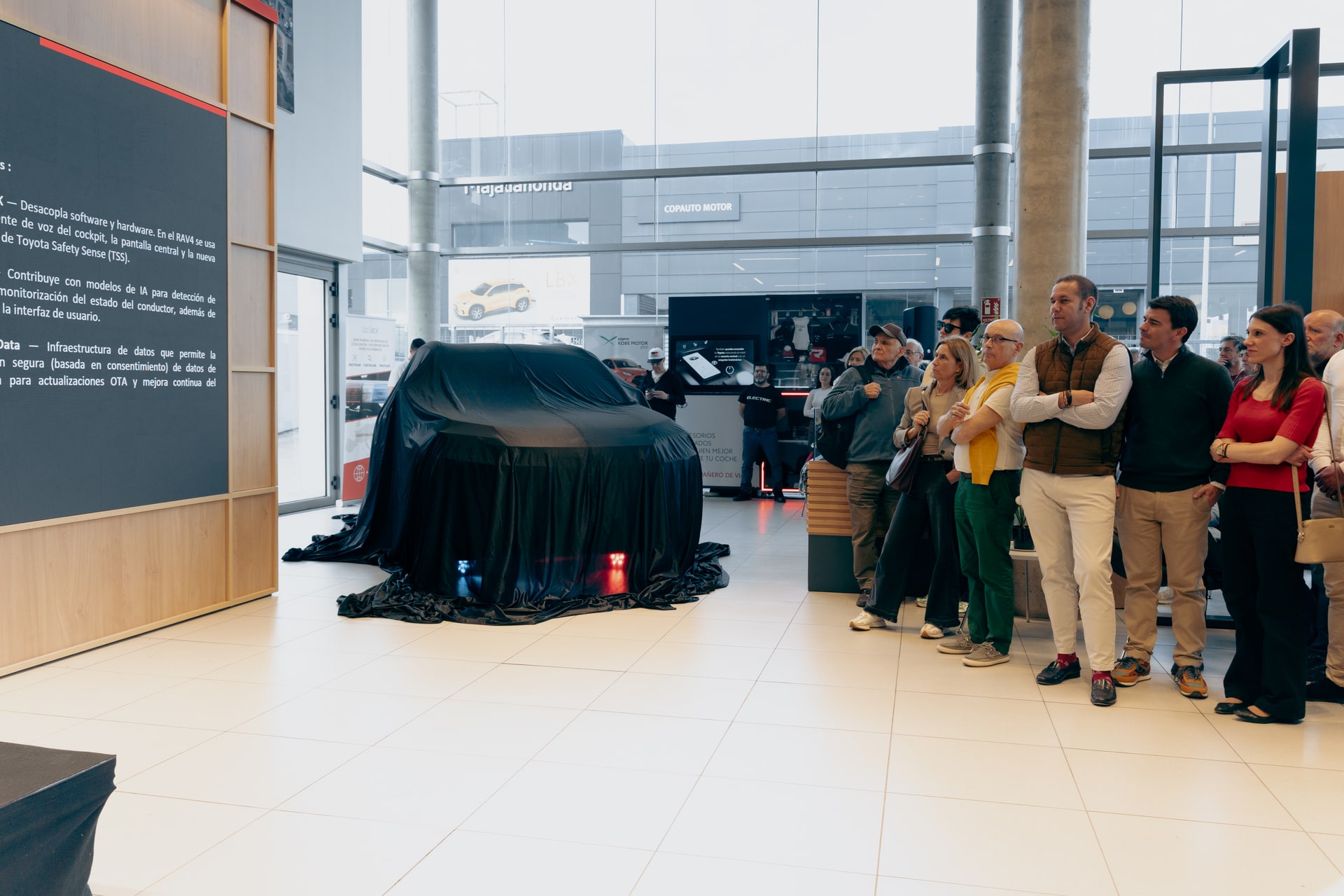
The segment of Japanese plug-in compact SUVs has become thin in Spain. Apart from the two Korean models and a few European proposals, basically two names remain on the table: the Toyota RAV4 Plug-in and the Mitsubishi Outlander PHEV. Both sit around €50,500–€50,800 RRP, both exceed 22 kWh of battery capacity and both boast the Cero (zero-emission) DGT label. However, the technical decisions behind them are very different, and this becomes evident in daily family use.
This analysis deliberately leaves out the BYD Seal U DM-i and the Nissan Qashqai e-Power. Not for lack of commercial merit — they sell, and well — but because, for this comparison, we did not look for the brands with the greatest pull, but for the models that best meet our editorial criteria of real-world electric range, comfort, safety and value for money within the pure Japanese PHEV segment. With the scope clarified, let us move on to the two that do qualify.
What a family asks of a plug-in compact SUV in 2026
The typical use is clear: daily journeys of 40–80 km that ideally are covered in electric mode, weekend trips where the combustion engine must be refined, and enough boot space for a pushchair plus the weekly shop. The Cero label remains the access pass to the ZBEs (low-emission zones) of Madrid and Barcelona, and here both comfortably qualify: both homologate more than the 40 electric kilometres required by the DGT.
The nuance lies in how much electricity you actually use before the petrol engine kicks in, and in how the car behaves when the battery is empty. Here the two Japanese models play in different leagues.
Toyota RAV4 Plug-in Hybrid 300 Advance — from ≈€50,500
Toyota’s proposition is that of a PHEV with genuine electric vocation. 140 km of homologated range is a lot of kilometres — in practice, with calm driving and mild temperatures, this translates into 100–110 real km, which for most families means covering the entire week without touching petrol if there is a charging point at home.
The powertrain delivers 270 combined hp, with eCVT and all-wheel electric drive (the rear axle is driven by an independent motor). It is not an enthusiast’s car — the eCVT gearbox pushes revs high when you ask for power, and that does not change here — but the thrust in town and up to 120 km/h is decisive. The Advance trim comes as standard with dual-zone climate control, 360° camera, wireless charger and the full Toyota Safety Sense ADAS pack.
| Power | Electric range | WLTP consumption | Top speed | Label | Fuel |
|---|---|---|---|---|---|
| 200 kW / 270 CV | ≈140 km | ≈1.5 l/100 km | ≈180 km/h | Cero | PHEV petrol |
The best: electric range well above the rival, and a Toyota network with proven reliability in hybrid mechanics.
The worst: the eCVT gearbox still is not refined under heavy demand, and the boot (≈520 l) loses some ground against the conventional RAV4 hybrid because of the battery.
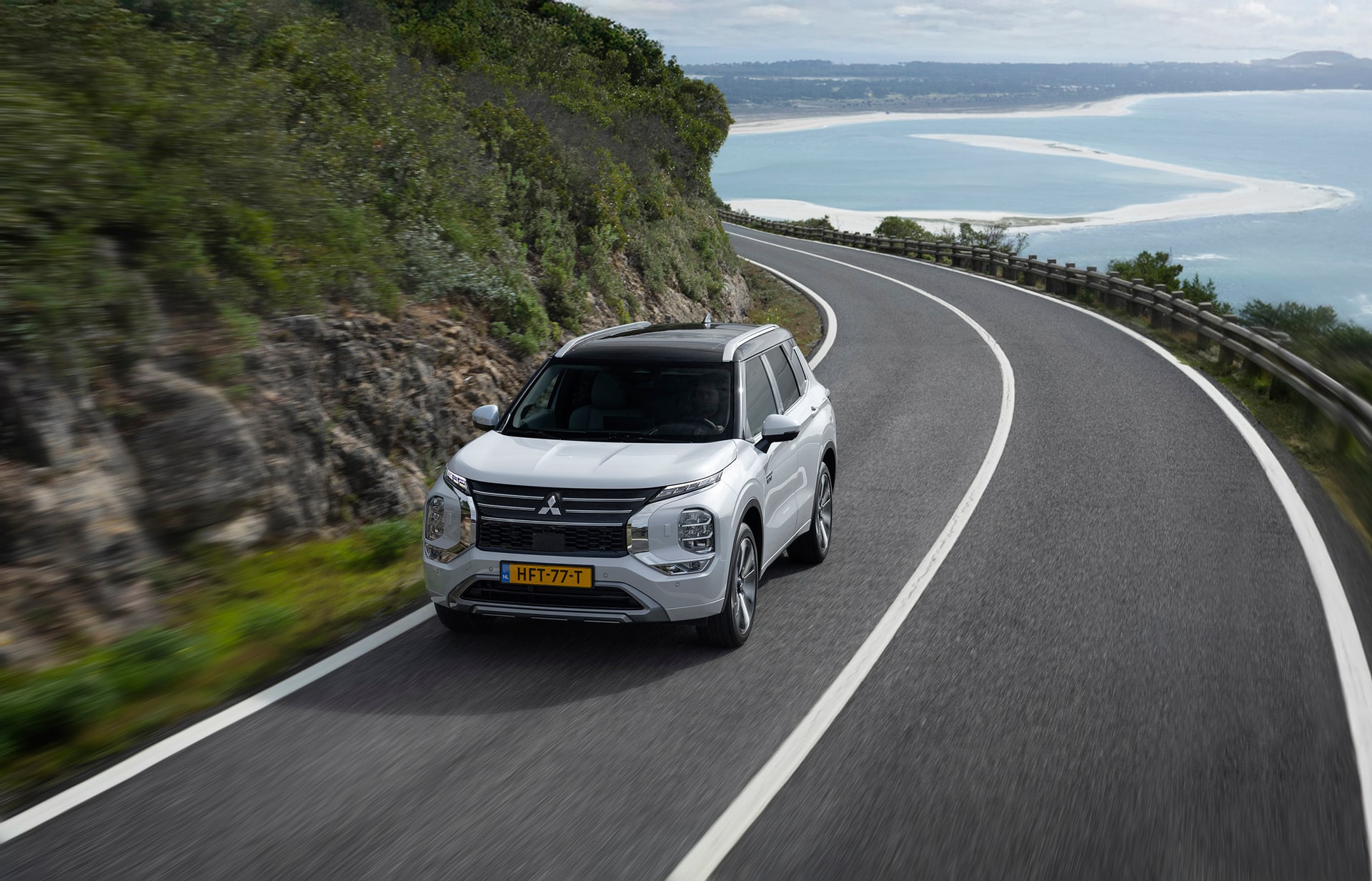
Mitsubishi Outlander PHEV 306 Motion 4WD — from ≈€50,800
The Outlander is the veteran of the segment, redesigned on a Nissan platform. It offers 310 combined hp, 4WD traction with two electric motors (one per axle) and off-road management with specific modes that the RAV4 lacks. On paper it is more powerful, and the 0–100 time confirms it: it is slightly ahead of the Toyota.
Where it loses ground is electric range. The ≈90 homologated km — against the RAV4’s 140 — come down to 65–70 real km. Enough for daily urban use, but it means plugging in more often if you want to keep consumption low. The battery is practically identical in capacity (≈22.5 kWh), so the difference comes from the management and from the greater weight of the car with its mechanical-electric 4WD.
| Power | Electric range | WLTP consumption | Top speed | Label | Fuel |
|---|---|---|---|---|---|
| 230 kW / 310 CV | ≈90 km | ≈1.0 l/100 km | ≈170 km/h | Cero | PHEV petrol |
The best: superior combined power, full-time traction with a more capable approach off the tarmac, and the optional availability of 7 seats (5+2 configuration) that the RAV4 lacks.
The worst: electric range clearly lower, and a Mitsubishi sales network in Spain more limited than Toyota’s — something to consider for warranty and long-term maintenance.
Head-to-head: where each one wins
If what you are after is maximising electric kilometres — that is, how many days a week you can cover without starting the combustion engine — the RAV4 Plug-in wins by a landslide. 50 km more of homologated range is not a nuance, it is a different category of use.
If what matters is broader family versatility (extra seats, traction with genuine ambitions, mechanical thrust), the Outlander offers arguments the Toyota cannot match. It is more car in the traditional sense: more power, more capacity, more configuration options.
On WLTP consumption the Outlander scores 1.0 l/100 against the RAV4’s 1.5, but these are laboratory figures with a full battery. When both run out of energy — as we have already analysed in depth — the RAV4 moves at 6.5–7 real l/100 km and the Outlander rises to 7.5–8 because of its greater weight. In practice, the thermal advantage belongs to the Toyota.
Summary comparison table
| Model | Power | Electric range | WLTP consumption | Traction | Price from | Overall score |
|---|---|---|---|---|---|---|
| Toyota RAV4 Plug-in Advance | 270 CV | ≈140 km | ≈1.5 l/100 km | AWD-e | ≈€50,500 | 8.5 / 10 |
| Mitsubishi Outlander PHEV Motion 4WD | 310 CV | ≈90 km | ≈1.0 l/100 km | 4WD S-AWC | ≈€50,800 | 7.8 / 10 |
Manufacturer’s recommended RRP prices, without dealer discounts, one-off campaigns or aid schemes such as Plan Auto+. Check the current amount of the plan on the official website before closing the deal.
Verdict by use case
For an urban family with a charging point at home and daily journeys of 50–100 km: Toyota RAV4 Plug-in. It is the car of this comparison, without qualification. The electric range lets you reach the weekend almost without spending a litre, and the reliability of the Toyota hybrid system is long-term insurance.
For a family that makes frequent long trips, mountain driving or occasionally needs 7 seats: Mitsubishi Outlander PHEV. The 4WD S-AWC with active torque split and the optional 5+2 configuration make it the more versatile tool, although you pay a toll in real consumption with an empty battery.
Price-performance ratio: technical tie. The RRP difference between them (≈€300) is negligible on €50,000 cars, so the decision is not won on price but on usage profile. If we had to pick for the average Spanish family — city during the week, country roads at weekends, a decent domestic socket — the RAV4 Plug-in is the most rational choice in 2026.
Frequently asked questions
Which has the better real-world electric range, the RAV4 Plug-in or the Outlander PHEV?
The Toyota RAV4 Plug-in, by a wide margin. It homologates ≈140 km against the Mitsubishi’s ≈90 km, and in real use the advantage holds: 100–110 km against 65–70 km. If the goal is to minimise use of the petrol engine, the RAV4 is clearly superior.
Do both have the DGT Cero label?
Yes. Both comfortably exceed the 40 km of electric range required for the Cero label, which gives unrestricted access to the ZBEs of Madrid, Barcelona and other cities with active low-emission zones.
Does the Outlander PHEV have seven seats?
It offers an optional 5+2 configuration in some markets and trims. In Spain availability is limited at the time of writing — it is advisable to confirm with the dealer the specific version and delivery times before counting on the third row as a purchase argument.
How long does it take to charge on a 7.4 kW home wallbox?
Both charge at 6.6 kW on AC, so a full charge from 10% takes roughly 3.5–4 hours on both models. Perfectly manageable for overnight charging. Neither accepts DC fast charging in all versions, a point to verify depending on the specific trim.
