

If your daily routine is traffic lights, roundabouts and parking in tight spaces, the WLTP homologation consumption figure tells you very little. What really matters is how much the car uses when it doesn’t exceed 50 km/h for half an hour at a stretch, which is exactly where full hybrids truly shine (or disappoint). We have cross-referenced data from fleetdata and km77 for five compact hybrid SUVs sold in Spain for less than €35,000 to see which one handles urban traffic best without draining the tank.
Methodology: how we measure real urban consumption
We did not rely on the combined WLTP figure, which mixes city, rural road and motorway driving in proportions that bear little resemblance to a trip from home to work. We took the specific urban cycle from the homologation (where the manufacturer publishes it) and checked it against the real-world consumption figures reported in km77 tests and in the fleetdata fleet records for predominantly urban trips. The result comes much closer to what a driver covering less than 15 km per trip will actually see, with the electric motor doing most of the work.
The ranking: the 5 compact hybrids that use the least fuel in the city
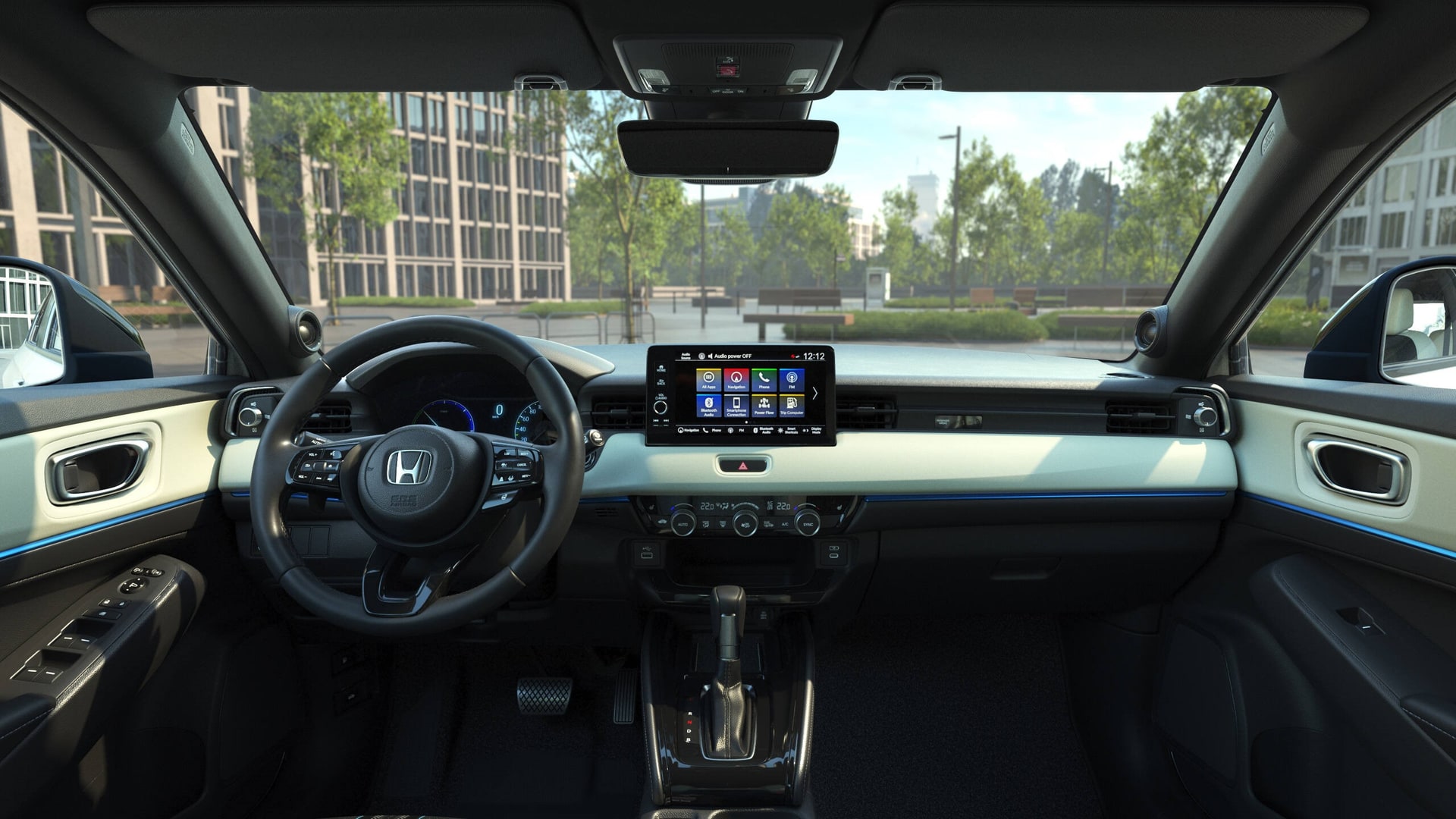
1. Honda HR-V e:HEV 1.5 i-MMD — from €32,700
Honda’s hybrid system is different from the rest: the petrol engine almost never drives the wheels directly, acting instead as a generator while the electric motor pulls the car for most of the time at urban speeds. That gives it the best behaviour of the five below 50 km/h, although on the motorway it loses part of that advantage compared with the others.
| Power (kW) | Power (hp) | WLTP consumption | Real urban consumption | Label | Fuel |
|---|---|---|---|---|---|
| 96 kW | 131 CV | 5.4 l/100 km | 4.2 l/100 km | ECO | Hybrid |
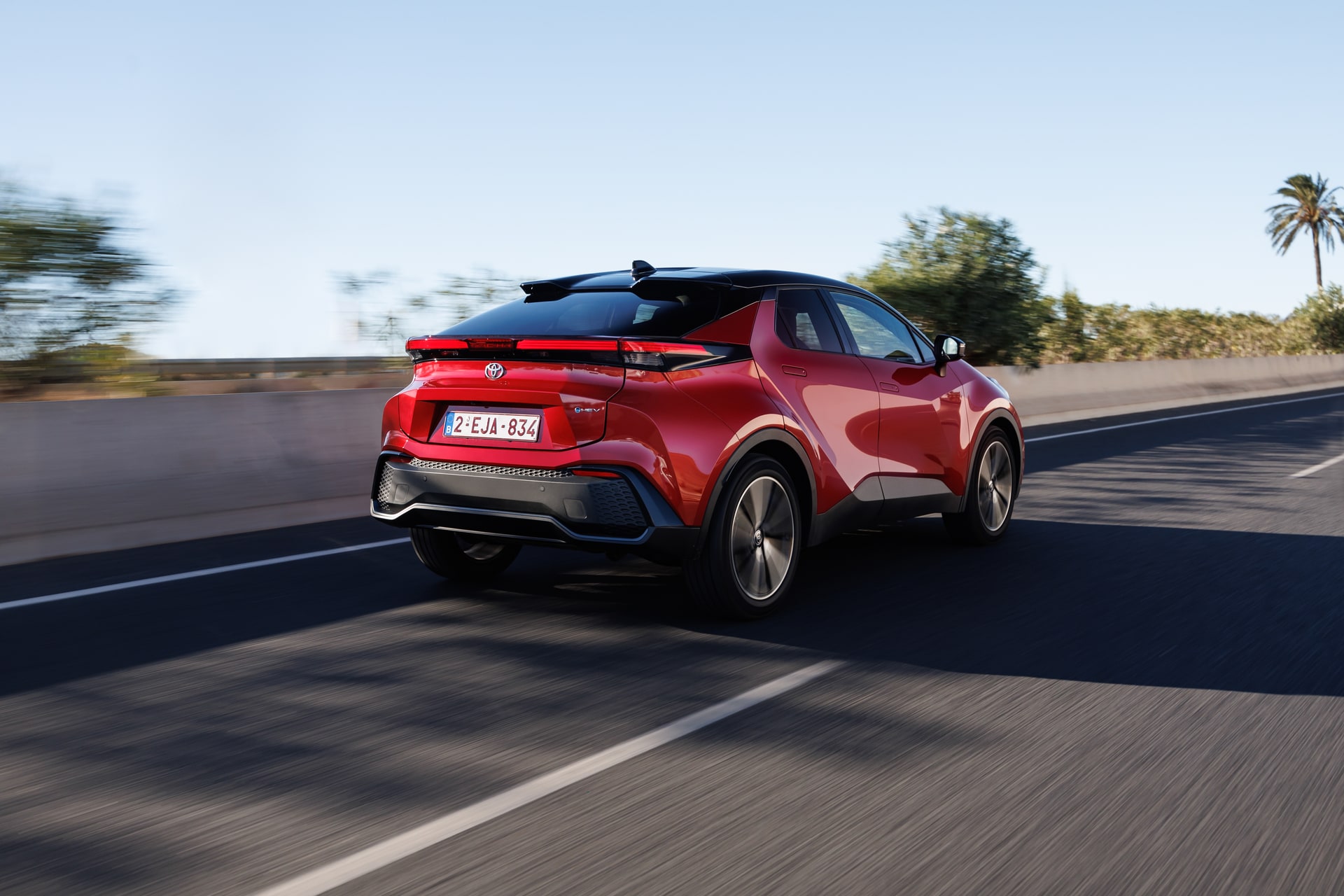
2. Toyota C-HR 1.8 Hybrid — from €29,900

Toyota has spent two decades refining its hybrid system, and it shows in how smoothly it moves in and out of electric mode in town. The C-HR is not the cheapest on the list, but it is the one that best balances consumption, proven reliability and a 364-litre boot that isn’t overly penalised by the battery.
| Power (kW) | Power (hp) | WLTP consumption | Real urban consumption | Label | Fuel |
|---|---|---|---|---|---|
| 103 kW | 140 CV | 4.9 l/100 km | 4.3 l/100 km | ECO | Hybrid |
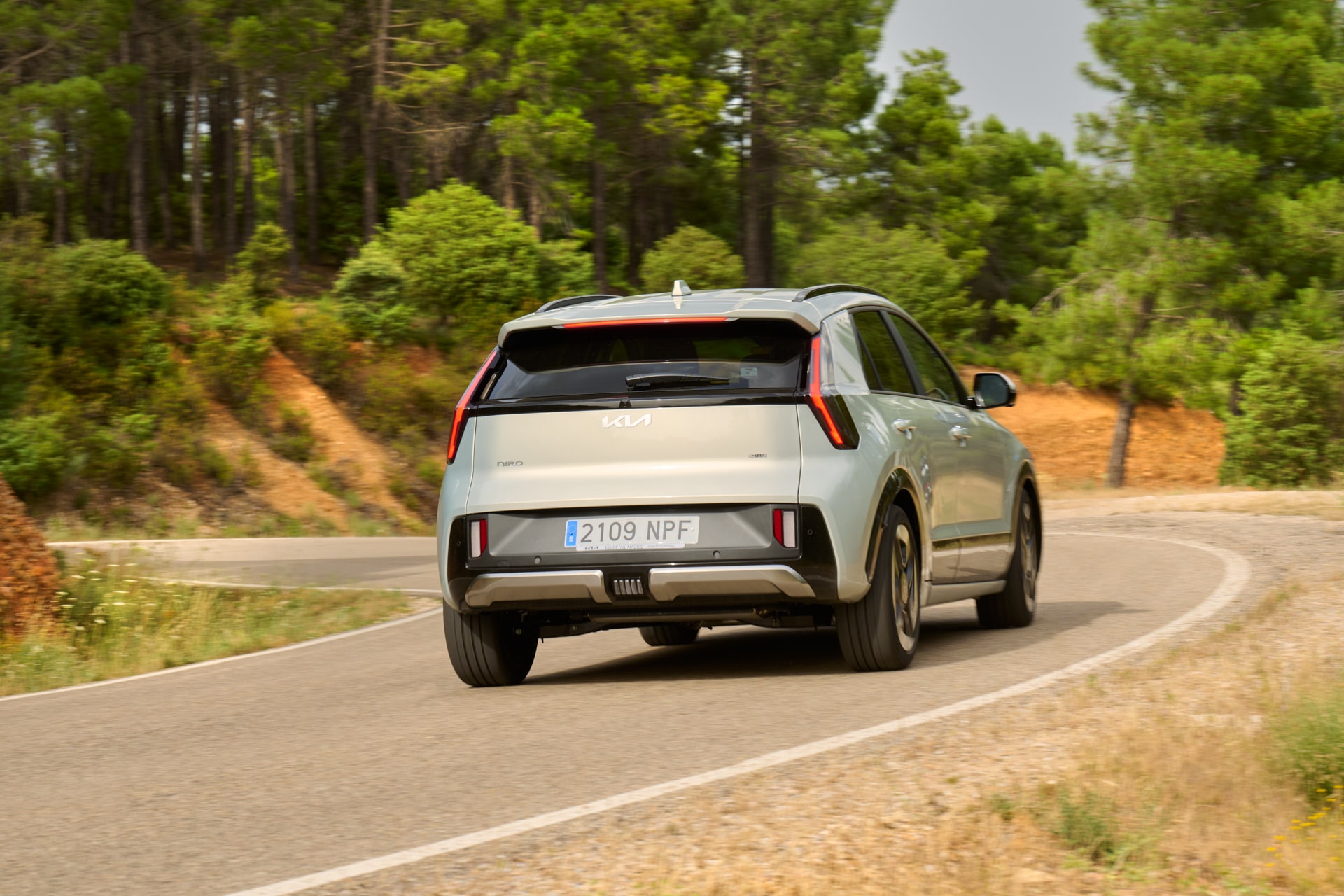
3. Kia Niro Hybrid 1.6 GDI — from €29,350
The Niro starts with an advantage that doesn’t show up in any consumption table: 451 litres of boot space, the largest of the five despite carrying the hybrid system’s batteries. In town it stays very close to the first two and adds the longest warranty in the group, 7 years or 150,000 km, an argument that carries weight if you plan to keep the car for a long time.
| Power (kW) | Power (hp) | WLTP consumption | Real urban consumption | Label | Fuel |
|---|---|---|---|---|---|
| 104 kW | 141 CV | 4.4 l/100 km | 4.4 l/100 km | ECO | Hybrid |
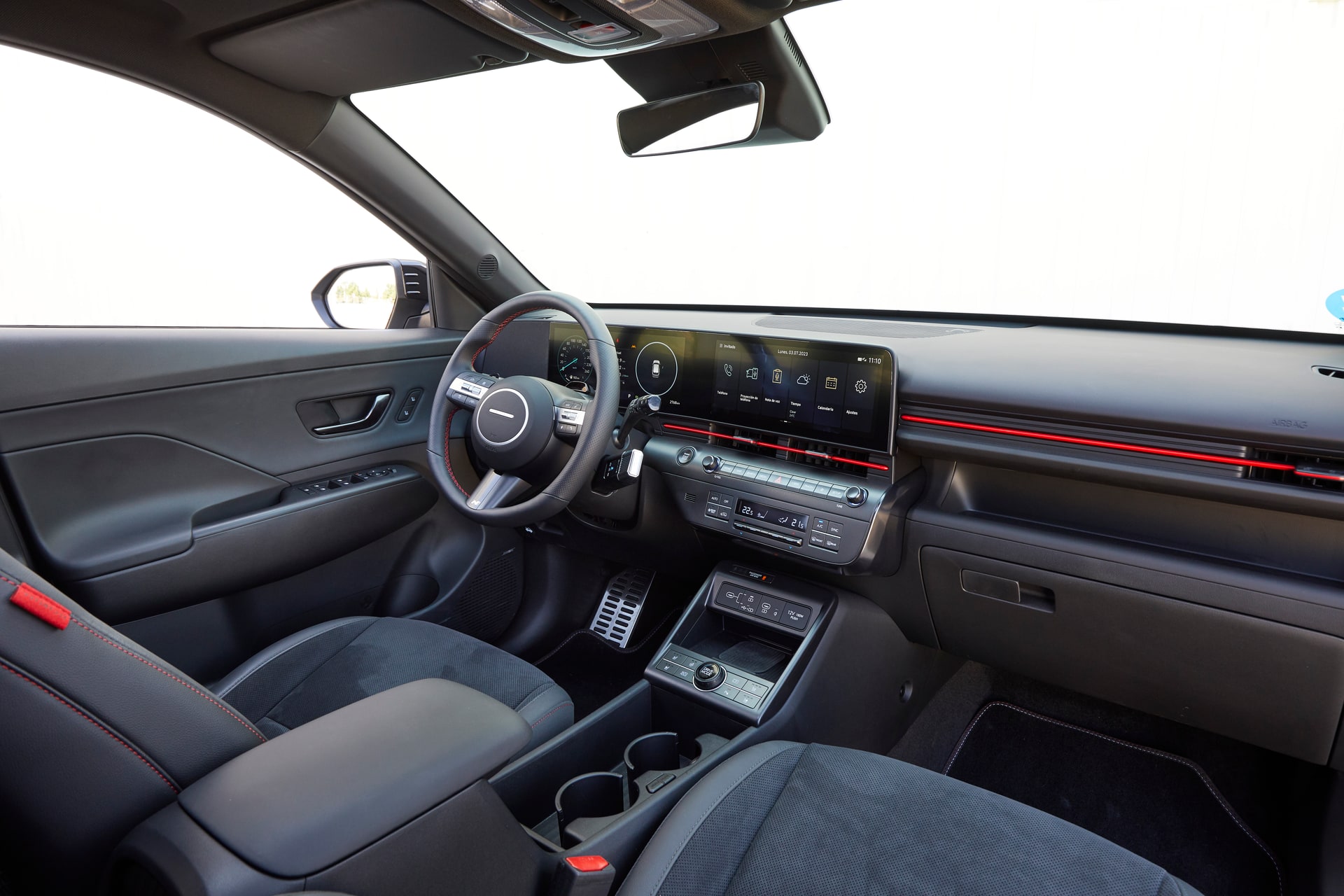
4. Hyundai Kona Hybrid 1.6 GDI — from €27,900
It shares much of its mechanics with the Niro, but the Kona is cheaper to get into and moves practically as well in slow traffic. It loses some boot space (407 litres) and standard equipment compared with its Korean sibling, but for anyone looking only at the final price it is hard to overlook.
| Power (kW) | Power (hp) | WLTP consumption | Real urban consumption | Label | Fuel |
|---|---|---|---|---|---|
| 104 kW | 141 CV | 4.6 l/100 km | 4.5 l/100 km | ECO | Hybrid |

5. Renault Captur E-Tech Full Hybrid 145 — from €27,600
It closes the ranking, but not because it is a bad car: the Captur is the cheapest of the five, and its E-Tech system, with its distinctive clutchless gearbox, works reasonably well in town. That said, the boot drops to 379 litres because of the battery, and urban consumption sits a step behind the rest of the group.
| Power (kW) | Power (hp) | WLTP consumption | Real urban consumption | Label | Fuel |
|---|---|---|---|---|---|
| 107 kW | 145 CV | 4.7 l/100 km | 4.7 l/100 km | ECO | Hybrid |
Summary table: the 5 compact hybrid SUVs head to head
| Model | Real urban consumption | Boot | Price from | Warranty | Score |
|---|---|---|---|---|---|
| Honda HR-V e:HEV | 4.2 l/100 km | 319 L | €32,700 | 3 years/100,000 km | 8.5/10 |
| Toyota C-HR Hybrid | 4.3 l/100 km | 364 L | €29,900 | 3 years (up to 10 with servicing) | 9/10 |
| Kia Niro Hybrid | 4.4 l/100 km | 451 L | €29,350 | 7 years/150,000 km | 9/10 |
| Hyundai Kona Hybrid | 4.5 l/100 km | 407 L | €27,900 | 5 years unlimited | 8.5/10 |
| Renault Captur E-Tech | 4.7 l/100 km | 379 L | €27,600 | 2 years (extendable) | 7.5/10 |
Where each one wins, no tricks
The HR-V e:HEV is objectively the most efficient below 50 km/h thanks to its almost series-parallel architecture, but it is also the most expensive on the list and has the smallest boot, 319 litres against the Niro’s 451. The Kia Niro wins on cargo space and warranty, a weighty argument if your car is going to stay with you for a decade. The Hyundai Kona Hybrid wins on entry price against the Niro itself despite sharing its mechanics, which makes it hard to ignore if budget is the deciding factor. The Captur, for its part, is the most affordable in the group and the only one with a seven-seat option in the Captur range (not in the hybrid version, but within the family), although in town it comes last in the group.
Verdict: which to choose according to your case
For purely urban use, short trips and many cold starts, the Honda HR-V e:HEV is the one you will use the least fuel with, although you pay almost €5,000 more than the Captur, a difference of over 15% that is only justified if you truly live in the city. If you are looking for the best balance between consumption, space and long-term warranty, the Kia Niro Hybrid is the most rounded option in the ranking. And if the starting price is what matters most without giving up competitive urban consumption, the Hyundai Kona Hybrid gives you almost the same performance as the Niro for €1,450 less. As we already analysed when comparing the Toyota C-HR against the Honda HR-V and the Mazda CX-30, the real differences in town between these hybrids rarely exceed half a litre per 100 km, so price and space tend to tip the balance more than consumption itself. If your usage pattern combines city and some motorway driving, it is worth reviewing first how to choose a compact hybrid SUV according to the type of urban journey you make each day, because the ranking may vary. And if your purchase falls within the criteria of the Plan Auto+, check the official website to confirm the current amount before closing the deal.
Frequently asked questions
Which compact hybrid SUV uses the least fuel in the city for less than €35,000?
The Honda HR-V e:HEV records the lowest real consumption in urban traffic, with figures around 4.2 l/100 km, thanks to a hybrid system that prioritises electric traction at low speeds.
Is it worth paying more for the Honda HR-V compared with the Hyundai Kona Hybrid?
It depends on how many urban kilometres you drive each year. The consumption difference between the two is small (0.3 l/100 km), so if your use is mixed, the HR-V’s fuel saving will take a long time to offset the nearly €4,800 price difference.
Which compact hybrid SUV has the largest boot in this ranking?
The Kia Niro Hybrid, with 451 litres, ahead of the Hyundai Kona Hybrid (407 L), the Renault Captur E-Tech (379 L), the Toyota C-HR (364 L) and the Honda HR-V (319 L).
Do these self-charging hybrids carry an ECO or CERO label from the DGT?
All five models in this ranking carry the ECO label, which applies to non-plug-in hybrids. The CERO label is only obtained by pure electric vehicles and some PHEVs with sufficient homologated electric range.
