

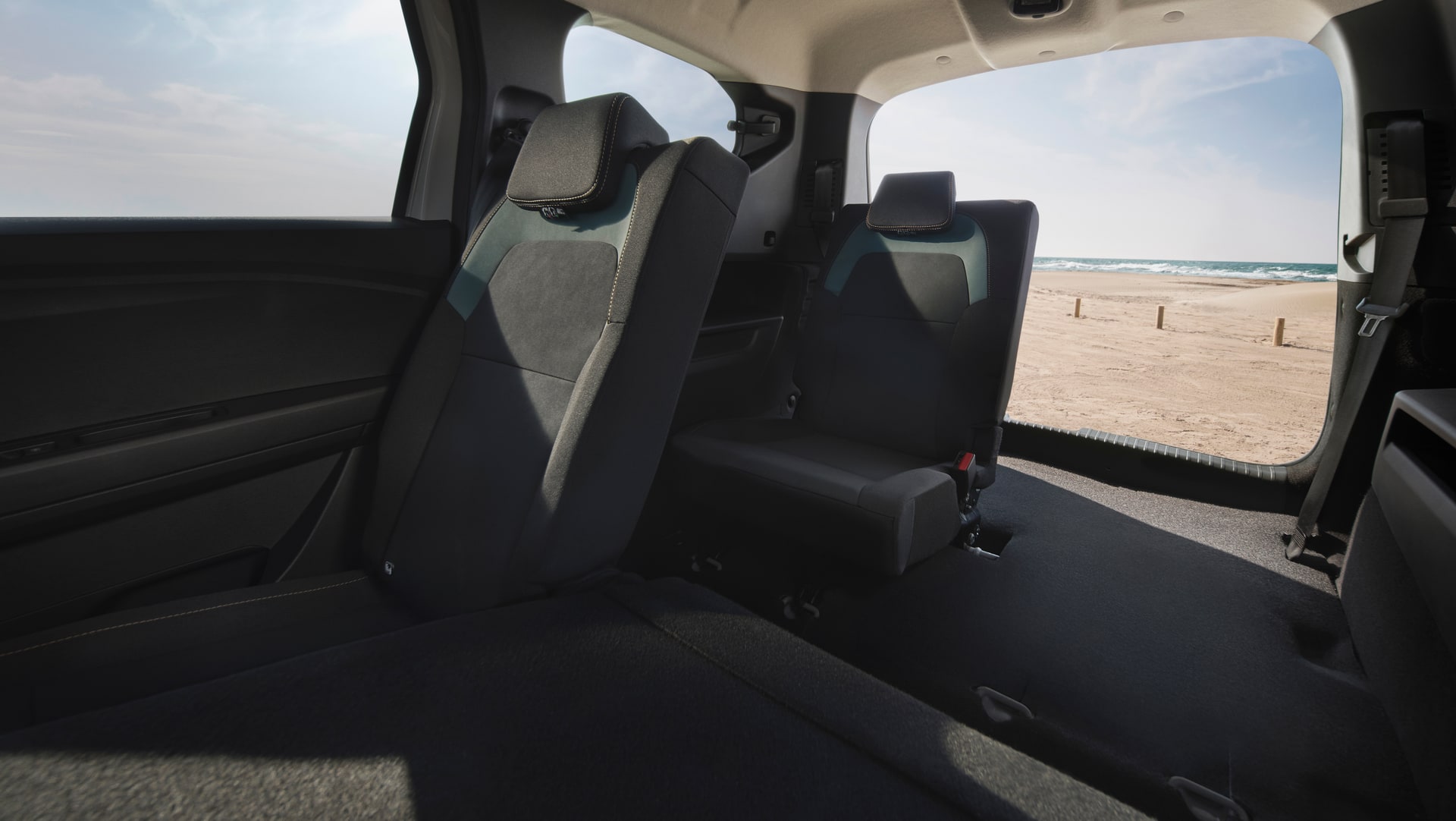
When the first child arrives, the question stops being “how many litres does the boot hold?” and becomes something much more specific: does the pram fit folded without having to play Tetris every morning? The technical sheet doesn’t answer that. And that is precisely where most buying guides fall short.
What “practical for a pram” means when litres aren’t enough
Two cars with the same boot figure can behave in completely different ways with a real pram inside. An SUV with 500 litres but a square, deep opening can swallow a stroller without effort, while a saloon with 480 litres but an irregular shape forces you to load it diagonally. Litres are a theoretical volume; what you use every day is a space with a specific shape, height and access angle.
The measurements that really matter in the boot
Length of the opening: the figure nobody checks on the spec sheet
A three-piece pram folded (chassis, carrycot and seat) usually measures between 75 and 95 cm in length, depending on the brand. A lightweight stroller drops to 55-65 cm. The useful benchmark is clear: at least 95 cm of length in the boot opening so you don’t have to force the front wheel against the folded backrest. Below that figure, the pram does fit, but only just.
Loading lip height and why your back notices it
A loading lip at 55-60 cm (typical of an estate) lets you slide the pram in almost without lifting it. On a tall SUV that figure rises to 70-80 cm, and there you do feel the weight of the pram plus the nappy bag on every load. It is not a matter of looks: it is 15-20 cm that you repeat several times a day.
Tailgate opening and width between wheel arches
The usable width between the inner wheel arches matters almost as much as length. If it falls below 100 cm, a double (twin) pram won’t fit sideways, however many litres the brand advertises.
Equivalences by pram type: from the lightweight seat to the urban trio
- Lightweight pushchair (umbrella type): fits in almost any boot from 350 litres.
- 2-piece pram (carrycot + seat): needs between 85 and 95 cm of free length.
- 3-piece pram with large chassis: requires the 95 cm of length and a low lip so you don’t have to tilt it.
- Twin pram: requires an arch-to-arch width above 100 cm, something many compact SUVs don’t offer.
Three family cars put to the test with a real baby pram
Dacia Jogger TCe 110: the cheapest with an honest opening
It is the entry-level family car with the best price-to-space ratio on the Spanish market, and with the third row folded the loading space is practically rectangular, with no awkward steps. The lip is low for a car with the height of a light MPV. What it lacks is refinement: the TCe 110 feels basic in soundproofing, and the finish of the plastics fools nobody.
| Power | Consumption | Boot | Emissions label | Fuel |
|---|---|---|---|---|
| 110 CV (81 kW) | 5.9 l/100 km | 708 litres (5 seats) | C | Petrol |
Skoda Octavia Combi 1.5 TSI: the estate’s balance
Here, for anyone who doesn’t need seven seats or SUV height, is the most practical boot of the three: generous opening length, a genuinely low lip and a wide tailgate opening as standard. The Skoda Octavia Combi swallows a three-piece pram without you having to lift it much off the ground. The small print: its entry price already approaches that of a compact SUV, and the boot shrinks noticeably if you add the optional subwoofer speaker pack.
| Power | Consumption | Boot | Emissions label | Fuel |
|---|---|---|---|---|
| 150 CV (110 kW) | 6.0 l/100 km | 640 litres | C | Petrol |
Peugeot 5008 Hybrid 136: the 7-seat SUV with a different logic
The Peugeot 5008 plays a different game: SUV height, seven real seats and a boot that, in the five-seat configuration, exceeds 700 litres. The problem for the pram is precisely that height: its loading lip is the highest of the three, and loading it every day means lifting the pram rather than sliding it. In return, if the family grows to three children, nothing in the group competes with its third row.
| Power | Consumption | Boot | Emissions label | Fuel |
|---|---|---|---|---|
| 136 CV (100 kW) | 5.2 l/100 km | 357 litres (7 seats) / 702 litres (5 seats) | ECO | Hybrid |
Comparison table: boot, measurements and starting price
| Model | Boot | Loading lip | Price from | Warranty | Pram practicality score |
|---|---|---|---|---|---|
| Dacia Jogger TCe 110 | 708 litres | Low | 17,400 € | 3 years (extendable) | 8/10 |
| Skoda Octavia Combi 1.5 TSI | 640 litres | Very low | 29,200 € | 3 years | 9/10 |
| Peugeot 5008 Hybrid 136 | 702 litres (5 seats) | High | 38,500 € | 3 years | 7/10 |
The price gap between the Jogger and the 5008 exceeds 100%: these cars serve different needs and are not direct rivals on RRP.
Verdict: which car to choose depending on your pram and your family
If budget comes first and only one child is on the horizon, the Dacia Jogger offers more usable boot per euro invested than any other family car on the Spanish market. If what you want is the best daily experience when loading the pram, without bending down or straining your back, the Skoda Octavia Combi wins clearly: its low lip is noticed every morning. And if the family is going to have two or three children and you need seven real seats with room to grow, the Peugeot 5008 makes up for its higher lip with space the other two cannot offer. For most first-time families with a single three-piece pram, the Octavia Combi is the most well-rounded choice; the Jogger wins if price matters more than refinement.
Frequently asked questions
How many litres of boot do I need at minimum for a baby pram?
From 400-450 litres a 2-piece pram usually fits without problems. For a 3-piece pram with a large chassis, look for 600 litres or more, and above all an opening at least 95 cm long.
Is an SUV or an estate better for a baby pram?
The estate wins on low loading lip and everyday ease. The SUV wins if you need height to get in and out with the baby in your arms or plan a third row in the medium term.
Does a twin pram fit in any family car?
No. You need to check the width between the boot’s wheel arches, which should exceed 100 cm; many compact SUVs fall short there even when they advertise good litres.
Are there public grants to buy a more practical family car?
The Plan Auto+ provides aid for purchasing certain vehicles in Spain. The amounts and requirements change frequently, so check the official website before making your final decision.
