

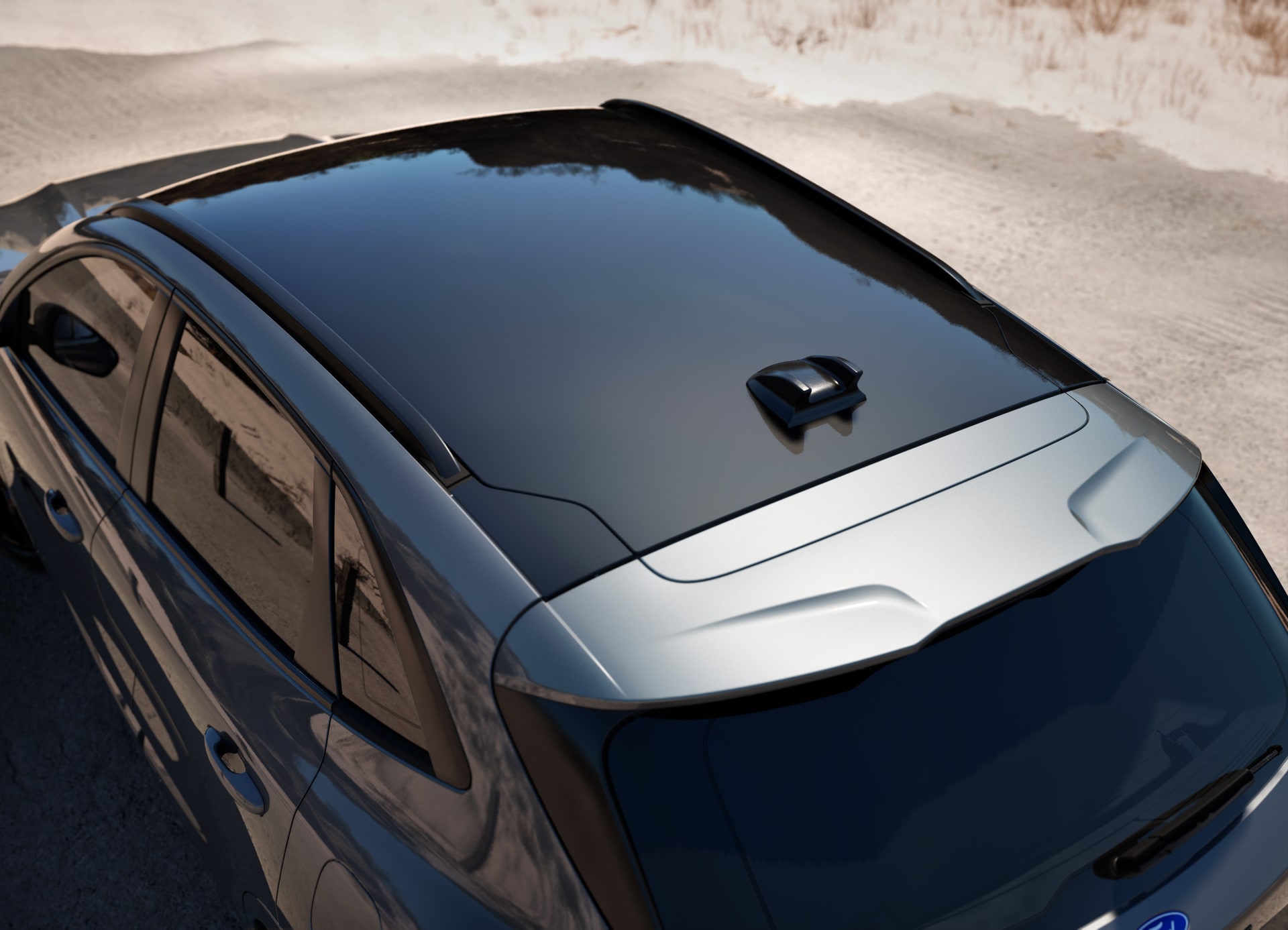
Not all compact hybrid SUVs perform equally well in the city. That is the trap many buyers fall into: they look at the spec sheet, compare horsepower and combined consumption, and end up choosing a car designed for a different usage pattern. The journey you make every day (three hundred metres to school, forty minutes of traffic jams, or a mix of city and outskirts with a plug in the garage) determines which hybrid technology will really pay off for you. And that changes the result more than any figure on the spec sheet.
Why the daily commute matters more than the spec sheet
A HEV shines in cold starts and stop-and-go traffic, because the electric motor takes on much of the propulsion without the combustion engine having to kick in. A PHEV, on the other hand, needs a plug to perform: without daily charging it behaves like a normal hybrid while hauling a battery of over a hundred kilos that it does not use. The question is not “which one is better?”, but “which one fits my routine?”.
Short urban trips and many cold starts: the territory of the full hybrid
If your day-to-day consists of trips under ten kilometres, with the engine starting cold several times, the self-charging HEV is the option with the fewest catches. You do not need to manage charging or plan recharging, and consumption in that scenario is where it shines most.
Toyota Corolla Cross 140H, from €29,900
| Power CV | Power kW | Consumption | Label | Fuel |
|---|---|---|---|---|
| 140 CV | 103 kW | 4.8 l/100 km | ECO | Hybrid (HEV) |
Toyota has spent years refining its HEV system and it shows in the city: the car runs in electric mode for a significant part of urban journeys, something no mild hybrid manages. The warranty, with the service plan at official dealerships, can extend up to ten years on the hybrid system. What is least convincing is the engine sound under hard acceleration, that “accelerator tied to a variable clutch” effect typical of the Toyota CVT.
Traffic jams and constant stop-and-go: when a higher-power HEV pays off more than an MHEV
If your journey is more traffic jam than fluid city driving (access ring roads, industrial estates with traffic lights every hundred metres), a HEV with more electric power reserve is advisable, capable of covering longer stretches without the combustion engine kicking in.
Honda ZR-V e:HEV, from €36,900
| Power CV | Power kW | Consumption | Label | Fuel |
|---|---|---|---|---|
| 184 CV | 135 kW | 5.4 l/100 km | ECO | Hybrid (HEV) |
Honda’s e:HEV system works almost like an electric car with a generator: the petrol engine rarely drives the wheels directly, so in real traffic jams it performs better than its homologated consumption suggests. The entry price is its weak point against the Corolla Cross, with a difference exceeding 20%. If your budget is tight, that figure matters.
Mixed city and outskirts use: the balance of power and consumption
For those who combine city driving with short motorway stretches (commuting to work outside the centre), a system that does not penalise you on the open road is worth considering, something more urban HEVs struggle with.
Nissan Qashqai e-Power, from €34,700
| Power CV | Power kW | Consumption | Label | Fuel |
|---|---|---|---|---|
| 190 CV | 140 kW | 5.3 l/100 km | ECO | Hybrid (HEV) |
Nissan’s e-Power is technically different: the combustion engine never drives the wheels, it only generates electricity for the electric motor. This translates into very smooth driving in the city and more stable behaviour outside it than a conventional hybrid compact SUV. The boot, admittedly, loses some capacity compared with the mild hybrid version of the same model due to the battery pack.
If you have a plug at home or at work: when the PHEV wins
Here the whole approach changes. With daily charging, a PHEV can do most urban journeys in one hundred percent electric mode, and that does justify the higher upfront price.
Ford Kuga PHEV, from €42,300
| Power CV | Power kW | Electric range | Label | Fuel |
|---|---|---|---|---|
| 225 CV | 165 kW | 69 km WLTP | CERO | PHEV |
The Kuga PHEV’s CERO label grants unrestricted access to any ZBE, something no HEV on this list achieves. But if you do not charge daily, you end up hauling a heavy battery with the petrol engine, and the real consumption soars above what the spec sheet promises. Without a plug, I do not recommend it: there are better-suited HEV or plug-in alternatives for that profile.
DGT label and ZBE access: what really changes
All three HEVs carry the ECO label: they enter current ZBE zones without problems, although some councils are starting to restrict ECO vehicles too during high-pollution days. The PHEV with the CERO label is the only one with guaranteed free access in the medium term, even if urban restrictions tighten.
Comparison table: the four urban use profiles
| Model | Technology | Price from | Power | Label | Best for | Score |
|---|---|---|---|---|---|---|
| Toyota Corolla Cross 140H | HEV | €29,900 | 140 CV | ECO | Short trips, cold starts | 8.5/10 |
| Honda ZR-V e:HEV | HEV | €36,900 | 184 CV | ECO | Traffic jams, stop-and-go | 7.8/10 |
| Nissan Qashqai e-Power | HEV (series) | €34,700 | 190 CV | ECO | Mixed city-outskirts | 8.2/10 |
| Ford Kuga PHEV | PHEV | €42,300 | 225 CV | CERO | Daily charging available | 8.0/10 |
Price and equipment: where the jump in range shows
The Corolla Cross remains the one offering the best equipment-to-price ratio in its entry trim with the hybrid system, with driver assistance systems as standard that others reserve for higher versions. The Kuga PHEV, with almost €12,500 more than the Toyota (over 40% extra), is only justified if you will really plug it in every night. The Plan Auto+ can narrow that gap in the case of the PHEV; it is worth checking the current amount on the official website before deciding.
Verdict: which compact hybrid SUV to choose based on your daily commute
For short urban trips with many cold starts and a tight budget: the Toyota Corolla Cross 140H. It makes the best use of electric mode in the city without depending on a plug, and its entry price sets it clearly apart from the rest. For constant traffic jams where spare electric power is useful: the Honda ZR-V e:HEV, though you must accept a price more than 20% above the Toyota. For mixed city-outskirts use with good motorway behaviour: the Nissan Qashqai e-Power. And if you have a guaranteed plug at home or at work, and want the CERO label to shield yourself against future restrictions: the Ford Kuga PHEV, on the non-negotiable condition that you charge it daily; if you do not, it loses all its sense against any of the other three.
Frequently asked questions
Is a compact HEV hybrid SUV better than a PHEV for the city if I have no plug?
Yes. Without the possibility of daily charging, the PHEV carries the weight of the battery without using it, and real consumption soars. A well-designed HEV, such as the Corolla Cross or the Qashqai e-Power, performs better in that scenario.
What DGT label do I need to enter any ZBE in 2026?
The CERO label (only PHEVs with sufficient electric range, or pure electric cars) is the safest in the long term. The ECO label, carried by most HEVs, covers almost all restrictions today, but some cities already limit it during high-pollution episodes.
Is it worth paying more for a plug-in hybrid SUV if I only drive in the city?
Only if you can charge it every day. With electric ranges of 50–70 km WLTP, a PHEV can cover almost the whole working week in electric mode, but that advantage disappears without a plug.
Which compact hybrid SUV has the best price-to-equipment ratio in 2026?
The Toyota Corolla Cross 140H, with the lowest entry price in this comparison and a level of standard driver assistance that its competitors do not match in that same price range.

1 Comment
Pingback: Toyota C-HR vs Honda HR-V vs Mazda CX-30: qué SUV híbrido compacto rinde mejor en ciudad por menos de 35.000€ en 2026 – Comparativa de Coches