

Buying an SUV-B in 2026 is no longer about choosing the one whose design you like best. It is about deciding what you are willing to give up. Because you always give up something. The car that comes loaded with screens and sensors as standard usually cuts boot space, and the one that boasts room for the family’s luggage often arrives at the dealership with less standard equipment. This article puts three SUV-Bs side by side, each representing a different buying decision: the Omoda 5 SHS, the Ford Puma and the SEAT Arona.
The real dilemma: there is no perfect SUV-B, only one that suits you
An urban SUV-B is bought to get around the city, park without stress and make the occasional weekend trip. Within that use, two variables weigh more than any other in the final decision: how much the car you are about to sign comes with as standard, and how many real litres fit in the boot when you load the shopping, the suitcase and the trolley. There is a third factor almost nobody looks at until they sign: the starting price, which can vary by more than 25% between two cars competing in the same segment.
Why standard equipment matters more in 2026 than it did three years ago
Since the GSR2 regulation came into force, every new car approved in the EU includes as standard a set of ADAS systems: emergency braking, lane departure warning, traffic sign recognition and intelligent speed limiting. That levels the safety floor across brands. What no longer levels out is what comes above it: dual-zone climate control, heated seats, wireless charging or a 360º camera. This is where some brands give equipment away and others charge for optional extras that push the final price 2,000 or 3,000 euros above the “from” price shown in the advertisement.
Omoda 5 SHS, from €26,900: the one that offers the most equipment as standard
The Omoda 5 SHS enters the segment with a hard-to-dispute argument: finishes that European rivals sell as options come included here from the entry-level version. A large dual screen, complete driver assistance systems and upholstery of higher quality than expected for its price. Its self-charging hybrid powertrain combines a 1.5 turbo engine with electric assistance.
| Model | Power | Consumption | Boot | Label | Fuel |
|---|---|---|---|---|---|
| Omoda 5 SHS | 140 kW / 190 CV | 4.3 l/100 km | 378 l | ECO | Hybrid |
What it does not give you: the boot is short compared with its direct rivals, and the after-sales network is still younger than that of brands with decades in Spain. That matters if you plan to resell the car in five or six years.
Ford Puma, from €24,700: the boot champion in the B segment
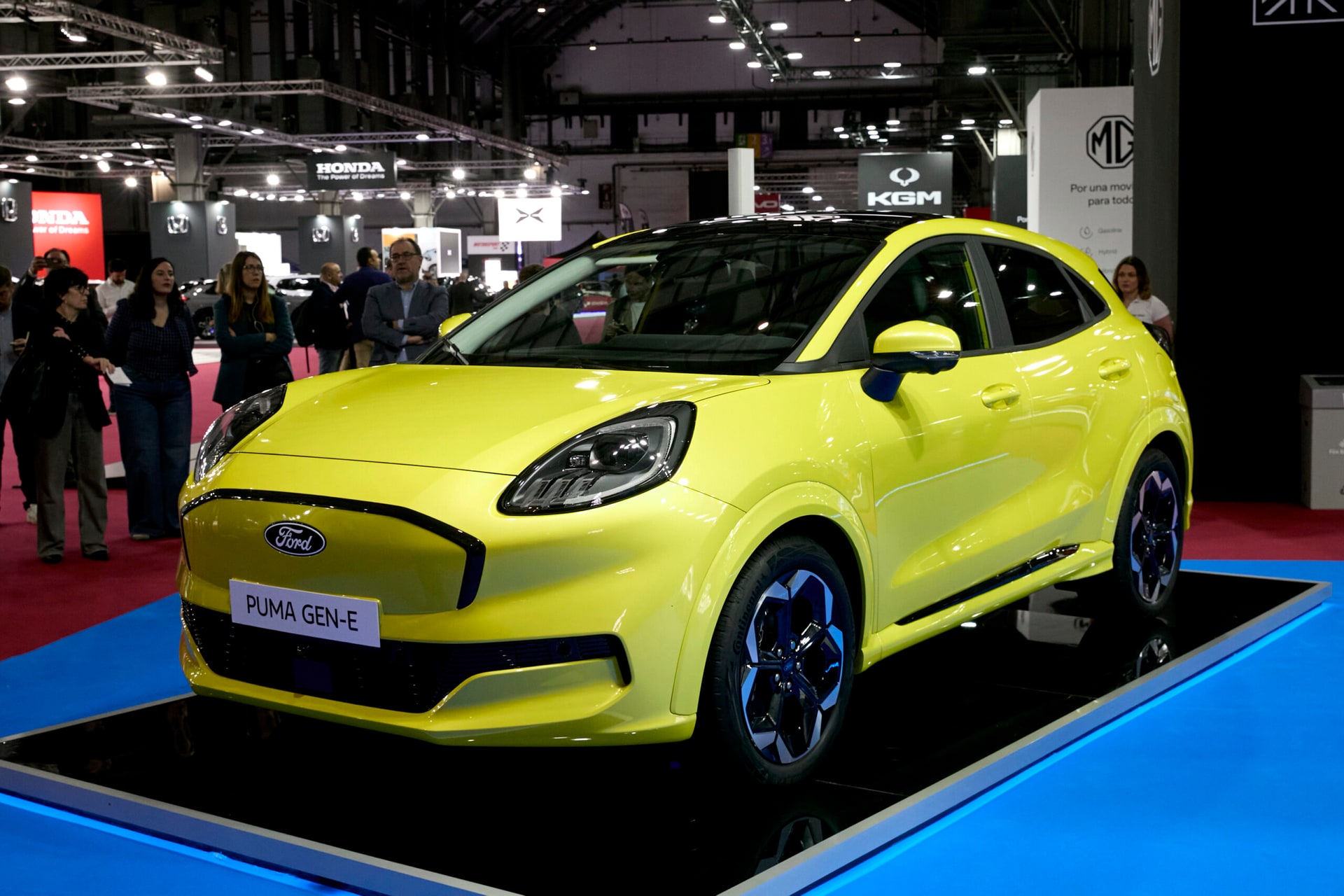
The Ford Puma remains the SUV-B with the greatest load capacity thanks to its Megabox, a space under the boot floor designed for liquids or tall objects that in any other car would end up on the rear seat.
| Model | Power | Consumption | Boot | Label | Fuel |
|---|---|---|---|---|---|
| Ford Puma | 92 kW / 125 CV | 5.3 l/100 km | 456 l | C | Petrol (mild hybrid) |
No direct rival of this size offers 456 litres. That said, standard equipment in the entry-level version is more limited: dual-zone climate control and much of the advanced driver assistance remain in the options catalogue, which inflates the final bill if you want the car fully equipped.
SEAT Arona, from €19,900: the balance with the lowest price of the three
The SEAT Arona does not win in either of the two categories above, and that is precisely why it convinces so many people: it does not fall short in any of them. It strikes a good balance between equipment, space and entry price, which is the lowest of the three compared.
| Model | Power | Consumption | Boot | Label | Fuel |
|---|---|---|---|---|---|
| SEAT Arona | 81 kW / 110 CV | 5.5 l/100 km | 400 l | C | Petrol |
The RRP difference between the Arona and the Omoda 5 SHS is around 35%, so it is worth checking exactly which version each one is being compared against before deciding on the basis of the “from” price alone.
Where each one wins, no half measures
The Omoda 5 SHS gives you more technology and assistance for the money you pay, full stop. The Ford Puma gives you more usable boot litres than any rival of its size, full stop. The SEAT Arona gives you the lowest entry price with an honest split between the two, without particularly standing out in either.
Those looking for alternatives
If none of these three quite fits, it is worth having a look at the Hyundai Bayon, with a surprisingly large boot for its category, or the Renault Captur E-TECH, which adds a plug-in hybrid variant that is unusual in the B segment. They are not part of the core of this comparison, because the aim was to isolate the two extremes of the equipment-versus-boot dilemma as clearly as possible.
DGT label: the tax nuance that changes the calculation in the long run
The Omoda 5 SHS carries an ECO label thanks to its hybridisation, which translates into regulated parking discounts in several cities and unrestricted access during high-pollution episodes. The Puma and the Arona stay at label C. For anyone using the car daily in the centre of a large city, that detail matters more in everyday life than any standard option.
Decision summary table
| Model | Boot | Standard equipment | Price from | Label | Score |
|---|---|---|---|---|---|
| Omoda 5 SHS | 378 l | Very high | €26,900 | ECO | 8.2/10 |
| Ford Puma | 456 l | Medium | €24,700 | C | 8.0/10 |
| SEAT Arona | 400 l | Medium-high | €19,900 | C | 7.6/10 |
Verdict: which SUV-B to buy depending on your case
For anyone entering an SUV-B with equipment as the priority, with no margin for expensive options, the Omoda 5 SHS wins, and with an ECO label thrown in. For families who load the boot every week with trolleys, sports bags or the big shop, the Ford Puma remains the best in the segment thanks to the Megabox. And if what you are after is entering the segment at the lowest possible price without giving up entirely on either of the two, the SEAT Arona is the option with the best value for money of the three, although it does not stand out in any one thing in particular.
If your budget has room, and it is worth remembering, the Plan Auto+ can reduce the difference in upfront outlay between these options: check the current amount on the official website before signing.
Frequently asked questions
What is the best urban SUV-B in 2026?
There is no single one. The Omoda 5 SHS leads on standard equipment, the Ford Puma on usable boot space and the SEAT Arona on entry price with a balanced split.
Which SUV-B has the largest boot?
The Ford Puma, with 456 litres thanks to its Megabox compartment, ahead of any direct rival of its size.
Which SUV-B comes with the most standard equipment without pushing the price up with options?
The Omoda 5 SHS, which includes as standard items that European rivals offer as paid extras.
Which DGT label should I look for in an SUV-B for daily urban use?
The ECO label, present on the Omoda 5 SHS thanks to its hybridisation, gives unrestricted access during pollution episodes and regulated parking discounts in several Spanish cities.
