

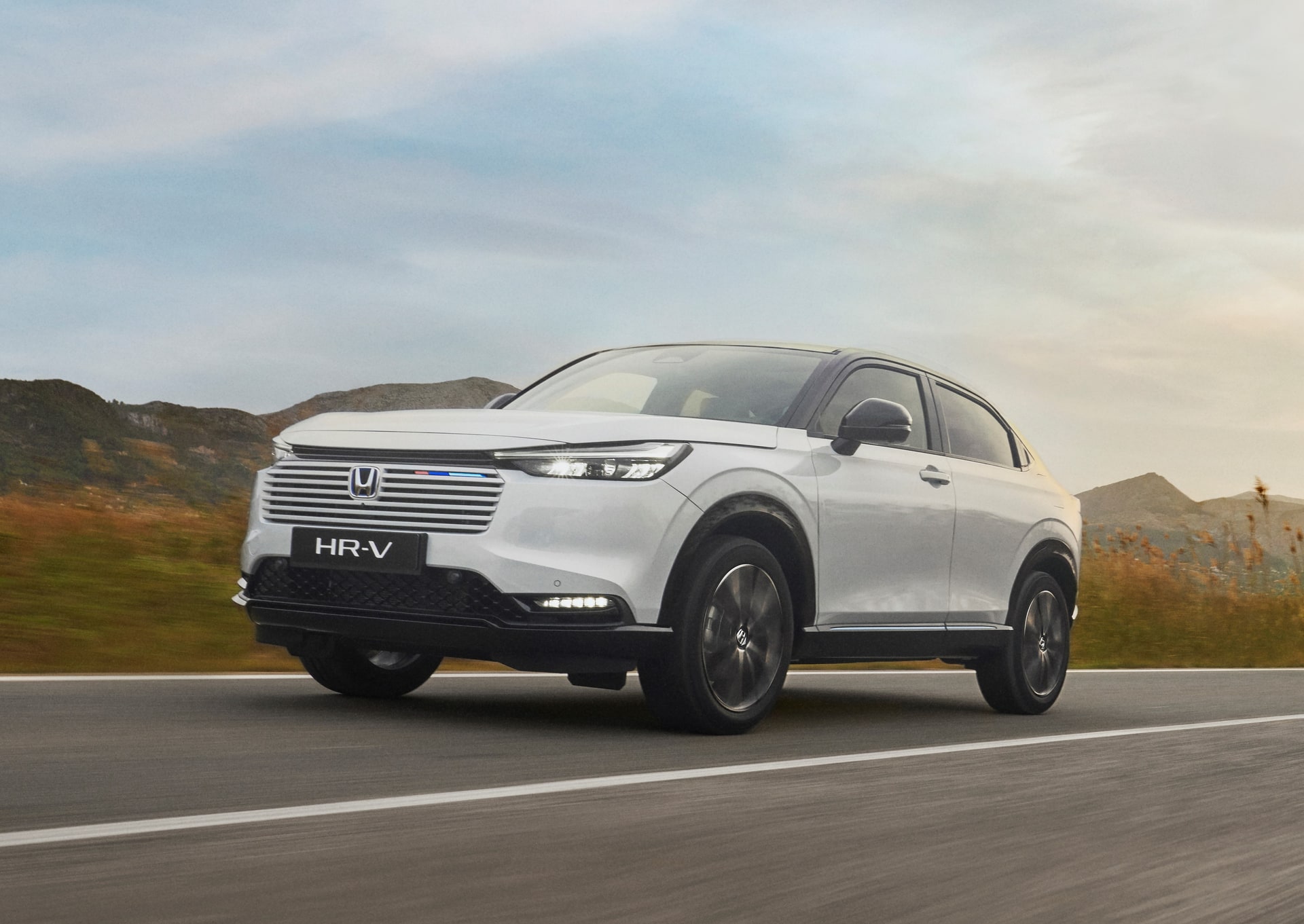
Anyone looking for a compact SUV for getting around the city in 2026 usually arrives at this comparison with one fixed idea: the Toyota C-HR. And that makes sense, because for years it has been the reference in the hybrid segment. The problem is that the version with the most presence on the Spanish market today is the electric one, with a list price starting at around 40,000€. That takes it directly out of the 35,000€ budget this article sets. So the real duel, the one that must be settled with a calculator in hand, is another one: Honda HR-V Hybrid versus Mazda CX-30 mild hybrid.
Why the Toyota C-HR falls outside the budget (and when we do recommend it)
The C-HR that can be seen at dealerships today in its Electric 230 77kWh Advance variant features a motor of about 220 CV and 170 kW, with a 77 kWh battery that is homologated at close to 600 km of range. These are figures that neither the Honda nor the Mazda can match, because we are talking about different technologies: one is pure electric, the other two run on petrol with different degrees of electrification. The electric C-HR carries the CERO label, full access to any urban traffic restriction, and a cost per kilometre in the city that, if you charge at home, is unbeatable. But its list price from approximately 40,000€ leaves it out of this comparison unless your budget rises to that step. We leave it here as a reference for where the segment is heading, not as a contender.
| Toyota C-HR Electric 230 77kWh Advance | Power | Top speed | Range | Battery | Fuel | Label | Price from |
|---|---|---|---|---|---|---|---|
| Data | 170 kW / 220 CV | 160 km/h | 600 km | 77 kWh | Electric | CERO | 40,000 € |
Honda HR-V Hybrid: the full hybrid that doesn’t need a plug
The HR-V Hybrid 1.5 i-MMD 131 Elegance uses Honda’s e:HEV system, with a combined output of 100 kW and 130 CV that merges petrol and electric motors without the need for a cable. In the city is where this system truly shines: the car runs in electric mode for much of the time at low speeds, which shows in a homologated consumption of 5.5 l/100 km. Its ECO label gives it access to most urban restrictions, and in a compact SUV that is already a clear advantage over a conventional petrol model.
| Honda HR-V Hybrid 1.5 i-MMD 131 Elegance | Power | Top speed | Consumption | Fuel | Label | Price from |
|---|---|---|---|---|---|---|
| Data | 100 kW / 130 CV | 170 km/h | 5.5 l/100 km | Hybrid (petrol/electric) | ECO | 35,300 € |
Mazda CX-30: the mild hybrid that prioritises driving over consumption
The CX-30 MHEV 2.5 e-Skyactiv G 140 Prime-Line is another story. Its mild-hybrid system provides an occasional electric boost, but the petrol engine remains the protagonist almost all the time. With 100 kW and 140 CV it is, on paper, the more powerful of the two, and this shows in how it responds in the city: it accelerates with more eagerness, the gearbox is more direct, and Mazda continues to focus on a driving feel that the HR-V does not pursue in the same way. The trade-off lies in consumption, homologated at 6 l/100 km, and in the label: as it is not a full hybrid, it stays in category C.
| Mazda CX-30 MHEV 2.5 e-Skyactiv G 140 Prime-Line | Power | Top speed | Consumption | Fuel | Label | Price from |
|---|---|---|---|---|---|---|
| Data | 100 kW / 140 CV | 190 km/h | 6 l/100 km | Mild hybrid (petrol/electric) | C | 31,300 € |
Real-world city consumption: where the difference really lies
Here is the core of the decision. The HR-V consumes half a litre less per 100 km according to its homologation, but in dense urban traffic, with many traffic lights and pull-aways, that difference widens because this is where Honda’s e:HEV system draws on electricity without burning a drop of petrol. The CX-30 makes up ground with a higher top speed (190 km/h versus 170) and a more engaging engine response on country roads, but in the city that does not translate into any practical advantage for day-to-day use.
DGT label and access to urban restrictions: a clear advantage for one
If you live in a city with active low-emission zones, the HR-V enters without problems with its ECO label. The CX-30, with a C label, may be restricted during high-pollution episodes in some town councils. It is not a minor detail if your use is purely urban.
Boot, dimensions and everyday space
Both move within similar dimensions for compact SUVs, with boots designed for weekly shopping and weekend luggage rather than house moves. Neither stands out particularly over the other in this section according to the available homologated data.
| Model | Power | Consumption/Range | Label | Fuel | Price from | City score (1-10) |
|---|---|---|---|---|---|---|
| Toyota C-HR Electric 230 | 170 kW / 220 CV | 600 km | CERO | Electric | 40,000 € | 9 |
| Honda HR-V Hybrid | 100 kW / 130 CV | 5.5 l/100 km | ECO | Hybrid | 35,300 € | 8 |
| Mazda CX-30 MHEV | 100 kW / 140 CV | 6 l/100 km | C | Mild hybrid | 31,300 € | 6.5 |
The prices shown are indicative manufacturer list prices, without dealer discounts or one-off campaigns. If you are considering adding public aid, the current framework is the Plan Auto+, and you should always check the up-to-date amount on the official website before closing your budget.
The verdict: which to choose according to your real use
For pure urban use, with short trips and many stops, the Honda HR-V Hybrid clearly wins: lower real consumption, ECO label and a hybrid system designed precisely for that scenario. For those who combine city and country roads and value driving character more than saving the last litre, the Mazda CX-30 makes sense, especially because its list price from 31,300€ sits 13% below the HR-V, a difference that is not to be dismissed. And if the budget allows going up to 40,000€, the Toyota C-HR electric leaves the consumption debate behind: in the city, with the CERO label and without visiting a petrol station, it plays in a different league, although that means accepting the higher upfront cost and depending on being able to charge at home or nearby.
If your use case is weekly shopping, taking the children to school and getting around the centre, the HR-V is the most sensible option. If you prioritise the pleasure of driving and need to lower the initial outlay, the CX-30 does not disappoint. And if an electric car fits your charging routine, the C-HR justifies the jump in budget.
To delve further into how to weigh real against homologated consumption, it is worth reviewing how to choose an urban hybrid in 2026 according to real city consumption, which details that difference between laboratory and real traffic that we have applied here to the HR-V and the CX-30.
Frequently asked questions
Which is the hybrid SUV with the lowest city consumption among these three?
The Honda HR-V Hybrid is homologated at 5.5 l/100 km, half a litre less than the Mazda CX-30 (6 l/100 km). The Toyota C-HR, being electric, consumes no fuel and its city running cost depends on the price of the electricity used to charge it.
Why does the Toyota C-HR not fit within the 35,000€ budget?
The version commercially available in Spain, the Electric 230 77kWh Advance, starts from an indicative list price of 40,000€, 13% above the ceiling of this comparison.
What DGT label does each model have?
The electric Toyota C-HR carries the CERO label, the Honda HR-V Hybrid the ECO label as a full hybrid, and the Mazda CX-30 the C label as it is a petrol mild hybrid.
Is it worth paying more for the Mazda CX-30 or the Honda HR-V for their power?
The CX-30 offers 140 CV against the HR-V’s 130 CV and a higher top speed, but that extra power is more noticeable on country roads than in urban traffic, where consumption and the label weigh more than horsepower.
