

Buying a compact SUV in 2026 is no longer about choosing the one with the best design or the greenest label. It comes down to the numbers. And the calculation that really matters is simple: how much standard equipment do you get for every 1,000€ you put on the table? Because two cars with the same price can differ by thousands of euros in equipment if one comes with level 2 ADAS, a 360° camera and heated seats as standard, while the other leaves them on the options list.
What "standard equipment per 1,000€" means and how we measure it
The formula is straightforward: we divide the price of the entry-level trim by the number of relevant equipment items it comes with from the factory, grouped into four blocks. Simply adding up individual features without criteria is not valid: a rain-sensing windscreen wiper does not weigh the same as a head-up display.
The four scoring blocks: ADAS, comfort, multimedia and powertrain
- ADAS: autonomous emergency braking, active lane keeping, adaptive cruise control, blind spot detection, assisted parking.
- Comfort: two-zone climate control, heated seats, alloy wheels as standard, electric tailgate, panoramic roof.
- Multimedia: central screen size, wireless Android Auto/Apple CarPlay, digital instrument cluster, number of speakers, OTA updates.
- Powertrain: environmental label, homologated consumption, electric range if applicable, power available without a trim surcharge.
We score each block from 1 to 10 and cross-reference it with the entry price. The result does not always match the "cheapest" car: sometimes the one that costs 1,500€ more justifies the difference many times over, and sometimes it does not.
Volkswagen Tiguan Life 1.5 TSI 130 CV: the highest starting price, but compensated
The entry Tiguan in Spain comes with two-zone climate control, a 10.25-inch Digital Cockpit and the Travel Assist package (lane keeping plus adaptive cruise control) as standard, something rivals at a similar price still charge extra for. That said, the 490-litre boot falls short compared with the Tucson, and the 130 CV 1.5 TSI is noticeably tight if you travel fully loaded with luggage and children.
| Model | Power | Consumption | Boot | Label | Fuel | Price from |
|---|---|---|---|---|---|---|
| Volkswagen Tiguan Life 1.5 TSI 130 CV | 96 kW / 130 CV | 6.4 l/100 km | 490 l | C | Petrol | 36,900 € |
Hyundai Tucson Essence Hybrid: the hybrid that packs the most equipment into the base trim
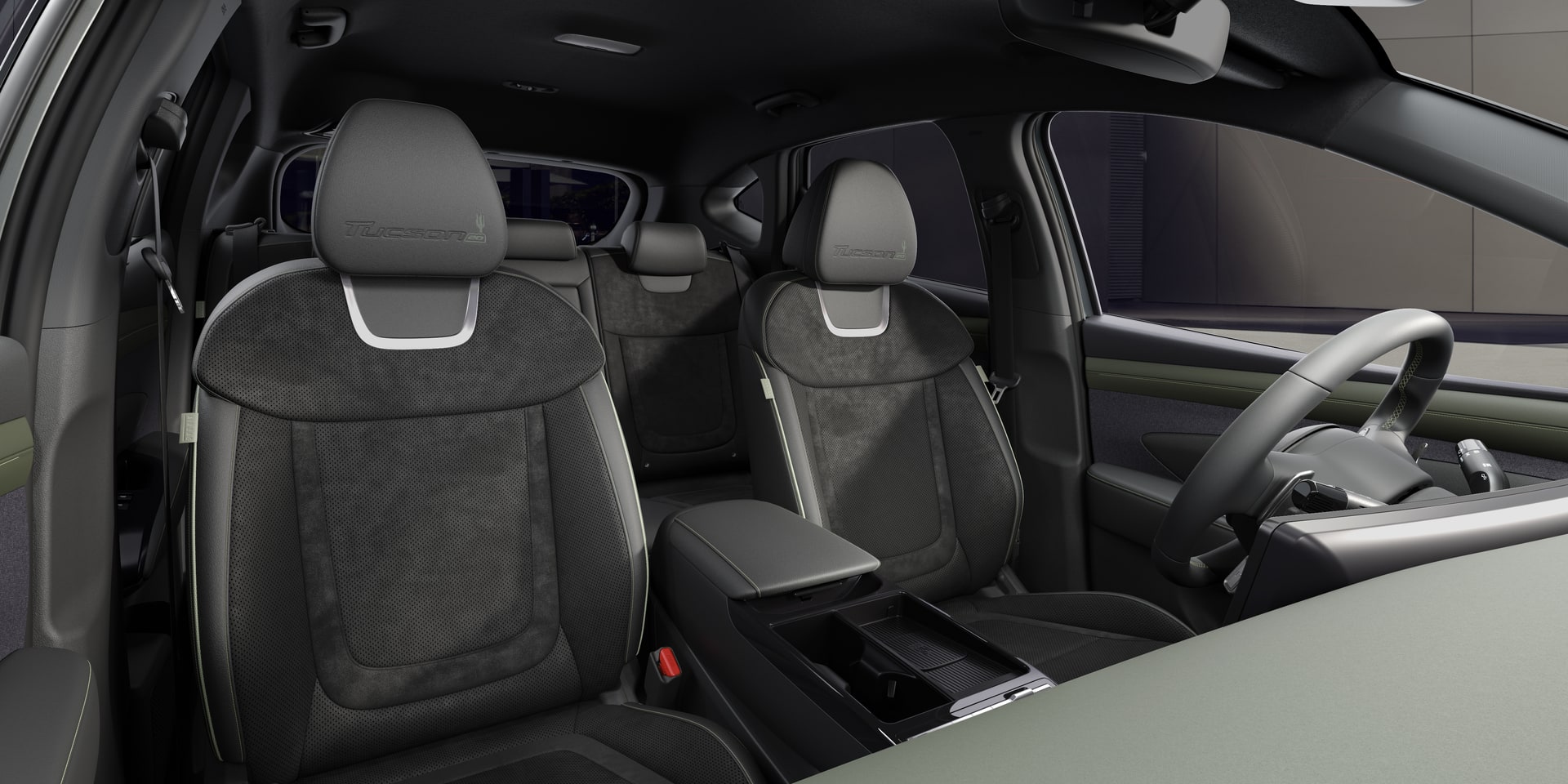
Here is the first twist. The Tucson Essence Hybrid starts at a price similar to the Tiguan but adds 616 litres of boot space, 215 CV of combined power and an ECO label, all in the entry trim. The multimedia system is decent, nothing more, with a 12.3-inch screen that does not stand out for speed. But in real-world city consumption it drops below 5.5 l/100 km, something neither the Tiguan nor the MG HS can match without plugging in.
| Model | Power | Consumption | Boot | Label | Fuel | Price from |
|---|---|---|---|---|---|---|
| Hyundai Tucson Essence Hybrid | 158 kW / 215 CV | 5.3 l/100 km | 616 l | ECO | Hybrid | 34,950 € |
MG HS PHEV Comfort: the cheapest entry-level CERO label, with caveats
The MG HS PHEV enters the segment with the most accessible CERO label of the three, which matters in large cities with traffic restrictions. It comes with a 360° camera, heated seats and a complete ADAS package as standard, a strong argument against the Tiguan. The fine print: with a depleted battery consumption climbs above 6.5 l/100 km, and the boot shrinks to 451 litres because of the battery housing.
| Model | Power | Electric range | Consumption | Boot | Label | Fuel | Price from |
|---|---|---|---|---|---|---|---|
| MG HS PHEV Comfort | 190 kW / 258 CV | 52 km | 1.1 l/100 km (homologated) | 451 l | CERO | PHEV | 34,990 € |
Two alternatives to watch: Jaecoo 7 SHS and Cupra Terramar e-Hybrid
If your budget allows some flexibility, there are two names worth keeping on your radar. The Jaecoo 7 SHS starts at prices below the three above and packs a level of standard equipment that is surprising for its class, although the perceived interior quality is still a step behind. The Cupra Terramar e-Hybrid goes the other way: it costs up to 18% more than the Jaecoo, but offers over 100 km of real electric range in its top version and an interior finish that genuinely feels premium.
Summary table and final score
| Model | ADAS (1-10) | Comfort (1-10) | Multimedia (1-10) | Powertrain (1-10) | Price from |
|---|---|---|---|---|---|
| Volkswagen Tiguan | 9 | 8 | 8 | 6 | 36,900 € |
| Hyundai Tucson Hybrid | 7 | 8 | 6 | 9 | 34,950 € |
| MG HS PHEV | 8 | 7 | 6 | 7 | 34,990 € |
| Jaecoo 7 SHS | 7 | 7 | 7 | 7 | 31,900 € |
| Cupra Terramar e-Hybrid | 8 | 9 | 8 | 8 | 39,900 € |
Verdict: which compact SUV to buy based on your profile
For urban use with traffic restrictions, the MG HS PHEV wins thanks to the CERO label and its standard safety equipment, provided you can plug it in every night. If you have nowhere to charge, forget it: consumption with a depleted battery eats into the tax advantage.
For regular long-distance travel, the Hyundai Tucson Hybrid makes the most sense: 616-litre boot, lower real-world consumption and enough power without relying on a plug. The price difference with the Tiguan (5% cheaper) does not compensate for the extra space the latter gives up.
For pure price-to-equipment ratio, the Jaecoo 7 SHS takes the crown, with the caveat that its interior finish is not yet on par with European brands.
If the budget allows and you want serious electric range and a more premium finish, the Cupra Terramar e-Hybrid justifies its 14% premium over the MG HS, although it exceeds 15% over the Jaecoo 7 SHS, so make sure you are clear on this before comparing both at the dealership.
Frequently asked questions
Which compact SUV has the best standard equipment per 1,000€ in 2026?
Among the entry-level trims compared, the Hyundai Tucson Essence Hybrid and the Jaecoo 7 SHS pack the most relevant equipment per 1,000€ of price, though for different reasons: the first for efficiency and space, the second for the volume of ADAS and comfort at a reduced price.
Is it worth paying more for the Volkswagen Tiguan over the Hyundai Tucson?
Only if you prioritise the interior finish and standard Travel Assist. In boot space and real-world consumption, the Tucson has a clear advantage for less money.
Does the MG HS PHEV make sense if I have nowhere to charge at home?
Not particularly. Without daily charging, consumption with a depleted battery rises above 6.5 l/100 km and it loses its main selling point, the CERO label in real-world use.
Are there public grants for buying an electrified compact SUV in 2026?
Yes, through the Plan Auto+, which covers plug-in hybrid and electric SUVs subject to the current conditions. Check the plan’s official website for the up-to-date amount and requirements before finalising your purchase.
