

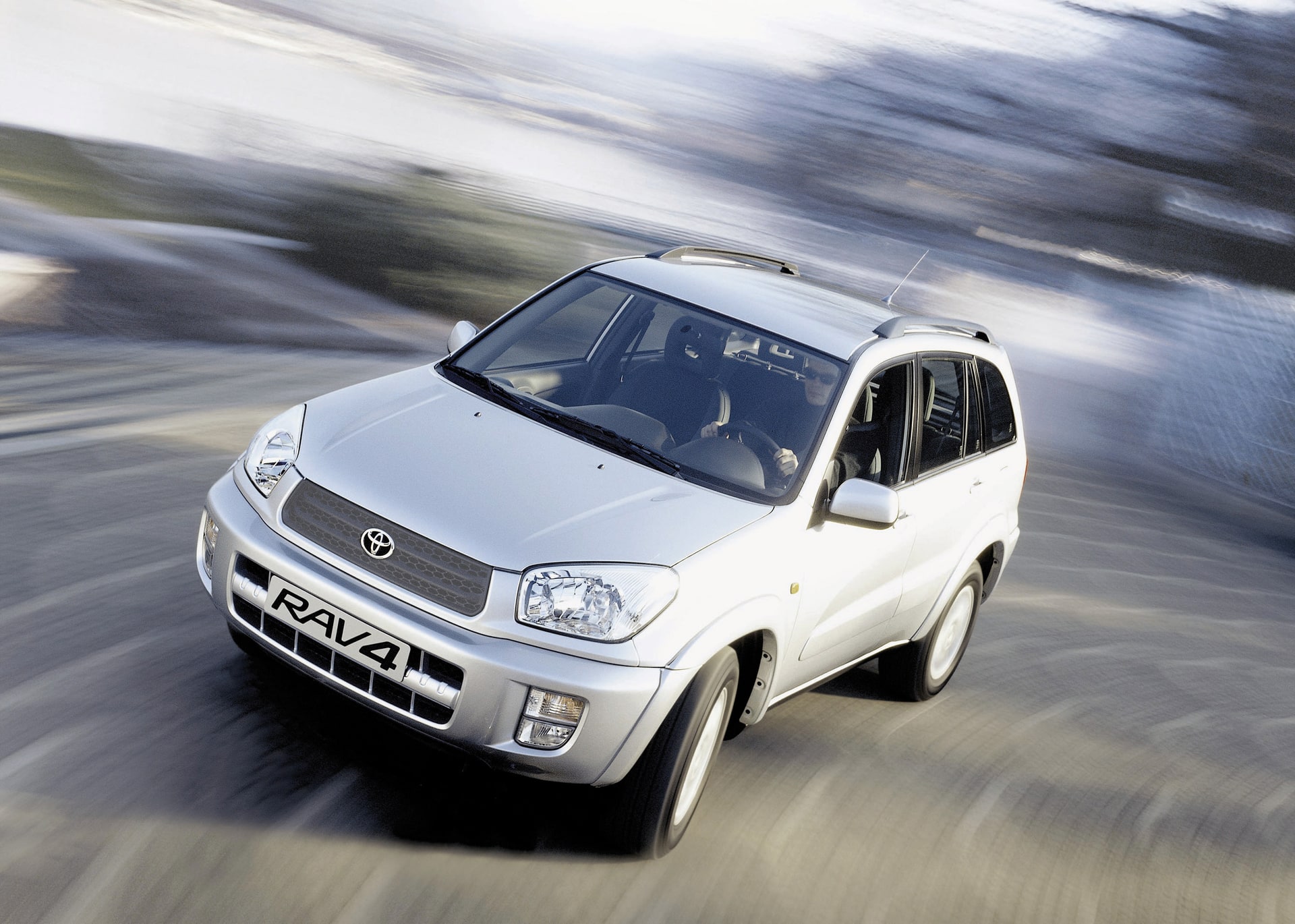
The hybrid compact SUV has become the logical choice for Spanish families who aren’t yet ready to make the leap to a pure electric car. Two names keep appearing on the shortlists: Toyota RAV4 and Hyundai Tucson. But be careful, because they are not the same type of car. The RAV4 arriving at dealerships today is the Plug-in Hybrid 300 Advance; the Tucson is still sold with a very refined conventional hybrid range. Same segment, different philosophies.
Let’s get to the point: for anyone who can plug in at home, the RAV4 PHEV plays in another league. For those who can’t, the Tucson turns the equation around.
Two hybrids, two philosophies within the same segment
The RAV4 Hybrid that Toyota now sells in Spain is, in practice, a plug-in. The Plug-in Hybrid 300 Advance version uses a 268 CV system with a 22.5 kWh battery and a homologated electric range of around 140 km. The Tucson Hybrid, by contrast, is a classic full hybrid: a 1.6 T-GDi with electric assistance, 220 CV combined and no possibility of external charging.
Comparing both makes sense because they are bought for the same things—family travel, compact SUV, favourable environmental label—but the monthly bill and usage pattern change radically depending on which you choose.
Toyota RAV4 Plug-in Hybrid 300 Advance — from ≈50,500 €
The RAV4 PHEV is the one that best embodies today the idea of a “serious hybrid”. With the 140 km of homologated electric range (in real use, expect between 90 and 110 km depending on the season), many drivers can go weeks without visiting a petrol station. Total traction is electric on the rear axle, which adds stability on slippery surfaces without adding a mechanical driveshaft—a detail that is appreciated on long family journeys.
That said, there are drawbacks. The boot is somewhat reduced compared with the conventional RAV4 hybrid due to the battery’s location, and the feel of the e-CVT gearbox under load is still not its strongest point. On the motorway at 120 with the battery depleted, real consumption falls within a reasonable range for its weight, but don’t expect the Toyota miracle of other times: it is a car that asks to be used plugged in in order to shine.
| Power | Electric range | WLTP consumption | Battery | CO₂ | Label | Fuel |
|---|---|---|---|---|---|---|
| ≈200 kW / 270 CV | ≈140 km | ≈1.5 l/100 km | ≈22.5 kWh | ≈30 g/km | 0 emissions | PHEV petrol |
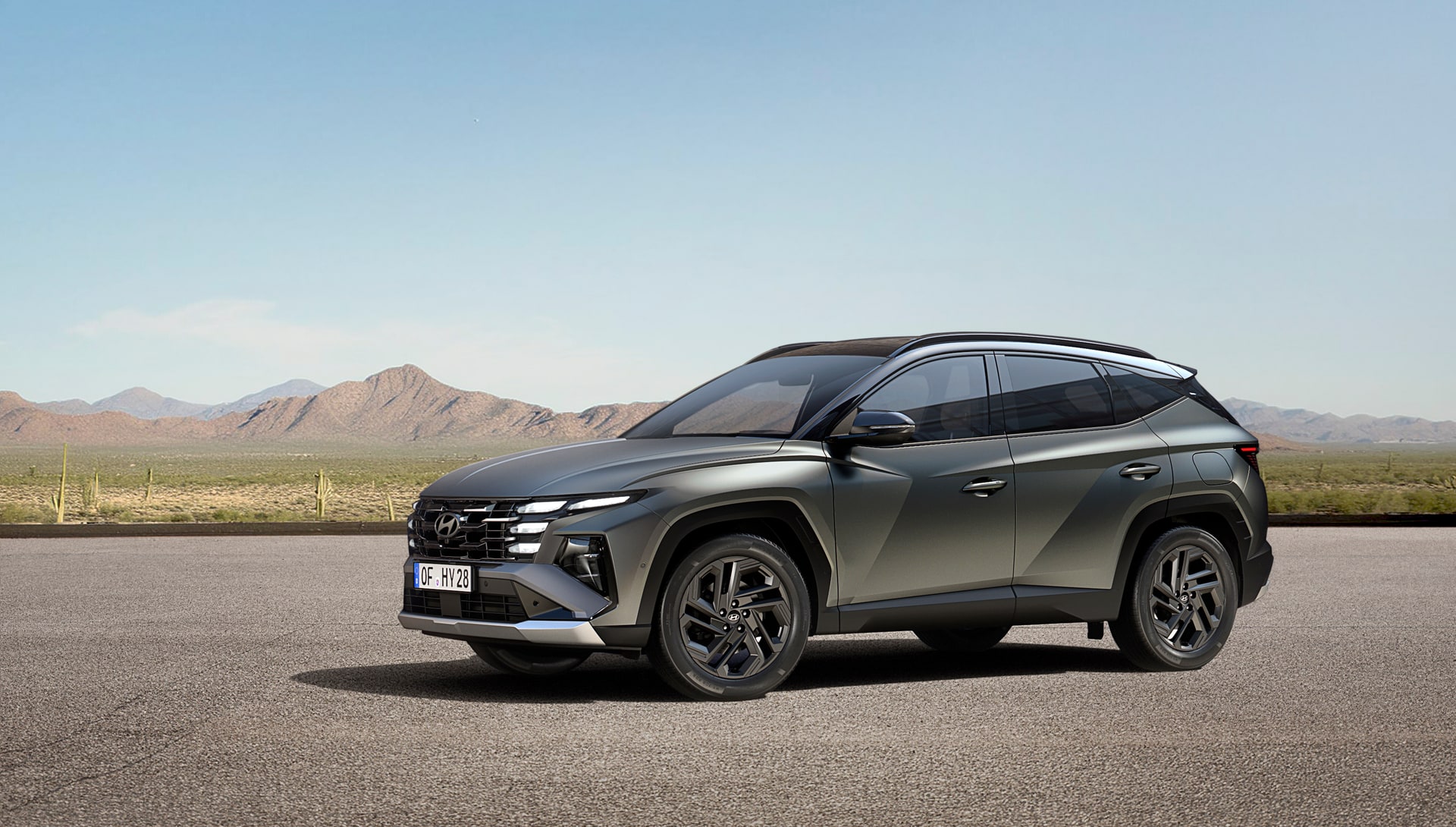
Hyundai Tucson 1.6 T-GDi Hybrid — from ≈40,300 €
The hybrid Tucson takes a different path. It doesn’t plug in, doesn’t promise real electric range beyond the metres of rigour in a traffic jam, and honestly accepts its nature. In return, it is a lighter car, with a cleaner boot and an interior presentation that, frankly, feels a step above what the RAV4 PHEV offers in visible plastics and finishes.
The combined 220 CV moves the car with ease (0-100 in around 8 seconds) and the WLTP consumption of 5.5 l/100 km is realistic: on long motorway stretches at the legal speed, expect a little over 6 l/100 km in real life. It carries an ECO label, not a ZERO one—an important nuance in Madrid and Barcelona if daily access to restricted zones weighs on the decision.
| Power | Torque | 0-100 km/h | Top speed | WLTP consumption | CO₂ | Label | Fuel |
|---|---|---|---|---|---|---|---|
| ≈160 kW / 220 CV | ≈370 Nm | ≈8 s | ≈190 km/h | ≈5.5 l/100 km | ≈130 g/km | ECO | Petrol hybrid |
Where each one wins (without false equivalence)
The RAV4 PHEV clearly wins on: real usable electric range for everyday use (no conventional hybrid comes close), a ZERO label with what that implies for urban access, and available power when you ask for it. For anyone with a wallbox at home and who drives 40-60 km a day, the cost per kilometre is unbeatable.
The Tucson Hybrid clearly wins on: entry price (over 10,000 € of difference, a gap of more than 20%), interior presentation and a more usable boot without the large battery stealing volume. And something less tangible but real: it doesn’t depend on you remembering to plug it in to be efficient.
For useful boot space with the battery under the floor, there are PHEV rivals better resolved than the RAV4, worth knowing. And if the doubt is broader about how many real electric kilometres you can cover, that calculation settles the matter before any technical sheet does.
Summary table and score
| Model | Power | EV range | Consumption | Label | Price from | Score |
|---|---|---|---|---|---|---|
| Toyota RAV4 PHEV 300 Advance | 270 CV | ≈140 km | ≈1.5 l/100 (WLTP) | 0 | ≈50,500 € | 8.3 / 10 |
| Hyundai Tucson 1.6 T-GDi Hybrid | 220 CV | Not applicable (HEV) | ≈5.5 l/100 | ECO | ≈40,300 € | 8.0 / 10 |
Manufacturer’s recommended retail prices (PVP), without dealer discounts, campaigns or aid such as the Plan Auto+.
Verdict by use case
-
For urban/metropolitan use with a plug at home or a company garage: the Toyota RAV4 PHEV 300 Advance wins. The ZERO label and the real 90-110 km electric range make it a car that, used well, barely touches the petrol pump during the week. The extra cost is recovered in 3-4 years if you cover 70% of your use in electric mode.
-
For high mileage on the motorway without easy access to a plug: the Hyundai Tucson Hybrid wins. Cheaper, lighter, more coherent on long journeys without a battery to haul around empty. It’s the car that demands nothing from you to be efficient.
-
Pure price-performance ratio: the Tucson Hybrid wins. The RRP difference exceeds 20%, and that with a Tucson that as a family car more than fulfils its role. The RAV4 PHEV only pays off if you genuinely plug it in.
FAQ
Can I drive into Madrid Central or Barcelona’s ZBE with the Tucson Hybrid?
Yes, the ECO label allows access under certain conditions, but it does not equal the freedom of movement of the RAV4 PHEV’s ZERO label. If you live or work inside a ZBE with strict restrictions, the RAV4 has a structural advantage.
Does the RAV4 PHEV pay off if I have nowhere to plug it in?
No. A PHEV without regular charging becomes a heavy and expensive conventional hybrid. In that scenario, the Tucson Hybrid is the rational choice for real consumption, price and simplicity.
What real electric range can I expect from the RAV4 PHEV on a trip?
Around 90-110 km in mixed conditions and mild temperatures. On pure motorway at 120 km/h, the figure drops to 70-80 km. In winter with heating on, subtract another 15-20%.
Which one holds its value better on resale?
The RAV4 historically retains a very strong residual value, even in plug-in versions. The Tucson has improved a great deal but still depreciates somewhat faster. If resale value at 4-5 years weighs on the decision, Toyota has the edge.
