

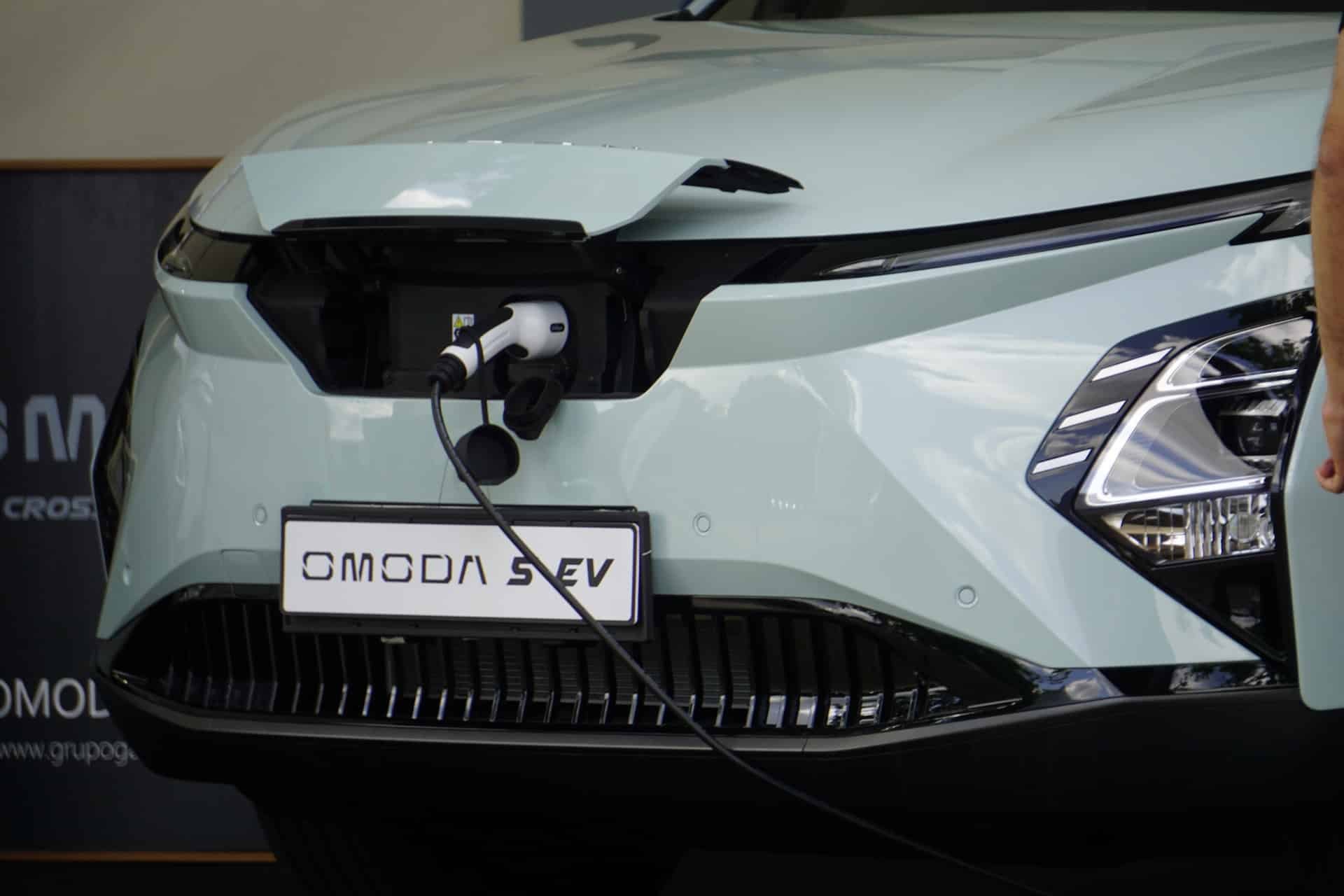
The Chinese arrival in Spain is no longer news: it is a showroom reality. What matters now is not whether to buy a Chinese SUV, but which one. And this is where things get complicated, because the three candidates we are putting head to head — Omoda 5, Jaecoo 7 and Leapmotor C10 — solve the same problem (a compact family SUV at a restrained price) with three radically different powertrains. Pure electric, classic petrol and range-extender. Three philosophies, three electricity bills, three experiences behind the wheel.
Before we get started: the prices you will see are the manufacturer’s recommended retail price, without dealer discounts, one-off campaigns or grants such as the Plan Auto+. On the street, with a good discount and manufacturer finance, any of the three can come down quite a bit.
Why we are comparing these three Chinese SUVs and not others
Chery (the parent company of Omoda and Jaecoo), Stellantis-Leapmotor and, behind them, BYD or MG, are the names moving volume in Spain. We chose the Omoda 5, Jaecoo 7 and C10 because all three play the same game — a compact SUV of around 4.4-4.7 metres, designed for a small family — but each one bets on a different powertrain. It is the useful comparison for anyone who does not yet know which type of propulsion suits them.
Omoda 5 electric 204 CV Comfort — from ≈37,900 €
The Omoda 5 is the “easy” entry point into the Chery world in Spain. A bold design — too bold for some tastes —, an interior with two joined screens in the style of a Mercedes from three years ago, and a 204 CV electric powertrain with a 61 kWh battery. On paper, 430 km WLTP. In practice, you can count on around 320-350 km of real-world range if you don’t overdo it on the motorway.
The best thing about the 5 is the feeling of a “normal” car: it drives like a boring electric car in the good sense, with light steering and soft suspension. For city and suburban use, it does the job. For long trips, the fast-charging curve is not its strong point and you will notice 30-40 minute stops every 250 real-world km.
| Power kW | Power CV | Top speed | Range | Battery | Fuel | Label |
|---|---|---|---|---|---|---|
| 150 kW | 204 CV | 170 km/h | 430 km | 61 kWh | Electric | 0 |

Jaecoo 7 1.6 TGDI 145 CV Select — from ≈33,900 €
Jaecoo is the “premium” brand under the Chery umbrella, and you notice it as soon as you open the door. The leap in perceived quality compared with the Omoda 5 is real: upholstery with a better feel, more generous padding, a 14.8″ vertical Tesla-style screen and chrome details that don’t look cheap. In our opinion, it is the most convincing interior of the three.
The mechanical side, on the other hand, is the most conventional of the trio. A 150 CV 1.6 TGDI with a 7-speed DCT gearbox, front-wheel drive, 7.5 l/100 km homologated and a C label. Nothing exciting. Nothing broken, either. For anyone who doesn’t want to hear about cables or hybrid modes, it is the direct option — and the cheapest of the three by a margin that comes close to 15% compared with the Leapmotor.
| Power kW | Power CV | Top speed | Consumption | CO₂ | Fuel | Label |
|---|---|---|---|---|---|---|
| 110 kW | 150 CV | 180 km/h | 7.5 l/100 | 170 g/km | Petrol | C |
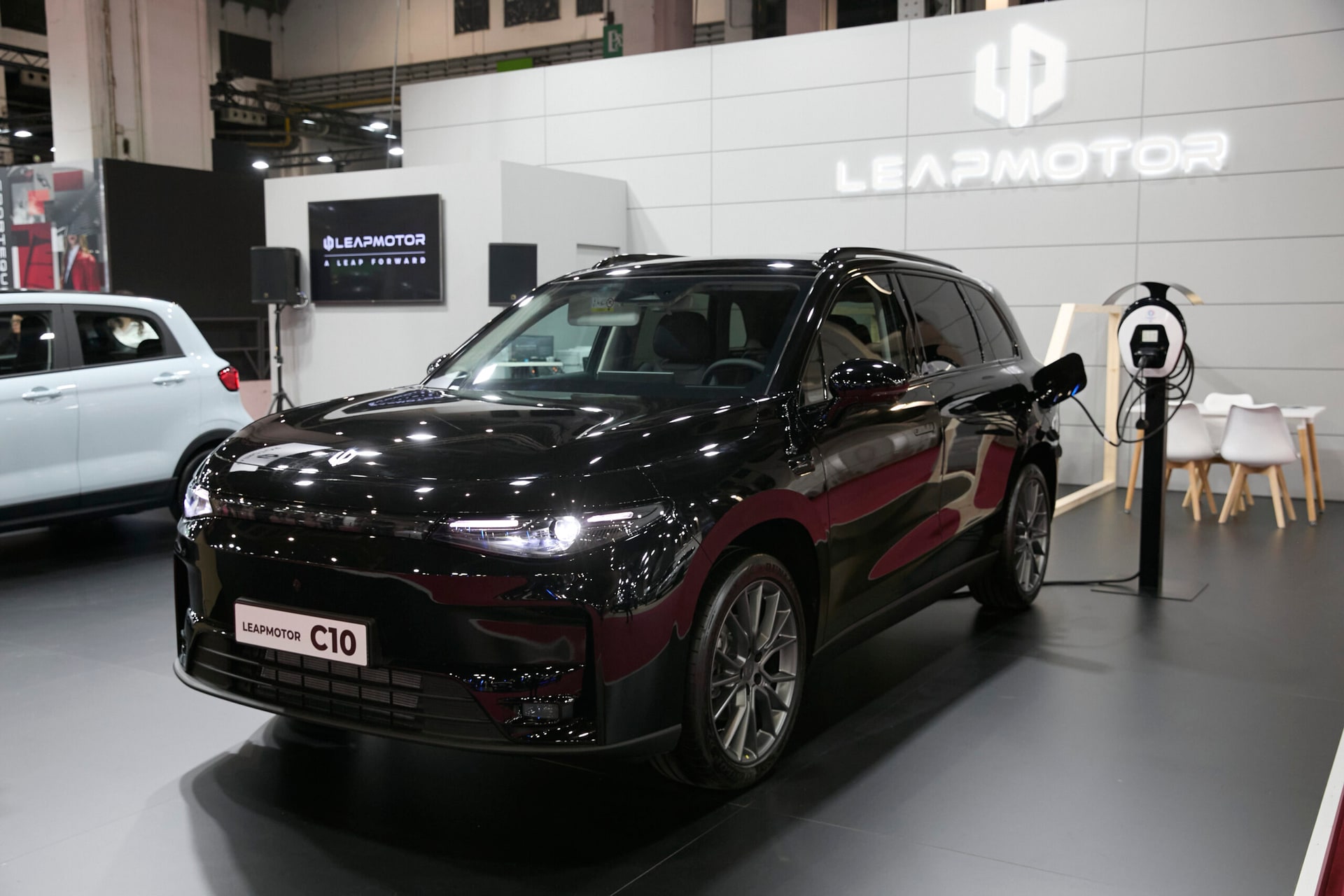
Leapmotor C10 REEV 215 CV Style — from ≈36,800 €
Here comes the unusual proposition, and probably the most interesting one. The C10 REEV is a range-extender: a 215 CV electric motor drives the wheels all the time, and a 1.5 petrol engine acts as a generator when the battery (28.5 kWh) runs out. Declared electric range of 150 km, combined consumption of 0.5 l/100 km, 10 g/km of CO₂ and a 0 label.
In real-world use, if you charge at home and drive less than 100 km a day, you can go weeks without visiting a petrol station. On a long trip, the tank gets you out of trouble without charging anxiety — exactly what a pure electric car lacks. The interior finish sits between the Omoda and the Jaecoo: decent materials, a huge central Tesla-style screen and a notable sense of space thanks to its 4.74 m length.
| Power kW | Power CV | Top speed | Electric range | Consumption | Battery | Fuel | Label |
|---|---|---|---|---|---|---|---|
| 160 kW | 220 CV | 170 km/h | 150 km | 0.5 l/100 | 28.5 kWh | REEV petrol/electric | 0 |
Perceived quality: where the difference shows
The Jaecoo 7 wins here without question. It is the only one of the three that feels like a car “a step above its price”. The Leapmotor C10 comes second — good plastics in visible areas, some hard-feeling surfaces on the lower console. The Omoda 5 completes the podium: it is not bad, but its interior is already starting to feel like the previous generation compared with the other two.
Official warranty in Spain: the small print that matters
All three brands are betting heavily on warranty to overcome the fear of “what if this breaks down in three years?”. Broadly speaking, Omoda and Jaecoo offer a 7-year or 150,000 km warranty on the vehicle (with conditions and servicing in the official network), and 8 years / 160,000 km for the battery on the electric Omoda. Leapmotor, backed by Stellantis, covers 4 years on the vehicle and 8 years / 160,000 km on the battery and high-voltage components.
On paper, Chery (Omoda/Jaecoo) wins on total years. In terms of real workshop network and logistical backing, Stellantis has the advantage thanks to its size. It is a technical draw with asterisks — as we already analysed when choosing a family electric SUV based on reported reliability and warranty coverage, what matters is not the number of years but the density of the network.
Summary table with a 1-10 score
| Model | Price from | Power | Range/Consumption | Label | Perceived quality | Warranty | Overall score |
|---|---|---|---|---|---|---|---|
| Omoda 5 204 Comfort | 37,900 € | 204 CV | 430 km | 0 | 6.5/10 | 8/10 | 7.0/10 |
| Jaecoo 7 1.6 TGDI Select | 33,900 € | 150 CV | 7.5 l/100 | C | 8/10 | 8/10 | 7.8/10 |
| Leapmotor C10 REEV Style | 36,800 € | 220 CV | 150 km elec. + petrol | 0 | 7.5/10 | 7.5/10 | 8.0/10 |
Verdict by use case
- For urban use and short trips with a home charger: Leapmotor C10 REEV. 150 electric km and the means to drive to Galicia without planning stops. It is the most complete proposition of the trio.
- For anyone who doesn’t want to bother with plugs: Jaecoo 7 1.6 TGDI. The most convincing interior, proven mechanics, the lowest retail price. The C label is a limitation in large low-emission zones, though.
- For a pure electric car on a tight budget: Omoda 5 Comfort. If your day-to-day is 60-80 km and you charge at home, it does the job. For long trips, it falls short.
One final note: the difference in retail price between the Jaecoo (33,900 €) and the Omoda (37,900 €) is around 12%. That is not trivial. If budget rules and the city where you live doesn’t force you to have a 0 label, the Jaecoo is the one that stretches every euro the furthest.
Frequently asked questions
Which Chinese SUV has the best perceived quality in 2026?
The Jaecoo 7 is, today, the Chinese SUV with the best interior finish in the 30,000-40,000 € range. Upholstery, screen and chrome details play in a higher league than the Omoda 5 and, by a small margin, the Leapmotor C10.
How much warranty do Chinese cars sold in Spain offer?
Chery (Omoda and Jaecoo) offers 7 years or 150,000 km on the vehicle and 8 years / 160,000 km for the battery on electric models. Leapmotor, under Stellantis, covers 4 years on the vehicle and 8 years / 160,000 km on the battery. Always with servicing in the official network.
What is a REEV and why does the Leapmotor C10 use one?
A REEV (Range Extender Electric Vehicle) is an electric car whose wheels are always driven by the electric motor, with a small petrol engine that acts as a generator when the battery runs out. It allows a 0 label and total range without charging anxiety.
Can I benefit from the Plan Auto+ by buying one of these Chinese SUVs?
The electric Omoda 5 and the Leapmotor C10 REEV are candidates for Plan Auto+ grants as they have a 0 label. The Jaecoo 7 1.6 TGDI, with a C label, is excluded. Check the plan’s official website for current amounts and deadlines.
