

Choosing a family SUV in 2026 on an average budget requires careful consideration. The €30,000 to €45,000 range is more competitive than ever: it includes well-equipped premium compacts, mainstream SUVs with top-tier technology and, for the first time in years, a seven-seat option that doesn’t require spending €50,000. Even so, not every car in this range is a good idea for a real family, the kind that carries car seats, suitcases and bicycles at the weekend.
Let’s get to what matters: what you should look for, which three models stand out for their design-technology-price balance, and which one would win in your specific case.
What Defines a Good Mid-Budget Family SUV Today
In 2026, a family SUV is no longer judged solely by its boot. Standard technology, such as ADAS level 2, connected screens, 360-degree camera and wireless charging, has become the new battleground. Design also matters: interiors from five years ago, with hard plastics and tiny screens, now feel like cars from another decade.
The sweet spot is between €35,000 and €42,000 with light electrified or full hybrid powertrains. Below that, you have to give up something (equipment, finish or engine). Above it, you enter premium territory, which generally isn’t worth it unless you know exactly what you need.
The Three Criteria That Truly Separate the Finalists
First, real usable space: not the advertised boot volume, but the width between wheel arches and the height up to the parcel shelf. Second, software quality: a slow infotainment system ages a car faster than any scratch. Third, standard ADAS equipment, not the features they sell you as expensive options.
Using these three filters, three models stand out in the Spanish mid-budget segment: the Peugeot 3008 Hybrid 136, the Hyundai Tucson 1.6 TGDI 48V and the Skoda Kodiaq 1.5 TSI mHEV (the only one offering seven seats in this price range without breaking a sweat).
Peugeot 3008 Hybrid 136 — from €36,900
In my opinion, the new-generation 3008 is the most daring compact SUV in its class from a styling standpoint. The curved 21-inch Panoramic i-Cockpit makes an immediate difference compared with more conservative rivals. Fastback exterior design, three-claw light signature, and an interior with materials that feel a step above what you’d expect from a mainstream Peugeot.
The 136 hp mild-hybrid powertrain performs well in town and on the road. Don’t look for outright performance; look for refinement and moderate consumption (around 6 l/100 km in real-world driving). The 520-litre boot is adequate, though not outstanding.
| Power kW | Power CV | Fuel | Label |
|---|---|---|---|
| 100 kW | 136 CV | Mild hybrid | ECO |
Where it clearly wins: interior design and technological perception. No one in the range offers such a striking visual experience on board. Where it loses: rear-seat space is somewhat tight for families with older children, and a small steering wheel that still divides opinions.
Hyundai Tucson 1.6 TGDI 48V — from €32,400
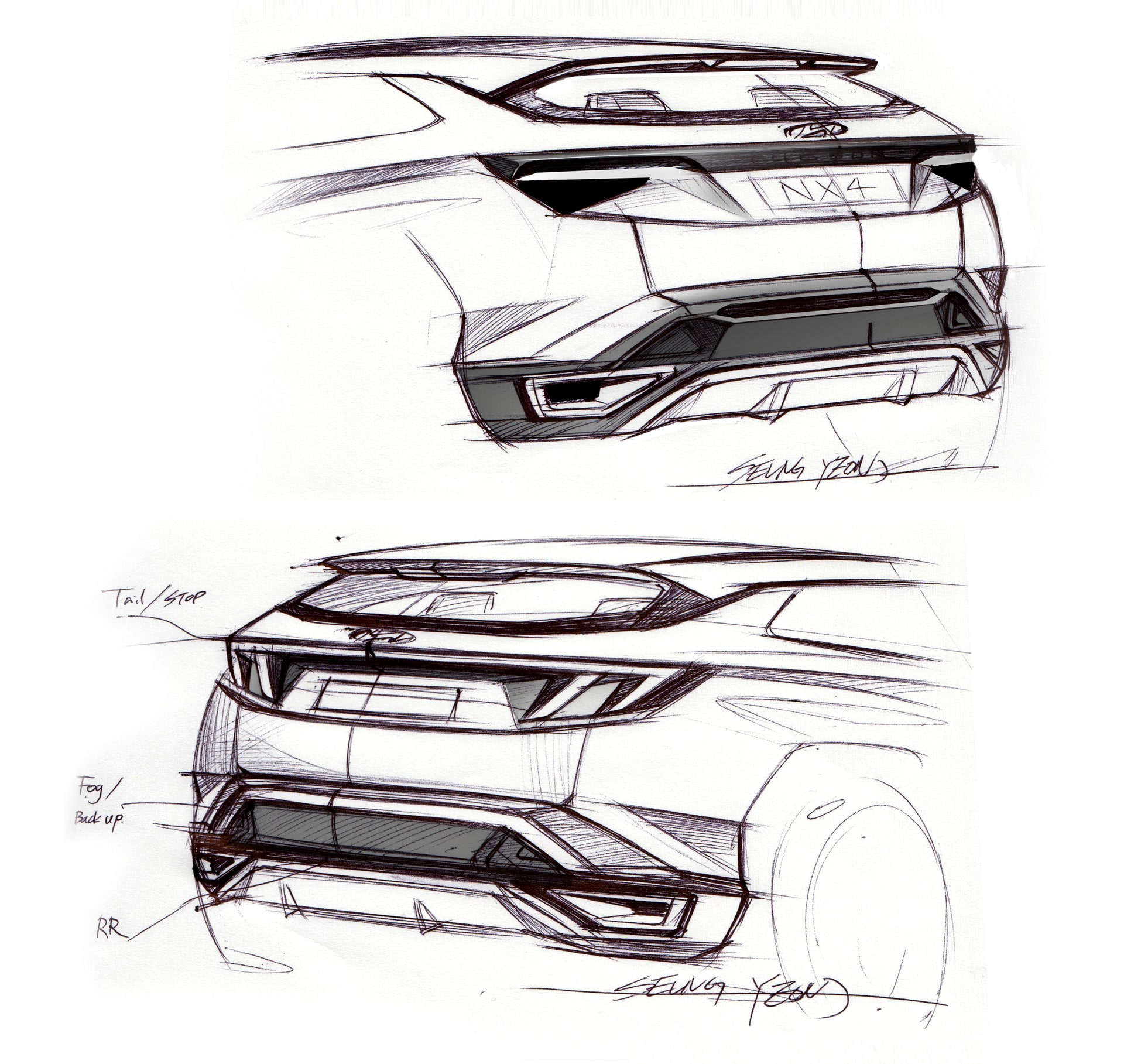
The Tucson is the balanced option. Angular design with headlights integrated into the grille, one of the most recognisable fronts in the segment, a sensible interior with a dual 12.3-inch screen setup and, best of all, ergonomics without tricks: a physical climate control panel, buttons where you expect them.
With the 1.6 TGDI 48V 150 hp engine, the Tucson runs smoothly on motorways and returns consumption of 6.5–7 l/100 km in mixed use. The 620-litre boot is the best of the trio for five seats. The 5-year unlimited-mileage warranty remains a very strong argument against the 2–3 years offered by most European rivals. If you’re interested in the PHEV step-up, the review of the plug-in Tucson explains well where that jump pays off.
| Power kW | Power CV | Fuel | Label |
|---|---|---|---|
| 110 kW | 150 CV | Petrol mild hybrid | ECO |
Where it wins: equipment-to-price ratio and warranty. Where it loses: the interior, though correct, doesn’t convey as much as the Peugeot’s nor feel as solid as the Skoda’s.
Skoda Kodiaq 1.5 TSI mHEV — from €41,900
The Kodiaq is the serious play for anyone who needs seven seats without going up to €50,000. New generation with more restrained design, with fewer adornments and better proportions, and a big leap in technology: a 13-inch central screen, physical Smart Dials (you turn a dial and choose a function on the screen), head-up display and a finely tuned ADAS package.
The 150 hp 1.5 TSI mHEV with DSG7 moves the car with dignity; don’t expect excitement, but you will get sobriety. Real-world consumption of 7–7.5 l/100 km with all seven seats empty. Boot of 910 litres in the five-seat configuration, 340 with all seven seats in use. For families with two children and a grandmother who visits regularly, that flexibility between configurations is gold.
| Power kW | Power CV | Fuel | Label |
|---|---|---|---|
| 110 kW | 150 CV | Petrol mild hybrid | ECO |
Where it wins: space and versatility. Where it loses: starting price almost 30% above the base Tucson, and the third row remains an emergency seat rather than everyday space for adults.
Comparison Table and Scoring
| Model | Power | Boot | Seats | Starting price | Warranty | Technology | Design | Value for money | Overall score |
|---|---|---|---|---|---|---|---|---|---|
| Peugeot 3008 Hybrid 136 | 136 CV | 520 l | 5 | €36,900 | 2 years | 9 | 9.5 | 7.5 | 8.5 |
| Hyundai Tucson 1.6 TGDI 48V | 150 CV | 620 l | 5 | €32,400 | 5 years | 8 | 8 | 9.5 | 8.7 |
| Skoda Kodiaq 1.5 TSI mHEV | 150 CV | 910 / 340 l | 5 or 7 | €41,900 | 2 years | 8.5 | 7.5 | 8 | 8.3 |
The price difference between the Tucson and the Kodiaq exceeds 25%, so they are not strictly the same purchase: the Skoda plays in a different league when it comes to space.
Verdict by Use Case
- For a family with two young children who values design and screens: Peugeot 3008 Hybrid 136. It’s the one you’ll enjoy most each morning when you get into the car.
- For the best price-performance ratio with a 5-year warranty: Hyundai Tucson 1.6 TGDI 48V. The most rational of the three. If I could only recommend one blindly, it would be this one.
- For a family that needs 7 seats and a huge boot for under €45,000: Skoda Kodiaq 1.5 TSI mHEV. It has no direct rival in this range.
If your use includes many long trips and you’re considering a full hybrid instead of a mild hybrid, this comparison between the RAV4 and Tucson Hybrid will save you several hours at the dealership.
Frequently Asked Questions
What is the best family SUV for 2026 under €35,000?
In that range, the Hyundai Tucson 1.6 TGDI 48V in mid-level trim is the most complete option: 150 CV, solid ADAS equipment, a 620-litre boot and a 5-year warranty. Serious alternatives are the Kia Sportage (same mechanical base) and, one step lower in price, the Dacia Bigster for those who prioritise raw space over refinement.
Is a 7-seat SUV worth it on an average budget?
Only if you’ll use the third row fairly often. The Skoda Kodiaq from €41,900 is the most sensible option; above that come the Hyundai Santa Fe and Kia Sorento. If the third row will be purely occasional, a five-seater with 600+ litres of boot space usually covers the real need without paying the extra cost.
Can I apply for any public aid for these models?
Mild-hybrid engines and conventional HEVs are not covered by the current Plan Auto+, which focuses on pure electric and PHEV vehicles. For current conditions, check the official website, as amounts and deadlines are updated.
What standard technology should I require in a 2026 family SUV?
Non-negotiable minimums: automatic emergency braking with pedestrian detection, active lane keeping, adaptive cruise control, rear-view camera and wireless Apple CarPlay / Android Auto. In the mid-range it’s already reasonable to also ask for a 360-degree camera, wireless charging and head-up display, at least as affordable options.
