


The hybrid compact SUV has become the default family car in Spain. No plug-in, no pure electric: a fuel tank, a HEV system that recovers energy and an ECO label that still opens the door to Madrid Central without any hassle. The problem is that the €40,000 threshold has become slippery — many top trims go over it, and the entry-level versions leave out the equipment that truly justifies buying a hybrid in 2026.
We have picked the five that, in mid-level trim, still fit below that figure and offer coherent equipment. No stripped-down versions to lower the owner’s list price. The criteria are simple: real equipment per euro, WLTP consumption, useful boot space and warranty.
What we expect from a hybrid compact SUV under €40,000 in 2026
At these prices, anything goes no longer applies. The buyer in this segment wants low consumption in the city (below 6 l/100 km in real-world driving), a boot of 500 litres or more, a rear-view camera, dual-zone climate control, a decent central screen with wireless Android Auto and CarPlay, and a full ADAS package as standard — autonomous emergency braking, active lane keeping and adaptive cruise control. If any of this is missing in the mid-level trim, the model loses points. Simple.
And one more thing: ECO label, no exceptions. If the hybrid system does not achieve it, it does not enter the ranking.
Toyota RAV4 Hybrid Advance Plus — from €39,900
The RAV4 is the obligatory reference. Toyota’s hybrid system has been refined for nearly three decades and it shows: in the city it easily drops below 5.5 l/100 km, and on the motorway it stays around 6.5-7 l/100 km, figures that no German or French rival matches consistently. The Advance Plus trim comes as standard with the full Safety Sense package, a 10.5″ screen, a 360º camera and a power tailgate.
The downside? The interior feels a step below what €40,000 should buy. Cheap plastics on the centre console, a screen with an improvable interface and a driving position that is still too high for my taste. That said, five years of warranty (up to 10 with official servicing) and reliability nobody disputes.
| Power CV | Power kW | WLTP consumption | Label | Fuel |
|---|---|---|---|---|
| 218 CV | 160 kW | 5.8 l/100 km | ECO | Hybrid |
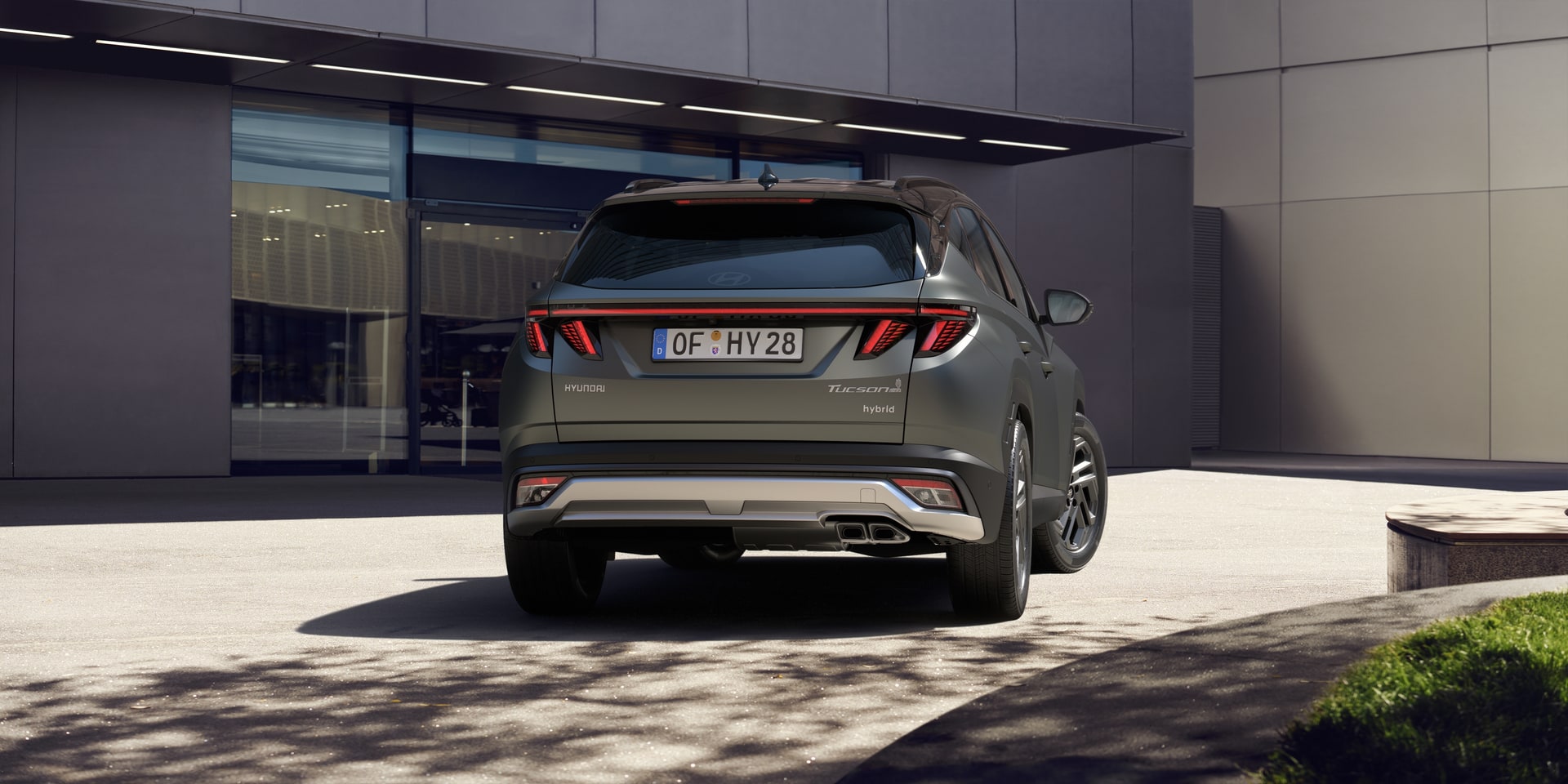
Hyundai Tucson Hybrid Maxx — from €37,750
The Tucson plays in another league when it comes to interior design. The curved dual screen of 12.3″, materials above the segment average and the rear space make it the most “car-like” of the five. The Maxx trim includes heated front and rear seats, a 360º camera, a head-up display and a panoramic roof — equipment that the RAV4 only offers in trims above €42,000.
The hybrid system performs slightly worse than the Japanese model in real-world consumption. In the city it sits between 6 and 6.5 l/100 km, and on the motorway it shows its limits on gradients — the engine revs with less finesse than the Toyota. Even so, for those who spend more time looking at the dashboard than at the petrol station receipt, the Tucson is hard to beat. We cover the direct RAV4 vs Tucson comparison separately in more detail.
| Power CV | Power kW | WLTP consumption | Label | Fuel |
|---|---|---|---|---|
| 215 CV | 158 kW | 6.0 l/100 km | ECO | Hybrid |
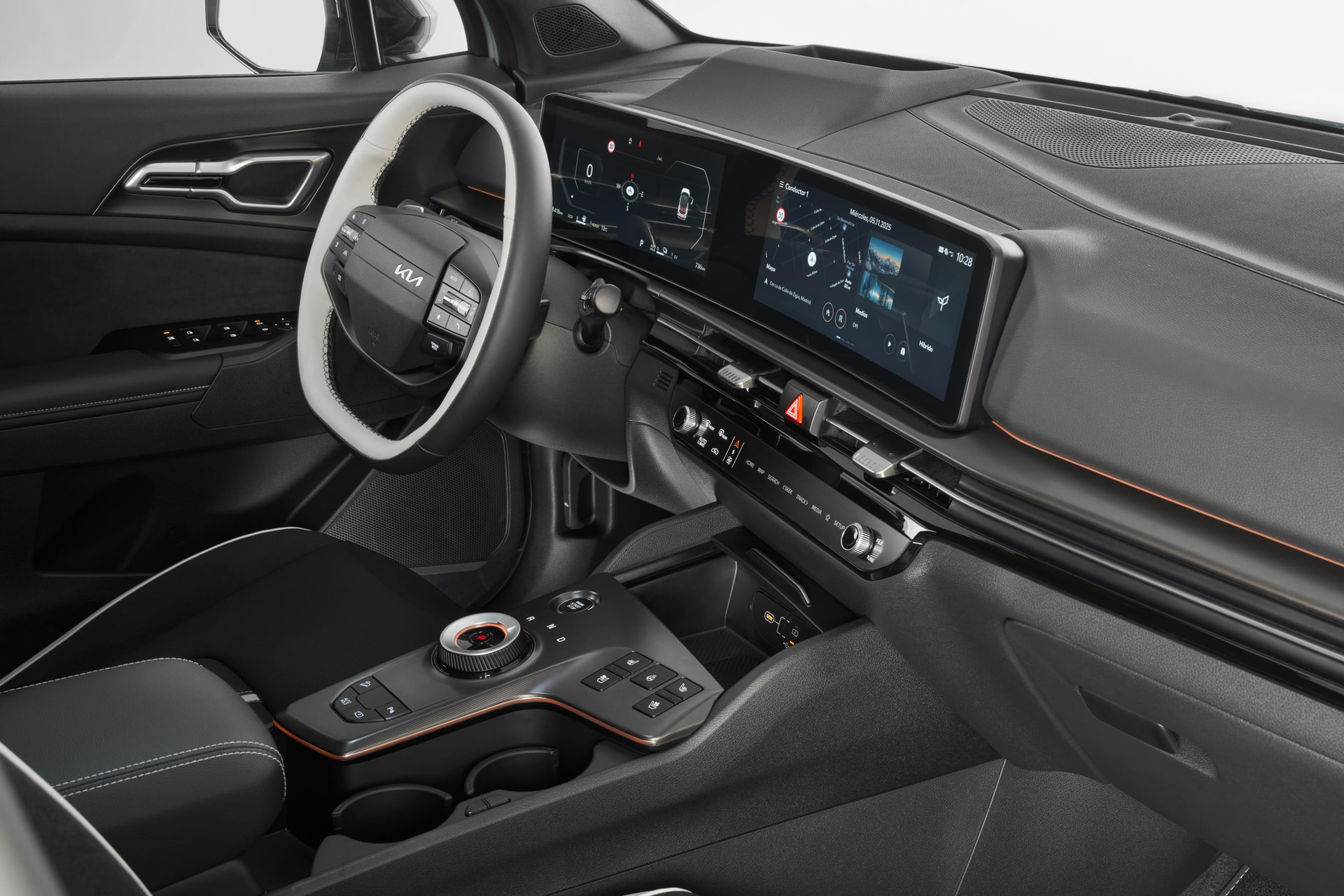
Kia Sportage HEV Drive — from €36,480
The Tucson’s sibling wins on price and on something less obvious: Kia’s seven-year warranty, which remains the most generous standard in the mainstream market. Mechanically it is identical to the Hyundai — same 1.6 T-GDI with electric assistance, same 215 combined CV, same WLTP figures — but the Drive trim adds a curved screen, wireless Apple CarPlay, a rear camera and adaptive cruise control for almost €1,300 less.
The trade-off lies in the fine tuning: the Sportage has a slightly firmer suspension than the Tucson, and in mid-level trim it loses the rear heated seats and the head-up display. But if you are looking for the best equipment per euro in the entire ranking, this is it. No question about it.
| Power CV | Power kW | WLTP consumption | Label | Fuel |
|---|---|---|---|---|
| 215 CV | 158 kW | 6.0 l/100 km | ECO | Hybrid |
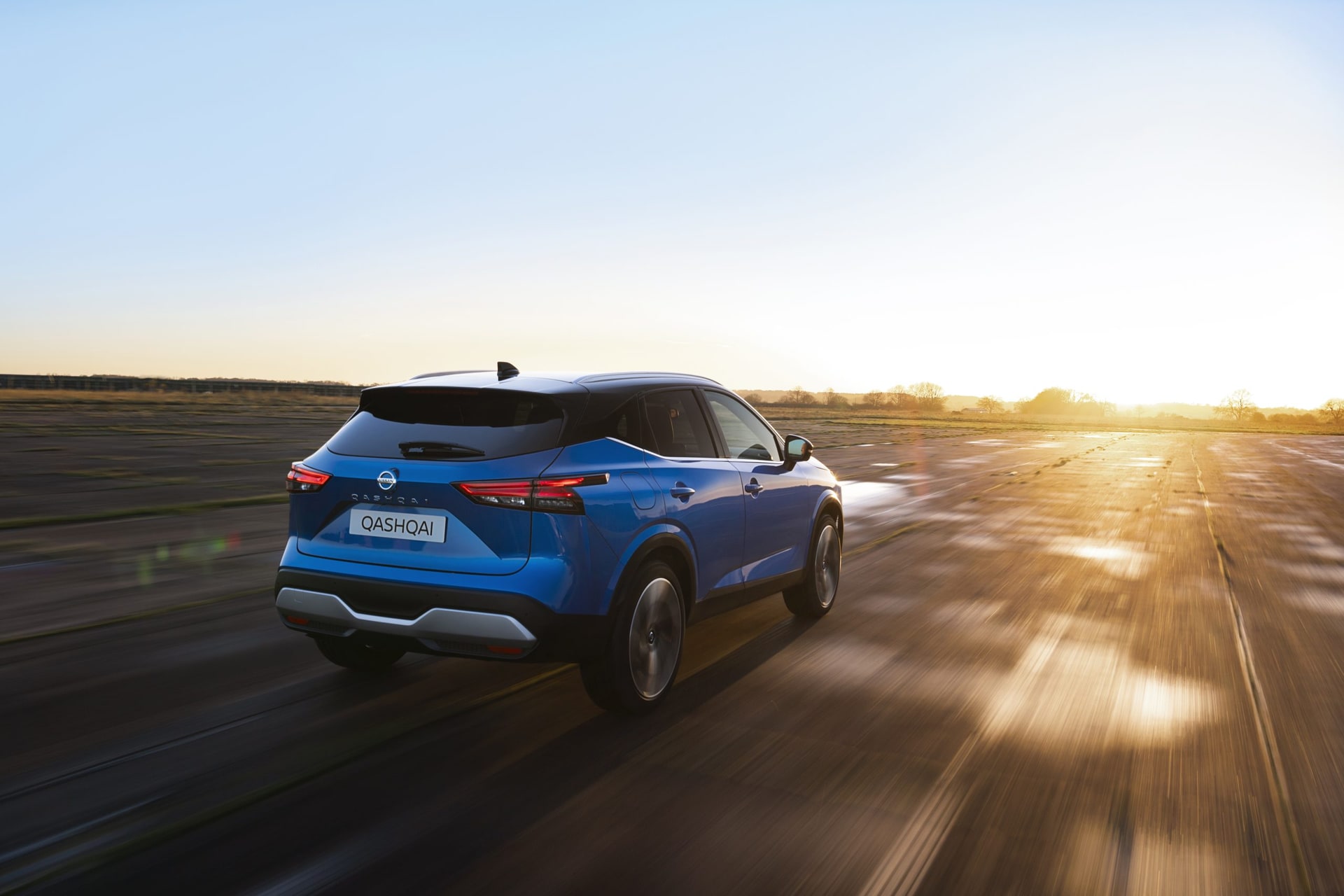
Nissan Qashqai e-Power N-Connecta — from €38,600
The e-Power is the dark horse of the group. It is not a conventional hybrid: the wheels are always driven by the electric motor, and the 1.5 variable-cycle petrol engine acts solely as a generator. In the city this translates into practically electric driving, with immediate response and notable silence. Real urban consumption: 5.2-5.5 l/100 km with ease.
On the motorway things change. The petrol engine has to work harder and consumption rises to 7 l/100 km with ease — worse than the RAV4, worse even than the Tucson. The N-Connecta trim comes with a 12.3″ screen, ProPilot with Navi-link, a 360º camera and built-in Google. For pure urban use with weekend getaways, it is the most interesting proposal in the lineup.
| Power CV | Power kW | WLTP consumption | Label | Fuel |
|---|---|---|---|---|
| 190 CV | 140 kW | 5.3 l/100 km | ECO | Hybrid |

Honda CR-V Hybrid Elegance — from €39,900
The CR-V sits right at the top of the budget and does so with a distinctive proposal: it is the largest of the group (4.70 m), the one with the most useful boot (579 litres) and the one that best absorbs bumps on the motorway. Honda’s e:HEV system works in a similar way to Nissan’s e-Power — the electric motor drives, the petrol engine generates and, on occasion, connects directly to the wheels on the motorway for greater efficiency.
The Elegance trim falls short on screens (9″, small for 2026) and on some equipment details compared with the Tucson. But for a real family, with four adults and a loaded boot, it is the most coherent option. Real motorway consumption: 6.3-6.8 l/100 km, a very good figure for its size.
| Power CV | Power kW | WLTP consumption | Label | Fuel |
|---|---|---|---|---|
| 184 CV | 135 kW | 5.8 l/100 km | ECO | Hybrid |
Summary table and score
| Model | Price from | Power | WLTP consumption | Boot | Warranty | Score |
|---|---|---|---|---|---|---|
| Toyota RAV4 Hybrid Advance Plus | €39,900 | 218 CV | 5.8 l/100 km | 580 l | 5 years (up to 10) | 8.7 |
| Hyundai Tucson Hybrid Maxx | €37,750 | 215 CV | 6.0 l/100 km | 546 l | 5 years | 8.5 |
| Kia Sportage HEV Drive | €36,480 | 215 CV | 6.0 l/100 km | 526 l | 7 years | 8.8 |
| Nissan Qashqai e-Power N-Connecta | €38,600 | 190 CV | 5.3 l/100 km | 504 l | 3 years | 8.0 |
| Honda CR-V Hybrid Elegance | €39,900 | 184 CV | 5.8 l/100 km | 579 l | 5 years | 8.3 |
Verdict by use case
- For mixed city-motorway use and maximum long-term reliability: Toyota RAV4 Hybrid. The most mature HEV system on the market, unbeatable real-world consumption on varied routes and an aftersales network that is bulletproof. Trade-off: the interior is short for the price.
- For intensive urban use with occasional trips: Nissan Qashqai e-Power. Permanent electric driving in the city makes it the most pleasant of the lineup in traffic jams. On the motorway it loses its shine, so if you spend 50% of your time on the road, rule it out.
- Best equipment-to-price ratio in the ranking: Kia Sportage HEV Drive. It is the objective winner if you count euros. Same car as the Tucson, €1,270 cheaper and two more years of warranty — the equation leaves no room for debate. The list price difference with the RAV4 exceeds 9%, with equivalent or superior equipment.
- For a large family with frequent long journeys: Honda CR-V. More space, better damping and contained consumption despite its size. It is the only one that does not need to apologise on the motorway with four adults on board.
- For those who prioritise premium interior: Hyundai Tucson. If you are going to look at the dashboard every day for six years, it is the one that ages best visually.
Frequently asked questions
Does a non-plug-in hybrid compact SUV have an ECO label in Spain?
Yes. All HEVs sold with a high-voltage battery and assisted electric propulsion system receive the ECO label from the DGT, which allows access to low-emission zones such as Madrid Central or Barcelona without the usual restrictions.
Is a non-plug-in hybrid worth it if I do a lot of motorway driving?
Yes, although the saving is smaller than in the city. A RAV4 or a CR-V achieves 6.3-6.8 l/100 km real-world on the motorway, below any equivalent petrol car. In the city the saving is much greater — up to 35% compared with a comparable naturally aspirated petrol car.
Can I access the Plan Auto+ with a non-plug-in hybrid compact SUV?
The Plan Auto+ is mainly aimed at electrified vehicles (electric and PHEV). Conventional HEVs are often excluded from the most generous aid, although it is advisable to check the current conditions on the official website, as some autonomous communities maintain specific aid.
Which warranty offers the best real coverage in this segment?
Kia with its 7 years/150,000 km is the broadest in the mainstream market. Toyota offers 5 years as standard, extendable up to 10 if maintenance is carried out in the official network — a different model but very competitive if you have a Toyota dealership nearby.
