

The family C-segment SUV remains the most contested segment on the Spanish market, and the one that demands the finest judgement. Below €40,000 is where most of the sales are concentrated, but also most of the disappointments: cars that look well equipped in the brochure and then fall short somewhere — a tight boot, slow infotainment, a base powertrain that doesn’t move the whole package well. We have filtered five contenders that, in our view, best solve the design + equipment + price equation in 2026.
The rule has been simple. One model per brand, a specific version (no comparing the top trim with a rival’s entry trim) and a realistic RRP at a Spanish dealership. No launches that aren’t yet registered.
What defines a well-resolved family C-segment SUV for under €40,000 today
Five years ago, a €35,000 C-segment SUV was considered well equipped with dual-zone air conditioning, a rear camera and an 8-inch screen. In 2026 that bar has risen. The minimum required for a car in this range to hold its own as a family option is: full LED matrix headlights, level 2 semi-autonomous driving (adaptive cruise control + active lane keeping), a central screen of 10" or larger with wireless Android Auto and CarPlay, dual- or tri-zone climate control, electric tailgate and a boot above 500 litres with the seats in position.
Add to that an electrified powertrain that doesn’t penalise real-world consumption and a minimum 5-year warranty, and you have the filter with which we have discarded half the segment.
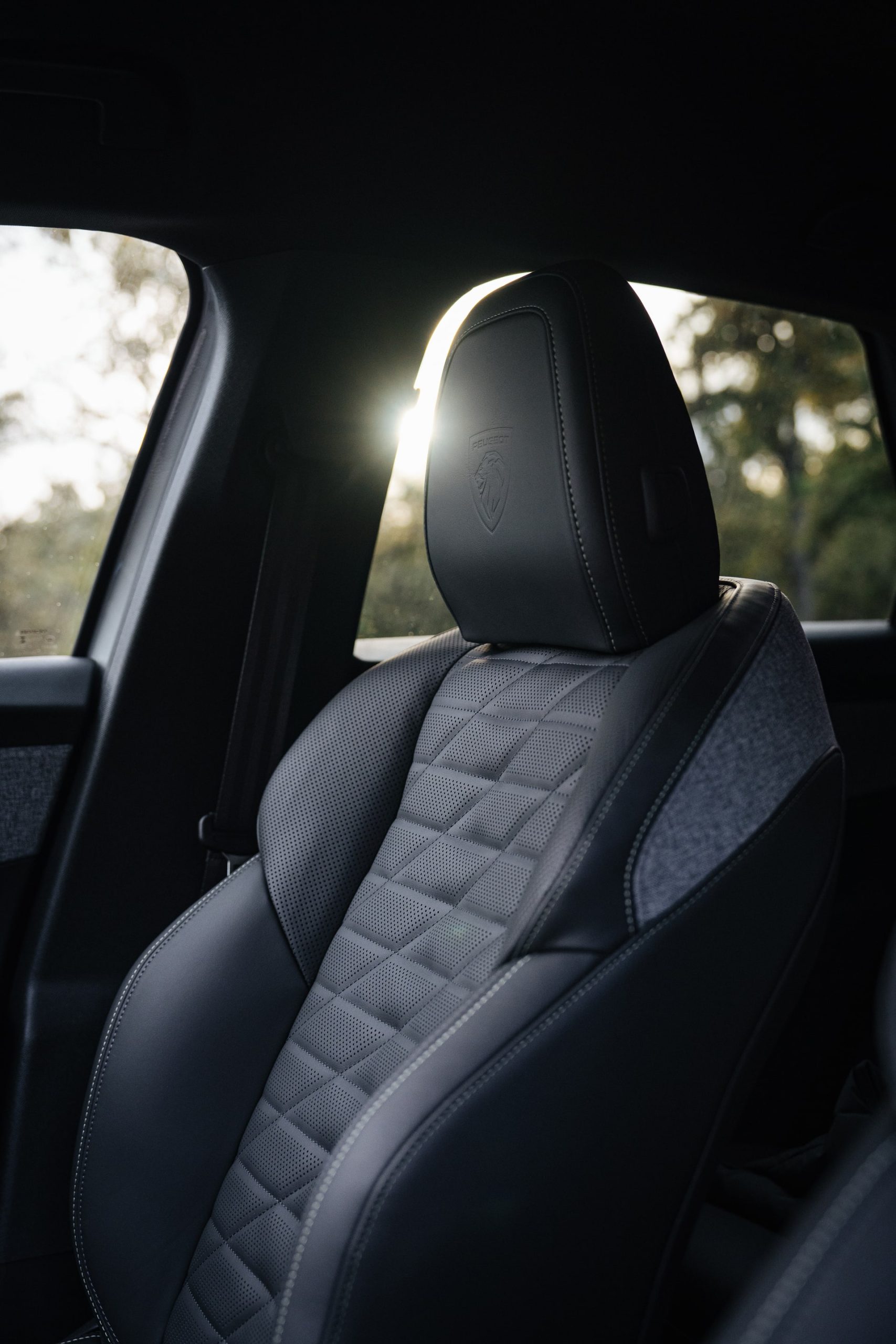
Peugeot 3008 Hybrid — from €36,900
The third-generation 3008 is, in my view, the C-segment SUV with the most striking design in the group under €40,000. The fastback silhouette divides opinion — some see an elegant coupé, others a less practical car than the older 3008 — but the 21-inch panoramic i-Cockpit and the dashboard materials play in a different visual league. The Hybrid 136 e-DCS6 version works as a base powertrain: sufficient in town, somewhat strained on motorway overtaking with the car loaded.
| Power | Fuel | DGT label |
|---|---|---|
| 100 kW / 136 CV | Mild hybrid (MHEV 48V) | ECO |
Objective strong point: interior design and perceived quality above the segment average. Clear weak point: a 520-litre boot, correct but not outstanding, and rear legroom that is not the most generous here.
Hyundai Tucson Hybrid — from €34,950
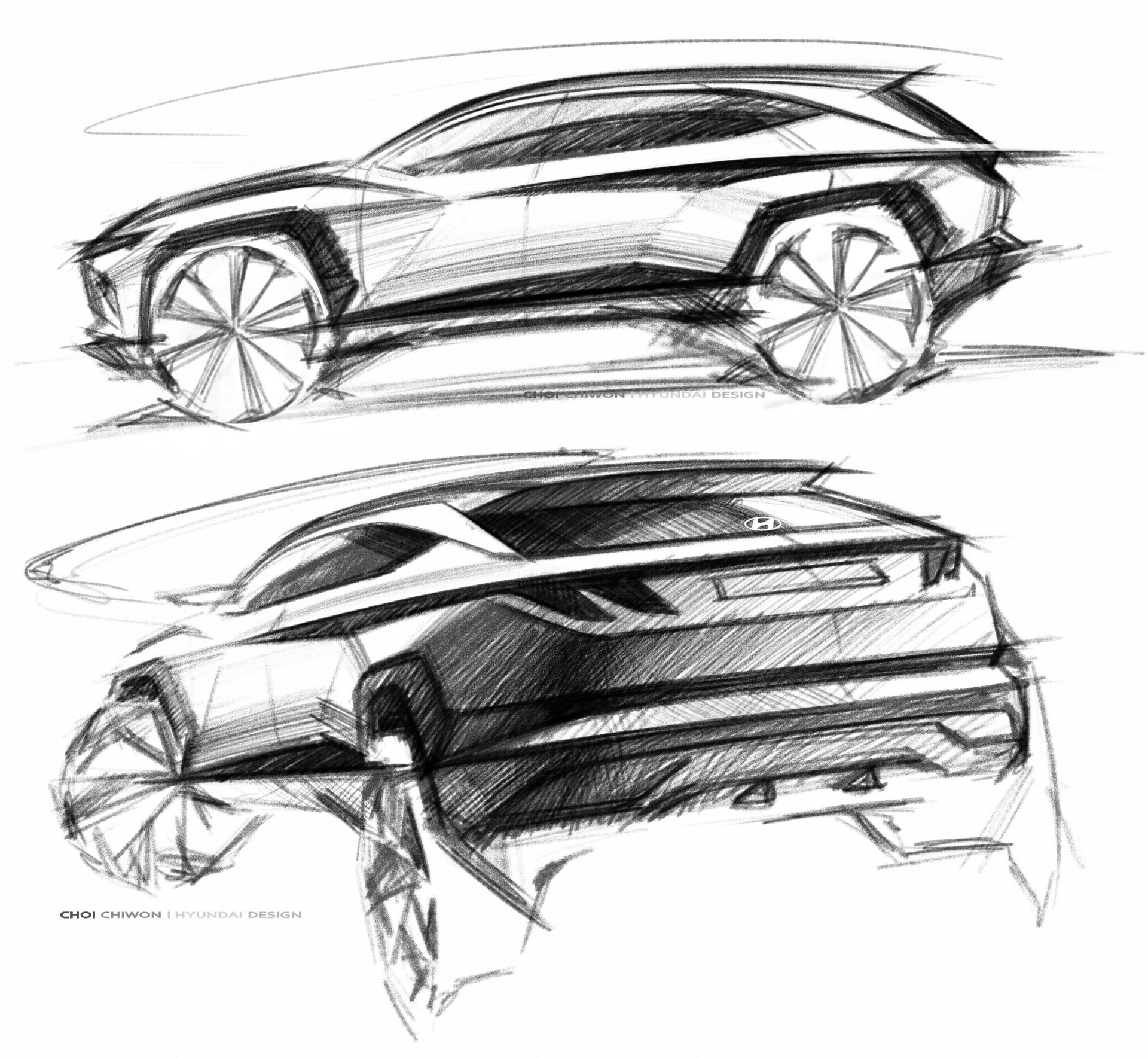
The Tucson full hybrid 1.6 T-GDI HEV with 215 CV is the most rational candidate on the list. It delivers between 5.8 and 6.5 l/100 km in real mixed use, has a 620-litre boot and a 5-year warranty with no mileage limit that no European rival in the segment matches. The 2024 facelift refined the parametric front end without losing personality.
| Power | Fuel | DGT label |
|---|---|---|
| 158 kW / 215 CV | Hybrid (HEV) | ECO |
Where it objectively wins: combined power and boot space. Where it loses: the dashboard, even after improvements, doesn’t convey the same touch sophistication as the 3008 or the Tiguan. If you want a detailed analysis of this powertrain against the RAV4, we cover it thoroughly in the head-to-head with the Toyota.
Volkswagen Tiguan eHybrid — from €39,900
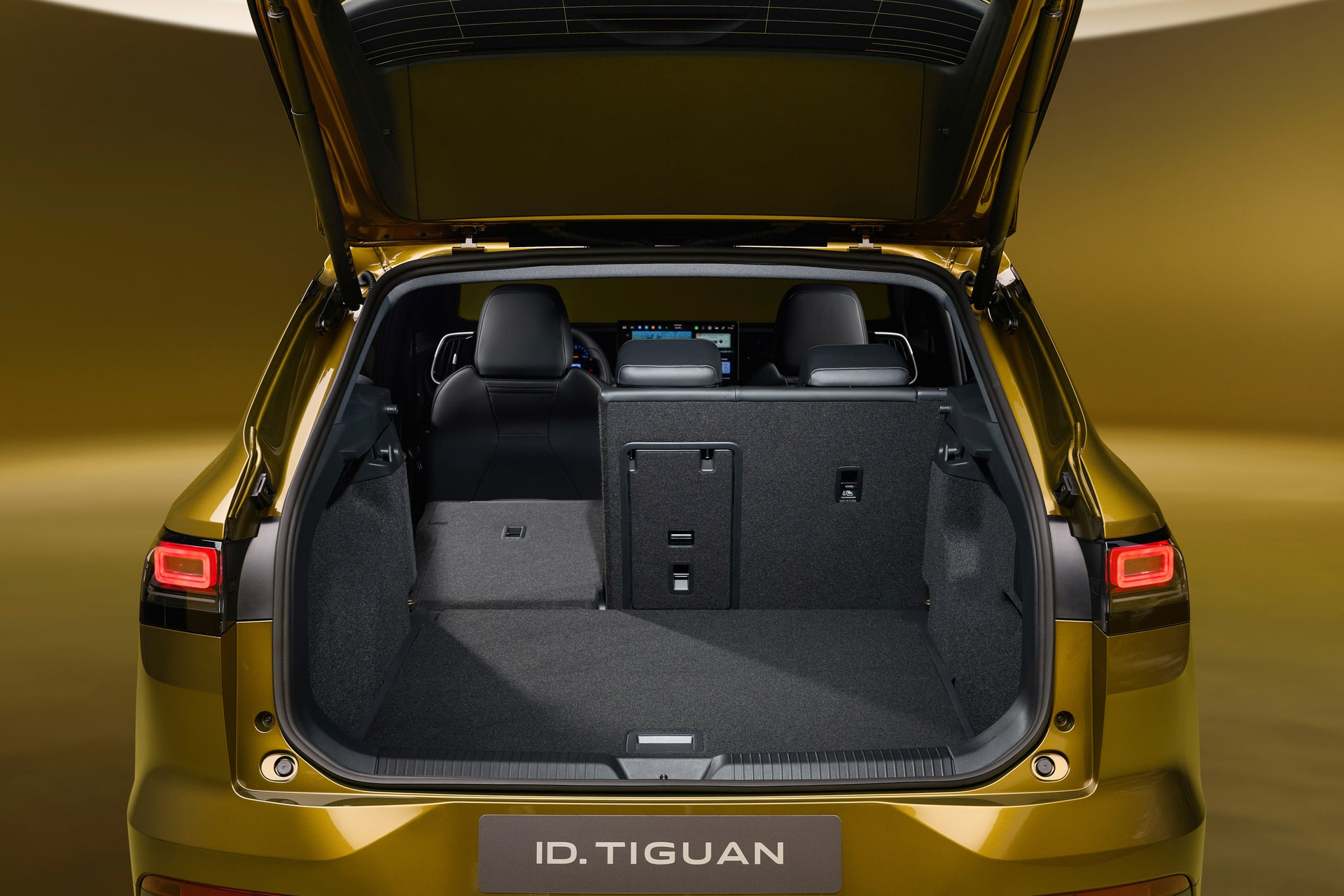
The third-generation Tiguan plays in another league of refinement. The eHybrid 1.5 TSI version with 204 CV offers almost 100 km of WLTP electric range — genuinely useful for anyone who charges at home — and a silent ride that no rival here matches. The problem is the price: at €39,900 you are right at the edge of the budget and with the entry trim. Moving up to Life Plus or Elegance quickly takes it above.
| Power | Fuel | DGT label |
|---|---|---|
| 150 kW / 204 CV | PHEV (petrol + electric) | CERO |
Wins on: ride refinement and CERO label (access to ZBE zones and tax advantage). Loses on: a boot penalised by the battery (490 litres) and a price at the limit of the article’s threshold.
Mazda CX-5 — from €33,500
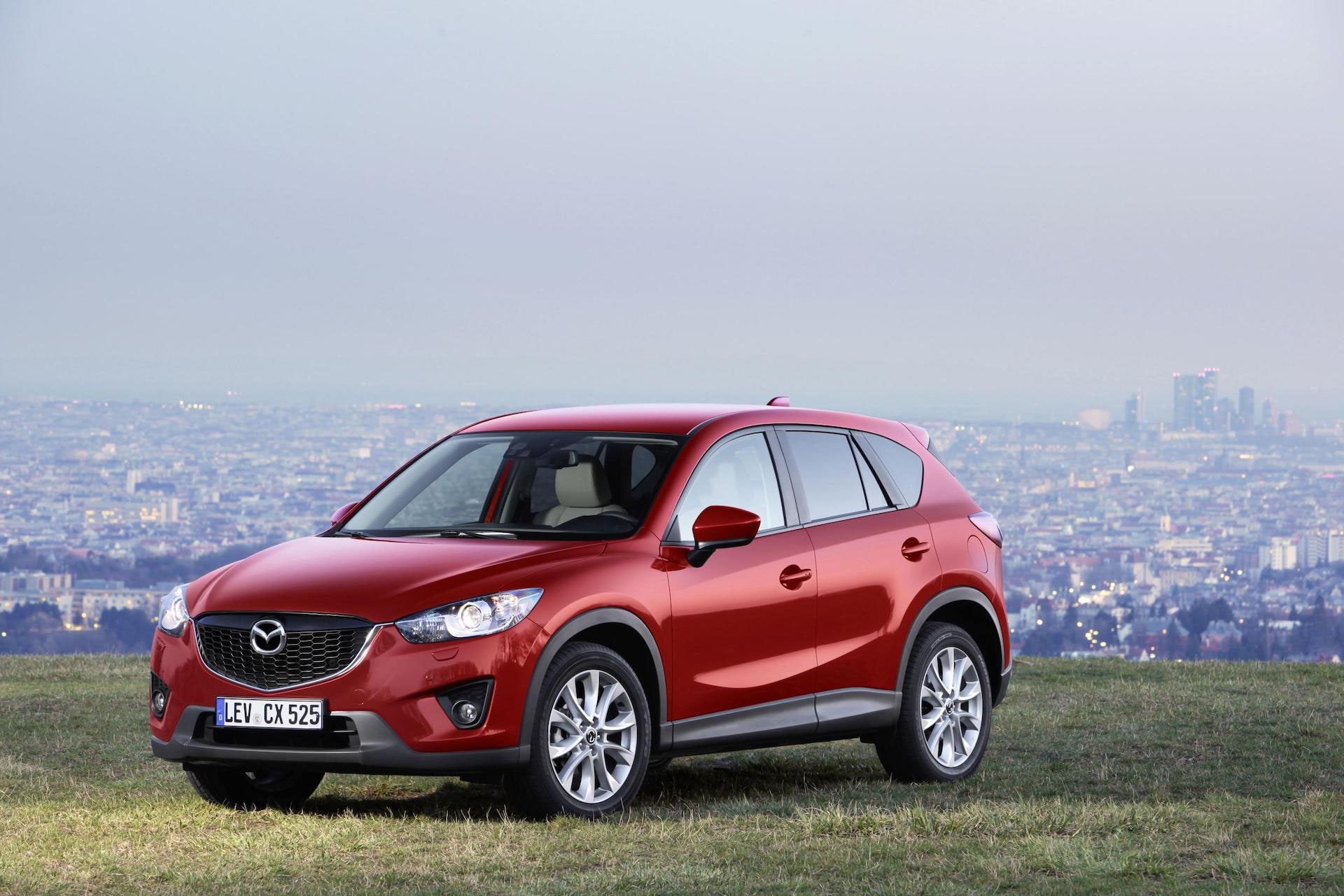
The CX-5 has been on the market for a while, yes, but it keeps selling and Mazda confirms a complete renewal for 2026. The 2.0 e-Skyactiv G version with 165 CV and 24V mild hybrid holds its own with a chassis that, dynamically, is the finest in the group. The interior ages with dignity: good materials, physical controls (something you’ll appreciate at 10,000 km) and meticulous ergonomics.
| Power | Fuel | DGT label |
|---|---|---|
| 121 kW / 165 CV | Mild hybrid (MHEV 24V) | ECO |
Wins on: driving dynamics and entry price. Loses on: a non-touch central screen while driving (Mazda’s philosophy) and mixed consumption somewhat higher than the Tucson HEV.
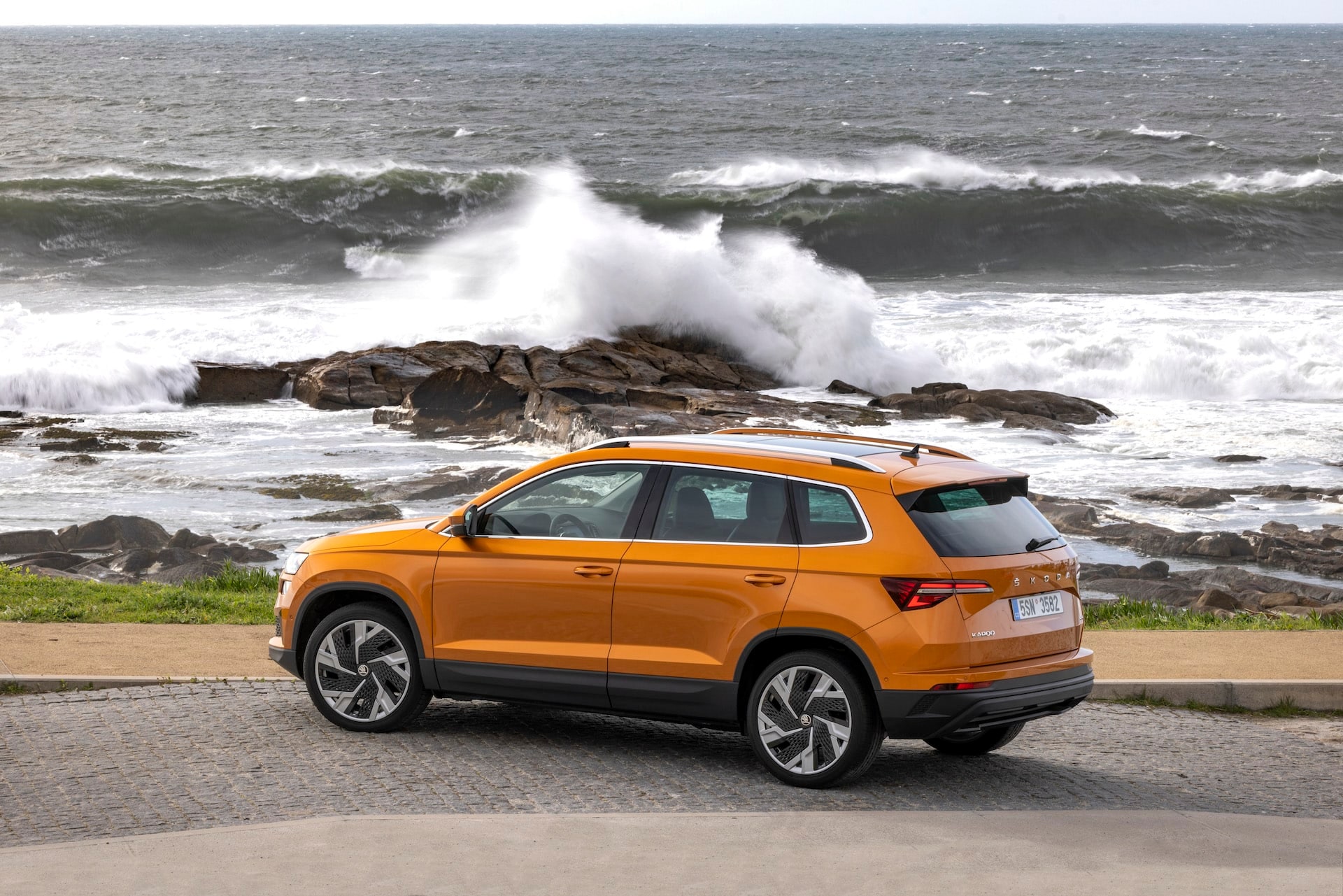
Skoda Karoq — from €32,100
The Karoq Selection 1.5 TSI with 150 CV and DSG gearbox is the pragmatic choice. Less glamour than a 3008, less refinement than a Tiguan, but a package very hard to beat in euros per litre of boot space: 521 litres fixed, 1,630 with the seats folded, and the optional VarioFlex rear seats that turn the car into a serious load carrier.
| Power | Fuel | DGT label |
|---|---|---|
| 110 kW / 150 CV | Petrol MHEV | ECO |
Wins on: price and interior modularity. Loses on: conservative exterior design and petrol-only powertrain (no full hybrid or PHEV option in the range).
Comparison table and score
| Model | Power | Boot | Label | Warranty | Price from | Design | Equipment | Price | Overall score |
|---|---|---|---|---|---|---|---|---|---|
| Peugeot 3008 Hybrid | 136 CV | 520 l | ECO | 2 years | €36,900 | 9 | 8 | 7 | 8.0 |
| Hyundai Tucson Hybrid | 215 CV | 620 l | ECO | 5 years | €34,950 | 8 | 9 | 9 | 8.7 |
| VW Tiguan eHybrid | 204 CV | 490 l | CERO | 2 years | €39,900 | 8 | 9 | 6 | 7.7 |
| Mazda CX-5 | 165 CV | 522 l | ECO | 3 years | €33,500 | 8 | 7 | 8 | 7.7 |
| Skoda Karoq | 150 CV | 521 l | ECO | 2 years | €32,100 | 6 | 8 | 9 | 7.7 |
The RRP gap between the Karoq (€32,100) and the Tiguan eHybrid (€39,900) exceeds 24%: we are, in effect, talking about different leagues within the same segment.
Verdict by use case
For a family with frequent long trips and home charging: Volkswagen Tiguan eHybrid. CERO label, 100 real electric km and the highest refinement. That said, it requires a wallbox at home — without charging it loses much of its appeal, something we already explored in the analysis of a PHEV’s real electric mode.
For urban and peri-urban use without a charging point: Hyundai Tucson Hybrid. A serious full hybrid, low consumption without depending on a plug, 5 years of warranty. The most rational of all.
For those seeking the best-designed car in the group: Peugeot 3008 Hybrid. If you step in and fall in love with the i-Cockpit, there is no equivalent substitute at this price.
Best pure price-performance ratio: Skoda Karoq. Nobody gives you as much boot space and as much DSG for €32,100.
For the driver who still enjoys driving: Mazda CX-5. The only one with a chassis that invites you to seek out bends.
Overall winner of the ranking: Hyundai Tucson Hybrid, by a narrow but clear margin. It is the one that asks you to accept the fewest trade-offs.
Frequently asked questions
Which family C-segment SUV offers the best value for money under €40,000 in 2026?
The Hyundai Tucson Hybrid with 215 CV, from €34,950, for combining power, 620 litres of boot space, ECO label and a 5-year warranty — no European rival in the group matches that package at the same price.
Is a C-segment SUV PHEV worth it over a full hybrid if I don’t have a garage with a plug?
No. Without regular home charging, the PHEV carries the weight of the battery without making use of its electric range, and real consumption rises above that of an equivalent full hybrid. With a plug at home, the equation reverses.
Which SUV in this list has the largest boot?
The Hyundai Tucson Hybrid with 620 litres, followed by the Peugeot 3008 Hybrid and the Skoda Karoq, both around 520 litres. The Volkswagen Tiguan eHybrid drops to 490 litres because of the battery under the boot floor.
Are there public subsidies applicable to these models in 2026?
PHEV versions with the CERO label (such as the Tiguan eHybrid) may qualify for the Plan Auto+ in force in Spain. The exact amounts and requirements should be checked on the plan’s official website, as they are updated with each call for applications.
