

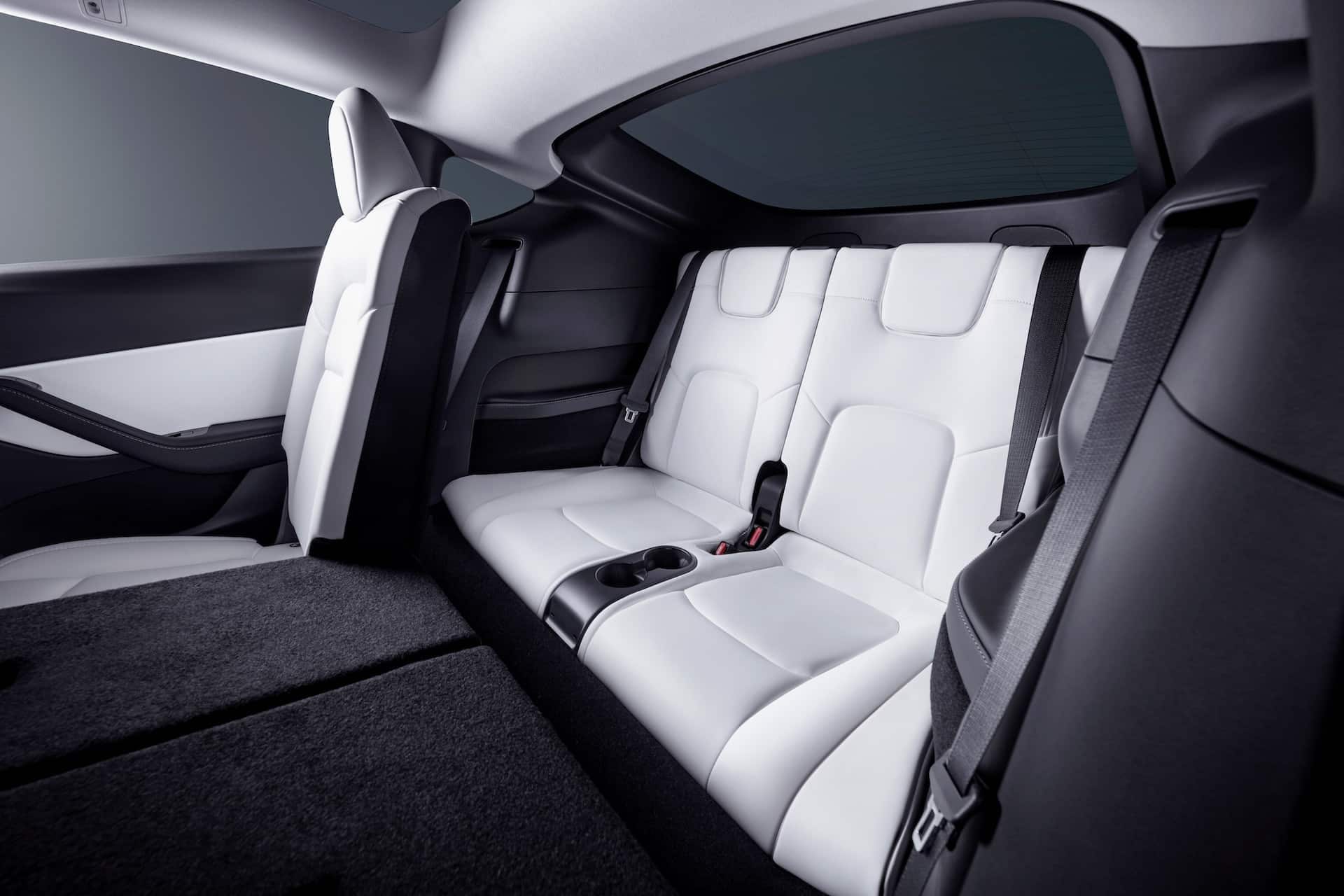
Talking about range in an electric car is easy as long as you don’t hit the motorway. That’s where the WLTP cycle deflates, the drag coefficient starts to matter, and the battery fan shows up in consumption. This ranking doesn’t look at the catalogue figure: it looks at how far each electric C-SUV goes at a real 120 km/h, with climate control on and the boot loaded, for less than €55,000 in Spain in 2026.
Methodology: why WLTP misleads on the motorway
WLTP mixes city, interurban and a “high speed” section that peaks at 131 km/h, with averages much lower. On a real Spanish motorway — sustained cruising at 120 km/h, with gradients, wind and air conditioning — the consumption of an electric SUV rises by between 25% and 40% compared with its homologated figure. A car with 500 km WLTP range usually drops to 340-380 real km at that speed.
For this ranking we cross-referenced homologated data with consumption tests published by specialist media (km77, Motorpasión, Autobild) and our accumulated experience in long-term testing. We always refer to the most efficient version of each model below €55,000 — no all-wheel-drive or Performance trims that distort the comparison.
What we mean by “real motorway range”
It is the distance the car can cover with a charge from 100 to 10% travelling at a steady 120 km/h, on the flat, with an ambient temperature of 15-20 °C and climate control in auto mode at 21 °C. It is not a laboratory figure: it is what you will see on the onboard computer after a long hour on the Madrid-Zaragoza road. And it is the figure that matters when you plan a charging stop.
A note: those who have already started choosing based on criteria such as how many long trips you make per year and how much time you can spend charging know that gross range matters less than the combination of range + charging power. We will take this into account in the verdict.
Tesla Model Y RWD (from €44,990)
It remains the benchmark to beat. The entry-level RWD variant mounts a 60 kWh usable LFP battery and is homologated at 500 km WLTP. On the motorway, with a sustained 120 km/h, it manages around 365-380 real km — exceptional efficiency for a 1.9-tonne SUV, thanks to a Cd of 0.23 which at that speed is worth its weight in gold.
Objective strength: the Supercharger network. Nobody charges faster or more reliably on long journeys. Weak point: a minimalist interior taken to the extreme, material feel a step below European rivals, and a suspension that, to my taste, remains too firm on bumpy surfaces.
| Power | WLTP range | WLTP consumption | Label | Fuel |
|---|---|---|---|---|
| 220 kW / 299 CV | 500 km | 14.9 kWh/100 km | Zero | Electric |

Hyundai IONIQ 5 77 kWh RWD (from €49,900)
800V architecture, a 10 to 80% charge in 18 minutes when you hit a 350 kW charger, and a 77 kWh battery homologated at 507 km WLTP. On the motorway at 120, the IONIQ 5 manages between 355 and 375 real km, a figure very consistent with what we measure on real journeys.
Its best feature: charging speed is the key. You can recover 300 km in under 20 minutes — no Tesla in this range matches it on a non-Supercharger charger. Its drawbacks: its height and aerodynamics take their toll in crosswinds, and the price rises quickly once you move up to the higher trims. We have already analysed in depth how it behaves against the Model Y on long journeys, and the tie is closer than it seems.
| Power | WLTP range | WLTP consumption | Label | Fuel |
|---|---|---|---|---|
| 168 kW / 228 CV | 507 km | 16.7 kWh/100 km | Zero | Electric |
Kia EV6 RWD Long Range (from €51,230)
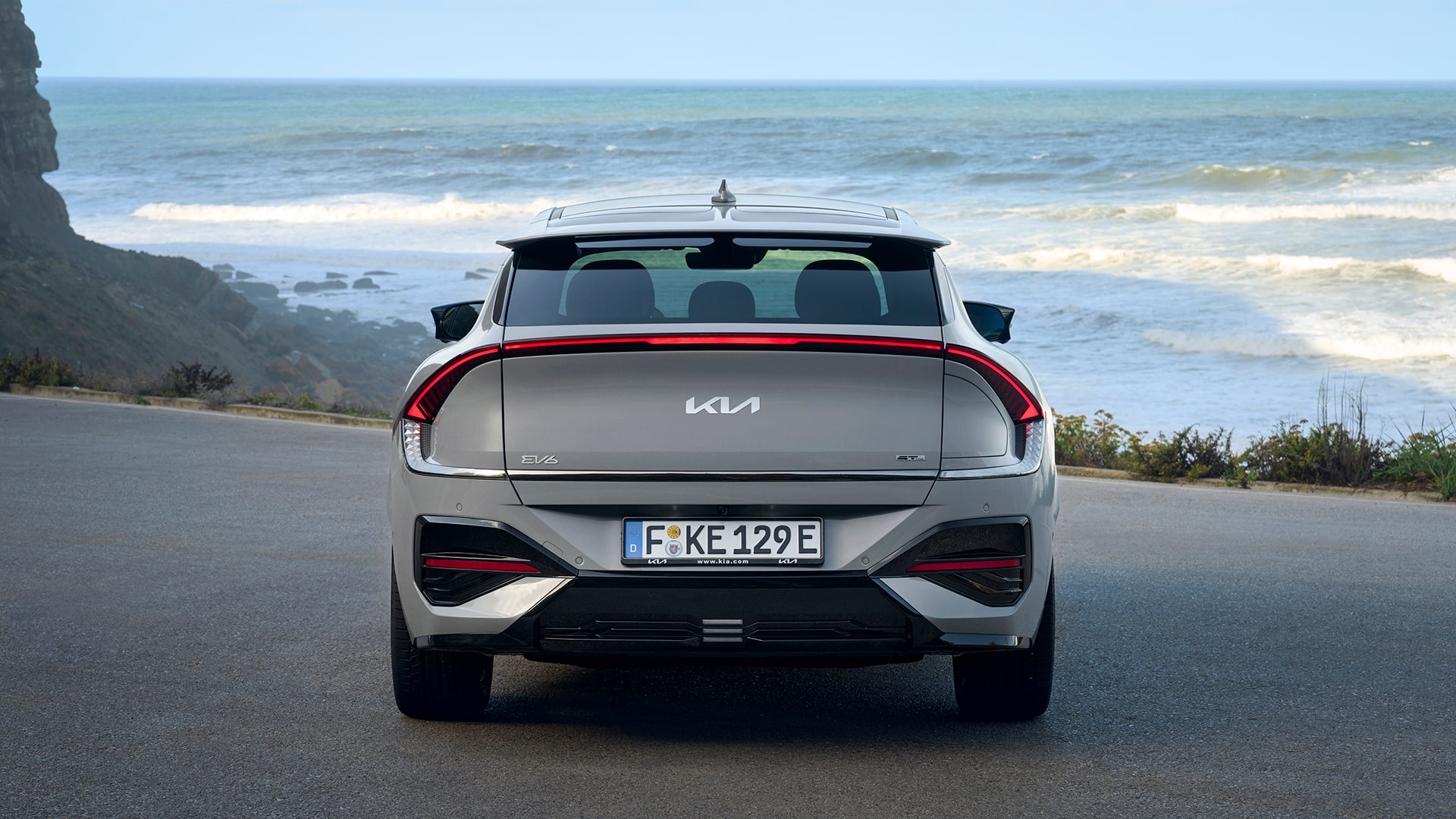
First cousin of the IONIQ 5 — same E-GMP platform, same 77 kWh battery, same 800V system — but with a more carefully considered aerodynamic approach. The result: 528 km WLTP and, by our calculations, around 380 real km at 120 km/h. It performs best on the motorway of the entire Korean group thanks to a Cd of 0.28 and a lower nose.
Better than the IONIQ 5 in: pure efficiency on long cruises and a sportier steering feel. Worse than it in: rear headroom (the sloping roofline is a penalty) and a slightly smaller boot.
| Power | WLTP range | WLTP consumption | Label | Fuel |
|---|---|---|---|---|
| 168 kW / 229 CV | 528 km | 16.5 kWh/100 km | Zero | Electric |
Renault Scenic E-Tech 87 kWh (from €46,500)
The European surprise of the ranking. With the large 87 kWh battery and a 160 kW motor, Renault is homologated at 625 km WLTP — the highest figure in the group. On a real motorway at 120 km/h this translates into 390-410 real km, which makes it, on paper and in our measurements, the longest-range car in its segment below €55,000.
The good: leading range and an interior that represents a huge qualitative leap over what Renault offered three years ago. The bad: maximum DC charging power stays at 150 kW — one step below the Koreans — so although it goes further on a single charge, stopping to charge takes longer. On a chained long journey, the Hyundai and the Kia can complete the leg in fewer total minutes.
| Power | WLTP range | WLTP consumption | Label | Fuel |
|---|---|---|---|---|
| 160 kW / 218 CV | 625 km | 16.3 kWh/100 km | Zero | Electric |
Peugeot E-3008 73 kWh (from €48,300)
The STLA Medium platform of the Stellantis group, debuted on the E-3008, shows promise. A 73 kWh battery, 525 km WLTP and a coupé-SUV silhouette that helps quite a bit on the motorway. At a real steady 120 km/h, we have it at around 350-365 real km, with good consistency in average temperatures.
In its favour: a striking interior design with the panoramic i-Cockpit and a presentation well above the segment average. Against it: the maximum DC charging power (160 kW) is decent but not spectacular, and the real consumption at a sustained 120 rises more than the WLTP figure suggests.
| Power | WLTP range | WLTP consumption | Label | Fuel |
|---|---|---|---|---|
| 157 kW / 213 CV | 525 km | 17.2 kWh/100 km | Zero | Electric |
Summary table and score
Score out of 10, weighting real motorway range (40%), efficiency (20%), charging speed (25%) and price-performance ratio (15%).
| Model | Real range at 120 km/h | DC charging power | Price from | Score |
|---|---|---|---|---|
| Renault Scenic E-Tech 87 kWh | 390-410 km | 150 kW | €46,500 | 8.8 |
| Kia EV6 RWD Long Range | 370-385 km | 240 kW | €51,230 | 8.7 |
| Hyundai IONIQ 5 77 kWh RWD | 355-375 km | 240 kW | €49,900 | 8.5 |
| Tesla Model Y RWD | 365-380 km | 175 kW (Supercharger) | €44,990 | 8.6 |
| Peugeot E-3008 73 kWh | 350-365 km | 160 kW | €48,300 | 7.9 |
Verdict by use case
For those seeking maximum range in one go: Renault Scenic E-Tech 87 kWh. Full stop. It goes furthest without stopping and lets you plan 350 km journeys with a margin. If your trips are long one-way without an intermediate charge, this is the option.
For those who make long trips back-to-back (more than 500 km in one go): Kia EV6 RWD Long Range. The combination of respectable range + 800V + 240 kW charging makes it the quickest to use on long chained routes. On a real Madrid-Barcelona leg, it arrives before the Scenic despite needing one more stop.
For those who prioritise the charging network and price: Tesla Model Y RWD. Nothing matches the Supercharger in reliability and coverage. And, with a price difference of more than 15% compared with the Kia EV6, the Model Y wins the price-performance contest hands down. It is not the most refined, but it is the one that makes you think least about charging.
For those who want to stand out with a more refined interior: Peugeot E-3008. It wins no objective metric, but it has the cabin with the most personality in the group. If you value that above 20 extra km of range, it fits.
The IONIQ 5 stands as the “all-rounder” of the ranking — none of the other four beats it in everything, and for anyone unwilling to opt for an extreme, it will cause fewer headaches.
Frequently asked questions
Which electric C-SUV has the most real motorway range for under €55,000 in 2026?
The Renault Scenic E-Tech with the 87 kWh battery, with between 390 and 410 real km at a sustained 120 km/h. It is the only one in the group that consistently exceeds 400 real km on the motorway.
Why does WLTP not reflect real motorway range?
Because the WLTP cycle devotes only a short section to high speeds and never maintains a steady 120 km/h. On a real motorway, consumption rises by between 25% and 40%, which cuts the homologated range proportionally.
Is it worth paying more for a car with 800V charging like the EV6 or the IONIQ 5?
If you make more than two long trips a month with charging stops, yes: you save 15-20 minutes per stop compared with a 400V system. If you rarely drive on the motorway, the difference does not justify the extra cost.
Are there public grants to buy these models in Spain?
Yes, through the Plan Auto+, which replaces previous schemes. The amounts and requirements vary depending on scrappage and income — check the official website for the current figure before signing.
