

The hybrid SUV has spent years being sold on the promise of “using less fuel”. But less than what? A hybrid costs between 2,500 and 5,000 € more upfront than its petrol equivalent, and that difference does not recover on its own. It depends on how many kilometres you drive, where you drive them and how long you plan to keep the car. Let’s put some numbers to the decision.
What “cost per kilometre” really means in an SUV
The cost per kilometre (CPK) is not just fuel divided by distance. If it were, any hybrid would win hands down. In practice, an honest CPK adds up four components: real fuel consumption (not WLTP), depreciation, maintenance and insurance. The first two account for 80% of the bill. The rest is noise… until it isn’t.
The formula to apply before you go to the dealership
Note down this calculation and draw two columns, one per car:
CPK = (purchase price − residual value after X years) / total km + (real consumption × fuel price) + annual maintenance × years / total km
For a typical Spanish usage of 15,000 km/year over 5 years, with petrol at 1.55 €/litre and a residual value of 45% for the hybrid and 40% for the petrol model (hybrids hold their value better in the used market), the numbers change radically compared with the brochure.
Toyota RAV4 Hybrid 2.5 140 kW 2WD Active Plus — from 42,500 €
The RAV4 is the gold standard for this calculation. Real mixed consumption close to 5.8 l/100 km according to common records in Spain, very high residual value and low-cost Toyota maintenance. Its direct petrol rival practically does not exist in its own range, so the natural comparison is a Kia Sportage or a Mazda CX-5 petrol.
| Power kW | Power CV | Consumption | Label | Fuel |
|---|---|---|---|---|
| 140 kW | 218 CV | 5.8 l/100 km | ECO | Hybrid |
At 15,000 km/year, the RAV4 Hybrid costs approximately 0.33 €/km all-inclusive. In urban and mixed use, it is almost unbeatable. On pure motorway driving at 120 km/h, consumption rises to 6.8–7.2 l/100 km and the advantage over a modern petrol engine narrows.
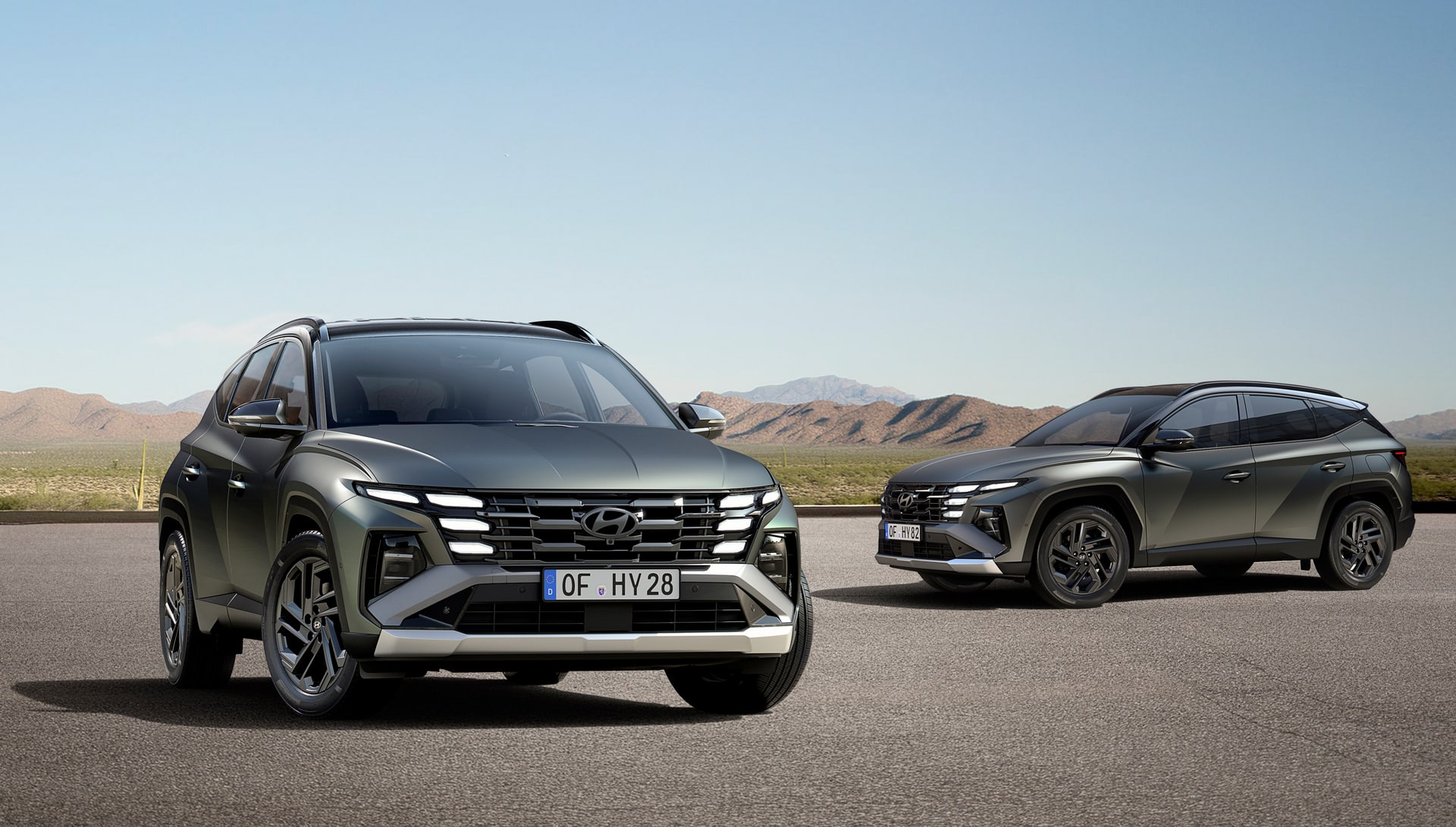
Hyundai Tucson 1.6 TGDI HEV 215 CV Maxx — from 36,900 €
The Tucson Hybrid plays in a different price league, and that changes the calculation. It is cheaper to get into, its real consumption is slightly above the RAV4’s (around 6.2–6.5 l/100 km in mixed use), and a 5-year unlimited-mileage warranty that weighs on both residual value and peace of mind.
| Power kW | Power CV | Consumption | Label | Fuel |
|---|---|---|---|---|
| 158 kW | 215 CV | 6.2 l/100 km | ECO | Hybrid |
For those driving 12,000–18,000 mixed km a year who do not want to pay the Toyota premium, the Tucson Hybrid works out at around 0.30 €/km. It is currently the most rational hybrid in the segment if you don’t mind an interior that sits a step below the RAV4 in perceived quality. If you want to go deeper into the direct comparison, we cover it thoroughly in the head-to-head between the RAV4 Hybrid and the Tucson Hybrid.
Nissan Qashqai e-Power 190 CV N-Connecta — from 38,400 €
The e-Power is a special case: a combustion engine that only generates electricity, with the wheels always driven by the electric motor. In town it is smooth and frugal (5.5–6.0 l/100 km real). On the motorway it is the reverse: the combustion engine works hard and consumption climbs above 7.5 l/100 km.
| Power kW | Power CV | Consumption | Label | Fuel |
|---|---|---|---|---|
| 140 kW | 190 CV | 5.8 l/100 km | ECO | Hybrid |
For a profile that is 80% urban, the Qashqai e-Power is the most efficient of the three. For those who do a lot of motorway driving, it is the one that ages worst in the wallet.
The petrol rival: Kia Sportage 1.6 T-GDI 150 CV Concept — from 29,950 €
This is the honest benchmark for measuring whether the hybrid pays off. Same size, same segment, same type of buyer. Real mixed consumption of 7.5–8.2 l/100 km, label C (it will not enter Madrid Central or similar zones in the long term) and an entry price between 6,000 and 12,000 € lower than the comparable hybrid.
| Power kW | Power CV | Consumption | Label | Fuel |
|---|---|---|---|---|
| 110 kW | 150 CV | 7.8 l/100 km | C | Petrol |
At 10,000 km/year, the petrol Sportage works out at approximately 0.31 €/km. Practically the same as the Tucson Hybrid, but without the upfront premium. If you do not often enter low-emission zones, the equation becomes harder for the hybrid.
Mazda CX-5 2.0 e-Skyactiv G 165 CV Centre-Line — from 32,700 €
24V mild hybridisation, an ECO label (yes, just barely) and real mixed consumption of 7.0–7.8 l/100 km. It is not a full hybrid, but it keeps the ECO label and is significantly cheaper than a full RAV4 or Tucson Hybrid.
| Power kW | Power CV | Consumption | Label | Fuel |
|---|---|---|---|---|
| 121 kW | 165 CV | 7.2 l/100 km | ECO | Petrol MHEV |
It is the cunning but legitimate option: an ECO label with an almost purely petrol powertrain. CPK around 0.32 €/km and the advantage of being able to enter where the C-label Sportage cannot.
Amortisation thresholds by profile
- Less than 10,000 km/year: the petrol (Sportage) or the mild hybrid (CX-5) wins. The full hybrid’s premium does not pay back in 5 years.
- 10,000–18,000 km/year in mixed use: the Tucson Hybrid is the sweet spot. RAV4 if you prioritise residual value.
- More than 18,000 km/year with a lot of city driving: Qashqai e-Power or RAV4 Hybrid, without a doubt.
- More than 20,000 km/year with a lot of motorway driving: here the conversation shifts to a used diesel or directly to a PHEV that you can plug in at home.
Summary table and score
| Model | Price from | Real mixed consumption | Estimated CPK | Best for | Score /10 |
|---|---|---|---|---|---|
| Toyota RAV4 Hybrid Active Plus | 42,500 € | 5.8 l/100 km | 0.33 €/km | High mileage, residual value | 8.7 |
| Hyundai Tucson Hybrid Maxx | 36,900 € | 6.2 l/100 km | 0.30 €/km | Price-consumption ratio | 8.8 |
| Nissan Qashqai e-Power N-Connecta | 38,400 € | 5.8 l/100 km | 0.32 €/km | Intensive urban use | 8.2 |
| Kia Sportage 1.6 T-GDI Concept | 29,950 € | 7.8 l/100 km | 0.31 €/km | Low mileage, no ZBE | 7.8 |
| Mazda CX-5 2.0 e-Skyactiv G | 32,700 € | 7.2 l/100 km | 0.32 €/km | Cheap ECO label | 7.5 |
The RRP difference between the petrol Sportage and the RAV4 Hybrid exceeds 40%, which conditions any firm recommendation.
Verdict
- For pure urban use (less than 25 km/day): Nissan Qashqai e-Power. The combustion engine decoupled from the wheels is gold in traffic jams.
- For mixed use with 12,000–16,000 km/year: Hyundai Tucson Hybrid. The best balance between purchase price, consumption and 5-year warranty.
- For those who drive a lot and plan to keep the car 7+ years: Toyota RAV4 Hybrid. Residual value and reliability pay back the upfront premium.
- For those who drive less than 10,000 km/year or rarely enter ZBE zones: petrol Kia Sportage. The numbers do not add up for the hybrid. This needs to be said clearly.
- Price-performance ratio with an ECO label: Mazda CX-5 mild hybrid. A legal loophole, but a useful one.
If your case is more about travelling as a family than city driving, it is worth cross-checking this guide with the analysis of how to choose a family hybrid SUV based on real motorway consumption.
Frequently asked questions
How many kilometres a year do I need to drive for a hybrid SUV to pay off compared with its petrol version?
As a rule of thumb, from 12,000–15,000 km a year in mixed use, the purchase premium is amortised over 4–5 years. Below 10,000 km/year, a modern petrol or a mild hybrid is usually cheaper in total cost of ownership.
Which hybrid SUV has the best real cost per kilometre in Spain in 2026?
In mixed use of 15,000 km/year, the Hyundai Tucson Hybrid comes in at around 0.30 €/km all-inclusive, slightly below the RAV4 Hybrid thanks to its lower purchase price, although the Toyota offsets this with a residual value above 5 years.
Does the ECO label alone justify paying more for a hybrid?
Only if you frequently live or work in ZBE zones (Madrid, Barcelona, Valencia). If not, a mild hybrid such as the Mazda CX-5 e-Skyactiv gives you the same ECO label for considerably less money, although it consumes slightly more.
Does a hybrid also use less fuel than a petrol car at a sustained 120 km/h on the motorway?
The advantage shrinks considerably. A full hybrid consumes 6.5–7.2 l/100 km at a sustained 120 km/h, compared with 7.5–8.5 l/100 km for its petrol rival. The real difference is 1–1.5 l/100 km, not the 3–4 l that the urban brochure figures suggest.
