

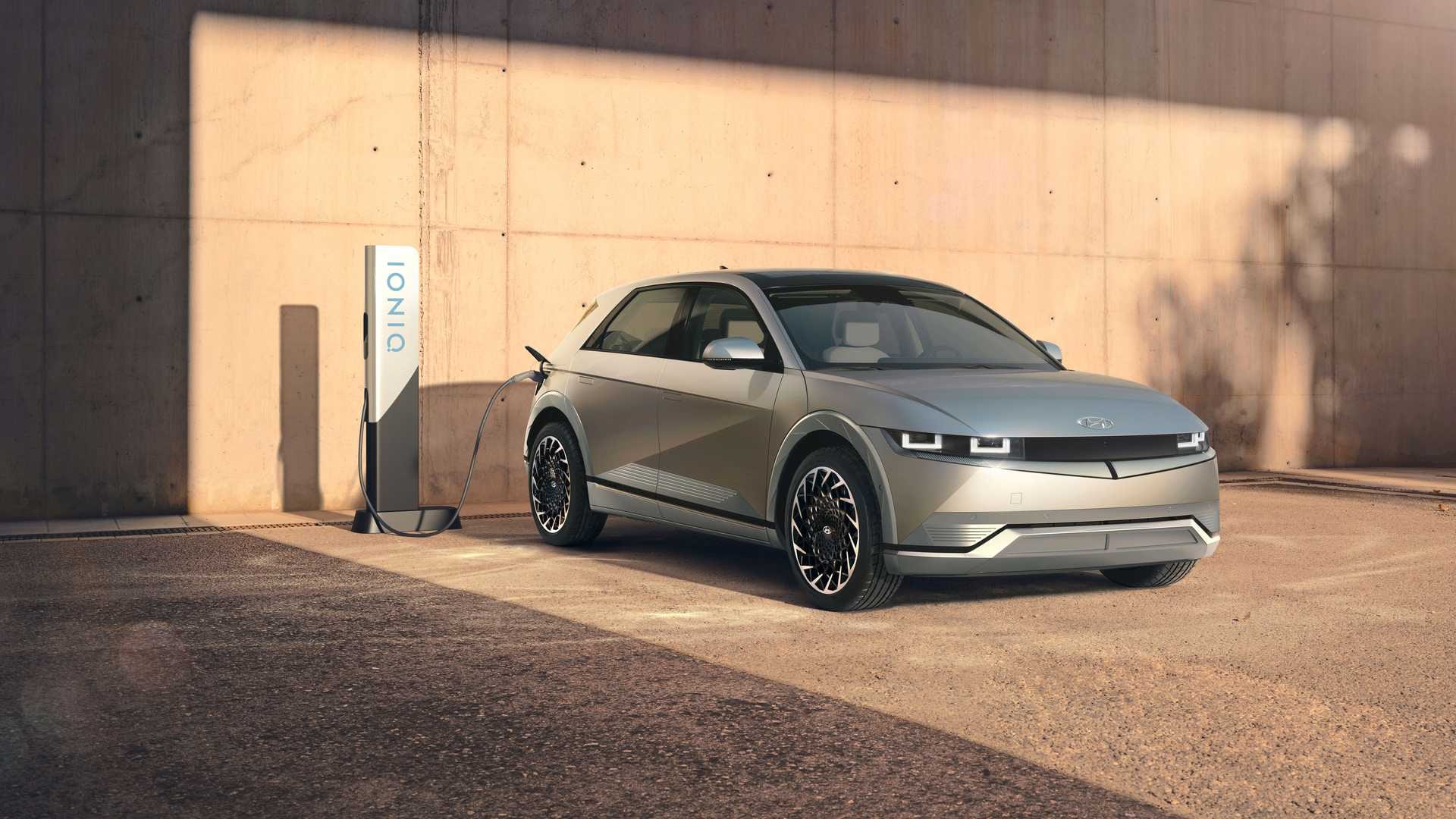
The Hyundai IONIQ 9 arrives in the Spanish market as the brand’s most ambitious bet in the electric SUV-E segment. Seven seats, a large-capacity battery, an 800V platform inherited from the IONIQ family and a starting price below 70,000 €. On paper, the package fits. And in practice, with a family on board and 600 km of motorway ahead? Let’s see it against its two direct rivals you can actually buy in Spain today: the Kia EV9 and the Volvo EX90.
Why compare these three 7-seat electric SUVs in 2026
They are the three real candidates for a family that needs seven seats, a plug and enough range to avoid planning every trip to the last detail. The IONIQ 9 and the EV9 share the E-GMP platform, which makes choosing between them an almost surgical exercise in nuances. The Volvo EX90 plays in a different league of price and finish, but it competes for the same customer: the buyer who wants a large, quiet, 100% electric family car without giving up usable rear seats.
We are not including the Tesla Model X or German premium combustion SUVs here: the aim is the pure 7-seat electric car, sold in Spanish dealerships in 2026.
Hyundai IONIQ 9 218 CV 110 kWh — from ≈69,900 €
The entry version of the IONIQ 9 is the Star with a single motor, 218 CV, a battery of ≈110.5 kWh and rear-wheel drive. Hyundai has prioritised range over raw power in this trim, and in our view it is the right decision for a car of this size and purpose.
In real use, what does that mean? That an IONIQ 9 Star can expect 450-480 km of effective range on the motorway at 120 km/h with the family on board and luggage — not the 620 km homologated, but an honest figure for travelling with a single charging stop on 500 km journeys. The 800V platform helps: when you plug in, you charge quickly, and on a long trip that matters more than having 100 extra km of theoretical range.
The interior is where the car surprises. Room for adults in the third row (not just children), materials a step above what Hyundai usually offers in lower segments and an overall sense of solidity that competes head-to-head with European premium brands. The 218 CV move the car’s considerable 2.5 tonnes with ease in normal use; on demanding overtakes it is noticeable that there is no surplus of power, though.
| Power kW | Power CV | Top speed | Range | Battery | Label | Fuel |
|---|---|---|---|---|---|---|
| ≈160 kW | ≈220 CV | ≈190 km/h | ≈620 km | ≈110.5 kWh | Zero emissions | Electric |
Strengths and weaknesses against its rivals
In its favour: the combination of a large battery and the 800V platform offers the best range-to-fast-charging compromise of the trio. And the starting price is clearly more aggressive than the Volvo’s. Against it: the exterior design is polarising (that front end is love-it-or-hate-it with no middle ground), and the entry version stays rear-wheel drive, something to bear in mind if you live in mountainous areas or regularly face snow.
Kia EV9 — from ≈73,000 € (indicative)
The IONIQ 9’s cousin arrived first and set the territory. It shares the platform, battery and charging logic, but opts for a much more angular exterior design and an interior presentation that is somewhat more technological and less “lounge-like”. If you already know the EV9 and are considering the IONIQ 9, you are essentially choosing bodywork and presentation: the mechanics are close relatives. We cover this in detail in our comparison between the Kia EV6 and Hyundai IONIQ 5, and the logic carries over one segment up.
The EV9 has been on the market longer, which works in its favour: an established after-sales network, mature software and real discounts already visible at dealerships (official RRPs do not always reflect the final price).
Strengths and weaknesses against the IONIQ 9
In its favour: a more assertive exterior design for those seeking classic SUV presence, and better access to dual-motor versions with all-wheel drive within the range. Against it: the interior feels less welcoming than the IONIQ 9’s, with slightly harder-feeling materials in the second row, and the base price is slightly higher for equivalent performance.
Volvo EX90 — from ≈105,000 € (indicative)
Playing in the premium league costs money. The EX90 starts about 35,000 € above the IONIQ 9, which comfortably exceeds the 15% price-gap threshold and places it in a different buyer segment. What does it offer in return? An interior with genuinely superior perceived quality, a benchmark ADAS package in its segment and the peace of mind of a brand with a long tradition in family safety.
On long journeys, the EX90 shines for acoustic comfort and suspension. But its efficiency is questionable compared with the Koreans: it weighs more, consumes more and its electrical architecture is not as agile when charging. In practice, an IONIQ 9 reaches the destination sooner on a 700 km trip.
Strengths and weaknesses against the IONIQ 9
In its favour: objectively superior perceived quality and active safety package. Against it: a price that nearly doubles the entry ticket, and lower energy efficiency that makes long journeys more expensive and slower.
Summary table and score
| Model | Power (base version) | WLTP range | Battery | Price from | Overall score |
|---|---|---|---|---|---|
| Hyundai IONIQ 9 Star | ≈220 CV | ≈620 km | ≈110.5 kWh | ≈69,900 € | 8.8/10 |
| Kia EV9 | ≈204 CV (RWD) | ≈563 km (RWD) | ≈99.8 kWh | ≈73,000 € | 8.5/10 |
| Volvo EX90 | ≈408 CV (Twin) | ≈590 km | ≈111 kWh | ≈105,000 € | 8.2/10 |
The prices shown are the manufacturer’s recommended RRP, excluding dealer discounts, one-off campaigns and public aid such as the Plan Auto+ scheme. Check the current figure in your province before deciding.
Verdict: which 7-seat electric SUV to choose in 2026
- For long family journeys prioritising range and fast charging: Hyundai IONIQ 9. The combination of a large battery, 800V platform and restrained price makes it the most rational choice for the 80% of families seeking a 7-seat electric SUV.
- For those who want a more assertive exterior design or affordable all-wheel drive: Kia EV9. Mechanically almost identical, but with a distinct visual personality and a more accessible range of AWD versions.
- For those who prioritise premium perceived quality and a safety package above price: Volvo EX90. But paying more than 50% over the IONIQ 9 — a difference that only pays off if the budget is genuinely different.
FAQ
How much real range does the Hyundai IONIQ 9 have on the motorway?
With the homologated 620 km WLTP and a battery of ≈110.5 kWh, on the motorway at 120 km/h with family and luggage you can expect between 450 and 480 real km. Enough for 500 km trips with a single quick charging stop thanks to its 800V architecture.
Is the IONIQ 9 worth it over the Kia EV9 if they share a platform?
If you value interior quality and acoustic comfort, the IONIQ 9 has the edge. If you prioritise a more classic SUV exterior design and availability of AWD versions in the mid range, the EV9 is more interesting. Mechanically they are close relatives.
What is the real difference between the IONIQ 9 and the Volvo EX90?
About 35,000 € in RRP, mainly. Volvo offers premium quality and benchmark ADAS; Hyundai, more effective range per euro spent and faster charging. For purely family use, the IONIQ 9 covers 90% of what the Volvo offers for considerably less money.
Does the Hyundai IONIQ 9 price include public aid?
No. The ≈69,900 € figure is Hyundai’s recommended RRP without dealer discounts or Plan Auto+-type aid. The final invoice price can be noticeably lower depending on the campaign and autonomous community.
