

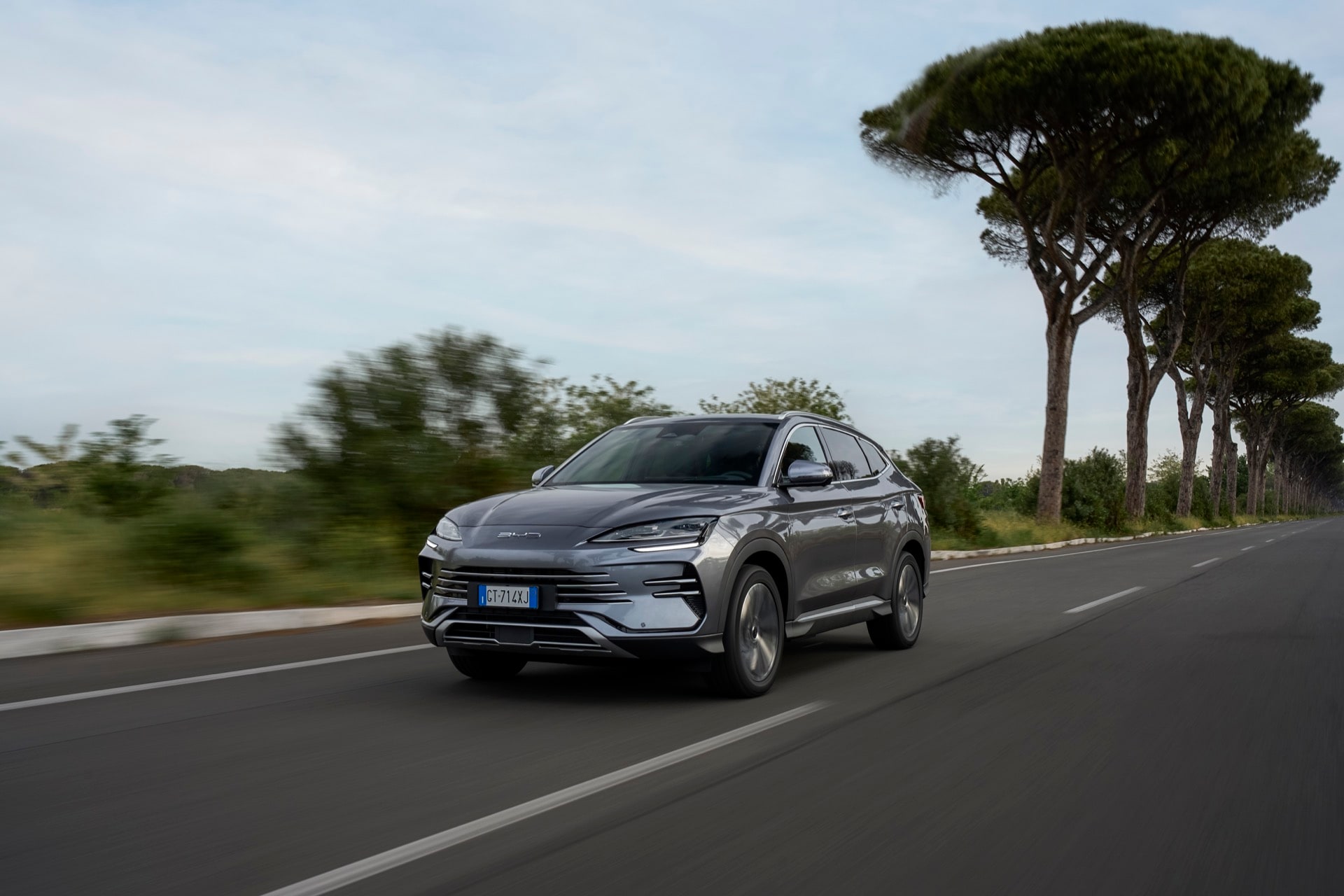
The plug-in hybrid SUV is going through a rather unusual moment. It sells more than ever in Spain, yet most press tests still measure it with the battery full—the friendly scenario—and hide what happens when the pack is depleted and the combustion engine has to haul around 300 extra kilos of cells and electronics. That is, in our view, the decisive filter for 2026: not how many electric kilometres it is homologated for, but how much the weight of that battery penalises real consumption once no charge is left.
This guide deliberately leaves out the PHEVs from BYD and Nissan. Not because they are bad options—the Seal U DM-i and the Qashqai e-Power (which is not even a strict PHEV, a separate note) have their arguments—but because, according to our editorial criteria, the models that best address the weight-battery / real-consumption axis come from other brands, and we prefer to prioritise analytical coherence over commercial notoriety.
Why battery weight decides real consumption
A mid-size PHEV SUV weighs between 250 and 400 kg more than its petrol or conventional hybrid twin. That extra mass is barely noticeable while there are electrons; it is very noticeable when there are none. A 1,650 kg C-segment SUV that rises to 2,050 kg because it carries an 18–25 kWh pack ends up consuming, on the motorway with an empty battery, between 25% and 40% more than its non-plug-in version. It is basic physics, not bad faith on the manufacturer’s part.
What matters is that this extra weight does not pay off equally across all profiles. If you charge every night and drive 40 km a day, the PHEV costs you pennies. If you travel 500 km on weekends without plugging in, the car becomes a heavy and expensive petrol car.
The three candidates in the analysis
We have chosen three plug-in SUVs currently on sale in Spain that represent three different engineering philosophies: Toyota bets on a large pack with ample mechanics, Peugeot seeks compact balance, and Volvo plays the premium card with power and a generous pack. All three fit the C/D SUV segment, all three can be plugged in, and all three compete for the same budget.
Toyota RAV4 Plug-in Advance from €52,950
The RAV4 Plug-in remains the benchmark for a reason that is uncomfortable for its rivals: even with the battery depleted, its hybrid drivetrain behaves like a traditional Toyota hybrid. The 2.5 Atkinson engine and the two electric motors work in parallel with the 18.1 kWh pack, and once this has no usable energy left the real motorway consumption hovers around 6.5–7.0 l/100 km. This is no magic: it is the only one of the trio that keeps a full-hybrid architecture when it loses its plug-in capability.
| Power | hp | Electric range | WLTP consumption | Label | Fuel |
|---|---|---|---|---|---|
| 225 kW | 306 hp | 75 km | 1.0 l/100 km | Zero emissions | PHEV |
Objective strength: the best consumption with an empty battery of the trio, by a margin that is not negligible. Weak point: an interior that feels a notch below the Volvo in materials and finish, and a price that already approaches premium territory without delivering that sensation.
Peugeot 3008 Hybrid 195 from €42,400
The plug-in 3008 is the lightest of the group and the cheapest. It mounts a 1.6 PureTech paired with a 92 kW electric motor and a 17.2 kWh pack homologated for 85 electric kilometres. On paper it is tempting. In practice, once the charge runs out, the 1.6 turbo has to move 1,780 kg with an EAT8 gearbox that does not always pick the right ratio, and real consumption climbs to 7.5–8.0 l/100 km on the motorway.
| Power | hp | Electric range | WLTP consumption | Label | Fuel |
|---|---|---|---|---|---|
| 143 kW | 195 hp | 85 km | 1.2 l/100 km | Zero emissions | PHEV |
Strength: the best homologated electric range of the trio and, by a wide margin, the most restrained price. Weak point: the drop in refinement when the battery runs out is the sharpest of the group. If the price angle within Stellantis interests you, the contest between the 3008 Hybrid and the C5 Aircross Plug-in nicely refines the internal choice.
Volvo XC60 T6 Recharge from €68,100
The XC60 Recharge is the heaviest (2,090 kg) and the most powerful. It mounts a 2.0 turbo paired with a 107 kW electric motor and an 18.8 kWh usable pack. Volvo has done its homework by refining thermal management and the transition between modes, and the result on long journeys with an empty battery is consumption of 7.8–8.3 l/100 km. Worse than the RAV4, better than one might expect from a car weighing over two tonnes.
| Power | hp | Electric range | WLTP consumption | Label | Fuel |
|---|---|---|---|---|---|
| 257 kW | 350 hp | 81 km | 1.1 l/100 km | Zero emissions | PHEV |
Strength: clearly superior comfort and acoustic insulation—the XC60 turns the motorway into a calm place even with the combustion engine working. Weak point: the price, around 60% above the Peugeot, and consumption with an empty battery that does not match its tariff.
Comparison table and scoring
| Model | Power | Electric range | Real consumption, empty battery | Boot | Price from | Warranty | Score /10 |
|---|---|---|---|---|---|---|---|
| Toyota RAV4 Plug-in Advance | 306 hp | 75 km | 6.5–7.0 l | 520 l | €52,950 | 3 years / 10 years hybrid | 8.6 |
| Peugeot 3008 Hybrid 195 | 195 hp | 85 km | 7.5–8.0 l | 520 l | €42,400 | 3 years | 7.8 |
| Volvo XC60 T6 Recharge | 350 hp | 81 km | 7.8–8.3 l | 468 l | €68,100 | 3 years | 8.1 |
The RRP gap between the Peugeot and the Volvo exceeds 60%: these are cars from different leagues even though they share technology, and the verdict should be read accordingly.
Verdict by use case
For urban use with guaranteed overnight charging: Peugeot 3008 Hybrid 195. If you will charge every night and rarely exceed 70 km a day, the 3008 leaves your wallet intact and keeps the zero-emissions label in your pocket. The extra cost of the Volvo or the Toyota does not pay off if the combustion engine barely ever starts. To go deeper into this logic, the analysis of how many electric kilometres you can cover per day helps size the pack properly.
For mixed use with frequent long trips: Toyota RAV4 Plug-in Advance. It is the only one of the trio that does not punish you when you travel without charging. Its inherited full-hybrid architecture means an empty battery is a minor problem, not a drama. If you drive 20,000 km a year with a third on the motorway, it is the rational choice.
For those who want a PHEV without giving up premium comfort: Volvo XC60 T6 Recharge. Expensive, heavy and less efficient than the Toyota on the road, yes. But also quieter, better finished and with a driving experience of another level. If the budget allows, the XC60 is the one you will enjoy most day to day.
Frequently asked questions
How much does a PHEV SUV really consume with an empty battery?
Between 6.5 and 8.5 l/100 km on the motorway depending on the model. PHEVs with a base full-hybrid architecture (Toyota, Honda) hold up better; those fitted with a small turbo hauling a lot of weight easily climb above 8 l.
Is a PHEV SUV worth it if I do a lot of motorway driving?
It depends on whether you can charge at your destination. If not, the PHEV behaves like a heavy petrol car and loses much of its raison d’être. For that profile, a conventional hybrid or a modern diesel usually turns out more economical than a poorly used plug-in.
Does the extra battery weight affect the car’s dynamics?
Yes, and more than it seems. An additional 250 to 400 kg is noticeable under long braking, in fast bends and, above all, in consumption when there is no electric energy. Manufacturers compensate with firmer suspension or specific tyres, with the corresponding impact on comfort.
Which PHEV SUV offers the best balance between electric range and consumption with an empty battery in 2026?
In our view, the Toyota RAV4 Plug-in. It is not the one with the most homologated electric kilometres, but it behaves best in the unfavourable scenario, which is the one that truly determines real annual running costs.

1 Comment
Pingback: Cómo elegir un SUV PHEV en 2026 según el perfil fiscal: autónomo, empresa o particular – Comparativa de Coches