

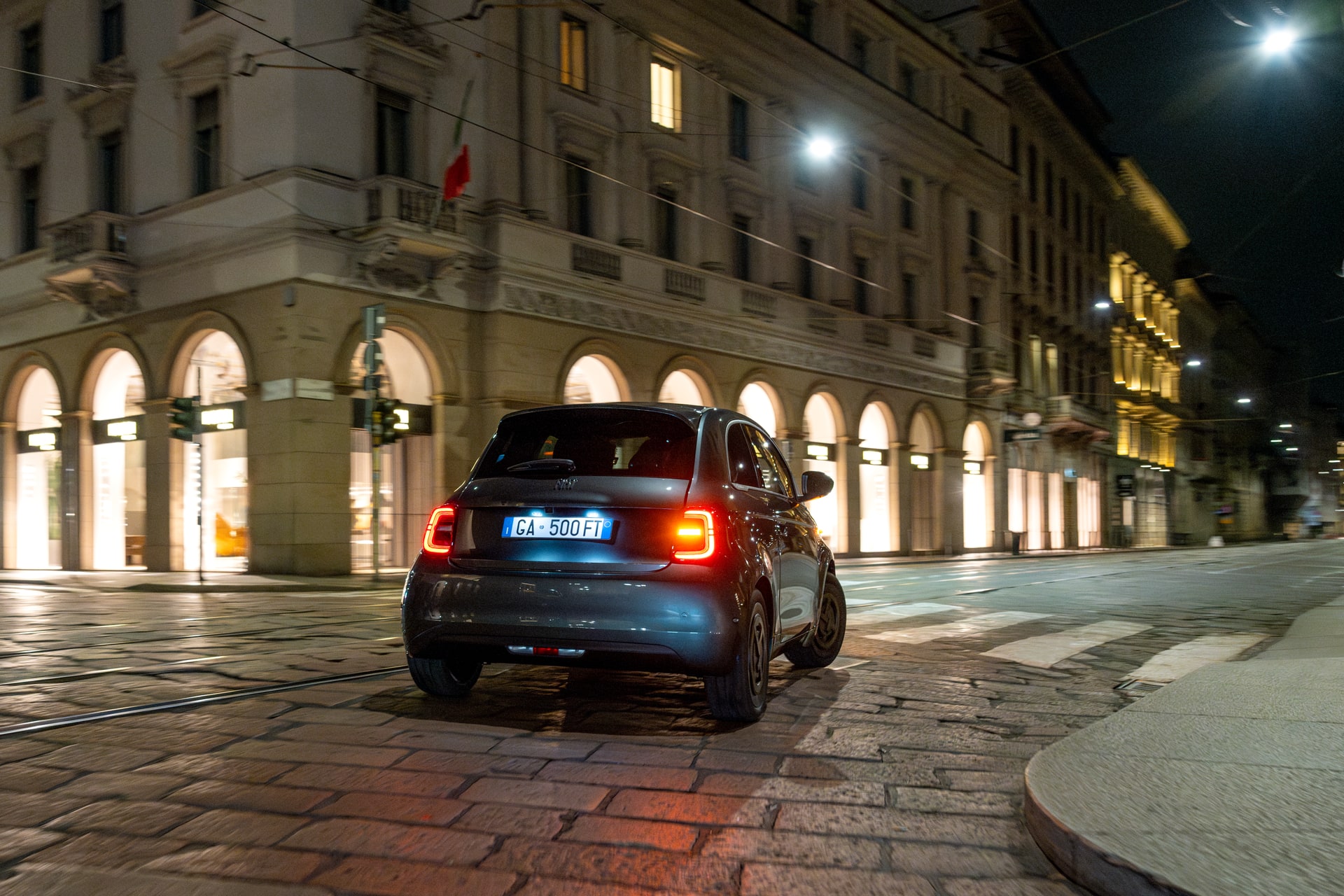
Comparing a FIAT 500e with an Abarth 500e is an unusual exercise: same platform, same battery, same boot size, same four snug seats. Yet these are two cars with very different intentions. One wants to get through the city without drawing attention; the other wants to be looked at while doing it. The question this comparison answers is simple: for someone who will use the car mostly in an urban environment, do the Abarth’s €4,500 price premium and 50 km less range pay off?
The context: two versions of the same car, with opposing intentions
We are talking about two variants of the same model built on Stellantis’ electric platform for the A segment. They share a 42 kWh battery, a 3.63 m body and the same charging architecture. What changes is the motor electronics, the chassis tuning, the sound and, of course, the price. Before getting into the details, a necessary reminder: the prices we use are the manufacturer’s recommended retail prices, without dealer discounts, one-off campaigns or Plan Auto+ aid.
FIAT 500e — from ≈€34,900
The standard 500e is a pure urban electric car, designed for historic city centres and low-emission zones. 120 hp is more than enough for the city; in fact, it is more than you need. Its appeal lies elsewhere: in the 320 km homologated range, the silence and a style that doesn’t tire. It is quick, yes, but it isn’t enjoyed like a “passionate” car — and I think that is precisely where its strength lies.
| Power kW | Power hp | Range | Consumption | Label | Fuel |
|---|---|---|---|---|---|
| ≈90 kW | ≈120 hp | ≈320 km | ≈17.5 kWh/100 km | Zero | Electric |
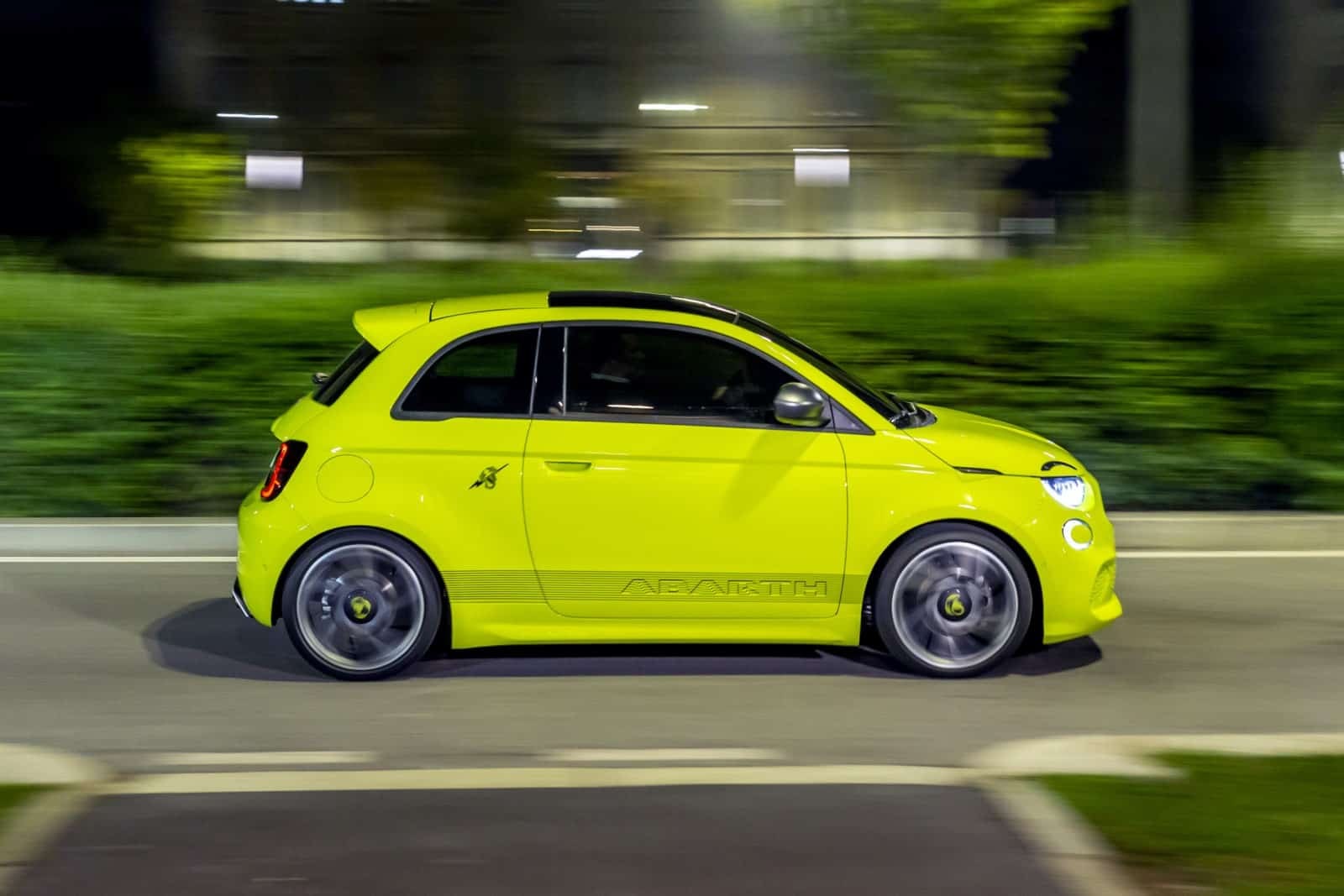
Abarth 500e — from ≈€39,400
The Abarth takes the same base, raises the power to 160 hp, stiffens the suspension, revises the steering and brakes, and adds the controversial “Sound Generator” that mimics the exhaust of the petrol Abarth. In the city this translates into a more electric-feeling response to the accelerator — if you’ll pardon the pun — less range (270 km homologated) and a visual presence that doesn’t go unnoticed. It is fun in short bursts. What remains to be seen is whether that fun fits pure urban use.
| Power kW | Power hp | Top speed | Range | Label | Fuel |
|---|---|---|---|---|---|
| ≈110 kW | ≈160 hp | ≈160 km/h | ≈270 km | Zero | Electric |
Real-world range: where the difference hurts
On paper there is a 50 km difference between the two. In pure urban use, with low speeds and plenty of regeneration, the gap narrows: both get close to their homologated figures, the 500e around 280–290 real km and the Abarth around 230–240. If your routine is a 20 km daily commute with charging at home every three or four days, it makes no difference. If you have no private charger and rely on public charging, every kilometre counts — and that’s where the 500e has a clear advantage. For anyone in this segment, real urban range is the filter that really decides the purchase.
City performance: do the extra 40 hp make any difference?
Honestly, not much. Between traffic lights, the 500e already has plenty. The Abarth feels livelier on the accelerator, its steering is a little heavier and the suspension transmits more of the road surface — for better and for worse. On Madrid’s cobbles or the paved streets of central Seville, the firmer setup takes its toll on comfort. The 500e filters better. The Abarth entertains when you find a clear stretch, which in the city happens rarely.
Equipment, boot and everyday use
Both share a 10.25″ central screen, climate control, an 11 kW on-board charger and access to DC fast charging. The boot is identical (185 litres) and the rear seats remain token in both. The difference lies in personalisation details: upholstery, wheels, the Abarth’s specific styling. Nothing that changes real-world use.
Comparative summary table
| Model | Power | Range | Battery | Price from | Urban use score (1-10) |
|---|---|---|---|---|---|
| FIAT 500e | 120 hp | ≈320 km | 42 kWh | ≈€34,900 | 8.5 |
| Abarth 500e | 160 hp | ≈270 km | 42 kWh | ≈€39,400 | 6.5 |
Where each one wins (without false equivalence)
FIAT 500e wins on: real range (≈50 km more homologated, decisive if you charge on the street) and ride comfort on uneven surfaces. For pure urban use, it is objectively the better car.
Abarth 500e wins on: dynamic character and visual presence. If you want a small electric toy with personality — and you’ll also take it onto secondary roads at the weekend — it is more consistent with itself.
Verdict: which electric 500 to choose
- Pure urban use (city + low-emission zones, street charging): FIAT 500e. The extra 50 km of range and the gentler suspension matter more than the additional 40 hp you won’t use.
- Mixed use, city + short trips, with a home charger: Abarth 500e. If you have a garage with a wallbox, the lower range stops being a problem and the extra character becomes enjoyable.
- Price-performance ratio: FIAT 500e, no question. The RRP difference exceeds 12% and, for most urban uses, it is not justified by functional improvements — only emotional ones.
If your use case is home-work-errands and nothing more, the 500e is the rational purchase. The Abarth is the passionate purchase. Both are legitimate, but it’s worth knowing which of the two categories you fall into before signing.
Frequently asked questions
Is it worth paying €4,500 more for the Abarth 500e if I’ll only use it in the city?
In our view, no. In an urban environment, the Abarth’s 160 hp is hard to make use of and you lose real range. The extra cost is only justified if you value the character, the artificial sound and the specific styling — that is, the emotional component, not the functional one.
Which has better real-world range in the city, the FIAT 500e or the Abarth 500e?
The FIAT 500e. It is homologated at 320 km versus the Abarth’s 270 km, and in pure urban use the difference stays around 50 real km in favour of the 500e, as both share the same 42 kWh battery but the motor is less demanding.
Can both be included in the Plan Auto+?
Yes, as 100% electric vehicles with a Zero label they fall within the current aid framework for buying electric cars in Spain. The amounts and requirements change; it is worth checking the official plan website before closing the deal.
Are these cars suitable as a family’s only vehicle?
No. Both are strictly four-seaters, with very tight rear access and 185 litres of boot space. They are designed as a second urban car or as a first car for one or two people without family loads. For family use you need to look one segment up.
