

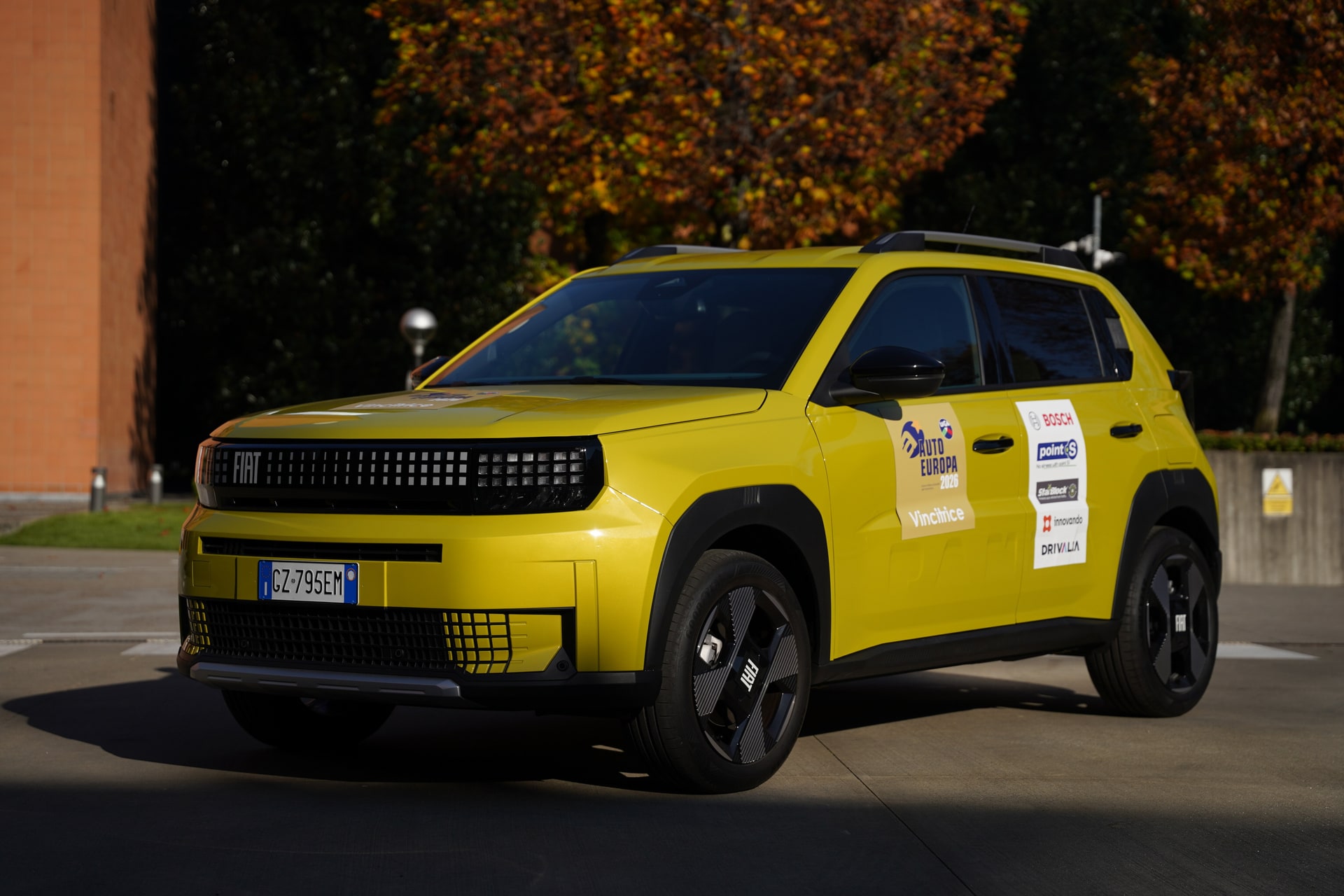
They share a platform, they share a factory, and they even share a philosophy: entry-level cars designed to put the European city car back on the map. And yet they offer almost opposite answers to the same question. The Citroën ë-C3 bets everything on the affordable EV; the FIAT Grande Panda, in its 1.2 100 Pop version, argues that the modern petrol car still has plenty to say below the 20,000 euro mark.
The urban buyer’s question is a specific one. Is it worth paying around €8,500 more for the ZERO label, the silence and overnight charging? Or is the Panda’s approach more rational? Let’s take it step by step.
Two cousins, two strategies: why this comparison makes sense
Both are born from Stellantis’ Smart Car platform, the same one the Group is launching to shake up the B segment. Same underpinnings, very similar dimensions, the same vocation as a city car made in Europe. The difference is in the heart: one plugs in, the other fills up.
This is not a comparison between different categories. It is the same category with two radically different spec sheets. And for the Spanish buyer, with low-emission zones in the big cities and volatile electricity bills, the decision is far from trivial.
Citroën ë-C3 Van 113 44 kWh — from ≈€26,700
The trim we are analysing is the ë-C3 with the 113 hp motor (Citroën calls it “Van 113” in its internal nomenclature, not to be confused with a van) and a 44 kWh battery. The pure 100% electric version.
Its best asset is comfort. The suspension with progressive hydraulic bump stops —the brand’s trademark— lets the ë-C3 swallow urban speed bumps with a smoothness you won’t find in any other car at this price. The Advanced Comfort seats help. In traffic jams, with the electric motor and that insulation, it drives like something from a segment above.
The 320 km WLTP range translates, in real urban use, into roughly 260-280 km without breaking a sweat. That is enough for an entire week of home-to-work trips in most cases. ZERO label, free access to Madrid Central, Barcelona’s ZBE and the rest.
| Power kW | Power hp | Top speed | Range | Battery | Label | Fuel |
|---|---|---|---|---|---|---|
| 80 kW | 110 hp | 130 km/h | 320 km | 44 kWh | ZERO | Electric |
FIAT Grande Panda 1.2 100 Pop — from ≈€18,200
The Grande Panda 1.2 100 Pop uses the 100 hp turbocharged three-cylinder with 48V mild hybrid technology on the entry-level trim. ECO label on the mild-hybrid versions. Starting price around €18,200 RRP, about €8,500 below the ë-C3.
What does it gain? Range without anxiety, refuelling in five minutes and no worry about installing a wallbox in the garage —or about not having one at all, which is very common in Spanish flats without a private parking space. It reaches 160 km/h without breaking a sweat and holds up better on the motorway than the ë-C3, whose real-world range drops from 110-120 km/h upwards.
The interior has the “running track” look that FIAT has revived, with more character than the Citroën in our view. That said, ride comfort is clearly behind the ë-C3. And so is cabin noise.
| Power kW | Power hp | Top speed | Consumption | CO₂ | Fuel |
|---|---|---|---|---|---|
| 70 kW | 100 hp | 160 km/h | 5.5 l/100 | 130 g/km | Petrol (MHEV) |
Where each one wins, no half measures
The ë-C3 clearly wins on:
- Urban ride comfort. The difference from the Panda is one of class, not nuance.
- Cost per kilometre with home overnight charging. Charging off-peak, we are talking about €1.5-2 per 100 km versus €8-9 per 100 km for the petrol Panda with petrol at €1.55/litre.
The Grande Panda clearly wins on:
- Entry price. €8,500 less is a huge amount in this segment; if you are interested in the segment without electric complications, that difference buys a lot of car.
- Touring versatility. No route planning, no hunting for chargers, no range drop at 120 km/h.
Summary table with scores
| Criterion | Citroën ë-C3 | FIAT Grande Panda |
|---|---|---|
| Price from | ≈€26,700 (6/10) | ≈€18,200 (9/10) |
| Power | 110 hp (7/10) | 100 hp (6/10) |
| Range / Touring use | 320 km WLTP (6/10) | ≈900 km tank (9/10) |
| Cost €/100 km | €1.5-2 overnight charging (9/10) | ≈€8-9 petrol (5/10) |
| DGT label | ZERO (10/10) | ECO (7/10) |
| Urban comfort | Excellent (9/10) | Decent (6/10) |
| Overall score | 7.8/10 | 7.0/10 |
RRP prices recommended by the manufacturer, excluding dealer discounts, one-off campaigns or Plan Auto+ incentives.
Verdict: what to buy depending on your case
- Pure urban use with a garage and wallbox: Citroën ë-C3. The extra cost pays for itself and the comfort is superior. ZERO label guaranteed against future restrictions.
- No fixed parking space or access to overnight charging: FIAT Grande Panda. Charging at public points every day kills the EV’s economic advantage and adds real friction.
- Mixed city use + frequent trips >200 km: FIAT Grande Panda. The ë-C3 can do it, but doesn’t enjoy it. The Panda does.
- Best absolute value for money: FIAT Grande Panda. The RRP difference exceeds 40% —well above the 15% threshold— and is too big to ignore if you can’t take advantage of cheap charging at home.
The short answer: ë-C3 if you have your own plug; Grande Panda if you don’t.
FAQ
Does the Citroën ë-C3 have a hybrid version like the Grande Panda?
Citroën sells the C3 with petrol and mild-hybrid engines in addition to the pure electric ë-C3, but in this comparison we have isolated the 100% electric version against the petrol Panda to frame the buyer’s strategic decision.
How long does the ë-C3 take to charge from a household socket?
With a conventional 2.3 kW socket, a full charge of the 44 kWh battery takes more than 20 hours. With a 7.4 kW home wallbox, it is completed in about 6-7 hours —the realistic use is daily overnight charging from 20% to 80%.
Does the Grande Panda 1.2 100 Pop have the ECO label?
Yes, the 1.2 100 engine with 48V mild hybrid technology qualifies for the DGT’s ECO label, with the associated circulation advantages in most Spanish ZBEs.
Are there public incentives for buying the ë-C3?
The electric model falls within the Government’s Plan Auto+ framework. The specific amounts and conditions change frequently; check the plan’s official website and confirm availability with the dealer before closing the purchase.

1 Comment
Pingback: FIAT 500e vs Abarth 500e: qué versión del 500 eléctrico compensa más en uso urbano – Comparativa de Coches