

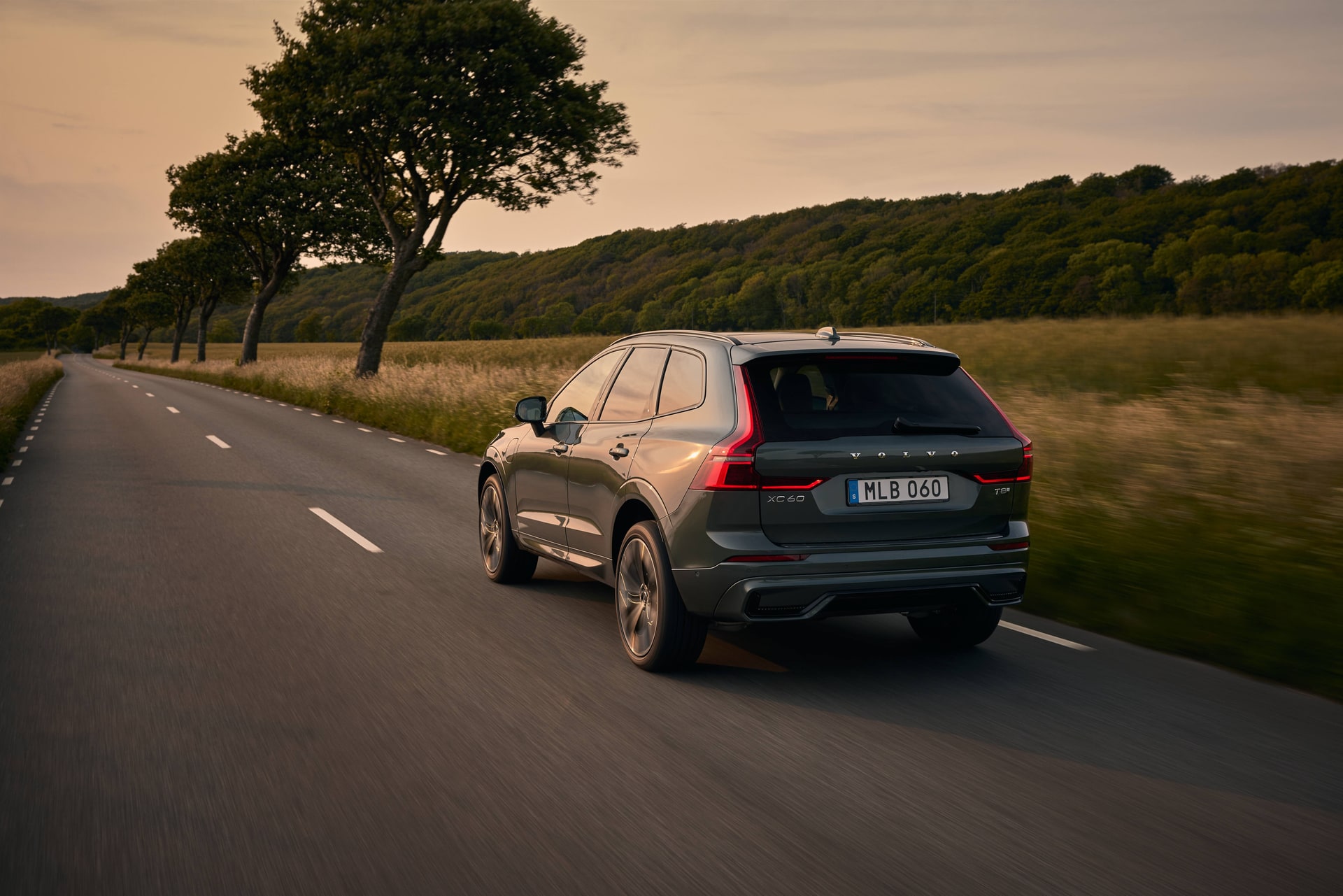
Home charging time is no minor detail when we talk about a premium PHEV SUV. In practice, it is what decides whether you will make most of your trips in electric mode or whether the battery will be left half-charged every morning. And almost nobody does the math carefully: the manufacturer sells you the battery kWh and the WLTP range, but the figure that really matters — how many hours your car takes plugged into a 7.4 kW home wallbox — rarely appears in the brochure.
Let’s break it down with real numbers and compare three premium D-segment PHEV SUVs that are sold in Spain in 2026.
Why the 7.4 kW wallbox is the home standard in Spain
The vast majority of residential installations in Spain are single-phase at 230 V. The physical ceiling a typical domestic line can handle, with a dedicated residual-current device and 32 A, is around 7.4 kW. It is the reasonable step up: below that (3.7 kW) you take twice as long, and above it you need three-phase power, which is not the norm in standard flats and townhouses.
For a premium PHEV with a 20–30 kWh battery, a 7.4 kW wallbox is more than enough. The bottleneck is almost never the wall. It is the car’s onboard charger.
The formula that really matters: usable kWh ÷ real AC power
Forget the manufacturer’s “official” charging times. The calculation is simple:
Time (h) = Usable battery capacity (kWh) ÷ Maximum AC power the car accepts (kW)
And here is the catch. Many premium PHEVs limit their internal AC charger to 3.7 kW or 7.4 kW. If your car only accepts 3.7 kW, it doesn’t matter that your wallbox delivers 7.4: you will charge at half the speed. If it accepts 11 kW on three-phase but you are single-phase, the real ceiling remains 7.4 kW.
On top of that calculation you must add 10–15% losses from heat and thermal management. A PHEV with 20 usable kWh and a 7.4 kW charger does not take 2h 42min: it takes roughly 3 real hours.
Three premium D-segment PHEV SUVs compared
Volvo XC60 Recharge T6 AWD Plus — from ~€75,000
The XC60 Recharge fits a 6.4 kW AC charger. With 18.8 usable kWh of battery, the math comes out at just under 3 hours from 0 to 100%. In practice, plugging it in on arriving home at 20:00 means having it full by midnight without breaking a sweat. Volvo has refined the thermal management and, in winter, the loss margin is contained.
| Power kW | Power CV | WLTP electric range | Fuel | Label |
|---|---|---|---|---|
| 257 kW | 350 CV | ~81 km | PHEV | 0 emissions |
BMW X3 xDrive30e — from ~€68,000
The X3 PHEV falls short on AC charging: 3.7 kW onboard charger. This is the car’s big “but”. With roughly 10 usable kWh of battery it takes around 3h 30min, which is not dramatic because the battery is not large either, but it means a 7.4 kW wallbox is underused. And the electric range suffers.
| Power kW | Power CV | WLTP electric range | Fuel | Label |
|---|---|---|---|---|
| 215 kW | 292 CV | ~50 km | PHEV | 0 emissions |
To go deeper into this model’s family use compared with the Swedish one, we already analysed the X3 xDrive30e versus the XC60 Recharge in a separate piece.
Mercedes-Benz GLC 300 e 4MATIC — from ~€78,000
Here Mercedes has done its homework. The GLC 300 e fits an 11 kW AC charger (three-phase) and also accepts DC fast charging up to 60 kW, which is very rare in a PHEV. On a single-phase 7.4 kW wallbox your real ceiling is 7.4, but with a battery of ~24 usable kWh a full charge comes out at about 3h 15min. On three-phase it would drop to 2h 30min. It is, today, the premium PHEV most consistent with the ambition of genuinely using it in electric mode.
| Power kW | Power CV | WLTP electric range | Fuel | Label |
|---|---|---|---|---|
| 230 kW | 313 CV | ~130 km | PHEV | 0 emissions |
And two alternatives worth keeping on the radar
Audi Q5 TFSI e (from ~€70,000): 7.4 kW AC charger, battery of around 17 usable kWh, full charge in about 2h 30min. Balanced, without excess.
Lexus NX 450h+ (from ~€67,000): 6.6 kW charger, 18.1 usable kWh battery. Charges in about 2h 30–3h. Lexus prioritises reliability over charging power, and it shows.
Summary table and scoring
| Model | Max AC charger | Approx. usable battery | Real time at 7.4 kW | WLTP EV range | Price from | Score /10 |
|---|---|---|---|---|---|---|
| Mercedes-Benz GLC 300 e | 11 kW (three-phase) / 7.4 kW single-phase | ~24 kWh | ~3h 15min | ~130 km | ~€78,000 | 9 |
| Audi Q5 TFSI e | 7.4 kW | ~17 kWh | ~2h 30min | ~60 km | ~€70,000 | 7.5 |
| Volvo XC60 Recharge | 6.4 kW | ~18.8 kWh | ~2h 55min | ~81 km | ~€75,000 | 7.5 |
| Lexus NX 450h+ | 6.6 kW | ~18.1 kWh | ~2h 50min | ~76 km | ~€67,000 | 7 |
| BMW X3 xDrive30e | 3.7 kW | ~10 kWh | ~3h 30min | ~50 km | ~€68,000 | 6 |
Prices are manufacturer’s recommended retail prices (PVP), indicative, without dealer discounts, campaigns or Plan Auto+ aid. Technical figures must be verified on the official datasheet for the specific model and trim.
Checklist before signing
- Ask for the real AC power of the onboard charger, not the DC fast-charging figure. If the salesperson hesitates, that is a bad sign.
- Confirm single-phase vs three-phase: many premium PHEVs advertise “11 kW” which at home drops to 7.4.
- Divide usable battery by real AC power and add a 15% margin. That is your figure.
- Look at the WLTP electric range and subtract 25–30% for real mixed use.
- Check whether the PHEV accepts DC charging: only the GLC 300 e and very few others offer it in this segment.
Verdict by use case
- For those who want to maximise electric kilometres and have a 7.4 kW home wallbox: the Mercedes-Benz GLC 300 e wins without debate. Large battery, powerful charger, DC charging as a bonus. It is ~15% more expensive than the X3, but the difference is justified.
- For families seeking a balance between cost and daily electric use: the Volvo XC60 Recharge is the most rational choice. 81 km WLTP covers most people’s daily needs and overnight charging is not a problem.
- For those who prioritise reliability and low maintenance above all else: the Lexus NX 450h+. It does not stand out in anything, but it fails at nothing.
- The BMW X3 xDrive30e is hard to recommend with the charging numbers on the table. It is an excellent car to drive, that is not in question, but its 3.7 kW charger and 50 km of electric range leave it halfway on the one ground where a PHEV should shine.
Frequently asked questions
Can I charge a premium PHEV from a normal domestic socket?
Yes, but at 2.3 kW a full charge will take you 8–10 hours. For daily use it is viable if you plug in overnight; for intensive rotation it does not pay off. The 7.4 kW wallbox is the reasonable minimum investment.
Why does my PHEV charge more slowly than the manufacturer says?
The onboard charger has a cap. If your car accepts 3.7 kW on AC, it doesn’t matter that the wallbox delivers 22 kW: you will charge at 3.7. In addition, there are heat losses of 10–15% and thermal management reduces power when reaching 80%.
Is a PHEV worth it if I can’t install a wallbox at home?
Frankly, no. A PHEV without regular charging becomes a heavy hybrid with worse consumption than an equivalent diesel. If you have no wallbox or secure socket in the car park, rule out the PHEV and look at a conventional HEV.
Does the Plan Auto+ aid apply to premium PHEV SUVs?
Plan Auto+ provides aid for electrified vehicles with a minimum electric range, and the premium PHEVs mentioned comfortably meet it. Check the current amount on the official website, as the sums and conditions are updated periodically.

1 Comment
Pingback: Cómo elegir un SUV premium en 2026 según el coste real de mantenimiento a 5 años y la cobertura de garantía – Comparativa de Coches