

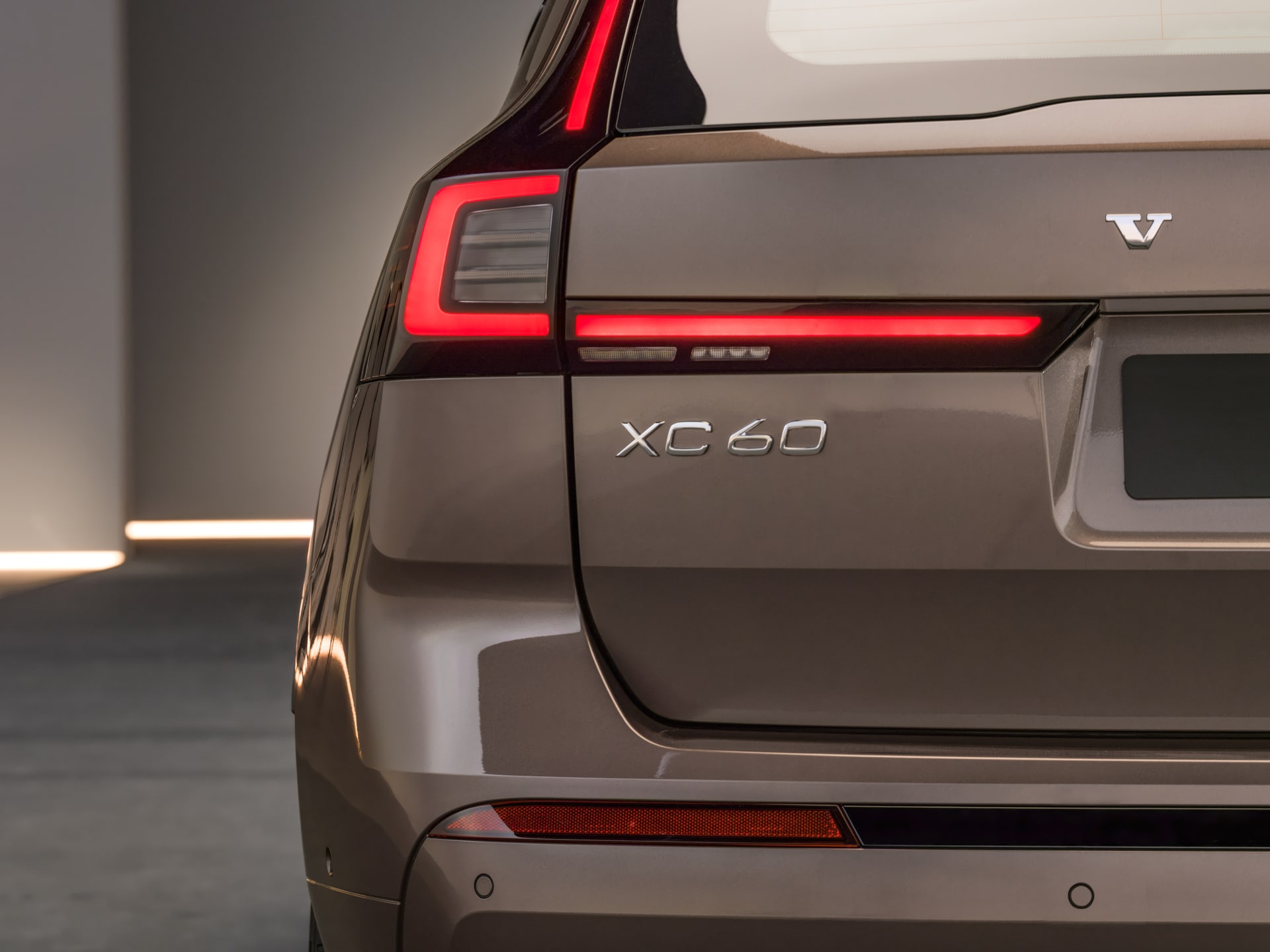
Two premium large SUVs, two philosophies. The Volvo XC90 T8 Recharge has for years been the reference for the sensible plug-in seven-seater: safe, rational, with an interior that ages well. Opposite it, the Range Rover Sport P460e plays in a different league of ambition: a bigger battery, heavy sports-car performance and a price tag to match. Which one makes more sense if what you want is to carry the family and luggage and cover 800 km in one go without regrets?
Before we get into it, a note for the reader: the prices you will see are the manufacturer’s recommended RRP. They do not include dealer discounts, one-off campaigns or aid schemes such as Plan Auto+. For the real figure in your case, request an offer.
The context: two seven-seat PHEV large SUVs, but they don’t play the same game
Both are large, plug-in SUVs with three rows and CERO (zero-emissions) labelling. That is where the similarity ends. Volvo relies on a turbocharged 2.0 four-cylinder combined with electric drive, while the Range Rover Sport fits a 3.0 turbo inline-six supported by a much larger battery. One weighs less, the other promises twice the pure-electric range. That is the fight.
Volvo XC90 T8 Recharge Core eAWD — from ≈€91,200
The Core trim is the entry point to the T8 Recharge, with 455 hp combined and eAWD all-wheel drive. On a long trip it performs as what it is: an honest seven-seater with a modest battery of around 19 kWh, good for roughly 70 km homologated under WLTP. In practice, that means that if you travel with a depleted battery you drop into conventional hybrid mode, which is a bit tight: the combustion engine has to move 2.3 tonnes and you feel it.
| Power kW | Power hp | Top speed | Electric range | Consumption | Label | Fuel |
|---|---|---|---|---|---|---|
| ≈340 kW | ≈460 hp | ≈180 km/h | ≈70 km | ≈1.5 l/100 | CERO | PHEV petrol |
The good: the XC90’s third row is one of the few genuinely usable ones for adults on short journeys and for children without complaint on long trips. The boot, with the third row folded, nearly reaches 640 litres. And the Pilot Assist driver assistance, with native Google integration, remains one of the most polished in the segment, something we already highlighted in the XC60 review and which works just as well here.
The questionable: the chassis shows the weight in fast bends, and the 180 km/h top speed makes it clear it is not built to show off on a German autobahn. Nor does it need to.
Land Rover Range Rover Sport P460e S — from ≈€104,600
The P460e is the most interesting PHEV in the Sport range. On paper it matches the Volvo’s 460 hp, but with a 3.0 turbo Ingenium six-cylinder that delivers its power differently: more linear, more refined, more “€100,000 car”. The 38 kWh battery, double that of the XC90, allows around 100 km homologated in pure electric mode. A huge difference if your daily use fits within that range and you only burn petrol on trips.
| Power kW | Power hp | Top speed | Electric range | Consumption | Label | Fuel |
|---|---|---|---|---|---|---|
| ≈340 kW | ≈460 hp | ≈230 km/h | ≈100 km | ≈2.5 l/100 | CERO | PHEV petrol |
The good: ride comfort at 130 km/h is simply superior, with standard air suspension and acoustic insulation that turns 500 km of motorway into a stroll. And those 100 real km (well, 70-80 in reality depending on temperature) of electric range are a change of category.
The questionable: the third row is optional and, when fitted, sacrifices a good part of the boot. Narrower than the XC90’s and designed for occasional use, not for taking three teenagers to Benidorm. For a family that genuinely uses all 7 seats often, it is a serious drawback.
Summary table and scoring
| Model | Power | EV range | Boot (7 seats up / 5 seats) | Price from | Warranty | Long family trip score |
|---|---|---|---|---|---|---|
| Volvo XC90 T8 Recharge Core | 460 hp | ≈70 km | ≈310 / 640 l | ≈€91,200 | 2 years + 8 years battery | 8.5 / 10 |
| Range Rover Sport P460e S | 460 hp | ≈100 km | ≈240 / 647 l (3rd row optional) | ≈€104,600 | 3 years + 8 years battery | 8.2 / 10 |
Where each one wins, no half measures
The Volvo wins on: real living space in the 7 seats (third row standard and usable), and price-to-equipment ratio. €13,000 less for a car with equivalent performance on paper is a lot of money: we are talking about a difference exceeding 14%, bordering on the 15% threshold that marks a category gap.
The Range Rover wins on: electric range (double, literally) and refinement on long trips. If your day-to-day is 60-80 km and you charge at home every night, you can go weeks without refuelling. That is impossible with the XC90. In addition, the inline-six and air suspension put motorway comfort on another level, something that, if you make many trips of 500+ km, you notice from day one.
Verdict by use case
- Family of 5-7 members who genuinely use the third row: Volvo XC90 T8 Recharge. No contest. The Range Rover with a third row is a makeshift solution; the Volvo is a genuine seven-seater.
- Couple or small family with short daily use and occasional long trips: Range Rover Sport P460e. The 100 km of electric range changes the equation: in practice you can be almost an electric car during the week and a grand tourer at weekends.
- Price-performance ratio: Volvo XC90 T8 Recharge. The €13,000 difference buys a lot of equipment and allows you to amortise more domestic electric charging. If your budget is tight, the equation is clear.
- Pure long-distance travel, premium comfort without compromise: Range Rover Sport P460e. For 1,000 km a month of motorway driving, the extra cost is justified.
If you are torn between paying more for electric range or investing in real living space, it is worth reviewing how the extra weight of the battery affects the real consumption of a PHEV, because the Range Rover pays a bill in kilos that the Volvo saves.
FAQ
Which has the better real electric range, the Volvo XC90 T8 or the Range Rover Sport P460e?
The Range Rover Sport P460e, no question. Its 38 kWh battery doubles the Volvo’s (19 kWh) and is homologated for around 100 km versus the XC90’s 70. In real use, with motorway driving and air conditioning, the Range Rover achieves around 70-80 real km versus 45-55 in the Volvo.
Is the Range Rover Sport P460e’s third row really usable?
It is optional and designed for occasional use. It is narrower and has less legroom than the Volvo XC90’s. If you regularly carry seven passengers, the XC90 is clearly the better choice; the Range Rover manages, but it is not designed for it.
Is it worth paying €13,000 more for the Range Rover Sport than the Volvo XC90?
It depends on use. If you drive many kilometres a day in electric mode and value premium motorway comfort, yes. If you use the third row often or care about price-to-equipment ratio, the Volvo wins clearly.
What DGT labels do both have, and can they enter ZBE zones?
Both carry the CERO label as PHEVs with more than 40 km of WLTP electric range, so they have unrestricted access to any Low Emission Zone in Spain, including Madrid Central and the Barcelona ZBE.
