

Choosing a C-SUV PHEV in 2026 is still an exercise in being honest with yourself. Not with the spec sheet, but with your real routine: how many kilometres you drive from Monday to Friday, whether you sleep with a charging point at home and how far you are going to make long trips with an empty battery. A badly chosen plug-in is simply an expensive hybrid dragging around an extra 300 kg. Well chosen, it is a car that can go weeks without seeing a petrol station.
This analysis deliberately leaves BYD and Nissan out of the C-SUV PHEV segment. It is not a judgement against either brand: according to our editorial criteria, we have prioritised the models that best meet the technical criteria that matter here —realistic homologated electric range, value for money and maturity of the plug-in hybrid system— over commercial profile. On that premise, three candidates make the cut that, in our view, cover the three driver profiles we will look at: Cupra Formentor e-Hybrid, Peugeot 3008 Hybrid 195 and Toyota RAV4 Plug-in.
The question that decides everything: how many daily km do you drive in electric mode?
It is not the power. It is not the boot. It is this. A PHEV whose WLTP range does not cover your typical day will force you to start the combustion engine every day, and the tax and consumption advantage evaporates within weeks. As we already explained in detail about the pure electric mode of a PHEV SUV, the homologated figure is not the real one: expect to lose between 25% and 35% of the WLTP figure in mixed use, even more in winter or on sustained motorway driving.
Hence the three thresholds of this guide: under 30 km a day, between 30 and 60 km, and over 60 km.
Under 30 km a day: Peugeot 3008 Hybrid 195 (from ~€44,500)
A pure urban driver profile: trips from home to work, school, errands. Here you do not need the largest battery in the segment — you need a well-resolved, comfortable PHEV that makes the most of every overnight charge without drama. The Peugeot 3008 Hybrid 195 in Allure trim fulfils that role with a 1.6 turbo plus electric motor system that homologates around 85-90 km WLTP. In practice, for 25-30 real daily km, charging every other night is enough.
Its strong point compared with the other two: the interior. The i-Cockpit with the panoramic screen and the Allure trim materials feel a step above the Formentor in the cabin, and well above the RAV4 in perceived quality. The weak point: the 1.6 PureTech petrol engine has a reliability record that weighs on the decision when it comes to intensive long-term use.
| Power (hp) | WLTP electric range | Label | Fuel |
|---|---|---|---|
| 195 hp | ~85 km | Zero emissions | PHEV |
Between 30 and 60 km a day: Cupra Formentor e-Hybrid (from ~€46,000)
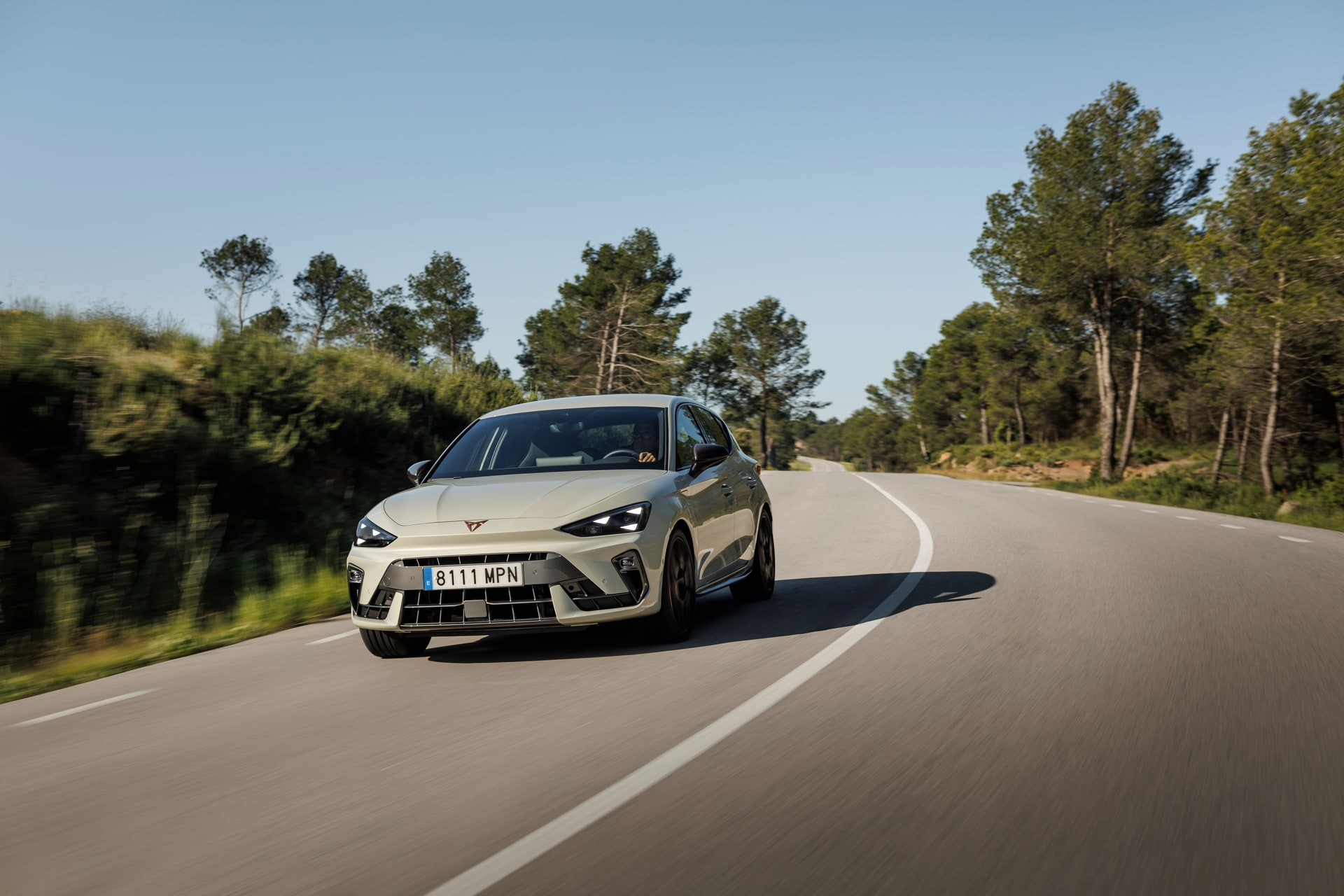
This is the range where most Spanish drivers with a mixed city-road daily commute live. Here the Cupra Formentor e-Hybrid VZ 272 hp is, in our view, the most well-rounded choice: a 19.7 kWh usable battery, WLTP range of around 100-115 km depending on trim, and a mechanical integration of the Volkswagen Group’s PHEV system that works better on the open road than the 3008’s and with more dynamic character than the RAV4.
It charges on AC up to 11 kW and accepts DC fast charging of up to 50 kW on the updated versions — uncommon among PHEVs and very useful if you have access to a fast charger at work. The compromise: the boot is limited to 345 litres, penalised by the battery’s location. If you have a large family, look elsewhere.
| Power (hp) | WLTP electric range | Label | Fuel |
|---|---|---|---|
| 272 hp | ~100-115 km | Zero emissions | PHEV |
Over 60 km a day or frequent long trips: Toyota RAV4 Plug-in (from ~€54,900)
When daily use exceeds 60 electric km or you are going to make long trips with a depleted battery, the conversation changes. WLTP range is no longer enough: what matters is how the car behaves when the charging point is far away. And there the RAV4 Plug-in Advance plays in another league.
Its hybrid system combines 306 hp of total power, electric all-wheel drive on the rear axle, and a WLTP electric range of around 75 km. Less than the Formentor on paper, yes — but with an empty battery it keeps working like a conventional Toyota hybrid, with real-world consumption of 5.5-6.5 l/100 km. The Formentor, with a depleted battery on the motorway, comfortably goes above 7.5 l. The 3008, similar. We already covered this contrast in detail in the comparison between the RAV4 Plug-in and the Honda CR-V Plug-in.
The trade-off is obvious: price. It costs around €8,000-10,000 more than the Peugeot, a difference of over 15% that has to be justified with intensive real use or regular long trips.
| Power (hp) | WLTP electric range | Label | Fuel |
|---|---|---|---|
| 306 hp | ~75 km | Zero emissions | PHEV |
Comparison summary table
| Model | Power | WLTP electric range | Boot | Price from | Warranty | Overall score |
|---|---|---|---|---|---|---|
| Peugeot 3008 Hybrid 195 Allure | 195 hp | ~85 km | 520 l | ~€44,500 | 3 years / 100,000 km | 7.8/10 |
| Cupra Formentor e-Hybrid VZ | 272 hp | ~100-115 km | 345 l | ~€46,000 | 3 years with no km limit (2 years) + 100,000 km | 8.3/10 |
| Toyota RAV4 Plug-in Advance | 306 hp | ~75 km | 520 l | ~€54,900 | Up to 10 years / 185,000 km (Toyota Relax) | 8.5/10 |
Verdict by use case
- Urban use and under 30 km a day: Peugeot 3008 Hybrid 195. Superior interior, lower price, more than enough range for the profile.
- Mixed use between 30 and 60 km a day: Cupra Formentor e-Hybrid. The largest battery of the trio, faster charging and the most satisfying driving dynamics. The best use-to-price ratio if the boot is not a priority.
- More than 60 electric km a day or frequent long trips: Toyota RAV4 Plug-in. The most expensive, yes, but the only one whose operation with an empty battery is not penalised. The Toyota Relax warranty is an additional argument for intensive use.
- Value for money: Peugeot 3008 Hybrid 195. It asks the least for what it offers, as long as the usage profile fits.
Frequently asked questions
¿How much minimum WLTP electric range should I look for in a C-SUV PHEV in 2026?
As a practical rule, multiply your daily mileage by 1.4 to compensate for the difference between WLTP and real use. If you drive 40 km a day, look for at least 55-60 km WLTP; if you drive 60, a minimum of 85-90 km WLTP.
Is it essential to have a charging point at home to buy a PHEV?
Yes. Without overnight home charging, a PHEV loses its reason for being: it becomes an expensive conventional hybrid with more weight. If you can only charge in public occasionally, a non-plug-in hybrid will be more cost-effective for you.
Do PHEVs still qualify for the Plan Auto+?
Plug-in hybrids are usually candidates for the grants under the Plan Auto+ currently in force in Spain, with specific conditions on minimum electric range and maximum price. Check the plan’s official website for the amount and up-to-date requirements before signing.
Is a PHEV worth it if I make a lot of long motorway trips?
Only if the underlying hybrid system is efficient with an empty battery. The RAV4 Plug-in delivers; many European rivals consume 7.5-8.5 l/100 km without battery, wiping out much of the annual savings. For 100% motorway use, a conventional hybrid or an efficient diesel may still make economic sense.

1 Comment
Pingback: Toyota RAV4 Hybrid vs Hyundai Tucson Hybrid: qué SUV-C híbrido convence más como coche de viaje familiar en 2026 – Comparativa de Coches