

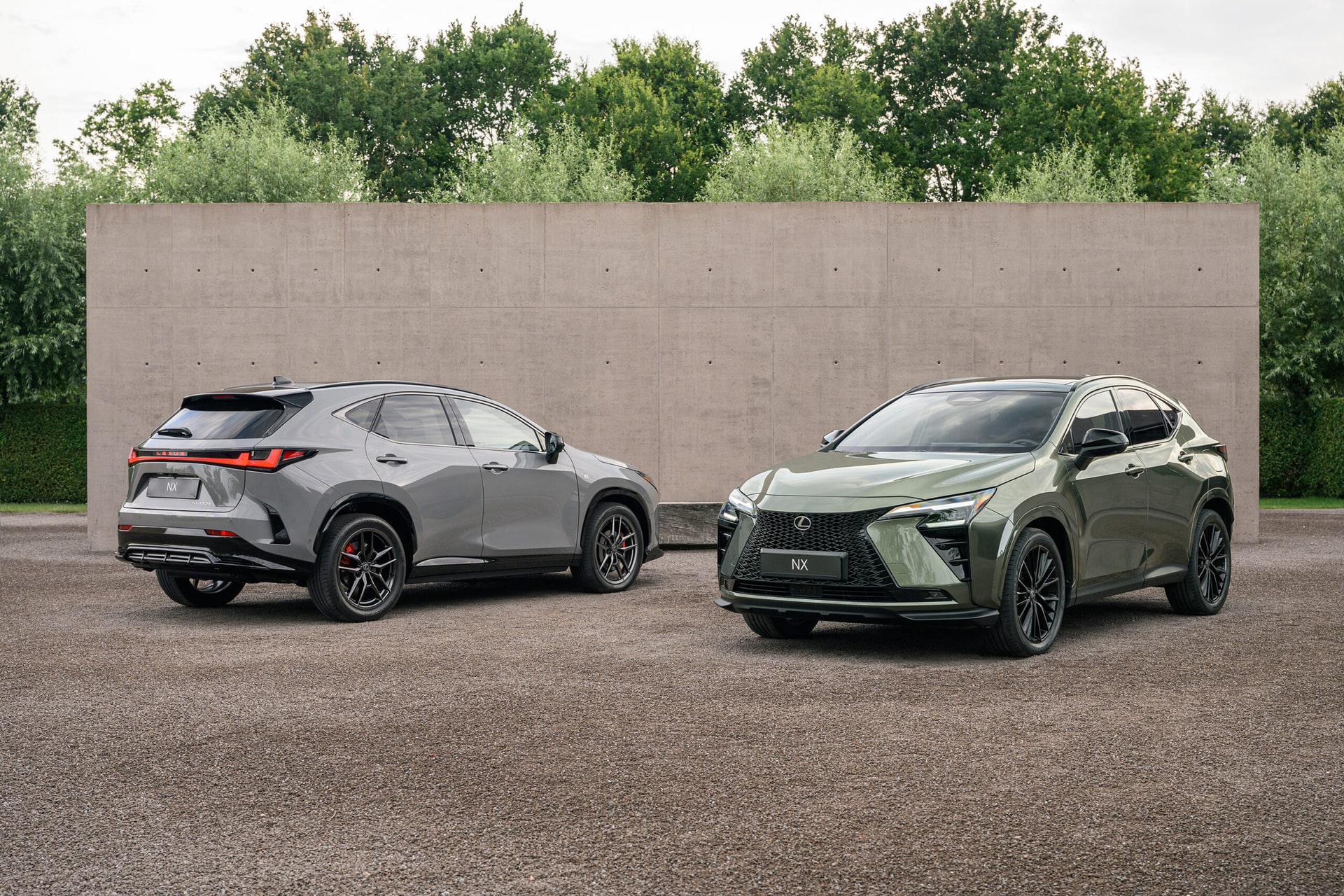
In the SUV-D premium PHEV segment there are half a dozen serious contenders, but when the criterion narrows to ride comfort on long journeys — not acceleration, not image, not off-road ability — the list gets shorter. Two cars contest this one: the Lexus NX 450h+ Premium+ and the Mercedes GLC 300 e. One bets on silent refinement and a CVT that doesn’t get in the way; the other on a battery that is huge for its class and a more European dynamic composure.
From the previous list of candidates we have ruled out two names readers might expect. BYD, because our selection is not chasing the commercial buzz of fashionable brands, but the models that best fit the specific criterion of this piece — long-distance comfort within the premium PHEV class — and here, in our view, the Chinese brand still falls short on acoustic refinement compared with the German and Japanese benchmarks. And Nissan, for the same editorial reason: its current offering in this segment does not compete in the premium refinement league that the comparison demands.
A quick note before we get into it: all price figures are the manufacturer’s recommended retail price (PVP), without dealer discounts, promotional campaigns or Plan Auto+ aid.
Lexus NX 450h+ Premium+ 4WD (from ≈55,500 €)
The NX 450h+ in Premium+ trim is the most refined model in the Lexus range for this segment. It combines a naturally aspirated 2.5 engine with two electric motors and all-wheel drive, delivering ≈310 hp combined and a homologated electric range of ≈70 km. The ≈18 kWh battery is modest for what is starting to appear in 2025.
What is interesting on long journeys is not the spec sheet but how it behaves. Acoustic insulation at 120 km/h is among the best in its category, the suspension filters road joints well, and the CVT gearbox — so maligned in other contexts — gets it right here: it keeps the combustion engine at low revs when the battery runs out, avoiding the “chainsaw” effect that other hybrids suffer on long gradients.
| Power | Electric range | Homologated consumption | Battery | Top speed | Label | Fuel |
|---|---|---|---|---|---|---|
| ≈230 kW / ≈310 hp | ≈70 km | ≈1 l/100 km | ≈18 kWh | ≈200 km/h | 0 (ZERO) | Petrol PHEV |
Its weak point on long journeys: electric range falls short if your daily stretch exceeds 60-70 km, and with the battery depleted the real consumption rises more than the homologated 1 l/100 suggests — something intrinsic to how the electric-only mode of a PHEV actually works.
Mercedes GLC 300 e (from ≈78,400 €)
The GLC 300 e plays in a different price bracket and, partly, a different concept. Its 2.0 turbo combined with an electric motor delivers ≈320 hp and ≈550 Nm, with a 0-100 time of ≈6.5 s and a top speed of ≈230 km/h. But the figure that changes everything for this use is the battery: ≈31 kWh gross, which translates to a homologated electric range of ≈120 km. Almost double that of the Lexus.
On long journeys this means you can cover the first leg — from home to the first refuelling stop — entirely in electric mode, with the added comfort of a car that, at low and medium charge, behaves like a pure electric. The suspension, with optional adaptive damping, has a more “German” composure than the Lexus: it moves less through fast motorway bends and conveys more confidence when overtaking at 130 km/h.
| Power | Torque | 0-100 | Electric range | Consumption | Battery | Top speed | Label | Fuel |
|---|---|---|---|---|---|---|---|---|
| ≈240 kW / ≈320 hp | ≈550 Nm | ≈6.5 s | ≈120 km | ≈9 l/100 km (battery depleted) | ≈31 kWh | ≈230 km/h | 0 (ZERO) | Petrol PHEV |
Its Achilles’ heel is price and weight. ≈2,220 kg penalise agility and, above all, raise combustion-engine consumption when the battery is depleted: ≈9 l/100 km homologated, which in practice is more. The PVP gap with the Lexus exceeds 40% — a chasm that needs justifying.
Acoustic comfort and suspension: where each one wins
At constant cruising speed (110-130 km/h), the Lexus is objectively quieter. Less rolling noise, less wind noise, and insulation that is especially noticeable on rough road surfaces. It is the car in which you arrive least tired after 600 km.
The Mercedes, on the other hand, wins on composure. Its suspension tuning — especially with the air suspension option — copes better with the long undulations of Spanish motorways and holds its line better through wide-radius bends. For those who drive quickly, it inspires more confidence.
Useful electric range on the road
There is no debate here: the GLC 300 e almost doubles the NX 450h+. In practice, with a full battery, the Mercedes can handle a Madrid-Segovia round trip without starting the combustion engine. The Lexus just makes it one way. If your travel profile mixes short hops between cities with an intermediate recharge, the GLC has a real advantage.
Summary table and scoring
| Criterion (long journeys) | Lexus NX 450h+ Premium+ | Mercedes GLC 300 e |
|---|---|---|
| Price from | ≈55,500 € | ≈78,400 € |
| Power | ≈310 hp | ≈320 hp |
| Electric range | ≈70 km | ≈120 km |
| Battery | ≈18 kWh | ≈31 kWh |
| Acoustic insulation | 9/10 | 8/10 |
| Dynamic composure | 7/10 | 9/10 |
| Useful electric range | 6/10 | 9/10 |
| Price-performance ratio | 9/10 | 6/10 |
| Overall long-journey score | 7.8/10 | 8.0/10 |
Verdict by use case
- For pure long-distance travel with charging only at home: the Lexus NX 450h+ wins. Quieter, smoother, and with a depleted-battery consumption that penalises less than the Mercedes’ weight.
- For mixed journeys with the possibility of an intermediate recharge: the Mercedes GLC 300 e wins. Its ≈120 km of electric range completely changes the travel equation.
- Price-performance ratio: the Lexus NX 450h+ clearly wins. The PVP gap exceeds 40% — a jump that is only justified if you specifically value the Mercedes’ greater electric range and dynamic composure.
If we had to choose one for a generic reader who drives 15,000 km/year with many 400-600 km trips and charges at home every night, we would pick the Lexus. Not because it is the better car in absolute terms — it isn’t — but because it offers 90% of the GLC’s travel comfort for considerably less money. Whoever knows they will regularly exploit the Mercedes’ 120 electric km, then yes: the price premium starts to make sense. For everyone else, it is capacity you pay for and never use.
Frequently asked questions
Which one consumes less with the battery depleted on the motorway?
The Lexus NX 450h+, thanks to its lower weight (≈2,000 kg versus ≈2,220 kg for the GLC) and the efficiency of the Atkinson cycle. In practice, it averages around 6.5-7 l/100 km real-world on the motorway at 120 km/h, compared with 7.5-8.5 l/100 km for the Mercedes under the same conditions.
Is it worth paying 23,000 € more for the Mercedes GLC 300 e?
Only if you will genuinely make use of the ≈120 km of electric range with frequent recharging, or if the Mercedes’ dynamic composure and interior finish are a priority. For pure travel use with overnight charging, the difference is not justified.
Do both keep the DGT ZERO label?
Yes. Both exceed the 40 km of homologated WLTP electric range required and emit less than 50 g/km of CO₂, so both carry the ZERO label and can circulate without restrictions in Spanish ZBE low-emission zones.
Which one is the better recommendation as a sole family car?
The Mercedes GLC 300 e, for its slightly larger interior space, better rear centre seat and a boot that remains practical despite the battery. The Lexus is slightly tighter in the back and its boot falls short of the Mercedes in usable litres.
