

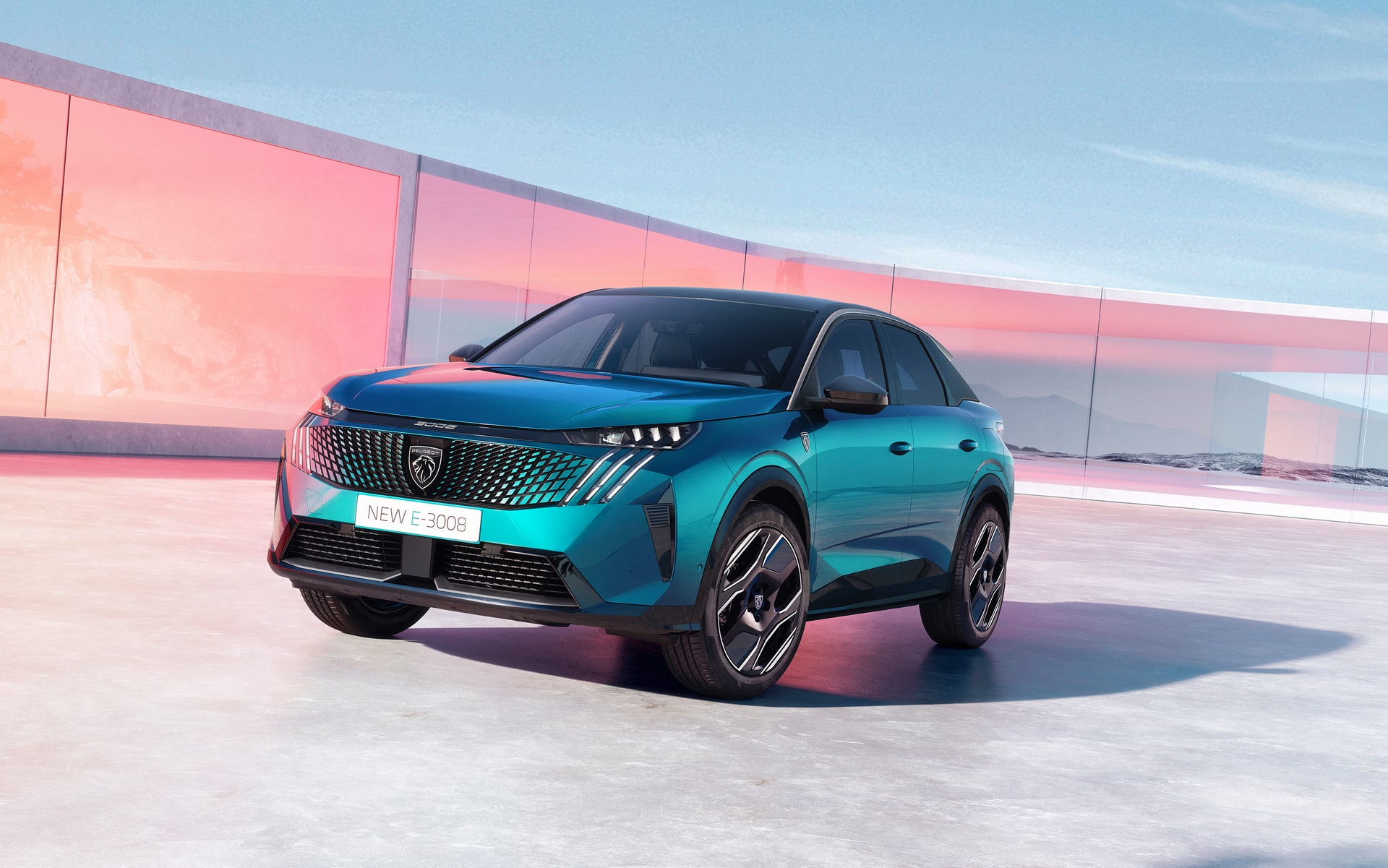
Two SUV-Cs from the same group, two electrification philosophies that have nothing in common. The Peugeot 3008 Hybrid goes for 48-volt mild hybrid technology — lighter, cheaper, ECO label — while the Citroën C5 Aircross Plug-in Hybrid raises the stakes with a 230 hp plug-in system and a CERO label. The question the Stellantis buyer faces is not which one is "better" in the abstract: it is whether paying between €8,000 and €10,000 more for the plug-in makes sense when the mild hybrid covers the same market niche with an ECO label.
In the SUV-C PHEV segment with Stellantis strategy, other proposals also compete, such as the Jeep Compass 4xe or the DS 7 E-Tense, but this piece focuses on the direct comparison between the two highest-volume brands of the group in Spain. From the initial list we ruled out BYD and Nissan: we were not looking for the best-known brands in the segment, but for the models that most precisely answer the Stellantis-vs-Stellantis angle that gives this comparison its purpose.
Important note before we get into the figures: all prices shown below are the manufacturer’s recommended retail price (RRP), without dealer discounts, one-off campaigns or Plan Auto+ aid.
Peugeot 3008 Hybrid (from ≈€38,700)
The current 3008 debuts the STLA Medium platform and a radical look, with that integrated grille and vertical headlights, which in our view are among the most daring styling proposals in the segment. In the Hybrid 1.2 145 48V Allure version with the eDCS6 gearbox, it fits a three-cylinder petrol engine assisted by a 21 kW electric motor integrated into the dual-clutch transmission. ECO label, not CERO — an important nuance for anyone living in low-emission zones.
On paper it promises 5.5 l/100 km homologated. In practice, with a reasonable right foot, it runs at around 6–6.5 l/100 km in mixed use. It is not a "real" hybrid like a Toyota: it is a mild hybrid that shuts off the combustion engine during deceleration and assists on gentle take-offs. No more, no less.
| Power kW | Power hp | Top speed | Consumption | Label | Fuel |
|---|---|---|---|---|---|
| ≈100 kW | ≈140 hp | ≈200 km/h | ≈5.5 l/100 km | ECO | Petrol mild hybrid |
Citroën C5 Aircross Plug-in Hybrid (from ≈€47,000)
The C5 Aircross plays in a different mechanical league. It combines the 1.6 PureTech with an electric motor powered by a battery of around 13 kWh, which gives it roughly 60 km of WLTP range in pure electric mode. Translated: if you charge at home every night and do fewer than 45–50 km of real daily driving, you can go weeks without filling up with petrol. CERO label, free access to Madrid Central and equivalent zones.
The price of this privilege: close to €47,000 for the trim equivalent to the Peugeot’s Allure, a 13 kWh battery that takes about 40 litres from the boot compared with the combustion 3008, and a weight of around 1,860 kg that you feel in corners. That said, with the battery empty consumption climbs sharply — we have already explained here why the WLTP range is almost never achieved and why a PHEV only pays off if you genuinely charge it.
| Power kW | Power hp | 0-100 | Top speed | Electric range | Consumption | Label | Fuel |
|---|---|---|---|---|---|---|---|
| ≈170 kW | ≈230 hp | ≈8 s | ≈230 km/h | ≈60 km | ≈1.5 l/100 km | CERO | Petrol PHEV |
Where each one wins
The 3008 Hybrid wins on: entry price (around €8,300 less, a difference of more than 20%), an interior design with the panoramic i-Cockpit that feels more modern, and lower weight — it is a car that drives with more agility. It also wins on usable boot space, since it has no battery taking up room.
The C5 Aircross PHEV wins on: CERO label (decisive if you live or work in an LEZ), performance (230 hp versus 140 hp is no contest) and variable cost per kilometre when charged regularly. Ride comfort remains Citroën’s historical selling point and is maintained here, with those progressive hydraulic bump-stop dampers that absorb potholes better than the Peugeot’s suspension.
Comparison table and scoring
| Criterion | Peugeot 3008 Hybrid | Citroën C5 Aircross PHEV |
|---|---|---|
| Power | ≈140 hp (7/10) | ≈230 hp (9/10) |
| Homologated consumption | ≈5.5 l/100 km (7/10) | ≈1.5 l/100 km + 15.5 kWh/100 km (9/10 when charged) |
| Electric range | Not applicable (mild hybrid) | ≈60 km (8/10) |
| DGT label | ECO (6/10) | CERO (10/10) |
| Price from | ≈€38,700 (8/10) | ≈€47,000 (6/10) |
| Warranty | 2 years + extensions | 2 years + extensions |
| Key equipment Allure/equivalent | Panoramic i-Cockpit, rear camera, level 2 ADAS (8/10) | Advanced Comfort, optional 7.4 kW OBC charger, level 2 ADAS (7/10) |
| Overall score | 7.2 | 8.2 |
Verdict: which car to choose depending on your situation
- If you CANNOT charge at home or at work: Peugeot 3008 Hybrid. Buying a PHEV without a charging point is throwing money away — we have covered this in detail here. The 3008 gives you an ECO label, decent consumption and around €8,300 less RRP.
- If you live in an LEZ and charge every night: Citroën C5 Aircross Plug-in Hybrid. If your real daily journeys are below 50 km, you will do most of them in electric mode and recover the premium through fuel savings and tolls avoided in restricted zones.
- Pure price-performance ratio: Peugeot 3008 Hybrid. The RRP difference comfortably exceeds 15% and, without intensive use of electric mode, the C5 Aircross PHEV’s premium is not recovered.
FAQ
Does the C5 Aircross PHEV’s premium over the 3008 Hybrid pay off?
Only if you charge at least five nights a week and your daily journeys do not exceed 50–60 km. In that scenario, the fuel savings plus LEZ access justify the ≈€8,300 difference in about 4–5 years. Without regular charging, no.
Is the Peugeot 3008 Hybrid a "real" hybrid?
Not in the Toyota sense. It is a 48V mild hybrid with a small electric motor integrated into the eDCS6 gearbox. It assists the combustion engine and allows creeping along at very low speed on electric power for a few seconds, but it is not equivalent to a full self-charging hybrid.
What DGT label does each one have?
The Peugeot 3008 Hybrid carries an ECO label. The Citroën C5 Aircross Plug-in Hybrid carries a CERO label, with the parking and low-emission zone access advantages that this brings.
How much boot space does the C5 Aircross lose because of the battery?
Around 40 litres compared with the combustion version of the same model. It remains a usable boot for family use, but the 3008 Hybrid offers more practical space as it does not carry a traction battery.
