

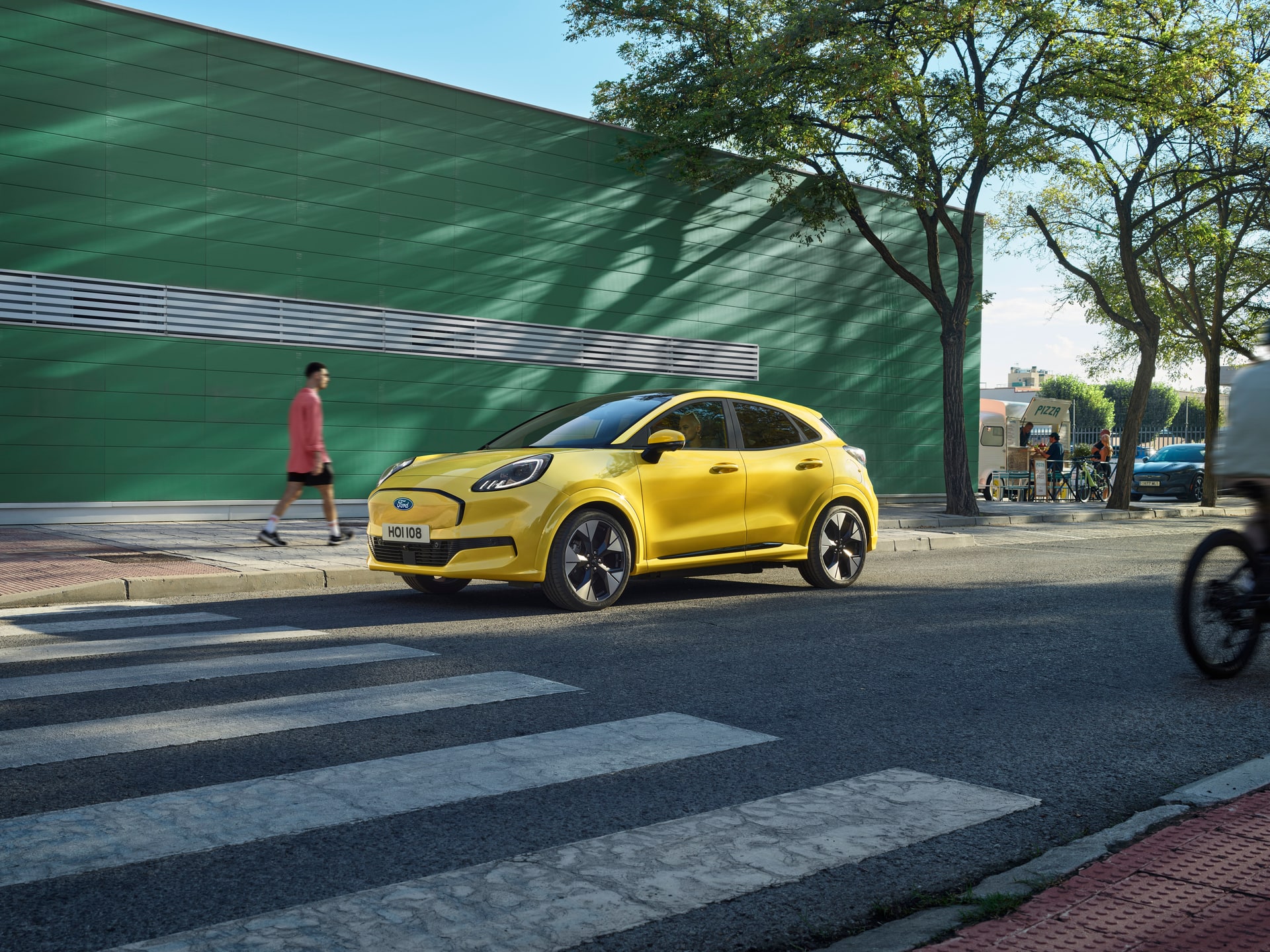
The urban SUV-B segment has for years been the real battleground of the Spanish market. Here the image wars of the SUV-Cs are not being fought: the fight is over the wallet, over the first family car, the second car in the household, the vehicle that has to fit in the same garage as always and make the same commute every morning. Ford and Volkswagen have been offering opposing approaches here for some time, and in 2026 that difference in approach has become even more pronounced.
On one hand, a Ford Puma that has made the leap to electrification with a variant focused on power and technology. On the other, a Volkswagen Taigo that stays faithful to the naturally aspirated petrol engine of old, cheap to buy and reasonably cheap to maintain. Two philosophies, two very different prices, and a reader who has to decide without anyone resolving the dilemma with an “it depends”.
Ford Puma: price from €35,100 and its commitment to electrification
The Ford Puma we analyse here is not the mild-hybrid petrol that many remember from earlier generations. It is the electrified variant of the range, with 120 kW (170 CV) and a battery of around 53 kWh that promises approximately 380 km of homologated range. These figures place this Puma in a different league within its own segment: more power than any petrol Taigo available, and a driving experience that, in town, is immediately noticeably smoother and quieter.
| Power (kW) | Power (CV) | Top speed | Range | Battery | Fuel | Price from |
|---|---|---|---|---|---|---|
| 120 kW | 170 CV | 160 km/h | 380 km | 53 kWh | Electric | €35,100 |
The Puma’s boot retains its long-standing selling point, the famous Megabox with a double floor beneath the boot floor, designed to carry tall or dirty items without soiling the rest of the car. It is a practical detail that the Taigo, with its more conventional layout, does not replicate.
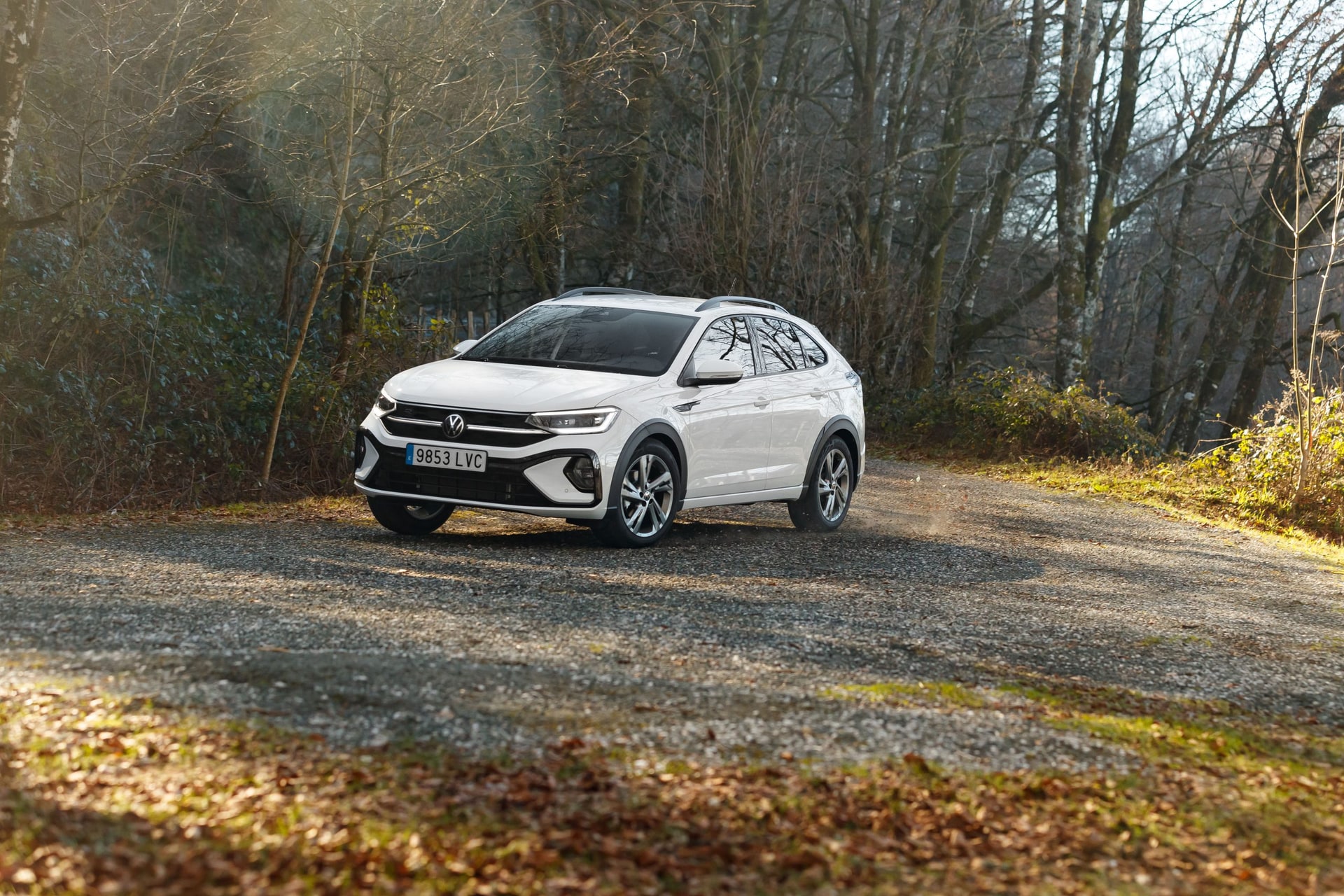
Volkswagen Taigo: price from €24,300 and the efficiency of the naturally aspirated petrol engine
The Taigo we compare uses the 1.0 TSI with 70 kW (100 CV), an engine well known within the Volkswagen Group for its reliability and a modest consumption of around 5.5 l/100 km homologated. It does not aim to boast about acceleration or cutting-edge technology: it aims to be the sensible choice, the one that does not complicate life for someone who simply wants a car that starts, uses little fuel and costs little to get into.
| Power (kW) | Power (CV) | Top speed | Consumption | CO₂ emissions | Fuel | Price from |
|---|---|---|---|---|---|---|
| 70 kW | 100 CV | 180 km/h | 5.5 l/100 km | 120 g/km | Petrol | €24,300 |
Interestingly, the Taigo reaches a higher top speed than the electric Puma (180 km/h versus 160 km/h), something unusual when comparing an entry-level combustion car with a higher-powered electrified variant. These are engines with different design logics: one prioritises instant torque in town, the other a gear ratio designed for motorway driving.
Head-to-head comparison: power, range and equipment
Placed side by side in the same table, the gap in proposition is clear. It is not just a matter of figures: it is a matter of what each car is designed for.
| Model | Power | Range/Consumption | Fuel | Price from | Score (1-10) |
|---|---|---|---|---|---|
| Ford Puma electric | 170 CV | 380 km | Electric | €35,100 | 8 |
| Volkswagen Taigo 1.0 TSI 100 | 100 CV | 5.5 l/100 km | Petrol | €24,300 | 7.5 |
The Puma’s score recognises its technological leap and its power, but does not hide that its price demands serious consideration of the real use it will get. The Taigo’s score rewards simplicity and the entry cost, although its mechanics fall short if daily life includes many motorway kilometres with a full load.
Where the Ford Puma wins
In power and torque available from standstill, the Puma is unbeatable: 170 CV versus 100 CV is a difference you feel on every overtake. And with a homologated range of 380 km and zero local emissions, it offers something the petrol Taigo simply cannot: unrestricted access to any current or future low-emission zone. For those who drive daily in Madrid or Barcelona, that point weighs more than it seems on paper.
Where the Volkswagen Taigo wins
The Taigo wins, and clearly, on entry price: €24,300 versus €35,100 is almost €11,000 of difference, making the Ford 44% more expensive. It also wins on homologated top speed, 180 km/h versus the Puma’s 160 km/h, a figure that for anyone covering many motorway kilometres is not an anecdote. If budget is the priority and charging does not fit into the buyer’s plans, there is no contest here.
Price and value for money: does the €10,800 difference pay off?
It depends on how you look at the spending. Paying €10,800 more for the Puma makes sense if the buyer will make daily use of the electrification, with regular access to charging and urban journeys where the cost per kilometre drops sharply compared with any petrol car. But if use is occasional, with frequent long trips and no garage with a charging point, that extra cost becomes a hard burden to recover. Bear in mind that both prices are the manufacturer’s recommended RRP, without dealer discounts or one-off campaigns, and that public grants for buying electrified vehicles under the Plan Auto+ may narrow the real gap between the two models; always check the current call for applications before deciding.
Verdict: which SUV-B to choose according to your use case
For intensive urban use with access to charging at home or at work: Ford Puma. Its power, its homologated range and the absence of emission-based restrictions make it superior in everyday city driving, although a considerable upfront outlay must be accepted.
For those who prioritise entry price and do not want to depend on charging: Volkswagen Taigo. With a price from €24,300, a modest consumption of 5.5 l/100 km and a well-proven mechanical setup, it delivers without surprises or small print.
Overall price-performance ratio: Volkswagen Taigo. The difference of almost €11,000 compared with the Puma is hard to justify unless the buyer will genuinely make daily use of the electrification.
Frequently asked questions
Which is cheaper to maintain, the electric Ford Puma or the petrol Volkswagen Taigo?
The Taigo has more predictable maintenance costs and is cheap per conventional service. The electric Puma can work out cheaper per kilometre if charged at home on a night tariff, but this depends on the buyer having access to a private charging point.
Does the electric Ford Puma face circulation restrictions due to the environmental label?
No. As an electric vehicle, it has unrestricted access to any Low Emission Zone, something the petrol Taigo cannot guarantee in every future scenario.
Is it worth paying almost €11,000 more for the Puma compared with the Taigo?
Only if daily use takes advantage of the electric range and regular charging is possible. For occasional use or frequent long journeys, the Taigo offers the better cost-to-utility ratio.
Which model has more boot space, the Puma or the Taigo?
The Puma features the Megabox, an additional compartment beneath the boot floor that adds extra practicality for bulky or dirty items, a design advantage the Taigo does not replicate in its more conventional layout.
