

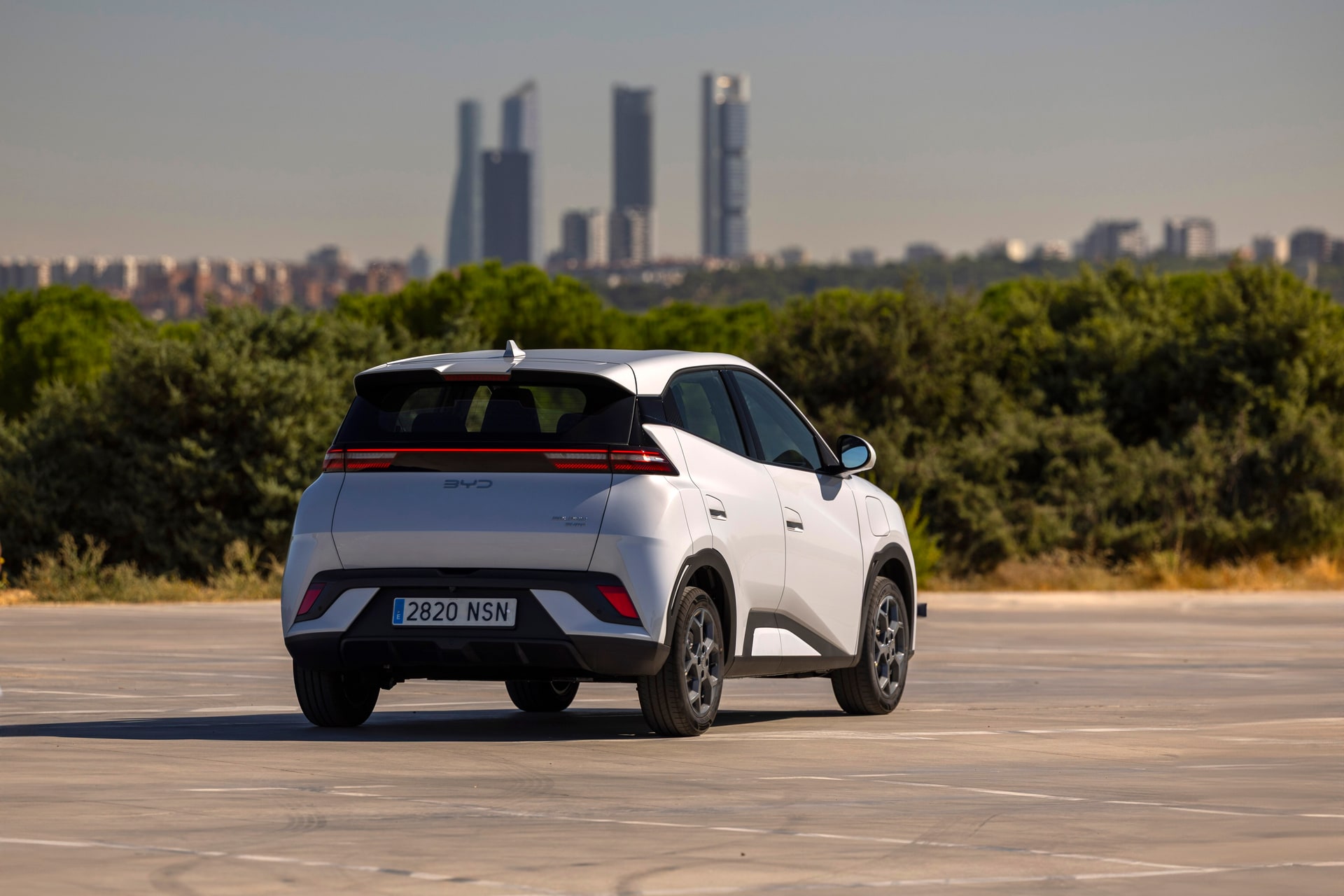
Buying a compact electric car in 2026 is no longer a gamble for early adopters. There is enough choice, prices are dropping below 27,000 €, and a charging network that, while not perfect, works for 90% of common journeys. The problem is not technical: it is about fit. A car designed to get around the city and serve as a second vehicle does not need to resemble the one that will carry the weekly shopping, the children and the summer trip. Confusing both cases is the most common way to end up overpaying or falling short.
The dilemma that defines the purchase: what will you use it for?
Before looking at spec sheets you need to answer an uncomfortable question: will this car spend its nights in a city garage doing 20-30 km trips a day, or will it be the only vehicle for a family that also drives Madrid-Toledo every other Saturday? The answer completely changes which model makes sense. And this is where the first keyword that really matters in this guide comes in: compact electric car 2026 no longer means a single type of car, but two product families with very different performance and prices.
The thresholds that really matter
Forget comparing peak power figures. What determines whether a compact electric car works for you comes down to four numbers:
- Minimum WLTP range: 300-350 km if it is a second city car; 400 km if it will be the only family vehicle.
- DC charging power: 80 kW is acceptable for occasional motorway use in urban settings; 100 kW or more makes a noticeable difference at each stop if you drive motorways regularly.
- Boot space: 350 litres is enough for two adults and the shopping; below 400 litres with children and travel luggage, it starts to become a problem.
- Price after Plan Auto+: the aid reduces the initial gap, but it does not equalise cars from different performance categories.
For a second city car: MG MG4 vs BYD Dolphin
If the car will live in the city, what you are really comparing is turning circle, opportunity charging and entry price. Here, our MG4 review already analysed how far it goes as a sole car, and the conclusion still holds: for pure urban use, it is more than enough.
| MG MG4 Comfort 51 kWh | Power | WLTP range | DC charging | Boot | Price from |
|---|---|---|---|---|---|
| Data | 125 kW / 170 CV | ~350 km | 117 kW | 363 L | 26,990 € |
| BYD Dolphin Comfort | Power | WLTP range | DC charging | Boot | Price from |
|---|---|---|---|---|---|
| Data | 150 kW / 204 CV | ~427 km | 80 kW | 345 L | 29,000 € |
The MG4 charges faster on continuous power and pulls ahead of the Dolphin in stop times on occasional road trips. The Dolphin, on the other hand, offers more range and more power for an extra outlay of just 2,000 €, which becomes noticeable if your “second city car” also ends up making the odd weekend getaway. Neither excels in boot space, but for two people and supermarket bags, both are sufficient.
For a single family car: Renault Megane E-TECH vs Peugeot e-308
When the compact electric car also has to cover the 500 km bank holiday trip, the conversation moves into a different category. We have already compared the Renault Megane E-TECH against the Peugeot e-308 on long-distance comfort, and the differences we found then still apply.
| Renault Megane E-TECH EV60 | Power | WLTP range | DC charging | Boot | Price from |
|---|---|---|---|---|---|
| Data | 160 kW / 220 CV | ~450 km | 130 kW | 440 L | 38,000 € |
| Peugeot e-308 | Power | WLTP range | DC charging | Boot | Price from |
|---|---|---|---|---|---|
| Data | 115 kW / 156 CV | ~400 km | 100 kW | 361 L | 38,500 € |
The Megane E-TECH wins on the two figures that matter most on a real journey: range and charging speed. The e-308 counters with a slightly more refined interior and a lower driving position, feeling more like a saloon than an MPV. That said, for anyone who regularly drives the motorway, 50 km of extra range and 30 kW more charging power are not minor details; they are half an hour less spent stationary at a charging point.
Overall comparison table
| Model | Recommended use | WLTP range | Boot | Price from | Score |
|---|---|---|---|---|---|
| MG MG4 Comfort 51 kWh | Second city car | ~350 km | 363 L | 26,990 € | 7.5/10 |
| BYD Dolphin Comfort | Second city car+ | ~427 km | 345 L | 29,000 € | 7.8/10 |
| Renault Megane E-TECH EV60 | Only family car | ~450 km | 440 L | 38,000 € | 8.4/10 |
| Peugeot e-308 | Only family car | ~400 km | 361 L | 38,500 € | 8.0/10 |
Where each model wins
The MG4 is objectively the cheapest to get into and the fastest to charge on continuous power within its group. The BYD Dolphin has a clear advantage in range and available power. The Renault Megane E-TECH is, of the four, the one that best combines boot space and fast charging for long journeys. The Peugeot e-308 compensates with a more premium interior and more refined dynamic behaviour, although its range sits a step below the Renault.
Verdict: which compact electric car to choose based on your case
For a second city car on a tight budget: the MG4. It wins on price, charges quickly, and you neither lack nor have excess for getting around town. If you can stretch to 2,000 € more and want some margin for a getaway, the BYD Dolphin gives you more real-world range for a small extra outlay.
For a single family car: the Renault Megane E-TECH is the most rounded option, with the best balance of range, charging and boot space of the four. The Peugeot e-308 is the alternative if you value the interior and driving experience more than the last kilometres of range.
A price warning: moving from an MG4 to a Megane E-TECH means almost 40% more outlay. That difference is only justified if you genuinely need the car as your only vehicle, not as a second car with family pretensions.
Frequently asked questions
What WLTP range do I really need for a second urban electric car?
300-350 km WLTP is more than enough for a week of short trips without charging every day. It is the range where the entry versions of the MG4 and Dolphin sit.
Which DC charging power makes the biggest difference on long journeys?
From 100 kW onwards, stops on the road drop from 30-35 minutes to 20-25 minutes to recover 10-80%. Below 80 kW the difference is especially noticeable on motorways.
Is it worth paying more for a family compact electric car than an urban one?
Only if you really make long journeys often. If the car stays in the city 90% of the time, an MG4 or a Dolphin covers the need without overpaying.
Does Plan Auto+ level the price between these models?
No. The aid reduces the initial outlay in every case, but the price gap between an urban compact and a family one remains proportionally similar after applying it.
