

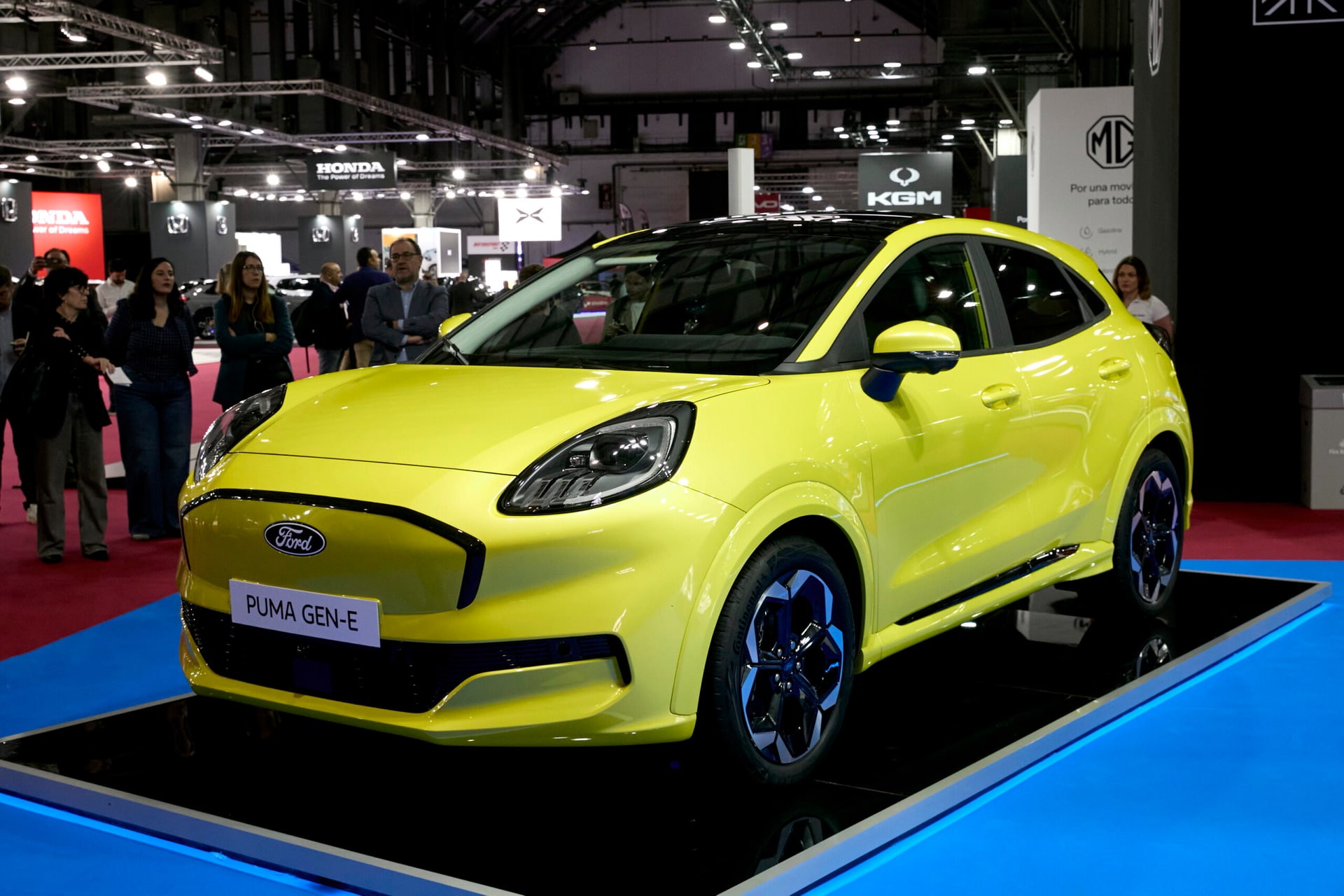
The B-SUV segment no longer competes only on price and consumption. In 2026 some brands have understood that design sells as much as the spec sheet, and they have picked a side: some bet on a body that stands out from the pavement, others on a dashboard that looks like it belongs to a car two classes above. The question a buyer should ask is not "which one is best?", but "what kind of differentiation matters to me?".
Two ways to stand out in the B-SUV segment: bodywork or dashboard
Some buyers park the car and want people to turn around and look at it. Others get in, switch on the ignition and expect the screen, the menus and the start-up sound to make them feel they have paid for something modern. Both profiles exist within the same budget, between 22,000 and 27,000 €, and both have solid options on sale in Spain right now.
Profile 1: the buyer who prioritises distinctive exterior design
Ford Puma, from 24,300 €: the coupé-style bet that does not go unnoticed
Since its launch the Puma has played the coupé silhouette card, with a roofline that drops towards the back and a high waistline that sets it apart from the generic tall-bodied B-SUV. Of the three in this group, it is the one that ages best visually: it still looks recent even though it has been on the market for several years. Its weak point is the interior, which is correct but conventional, with a central screen that does its job without surprising anyone.
| Version | Power | Consumption | Label | Fuel |
|---|---|---|---|---|
| Puma 1.0 EcoBoost mHEV 125 CV | 125 CV | 5.3 l/100 km | ECO | Petrol mild hybrid |
Citroën C3 Aircross, from 21,900 €: modular and colourful personality
The C3 Aircross has taken the opposite path to discretion: vertical light signatures, airbumps, and the option to personalise the roof and mirrors in several colours. It is the cheapest of this trio and, for anyone who wants a B-SUV that does not look like a clone of another, it more than delivers. That said, the perceived interior quality sits a notch below its higher-trim French rivals, with harder plastics in areas that are touched often.
| Version | Power | Consumption | Label | Fuel |
|---|---|---|---|---|
| C3 Aircross PureTech 110 | 110 CV | 5.7 l/100 km | C | Petrol |
Nissan Juke, from 23,700 €: the B-SUV that broke design moulds
The Juke remains the boldest of the three in its lines: pronounced wheel arches, split headlights, and a rear end that cannot be confused with any other model in the segment. It is also the best to drive, with a firmer chassis that rewards drivers who enjoy winding country roads. Its 354-litre boot is the tightest in this group, something to consider if the car will carry more than the weekly shop.
| Version | Power | Consumption | Label | Fuel |
|---|---|---|---|---|
| Juke 1.0 DIG-T 114 CV | 114 CV | 5.9 l/100 km | C | Petrol |
Profile 2: the buyer who prioritises a tech-focused interior
Peugeot 2008, from 24,650 €: the i-Cockpit as its signature feature
Peugeot’s i-Cockpit remains the most recognisable element of its range: a small, low steering wheel, a digital instrument cluster raised above it, and a central touchscreen with piano-style keys. It is not a system that wins everyone over at first; some taller drivers need a couple of days to find their seating position, but once adapted it is one of the most immersive in the segment. The exterior line is respectable, without the audacity of the Juke, but the cabin experience makes up for it.
| Version | Power | Consumption | Label | Fuel |
|---|---|---|---|---|
| 2008 PureTech 130 | 130 CV | 5.6 l/100 km | C | Petrol |
Renault Captur, from 23,900 €: the leap brought by the OpenR system
With the Captur, Renault has achieved one of the clearest technological leaps in its recent range thanks to the OpenR Link system, with a vertical screen of up to 10.4 inches, Google built in as standard on higher trims, and menu response that leaves almost all generalist competitors behind. Of the five models in this article, it is the one that best handles smartphone connectivity without cables or workarounds. Its exterior design, on the other hand, opts for soft, unaggressive lines, aimed at not tiring over the years rather than grabbing attention.
| Version | Power | Consumption | Label | Fuel |
|---|---|---|---|---|
| Captur TCe 140 | 140 CV | 5.8 l/100 km | C | Petrol |
General comparison table
| Model | Price from | Power | Consumption | Label | Key strength | Exterior design score | Interior tech score |
|---|---|---|---|---|---|---|---|
| Ford Puma | 24,300 € | 125 CV | 5.3 l/100 km | ECO | Coupé silhouette | 8.5 | 6.5 |
| Citroën C3 Aircross | 21,900 € | 110 CV | 5.7 l/100 km | C | Colour personalisation | 8 | 6 |
| Nissan Juke | 23,700 € | 114 CV | 5.9 l/100 km | C | Boundary-breaking design | 9 | 6 |
| Peugeot 2008 | 24,650 € | 130 CV | 5.6 l/100 km | C | i-Cockpit | 7 | 8.5 |
| Renault Captur | 23,900 € | 140 CV | 5.8 l/100 km | C | OpenR Link | 6.5 | 9 |
Which model wins on each key strength
The Juke wins on exterior design boldness and dynamic behaviour, but loses on boot space to all the others. The Puma strikes the balance between coupé styling and practicality, although its interior does not surprise. The C3 Aircross wins on entry price and personalisation, but gives ground on perceived quality. The 2008 wins on cabin originality thanks to the i-Cockpit, a feature with no real equivalent among segment rivals. And the Captur clearly wins on connectivity and screen speed, although its bodywork is the most conservative of the group.
Verdict: which B-SUV to choose based on your priority
For those who want the car to be noticed in the car park: Nissan Juke, with the caveat of a reduced boot if you carry cargo regularly. For those who want exterior design without giving up practical space: Ford Puma. For those who prioritise a driving experience that feels different from the first glance at the dashboard: Peugeot 2008 for its i-Cockpit. For those who value infotainment technology and smartphone integration above all: Renault Captur, with its OpenR Link system as almost a standalone argument. And for those stretching the budget as far as possible without giving up some personality: Citroën C3 Aircross, the cheapest of the five, with a price gap exceeding 10% compared with the Peugeot 2008.
If your use case mixes both worlds, urban journeys and some weekend travel, it is also worth reviewing hybrid options in the segment, as we already analysed when comparing the Ford Puma as a single urban car or when pitting the Hyundai Kona, Volkswagen T-Cross and Ford Puma against each other in petrol form.
Frequently asked questions
Which B-SUV has the most distinctive exterior design in 2026?
The Nissan Juke remains the boldest visually in the segment, followed closely by the Ford Puma with its coupé silhouette.
Which B-SUV offers the most tech-focused interior for the money?
The Renault Captur with the OpenR Link system and the Peugeot 2008 with the i-Cockpit are the two clear benchmarks in this price bracket.
Is it worth paying more for the Peugeot 2008 over the Citroën C3 Aircross?
It depends on whether you value the i-Cockpit as a distinctive driving experience; if not, the C3 Aircross offers almost the same space for a noticeably lower price.
Are there public grants for buying these B-SUVs in 2026?
The petrol models in this article do not usually fall within the scope of the Plan Auto+, which is aimed mainly at electrified vehicles; check the official plan website for current conditions and avoid relying on amounts from previous editions.
