

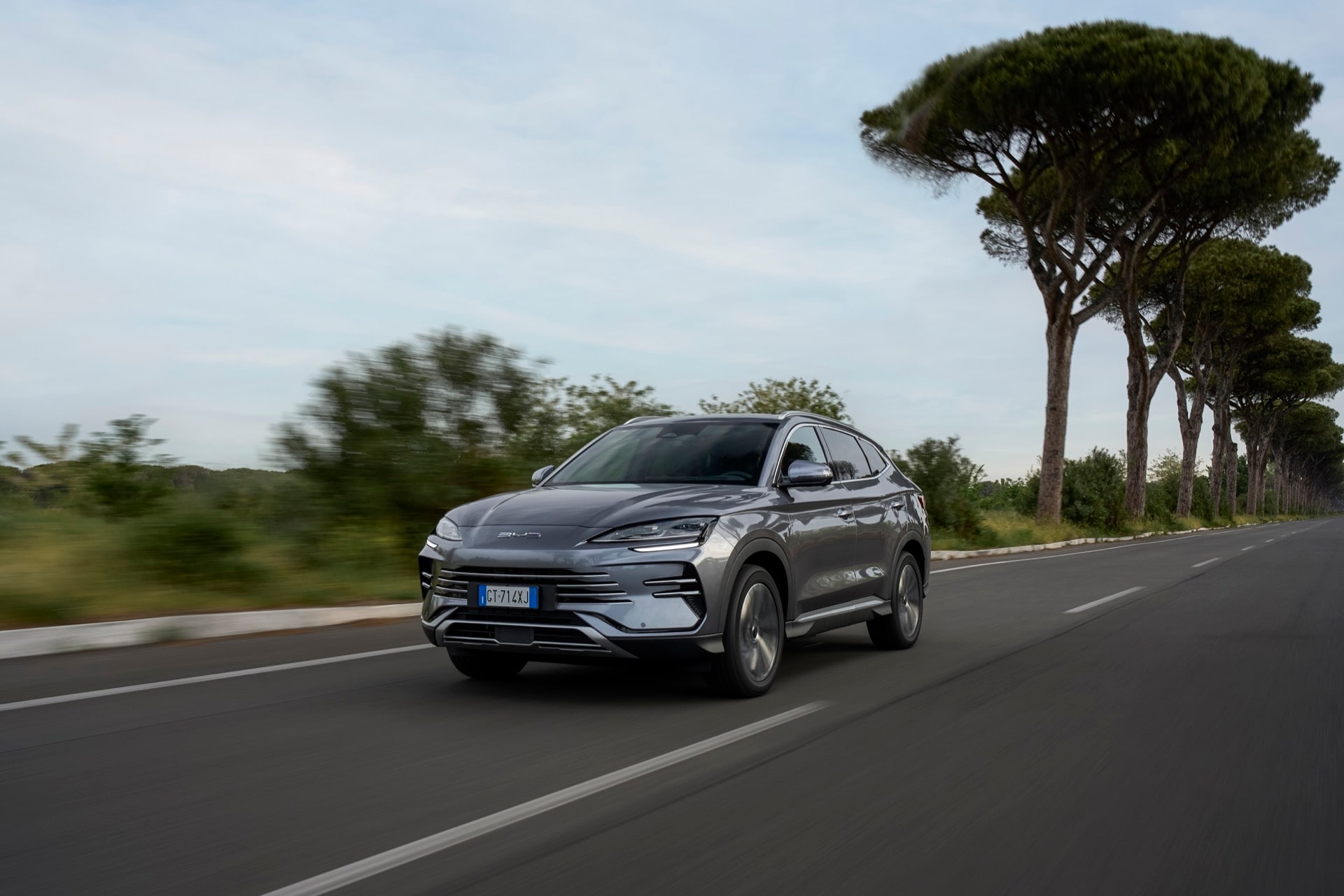
Buying a plug-in hybrid SUV just for the CERO sticker is the most expensive mistake a buyer can make in 2026. The label is earned on a WLTP test bench, but it is paid for (or amortised) on the road you drive every day. And that is where most PHEVs prove whether they are worth it or whether you have overpaid for a battery that will barely be used in electric mode.
What the DGT requires for the CERO label on a plug-in hybrid
The rule is simple on paper: a PHEV needs more than 40 km of WLTP-homologated electric range to display the blue and yellow sticker on the windscreen. Below that figure, the car falls into the ECO label, with fewer privileges for access to low-emission zones and fewer discounts in some municipalities. The catch is that many models offer two different batteries depending on trim, and only the version with the larger battery reaches the threshold. It is worth checking the exact technical specification of the version you intend to buy, not the general model specification.
Why daily mileage matters more than the spec sheet
A PHEV SUV with 120 km of homologated WLTP electric range will not deliver those 120 km on your real journey. The practical figure, with climate control, motorway driving and air conditioning use, is around 70-75% of the homologated value. This completely changes which car makes sense depending on how much you drive each day.
Under 20 km/day: the urban profile
Here almost any CERO-label PHEV is more than sufficient. The factor that really matters is not range but AC charging power: if you charge at a domestic 3.6 kW point, recovering 100% of the battery will take between 5 and 6 hours depending on the model. For this profile, paying extra for a 26 kWh battery is wasted money: you will never fully empty it in day-to-day use.
Between 20 and 40 km/day: the peri-urban driver who almost manages electric-only
This is the most demanding bracket for making the right choice. Here real electric range starts to make the difference between completing the whole trip without the petrol engine starting, or depending on it for the final stretch. Models with batteries above 25 kWh have a clear advantage over those stuck at 18-19 kWh.
Over 40 km/day or motorway journeys: when the PHEV stops making electric sense
If your daily route includes sustained motorway driving, electric consumption rises sharply and the battery empties in about half the distance it would in town. For this profile, the PHEV competes on petrol consumption with a conventional hybrid, and it is more sensible to look at the combustion engine and its efficiency than at the label.
Cupra Terramar e-Hybrid (from €44,500): the most powerful of the three
| Power | Battery | WLTP electric range | AC charging | Label | Fuel |
|---|---|---|---|---|---|
| 204 CV (150 kW) | 19.7 kWh | 119 km | 3.6 kW | CERO | PHEV |
It is by far the best to drive of the three. The MQB Evo chassis and sporty tuning are noticeable in corners, which is not always the case in this segment. The small print: its AC charging stays at 3.6 kW, so with a domestic wallbox it takes no less than 5-6 hours to charge fully.
Volkswagen Tiguan eHybrid (from €42,900): the balanced standard offering
| Power | Battery | WLTP electric range | AC charging | Label | Fuel |
|---|---|---|---|---|---|
| 204 CV (150 kW) | 19.7 kWh | 119 km | 3.6 kW | CERO | PHEV |
It shares its mechanicals with the Terramar, and the real difference lies in character: more comfortable suspension and a slightly more practical boot shape. For those who do not seek driving excitement but want a reliable everyday car, it wins on material quality and a slightly lower price.
BYD Seal U DM-i (from €36,490): the most generous electric range at the best price
| Combined power | Battery | WLTP electric range | Label | Fuel |
|---|---|---|---|---|
| 218 CV | 26.6 kWh | 125 km | CERO | PHEV |
Here is the surprise of the comparison: more battery than its two European rivals and a price almost 18% lower than the Cupra. That said, the interior finish feels a step below in material quality, and the after-sales network in Spain is still smaller than that of the Volkswagen Group.
Other options to consider in the segment
They are not the only CERO-label PHEVs on the Spanish market. The MG HS PHEV plays in a similar price bracket to the BYD, with a comparable battery and range, although with a more modest interior finish. The Jeep Compass 4xe adds electric all-wheel drive on the rear axle, something that neither Cupra, VW nor BYD offer in these versions, and it is interesting if you want some light off-road capability alongside the label.
Summary table and score
| Model | Price from | WLTP electric range | Battery | Score |
|---|---|---|---|---|
| Cupra Terramar e-Hybrid | €44,500 | 119 km | 19.7 kWh | 8/10 |
| Volkswagen Tiguan eHybrid | €42,900 | 119 km | 19.7 kWh | 8/10 |
| BYD Seal U DM-i | €36,490 | 125 km | 26.6 kWh | 8.5/10 |
Verdict: which PHEV SUV to choose based on your daily kilometres
For under 20 km a day and urban use, the Volkswagen Tiguan eHybrid is the most sensible option: you do not need to pay for more battery than you will use, and its ride comfort suits everyday life. For the 20 to 40 km bracket, where a large battery makes the difference in arriving on pure electric power, the BYD Seal U DM-i wins, with 26.6 kWh against the 19.7 kWh of the others, and at almost 18% less cost. If you want an SUV you also enjoy driving at weekends, the Cupra Terramar e-Hybrid best balances that sporty character with the CERO label. And if your daily mileage exceeds 40 km or includes long motorway stretches, none of the three makes electric sense: it is better to consider a conventional hybrid, as we already analysed when choosing a family hybrid SUV for long journeys.
Before signing, it is worth checking whether your autonomous community or the Plan Auto+ covers any of these versions, as the amount may change the final price comparison between the three.
Frequently asked questions
What WLTP electric range does a PHEV need to have a CERO label in 2026?
More than 40 km homologated in electric mode. Below that figure, the car receives an ECO label, not CERO.
Is it worth paying more for a large battery if I only make short trips?
No. If your daily use is below 20 km, a 19-20 kWh battery like that of the Cupra Terramar or the Tiguan eHybrid already covers the journey in pure electric mode without the need to pay more.
Does the BYD Seal U DM-i have the same warranty as the Volkswagen Group?
BYD offers its own warranty conditions, generally longer in years than those of the VW Group, although it is worth confirming the current small print at the dealership before signing.
Is a CERO-label PHEV suitable for making long journeys on the motorway?
It is suitable, but it loses its advantage: the battery runs out after a few kilometres at motorway speed and the car operates as a conventional hybrid, with petrol consumption that should be compared before deciding.

1 Comment
Pingback: Cómo elegir entre SUV híbrido autorrecargable y SUV PHEV en 2026 según si haces más ciudad o más autovía – Comparativa de Coches