

Choosing a family SUV with small children is not the same as choosing one without them. Everything changes: the height of the rear footwell, the door opening angle, the clearance between the front seatback and the child restraint. We have tested five hybrids priced around or below €45,000 which, on paper, look more alike than they turn out to be in everyday use with two Group 2/3 seats fitted.
What makes an SUV comfortable with children: ISOFIX, access and real space
Three things make the difference before you even look at power or consumption. First, the ISOFIX anchorages on the outer rear seats, present in all five models, but with varying ease of access depending on how deep the seats sit. Second, the opening angle of the rear doors: the wider they open, the easier it is to put a child into a seat without straining your back. Third, the space between the front seatback and the rear seat, which in cars with batteries poorly integrated under the rear seat shows up in the height of the seat itself, affecting the legs of whoever sits in front if they push the seat back.
Toyota RAV4 Hybrid 2.5 218H (from €42,300): the most reliable for long journeys
The RAV4 has been the benchmark of the hybrid segment for over a decade, and for families it shows in the small details: the rear doors open almost 90 degrees, something neither the Tucson nor the Austral manages, which makes it easier to buckle in a Group 1 seat without kneeling on the tarmac. The 580-litre boot takes a twin pushchair without folding the seatbacks. That said, real-world consumption on motorway with four seats occupied rises to 6.2–6.5 l/100 km, well above the 5.7 homologated figure.
| Power CV | WLTP consumption | Label | Fuel |
|---|---|---|---|
| 218 CV | 5.7 l/100 km | ECO | Hybrid |
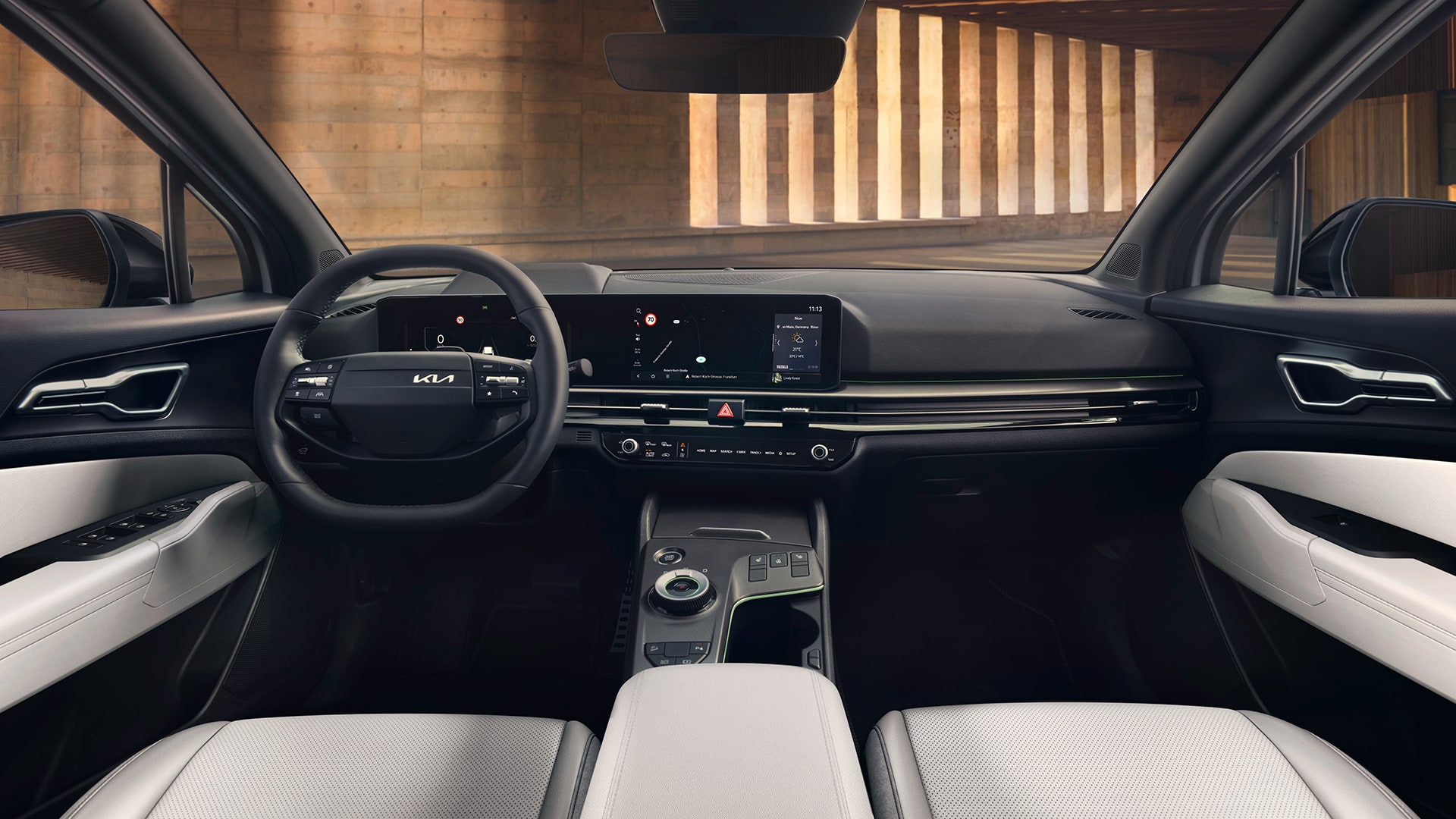
Kia Sportage HEV 1.6 T-GDI (from €33,950): the cheapest entry point
The Sportage enters this group with the most aggressive price of the five, and yet it gives up nothing essential: a 591-litre boot, the largest in the line-up, and a 7-year or 150,000 km warranty which, for a family buying to keep the car for ten years, weighs more than any equipment extra. The space between the front and rear seats is generous, although the door opening angle is somewhat narrower than on the RAV4, which is noticeable if your little one still uses a bulky-base Group 0+/1 ISOFIX seat.
| Power CV | WLTP consumption | Label | Fuel |
|---|---|---|---|
| 230 CV | 5.3 l/100 km | ECO | Hybrid |
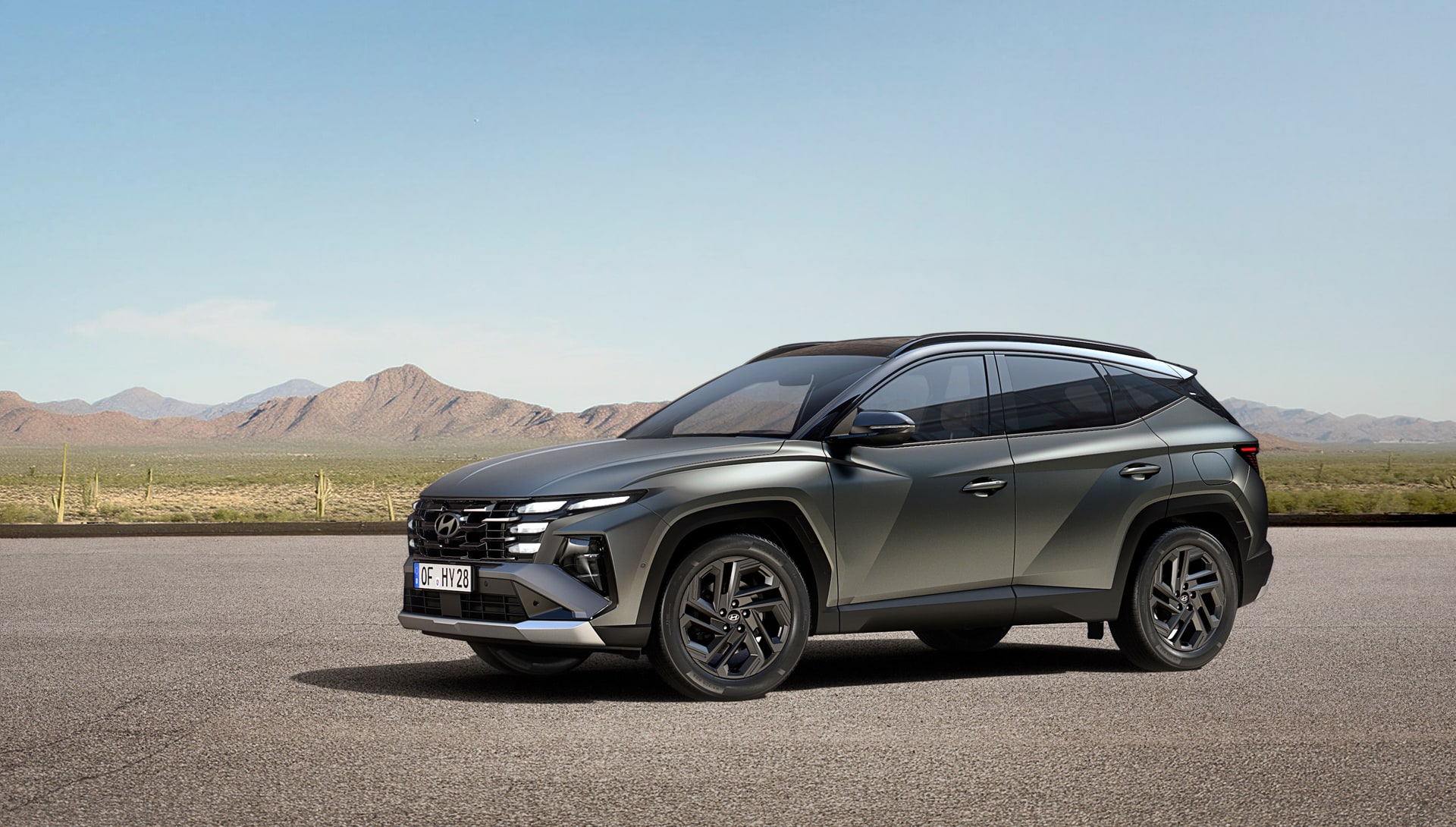
Hyundai Tucson Hybrid 1.6 T-GDI (from €36,700): the largest boot
The Tucson wins hands down on boot volume, 616 litres, enough for a pushchair, a travel high chair and a week’s luggage without a game of Tetris. The interior is the most visually modern of the group, with a curved dual screen that appeals more to adults than to children, who would appreciate better ventilation in the rear seats: it is the only one of the five without independent rear air vents on the entry-level trims. For short trips this is not a problem; for the August motorway at 35 degrees, it is noticeable.
| Power CV | WLTP consumption | Label | Fuel |
|---|---|---|---|
| 230 CV | 5.6 l/100 km | ECO | Hybrid |
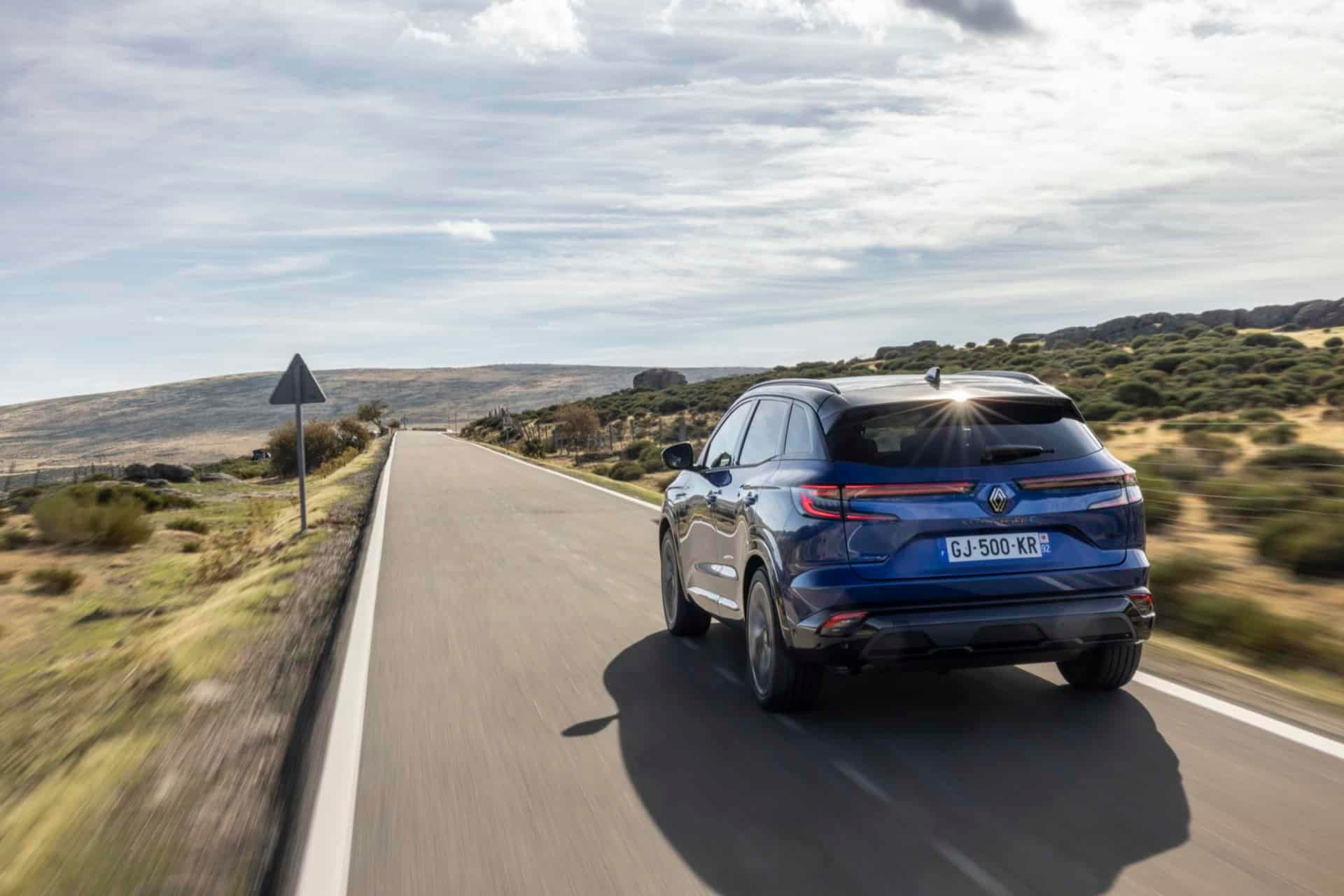
Renault Austral E-Tech full hybrid (from €37,400): the most efficient of the five
The Austral is the one that consumes least in our road tests, with real-world figures hovering around 5.4–5.6 l/100 km even with a full load, something no rival on this list matches. The rear seat slides longitudinally, a detail that seems minor until you need to share space between the boot and a teenager’s legs. The boot, between 500 and 555 litres depending on seat position, falls short of the Tucson or the Sportage if you travel with large luggage.
| Power CV | WLTP consumption | Label | Fuel |
|---|---|---|---|
| 200 CV | 5.0 l/100 km | ECO | Hybrid |
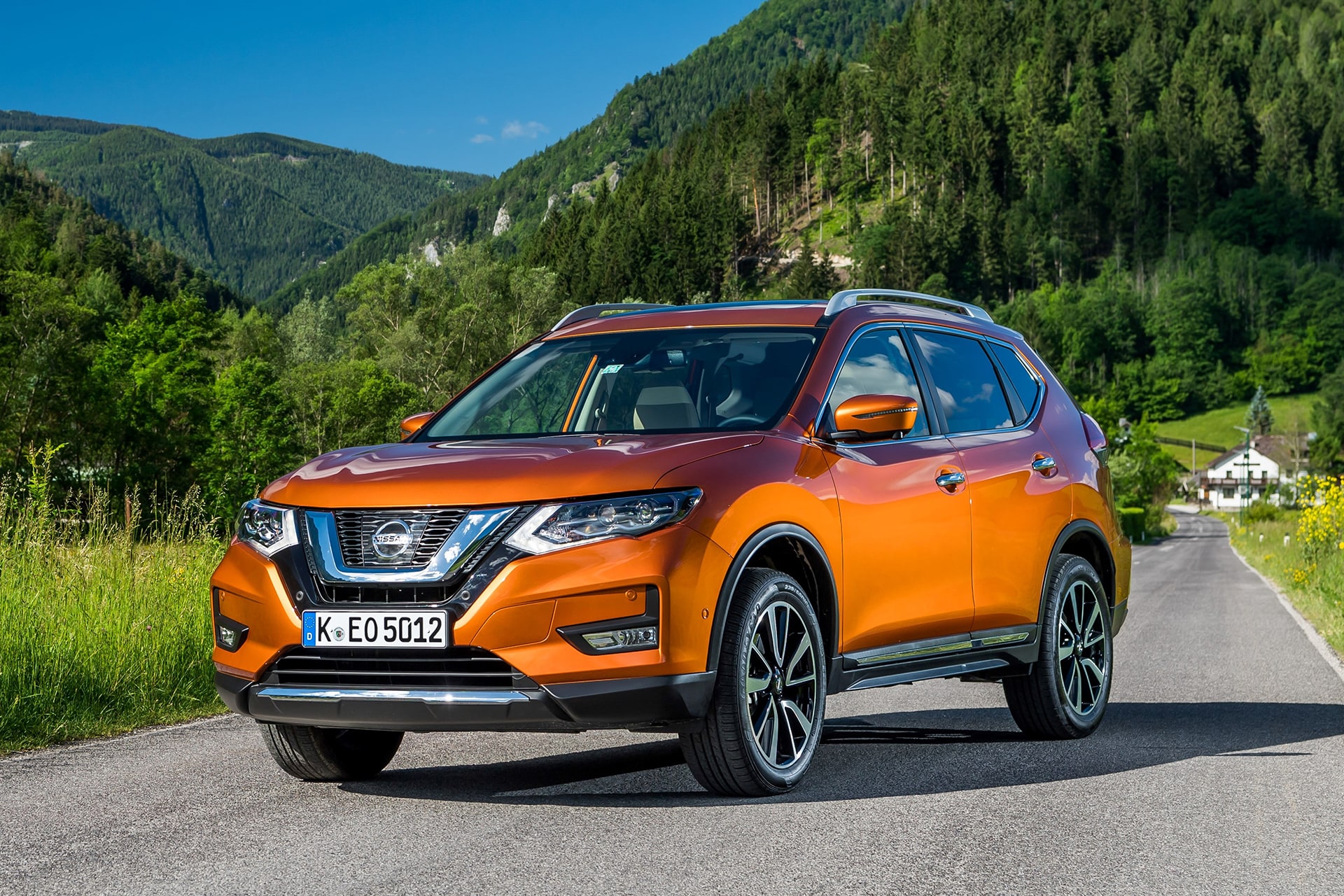
Nissan X-Trail e-Power (from €40,200): the only one with a 7-seat option
If your family already has four children or you are expecting a third, the X-Trail e-Power is the only one of the five offering a 7-seat configuration, with a third row designed more for short trips than for crossing the country, but useful for occasionally taking a school friend along. Its e-Power technology (a petrol engine acting as a generator, with no mechanical connection to the wheels) delivers smooth, almost electric driving, which suits children prone to car sickness better than the pull of other conventional hybrids. Real-world consumption rises somewhat on the motorway, around 6.3 l/100 km.
| Power CV | WLTP consumption | Label | Fuel |
|---|---|---|---|
| 204 CV | 5.9 l/100 km | ECO | Hybrid |
Summary table: the five hybrid family SUVs head to head
| Model | Price from | Boot | Warranty | WLTP consumption | Score |
|---|---|---|---|---|---|
| Toyota RAV4 Hybrid | €42,300 | 580 l | 5 years (up to 10 with servicing) | 5.7 l/100 km | 8.5/10 |
| Kia Sportage HEV | €33,950 | 591 l | 7 years / 150,000 km | 5.3 l/100 km | 8.7/10 |
| Hyundai Tucson Hybrid | €36,700 | 616 l | 5 years unlimited | 5.6 l/100 km | 8.3/10 |
| Renault Austral E-Tech | €37,400 | 500–555 l | 5 years / 100,000 km | 5.0 l/100 km | 8.2/10 |
| Nissan X-Trail e-Power | €40,200 | 575 l | 3 years (extendable to 5) | 5.9 l/100 km | 7.9/10 |
The verdict: which to choose depending on your case
For a family with a baby or small children in bulky seats, the Toyota RAV4 Hybrid wins thanks to the opening angle of its rear doors and a proven reliability that justifies paying the €8,000–9,000 difference over the Sportage, a price premium of more than 20% which does show in the verdict here. For those prioritising budget and a long warranty without sacrificing space, the Kia Sportage HEV is the most sensible option: it comes in below €34,000 and covers seven years of peace of mind. If the criterion is maximum boot space for travelling with full luggage, the Hyundai Tucson Hybrid takes the point, although it is worth checking the trim level if rear climate control matters to you. For those who drive many kilometres and want the lowest consumption in the group, the Renault Austral E-Tech is the reference, though you will have to give up some boot volume (we already discussed this dilemma between real consumption and purchase price in our guide to compact hybrid SUVs). And if you are a large family needing that occasional seventh seat, the Nissan X-Trail e-Power is the only genuine candidate of the five, something we also explore in depth in our analysis of 7-seat SUVs with the longest wheelbase.
Frequently asked questions
What is the cheapest family hybrid SUV of the five?
The Kia Sportage HEV, from €33,950, with the added advantage of a 7-year or 150,000 km warranty that no rival on this list matches.
Which hybrid SUV in this group offers a 7-seat option?
Only the Nissan X-Trail e-Power offers a 7-seat configuration among the five models compared, designed for short trips rather than long journeys with the third row occupied.
Which consumes least on long journeys with children and luggage?
The Renault Austral E-Tech full hybrid, with real-world figures around 5.4–5.6 l/100 km in our road tests with a full load.
Are there public subsidies to buy any of these hybrid SUVs in 2026?
Conventional (non-plug-in) hybrids usually fall outside the Plan Auto+ or receive smaller aid, as the plan is aimed mainly at electric and PHEV vehicles. Check the plan’s official website to confirm the current amount before signing the order.
