

A family SUV “comfortable for travelling” is not the one that looks best in the showroom or the one that promises the biggest screen. It is the one that, after 500 km of motorway with three kids in the back seats, lets everyone get out without a knot in their back and without having to redo the boot Tetris at a petrol station. That is measured with concrete numbers, not impressions. And this is where most comparisons fall short.
We have put three family SUVs sold in Spain today head to head, covering different usage profiles: Skoda Kodiaq, Hyundai Santa Fe and Peugeot 5008. All three aim at the same customer, but they reach that goal with fairly different design philosophies.
What makes an SUV truly comfortable for 500 km of travel
It is not the external size that decides comfort on a long journey. It is the combination of three things: real legroom for those sitting in the back, headroom above the head, and a boot that does not force you to choose between the big suitcase and the baby stroller. A car can measure 4.70 metres outside and feel cramped inside if the wheelbase is short, because that is where the living space is distributed.
The dimensions that make the difference: wheelbase, length and interior height
As a market reference, a family SUV starts to feel comfortable on long trips when it exceeds a 2.70 metre wheelbase, falls within a length of 4.55 to 4.75 metres, and offers more than 95 cm of interior height in the second row. Below those figures, the 500 km journey is felt in the back from around kilometre 200. The boot, so that it does not limit a family of four’s holiday, should be around or above 500 litres with the usual seat configuration.
Skoda Kodiaq 2.0 TDI 150 CV — from €38,700
The Kodiaq best resolves the space-price equation of the three. At 4.76 metres long and with a 2.79 metre wheelbase, it is the longest of the group, which translates into rear seats where a 1.85 m adult travels without touching the front seatback. The 745-litre boot in five-seat configuration is simply the most generous in the comparison.
| Engine | Power | Combined consumption | Label | Fuel |
|---|---|---|---|---|
| 2.0 TDI DSG | 110 kW / 150 CV | 5.5 l/100 km | C | Diesel |
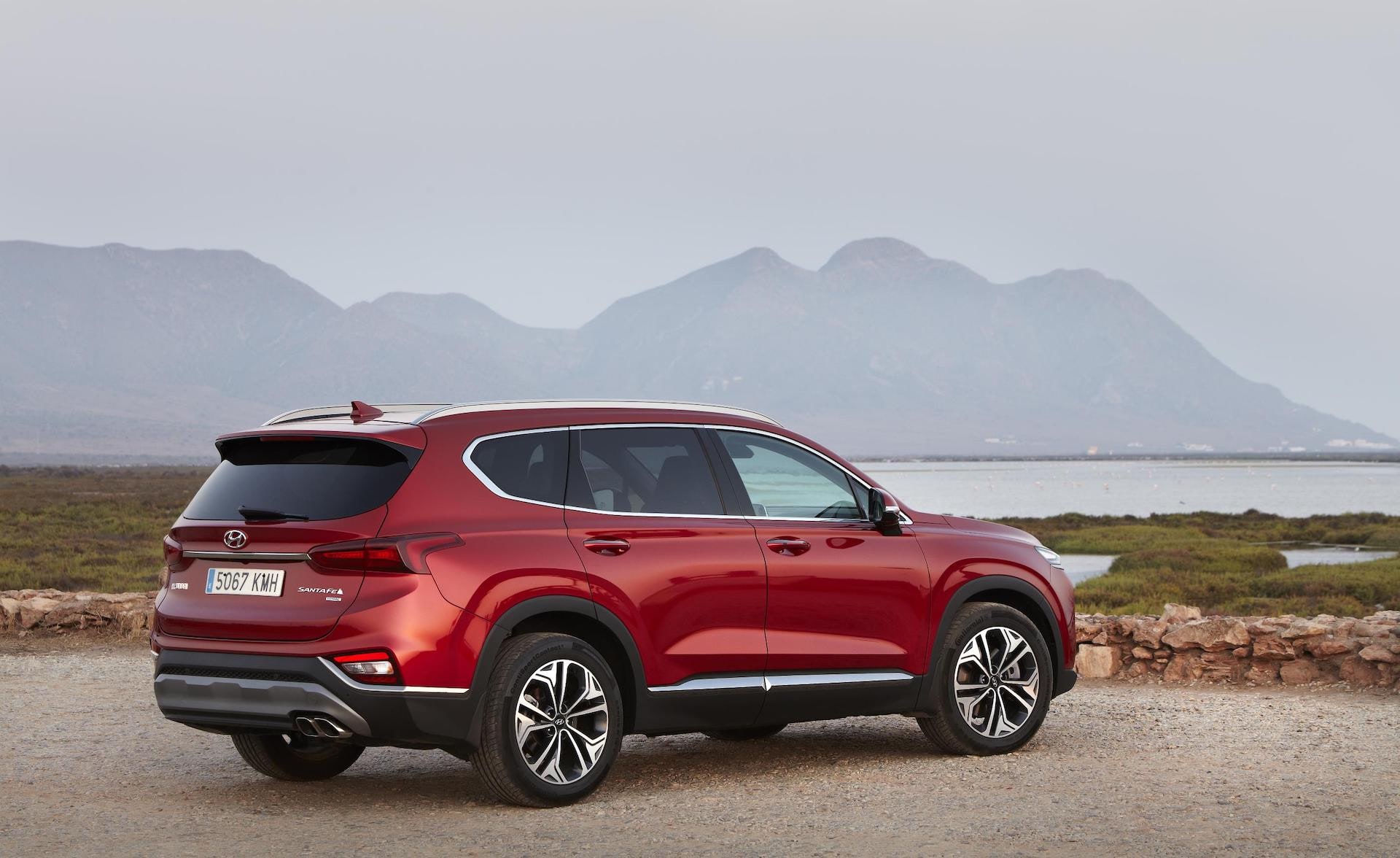
Hyundai Santa Fe Hybrid 215 CV — from €45,950
The Santa Fe plays a different game. Its more squared-off bodywork and an interior design that prioritises a sense of spaciousness give one of the best rear interior heights in the segment. For families travelling with tall child seats or who simply value not bowing their head when getting in, it feels the best inside despite not being the longest on paper. Its drawback is the price: a difference of almost €8,000 compared with the Kodiaq, more than 15%, which is worth keeping in mind before falling in love with the design.
| Engine | Power | Combined consumption | Label | Fuel |
|---|---|---|---|---|
| 1.6 T-GDI HEV | 158 kW / 215 CV | 6.0 l/100 km | ECO | Hybrid |
Peugeot 5008 Hybrid 136 CV — from €39,900
The new-generation 5008 takes a different approach: it is the shortest in length (4.64 metres) but keeps a wheelbase of 2.78 metres, very close to the Kodiaq. It is nimble in town, something the other two cannot claim, and efficient thanks to its hybrid powertrain. The fine print is in the boot: with the third row deployed it drops to 348 litres, which leaves it below the 500-litre threshold we set as the reference for a family trip with full luggage. As we already saw in the Peugeot 5008 vs Skoda Kodiaq, this is the point where the difference in approach between the two is most noticeable.
| Engine | Power | Combined consumption | Label | Fuel |
|---|---|---|---|---|
| Hybrid 136 | 100 kW / 136 CV | 5.3 l/100 km | ECO | Hybrid |
Boot and cargo space for a 500 km trip
Here there is no contest: the Kodiaq wins on comfort. Its 745 litres allow two large suitcases, a baby stroller and a golf bag without resorting to a roof box. The Santa Fe comes in at 571 litres, enough for a family of four with normal luggage. The 5008, used with the third row folded, rises to more than 900 litres; with all seven seats occupied, you have to choose what stays at home.
Where each model wins
The Kodiaq wins on raw space and on price-to-usability ratio: no rival in this trio offers as much boot and rear seat space for less money. The Santa Fe wins on the feeling of interior spaciousness and on finish, with a rear headroom that is appreciated on journeys of more than three hours. The 5008 wins on urban agility and real-world consumption, the lowest of the three according to combined figures, which matters if daily use mixes city and road driving in equal parts.
Comparison table of dimensions and comfort
| Model | Length | Wheelbase | Boot | Price from | Score |
|---|---|---|---|---|---|
| Skoda Kodiaq | 4,758 mm | 2,791 mm | 745 l | €38,700 | 9/10 |
| Hyundai Santa Fe | 4,830 mm | 2,815 mm | 571 l | €45,950 | 8/10 |
| Peugeot 5008 | 4,636 mm | 2,785 mm | 348-916 l* | €39,900 | 7.5/10 |
*The 5008’s boot varies depending on whether the third row is deployed (348 l) or folded (916 l).
Verdict: which family SUV to choose based on your use
For long trips with four or more occupants and real luggage, the Kodiaq is the most sensible option: more space for less money, with a difference of more than 15% compared with the Santa Fe that is only justified if finish and interior design weigh heavily in the decision. For those who prioritise a sense of spaciousness and travel with small children who need tall seats, the Santa Fe offsets its price with liveability that is noticeable, although the extra outlay must be accepted. For mixed city-and-road use with the seventh seat as an occasional resource rather than a constant need, the 5008 is the most efficient and agile of the trio, provided you accept sacrificing boot space when all seven seats are in use. A similar approach was covered when we compared the Skoda Kodiaq vs Volkswagen Tayron vs Hyundai Santa Fe, where space again proved to be the decisive factor.
Frequently asked questions
What wheelbase does a family SUV need to be comfortable on long trips?
From 2.70 metres onwards a real difference in legroom for second-row passengers is noticeable. Below that figure, a 500 km journey feels longer than it should.
What boot size is enough for family travel without problems?
More than 500 litres with the usual seat configuration allows four people’s luggage to be loaded without resorting to a roof box or trailer.
Is the Peugeot 5008 a good family SUV for long trips?
It is efficient and agile, but its boot drops considerably with the third row in use. It works best as a five-seat SUV with the seventh seat as an occasional resource.
Is it worth paying more for the Hyundai Santa Fe over the Skoda Kodiaq?
Only if the feeling of interior spaciousness and finish are priorities. In raw space and price, the Kodiaq offers a better ratio per litre of boot and rear seat space.
