

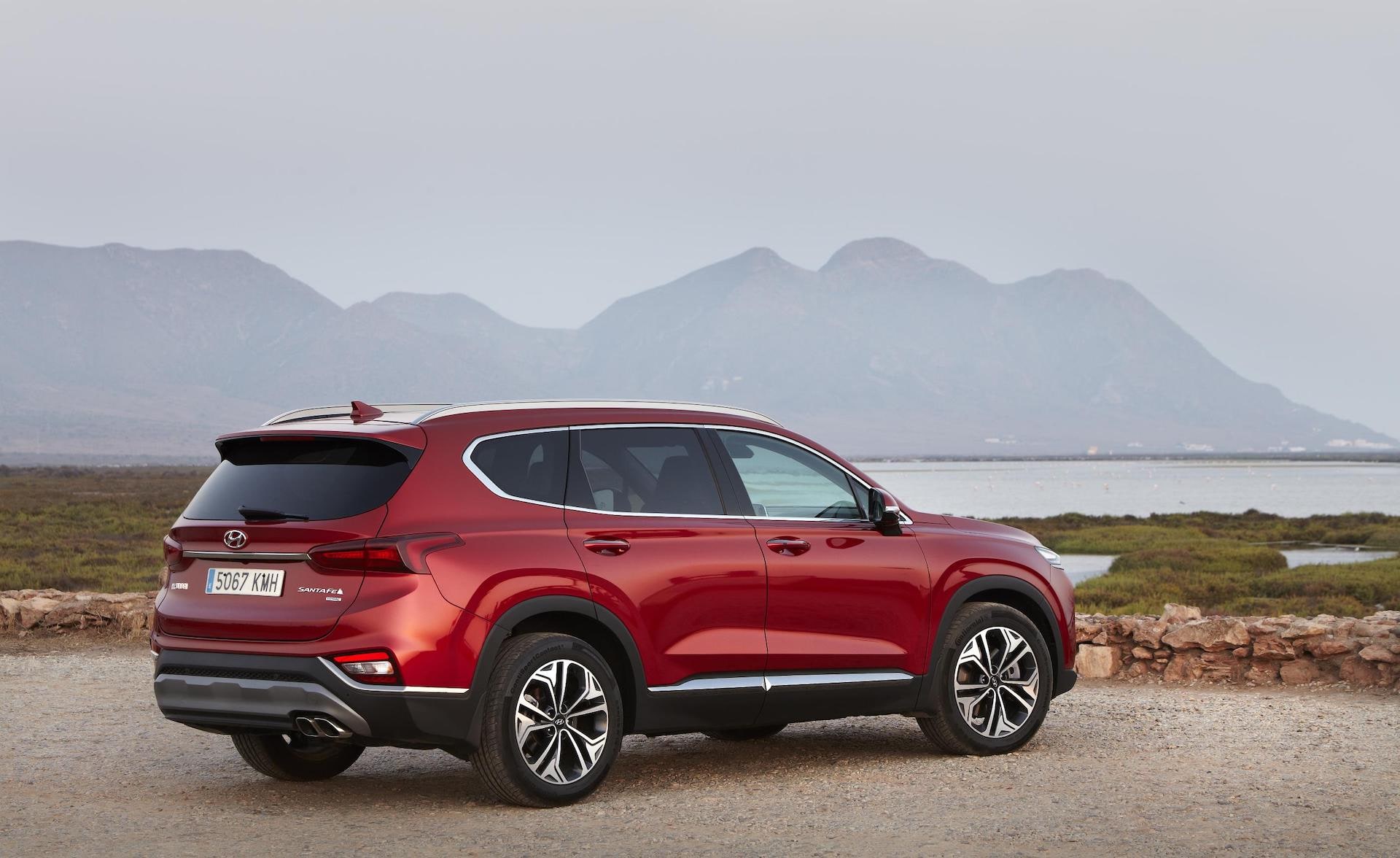
The Santa Fe has for years been Hyundai’s bet for families who need seven real seats, not a boot with two emergency seats squeezed in. The current generation, with its 1.6 TGDi 240 CV hybrid powertrain, changes the approach: it no longer aims to be the biggest SUV in its segment, but the most efficient within its size. This review focuses on the HEV Maxx version, the one you will probably see most at Spanish dealerships this year.
What exactly is this Hyundai Santa Fe HEV Maxx?
We are talking about the HEV 1.6 TGDi 239 Maxx 5-door variant, with automatic gearbox and front-wheel drive. The hybrid system delivers 180 kW, around 240 CV combined, and reaches a top speed of 200 km/h. It is not a car designed to show off its acceleration: it is a conventional hybrid, without a plug, designed to perform well on motorways and in town without depending on a charging point. The starting RRP is around 56,000 euros, and here comes the first caveat you should always make with these figures: it is the manufacturer’s recommended price, without dealer discounts or one-off campaigns that could lower it in practice.
| Model | Power | Top speed | Official consumption | CO₂ emissions | Fuel | Price from |
|---|---|---|---|---|---|---|
| Hyundai Santa Fe HEV 1.6 TGDi 239 Maxx | 180 kW / 240 CV | 200 km/h | 6.5 l/100 km | 140 g/km | Hybrid (petrol/electric) | 56,000 € |
Design and interior space: the 7 seats in practice
This generation’s squared-off body is not just aesthetic. It translates into reasonable access to the third row for an SUV of this size, something that does not always happen in this category. That said, the third row remains territory for children or short journeys: for two adults, a trip of more than an hour starts to be felt in the knees. Where the Santa Fe really convinces is in the second row, with plenty of space and a sense of roominess that is appreciated on long trips with the whole family.
Real-world consumption: what the spec sheet says and what the road shows
The official figure is 6.5 l/100 km. In real motorway use with the car loaded, luggage aboard and air conditioning on, that number rises, as happens with any plug-free hybrid under sustained cruising speed. On mixed journeys, with urban stretches where the hybrid system can recover energy, consumption gets much closer to the official figure. The practical conclusion: for those who mostly drive motorway at high speed, the Santa Fe will not be the efficiency champion of its segment; for those who combine city and road, the official 6.5 l/100 km is an achievable target, not a laboratory fantasy.
Maxx trim equipment: what comes as standard
The Maxx is the entry-level trim of this range, and it does not fall short on the essentials: driver assistance systems as standard, air conditioning, and the active safety package that Hyundai has been refining for years. What it does not include are the comfort extras found in higher trims, such as certain electric seat adjustments or more premium upholstery finishes. For a car that will be used as a family travel tool, the Maxx covers what matters without forcing the buyer to move up a trim just for extras.
Price: how much this Santa Fe really costs in 2026
At an indicative RRP of around 56,000 euros, the Santa Fe enters a territory where it already competes with seven-seat SUVs from mainstream brands and some premium entry-level models. It is worth remembering, again, that these figures do not include dealer offers or the Plan Auto+ aid, which can change the final outlay: it is always advisable to check the official website for the current amount before making any decision.
Against its direct rivals: Kia Sorento, Peugeot 5008 and Skoda Kodiaq
This is where the Santa Fe has to defend its place. The Kia Sorento shares its mechanical philosophy with Hyundai, within the same group, and tends to play the card of a somewhat more practical boot in five-seat configuration. The Peugeot 5008 bets on a more digital interior design and a younger image, although its third row is tighter. The Skoda Kodiaq, for its part, remains the reference for pure space for those who value centimetres above anything else: we analysed it in detail in the comparison Peugeot 5008 vs Skoda Kodiaq, and we also pitted it head to head with the Santa Fe itself in Skoda Kodiaq vs Volkswagen Tayron vs Hyundai Santa Fe.
Objective strengths against the rest
The Santa Fe wins on two specific fronts: Hyundai’s warranty, which remains one of the longest in the Spanish market and gives real peace of mind to anyone planning to keep the car for many years, and access to the third row, better resolved than in many of its direct rivals thanks to the squared body design.
Where it falls short
Real-world consumption on the motorway at sustained speed is not its strongest suit against rivals with more recent powertrains, and the starting price, close to 56,000 euros, places it above what many buyers expect to pay for a family SUV, even a seven-seater.
Comparative summary table
| Model | Fuel | Seats | Key strength | Rating |
|---|---|---|---|---|
| Hyundai Santa Fe HEV Maxx | Hybrid | 7 | Warranty and third-row access | 8/10 |
| Kia Sorento | Hybrid | 5-7 | Practical boot in 5 seats | 7.5/10 |
| Peugeot 5008 | Hybrid | 5-7 | Digital interior and young design | 7/10 |
| Skoda Kodiaq | Petrol/Diesel/Hybrid | 5-7 | Reference interior space | 8/10 |
Verdict: who is the Santa Fe HEV Maxx for?
For families with children who make long trips several times a year and want the peace of mind of an extended warranty, the Santa Fe is a solid and honest choice. For those who prioritise interior space above anything else, the Skoda Kodiaq still wins that contest. And for those looking for the lowest possible outlay in a seven-seat SUV at this level, it is worth comparing with the Kia Sorento first, mechanically related but with price nuances that may tip the balance. In direct relation between standard equipment and warranty, the Santa Fe Maxx is today the choice with the fewest surprises in the medium term.
Frequently asked questions
Does the Hyundai Santa Fe HEV consume what the spec sheet says?
The official figure is 6.5 l/100 km. On sustained motorway driving it rises somewhat from that number, as with any plug-free hybrid; in mixed use with urban stretches it comes much closer to the official consumption.
Is the Maxx trim sufficient for normal family use?
Yes. It includes driver assistance systems and the essential safety equipment. It does not include the comfort extras of higher trims, but it is not a “bare-bones” trim.
How much does the Hyundai Santa Fe cost in Spain in 2026?
The indicative starting price of the HEV 1.6 TGDi 239 Maxx version is around 56,000 euros RRP, excluding dealer discounts, one-off campaigns and Plan Auto+ aid.
Is the Santa Fe better than the Skoda Kodiaq for travelling with children?
For pure interior space, the Kodiaq usually has the advantage. The Santa Fe makes up for it with more comfortable third-row access and a longer warranty, which weighs in the decision over the long term.
