

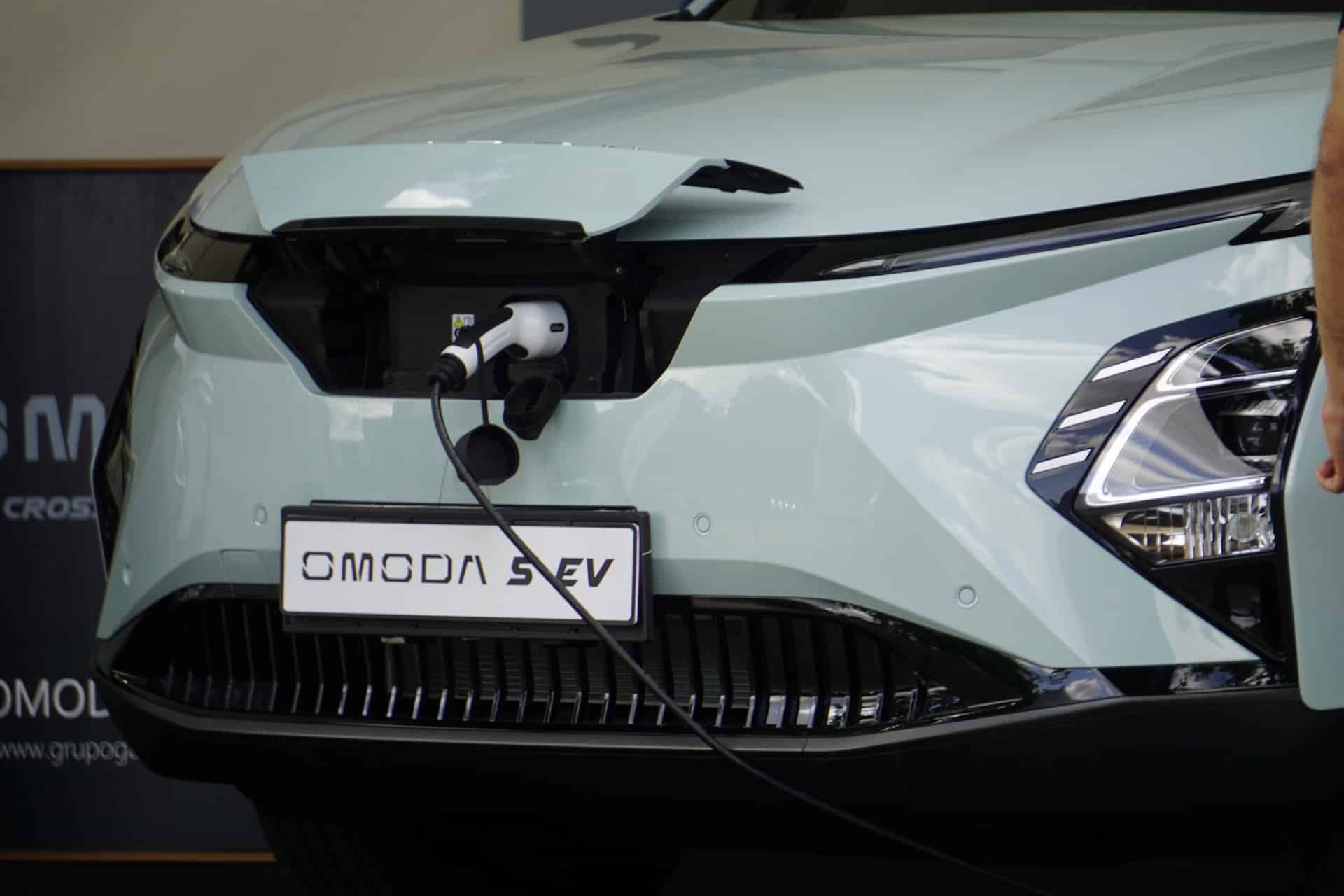
Looking for a hybrid SUV-B for less than €28,000 in 2024 forces you to play with the calculator. Neither the Omoda 5 SHS nor the Nissan Juke Hybrid drops below that figure in its official RRP: they sit at around €29,400 and €30,800 respectively. With campaign discounts and financing, both get close to that psychological €28,000 barrier, which is exactly what the buyer entering this segment wants without giving up hybrid technology.
The real question is not which one is cheaper on the brochure. It is which one gives you more car for the money you will actually pay at the dealership.
Omoda 5 SHS: technical specifications
The Omoda 5 SHS uses a 1.5 TGDI hybrid engine producing around 110 kW (220 CV) and 220 Nm of torque, a figure that is remarkably high for this segment. It accelerates from 0 to 100 km/h in about 8 seconds and reaches 180 km/h. It measures 4,450 mm in length and weighs around 1,620 kg.
| Power (kW) | Power (CV) | Torque | 0-100 km/h | Top speed | Consumption | CO₂ | Fuel |
|---|---|---|---|---|---|---|---|
| 110 kW | 220 CV | 220 Nm | 8 s | 180 km/h | 5.5 l/100 km | 120 g/km | Hybrid |
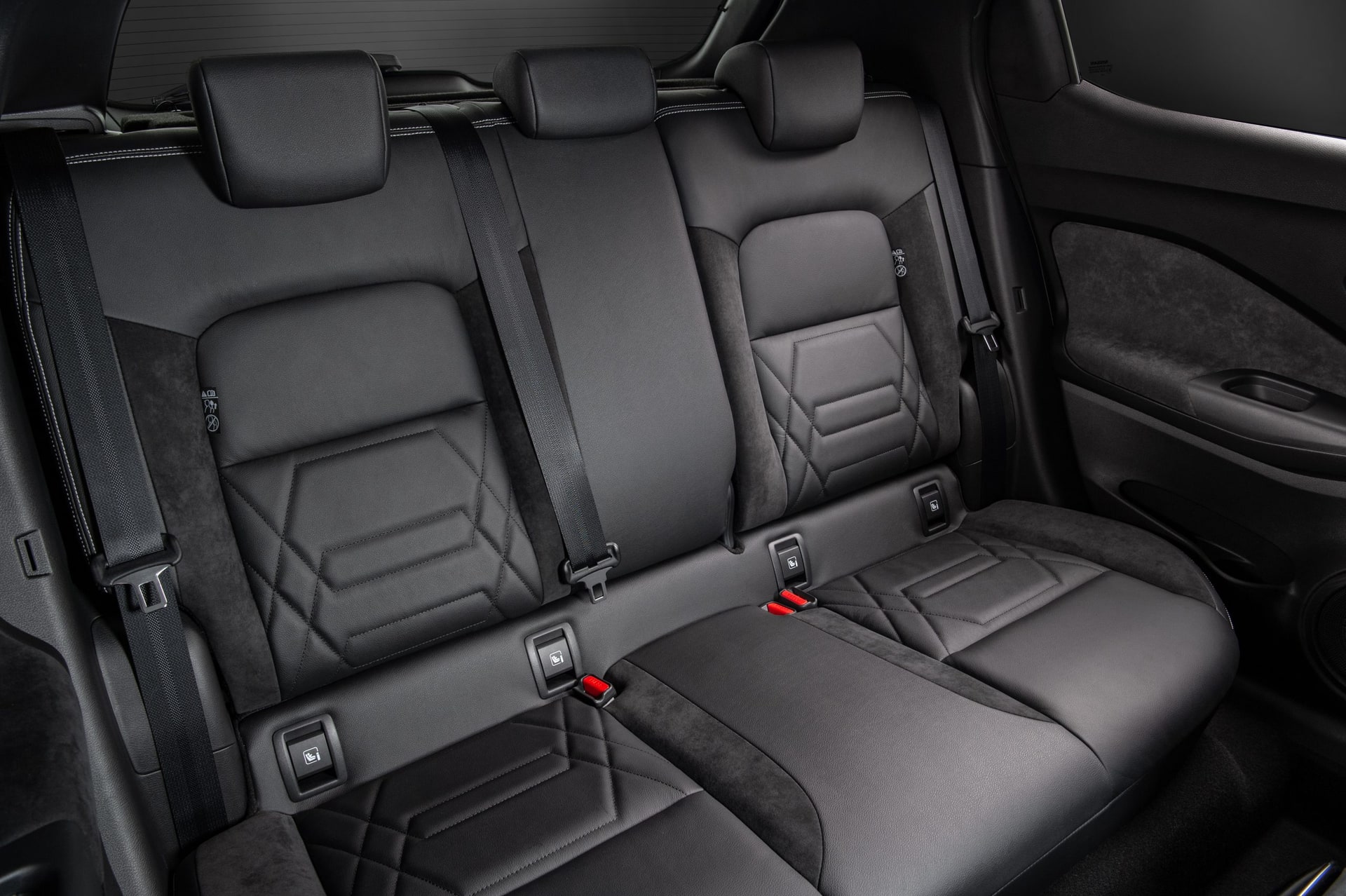
Nissan Juke Hybrid: technical specifications
The Juke Hybrid, in its Hybrid 1.6 143 Acenta 5p automatic version, delivers around 110 kW (140 CV), with front-wheel drive and an e-CVT automatic gearbox. It is no rocket, but it does not pretend to be: its homologated consumption of 4.5 l/100 km and its 110 g/km of CO₂ are the best in the group we are comparing today.
| Power (kW) | Power (CV) | Top speed | Consumption | CO₂ | Fuel |
|---|---|---|---|---|---|
| 110 kW | 140 CV | 170 km/h | 4.5 l/100 km | 110 g/km | Hybrid (petrol/electric) |
Price and versions: the small print behind the €28,000
Here is the first important warning: these prices are the manufacturer’s recommended RRP, without dealer discounts, one-off campaigns or aid such as the Plan Auto+. In practice, the final price you negotiate can drop noticeably from the official figures.
That said, the Omoda starts from around €29,400 and the Juke from around €30,800. The difference is around 5%, not much on RRP, but the Omoda comes with more standard equipment in its entry configuration, which narrows the real gap even further if you compare equivalent versions in performance.
Power and handling: the difference you feel when you press the pedal
With 220 CV against 140 CV, the Omoda plays in a different league of acceleration. A 57% increase in power is not a nuance: it is noticeable in every overtake and every motorway merge. The Juke, with its 140 CV, is more than enough in town and on short trips, but falls short if your use includes motorway driving with a load or frequent trips with a full car.
That said, more power does not always mean more enjoyment. The Omoda delivers its thrust with a certain abruptness in the gearbox, while the Juke delivers its hybrid system more smoothly and predictably, typical of the Nissan engineering built up over several generations of e-Power and mild hybrid.
Consumption and label: here the Juke wins
The Nissan Juke Hybrid consumes 4.5 l/100 km homologated, against the 5.5 l/100 km of the Omoda 5 SHS. It is a real 22% difference in favour of the Juke, which translates into fewer visits to the petrol station if your annual mileage is high. Both carry the ECO label because of their hybrid status, so in urban restrictions they are tied.
Where each one wins
The Omoda 5 SHS clearly wins on two fronts: power (220 CV against 140 CV) and value for money, with more technological content as standard across its range. The Nissan Juke Hybrid wins on homologated consumption (4.5 l/100 km against 5.5 l/100 km) and on something that does not appear on any spec sheet: the after-sales network and the track record of the brand, which in an urban hybrid you will keep for six or seven years weighs more than it seems when you sign the contract.
Comparative summary table
| Model | Power | Consumption | Price from | Score |
|---|---|---|---|---|
| Omoda 5 SHS | 220 CV | 5.5 l/100 km | €29,400 | 7.8/10 |
| Nissan Juke Hybrid | 140 CV | 4.5 l/100 km | €30,800 | 7.5/10 |
Verdict: which to choose depending on your case
For pure urban use, with short trips and little motorway driving, the Nissan Juke Hybrid makes sense: it consumes less, its brand gives peace of mind in day-to-day use, and its exterior size makes parking easier in cities with narrow streets.
For those who want more car for their money, with more power and equipment without overpaying, the Omoda 5 SHS wins on points. Its 220 CV are noticeable on the motorway, and its RRP, 5% lower, leaves room to negotiate even more with the dealership.
If your priority is performance-to-price ratio: Omoda 5 SHS. If you prefer an established brand and the lowest consumption in the group: Nissan Juke Hybrid. There is no tie here: each wins on the ground where the buyer usually decides.
Anyone who has already looked at the Hyundai Kona Hybrid against the Nissan Juke Hybrid knows that the Juke competes well in everyday comfort, but in pure power it still has no clear rival at this price. And anyone torn between Asian brands can also check how the Omoda 5 SHS compares with the Toyota C-HR before deciding.
Frequently asked questions
Which is cheaper, the Omoda 5 SHS or the Nissan Juke Hybrid?
The Omoda 5 SHS starts from around €29,400 RRP, against the €30,800 of the Juke Hybrid. The difference is around 5%, although both prices are indicative and may vary with dealer discounts and campaigns.
Which hybrid SUV consumes less, the Omoda 5 SHS or the Juke Hybrid?
The Nissan Juke Hybrid, with 4.5 l/100 km homologated against the 5.5 l/100 km of the Omoda 5 SHS, a difference of more than 20% in favour of the Nissan.
Is it worth paying for the extra power of the Omoda 5 SHS?
If your use includes regular motorway driving or frequent overtaking, yes: 220 CV against 140 CV is a difference you feel at the wheel, not just on the spec sheet.
Do both models fit within the €28,000 budget?
At official RRP, no: both exceed that figure. With campaign discounts, financing or the current Plan Auto+, they can get fairly close, but it is worth confirming the final offer at the dealership before ruling out either one.

2 Comments
Pingback: Los 5 SUV híbridos con etiqueta ECO y mejor equipamiento de serie por menos de 28.000€ en 2026 – Comparativa de Coches
Pingback: Omoda 5 SHS vs Renault Captur E-TECH vs Suzuki Vitara Hybrid: qué SUV-B híbrido ofrece más coche por menos de 28.000€ – Comparativa de Coches