

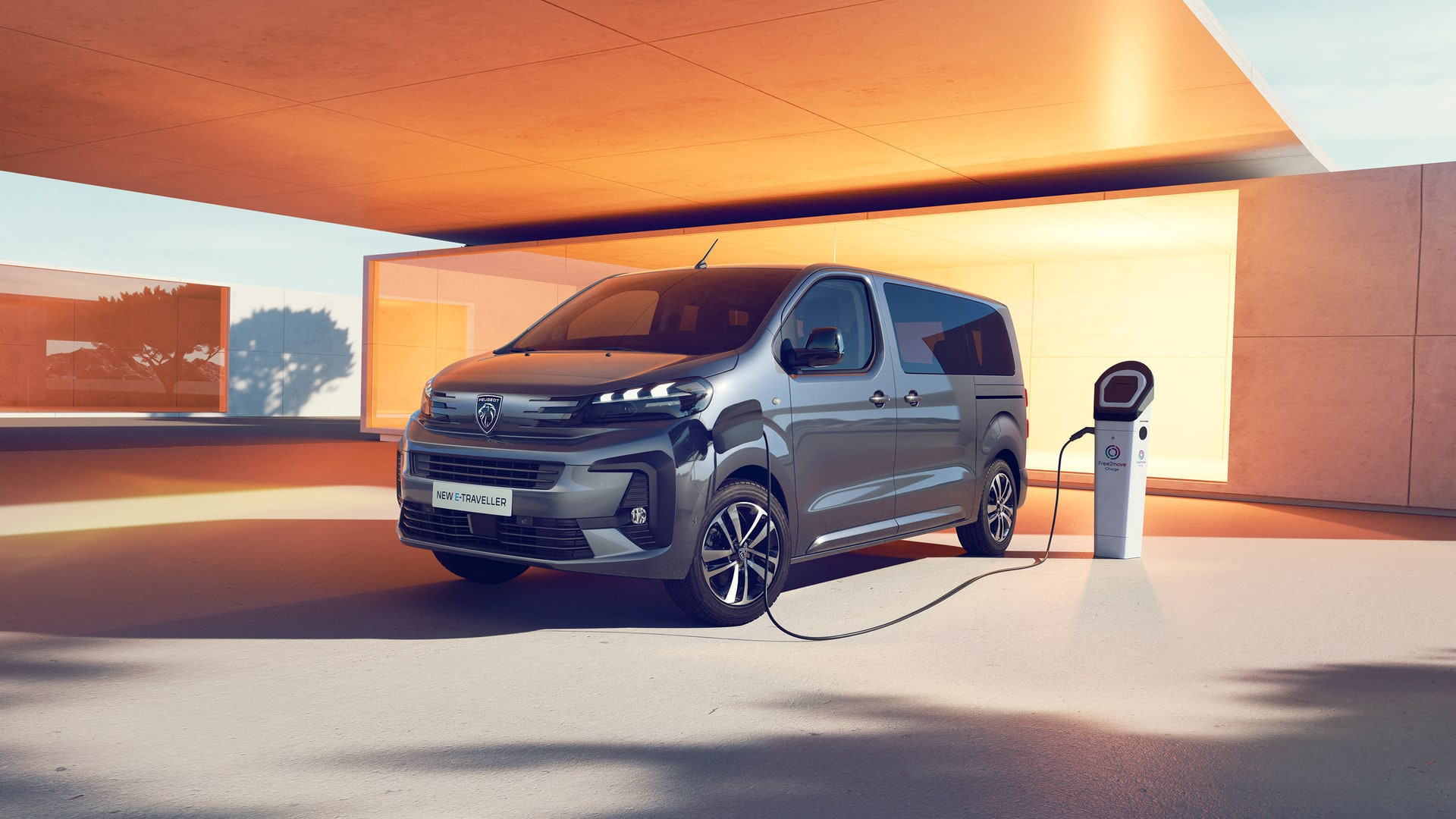
They share a platform, body, doors, windows and even the tailgate handle. But when you lift the bonnet and check the price tag, the Peugeot Traveller and the Opel Zafira Life are two almost opposite cars. One is 100% electric, feels a tonne heavier in psychological terms and costs around €64,400. The other keeps the tried-and-tested 180 CV 2.0 diesel and sits at around €45,900. Almost €18,500 of difference. The question is not which one is the better car — they are the same car — but which of the two approaches makes sense for your wallet.
A note before we start: the prices we use are the manufacturer’s recommended RRP, without dealer discounts, one-off campaigns or Plan Auto+ aid.
Why compare two Stellantis twins
Within Stellantis, the EMP2 platform adapted for passenger vans comes in four different names: Peugeot Traveller, Citroën SpaceTourer, Opel Zafira Life and the commercial sibling Toyota Proace Verso. Same chassis, same body, same seats. What really changes is the shop window: each brand prioritises a different powertrain, trim level and entry price.
We focus on the two ends of the current commercial range. Peugeot has pushed the Traveller towards 100% electric with its Standard 136 75 kWh version. Opel, meanwhile, keeps the Zafira Life alive with the 180 CV 2.0 diesel and automatic gearbox. Same bones, very different decision.
Peugeot Traveller Standard 136 75kWh Business VIP — from ≈€64,400
On paper, the electric Traveller is the bet for the future: zero local emissions, CERO label, unrestricted access to ZBE low-emission zones and mechanical refinement far superior to diesel. In practice, the ≈350 km of homologated range shrinks somewhat when you charge it with eight passengers and luggage, especially on motorways. For urban and peri-urban routes it is more than enough; for Madrid–Valencia with the whole family on board, you need to plan a stop.
The Business VIP trim comes well equipped — multi-zone air conditioning, premium seats, decent infotainment — and the electric response makes moving 1.8 tonnes with eight on board surprisingly smooth. That said, real-world consumption on the open road penalises it more than an equivalent electric car for a simple physical reason: it is a box.
| Power kW | Power CV | Top speed | Range | Battery | Label | Fuel |
|---|---|---|---|---|---|---|
| ≈100 kW | ≈140 CV | ≈130 km/h | ≈350 km | ≈75 kWh | CERO | Electric |
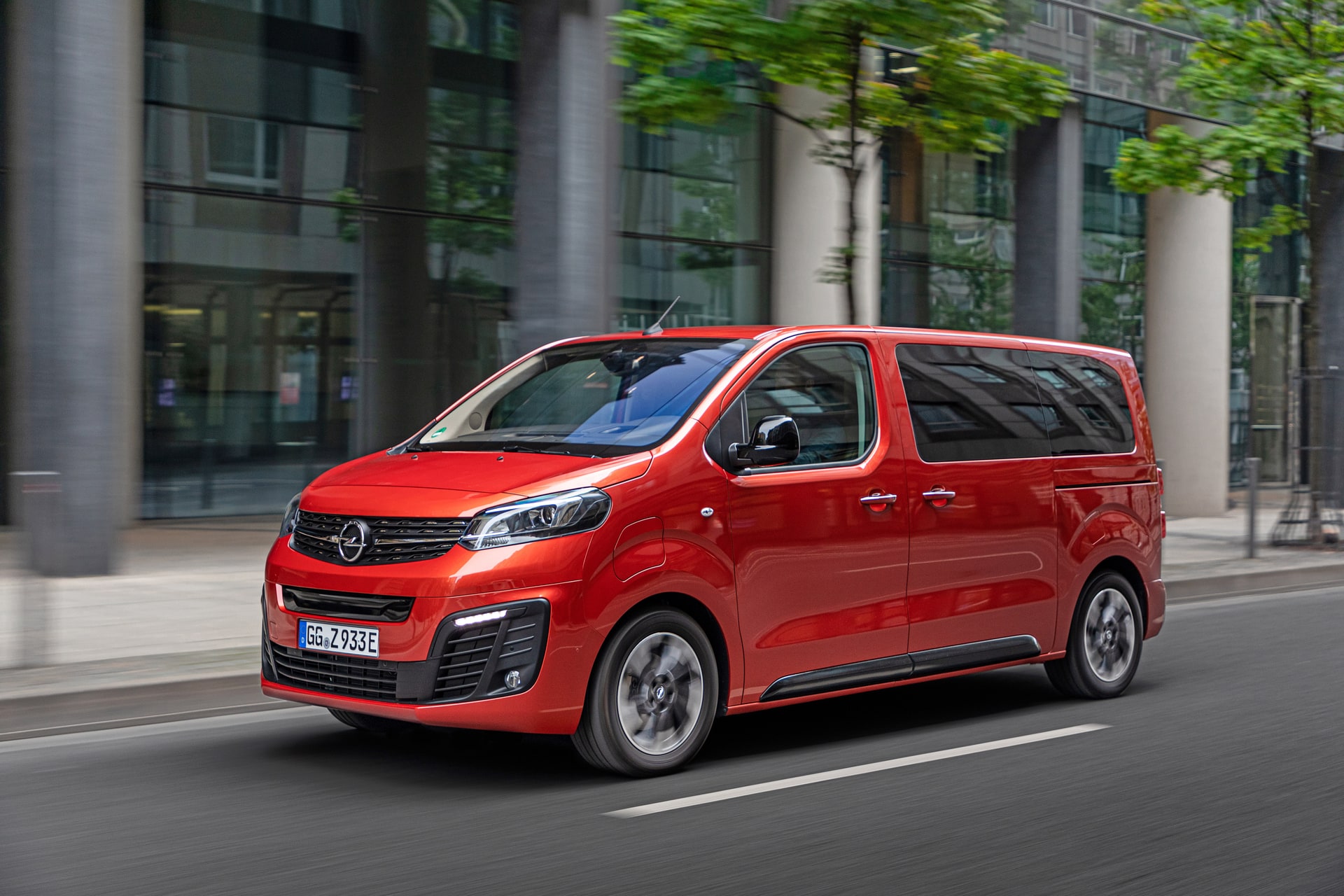
Opel Zafira Life 2.0D 180 S/S Aut. — from ≈€45,900
The Zafira Life with the 2.0 diesel and 180 CV is the pragmatic option. 180 CV with automatic gearbox moves the whole thing with authority, real-world consumption is reasonable for a vehicle of this size (always depending on your right foot, of course) and the range per tank comfortably exceeds 900 real km. For fleets, VTC, airport transfers and travelling families, it remains the most sensible approach.
The drawback is obvious: C label, emissions of ≈180 g/km of CO₂ and a regulatory horizon that is increasingly uncomfortable for diesel in large cities. If you live in central Madrid or Barcelona and use it daily, the C label starts to weigh.
| Power kW | Power CV | CO₂ emissions | Label | Fuel |
|---|---|---|---|---|
| ≈130 kW | ≈180 CV | ≈180 g/km | C | Diesel |
Where each one wins, no half measures
The Peugeot Traveller wins on:
- Mechanical refinement: silence, instant response and an absence of vibrations that diesel cannot match.
- Unrestricted city access: CERO label, no ZBE problems and regulated parking with perks in many municipalities.
The Opel Zafira Life wins on:
- Pure and simple purchase price: ≈€18,500 less, a difference that far exceeds 15% and conditions any TCO calculation.
- Real range on long journeys: 900+ km without stopping and refuelling in five minutes. For inter-provincial routes with eight passengers, there is no comparison.
The refinement of the electric Traveller is real, yes, but it is not enjoyed the same way when the payback on fuel savings takes seven or eight years to offset the price premium. And it remains to be seen whether the electric car’s residual value holds up at five years the way diesel does in the professional channel.
Summary table and score
| Model | Powertrain | Power | Range/Consumption | Label | Price from | Score |
|---|---|---|---|---|---|---|
| Peugeot Traveller Standard 136 75kWh Business VIP | Electric | ≈140 CV | ≈350 km (75 kWh battery) | CERO | ≈€64,400 | 7.5/10 |
| Opel Zafira Life 2.0D 180 S/S Aut. | Diesel | ≈180 CV | ≈180 g/km CO₂ | C | ≈€45,900 | 8/10 |
The score weighs price, flexibility of use and suitability for today’s Spanish market — it is not a pure mechanical refinement ranking, where the Traveller wins without breaking a sweat.
Verdict by use case
-
Pure urban and peri-urban use (hotel fleet, city transfers, metropolitan family with a charging point at home or work): Peugeot Traveller. The CERO label and refinement make up for it if you drive daily through ZBE zones and rarely exceed 250 km in one go.
-
Long journeys, inter-city VTC or airport transfers on routes over 300 km: Opel Zafira Life. 900+ km of real range, refuelling in minutes and 180 CV that move the eight seats with competence. The C label is the price to pay.
-
Price-performance ratio and rational TCO: Opel Zafira Life. The €18,500 difference covers many thousands of diesel kilometres. The calculation only favours the Traveller if you cover more than 35,000 km a year with cheap electricity and amortise it over seven or eight years. If your use is mixed or you fall below that figure, diesel still gives you more car for less money.
If your case is a large family with mixed use, torn between a pure MPV and more conventional alternatives, you may be interested in the three 7-seat rivals approach we already covered, or how to calculate the real cost per kilometre for transfer companies before signing anything.
Frequently asked questions
How long does it take to pay back the premium of the electric Peugeot Traveller over the diesel Zafira Life?
With a difference of ≈€18,500 and assuming an average saving of €8–10 per 100 km in favour of the electric car (highly dependent on electricity prices and the usage scenario), the pure fuel payback falls between 180,000 and 230,000 km. For most families that is too much; for intensive urban fleets it may work out in 4–5 years.
Can the electric Peugeot Traveller handle a long journey with 8 passengers?
On paper, ≈350 km of homologated range. In reality, with eight adults, suitcases and motorway driving at 120 km/h, it is realistic to count on 230–270 usable km between charges. A 500 km route means at least one long fast-charging stop. Feasible, but not comfortable.
Is the C label of the Opel Zafira Life a short-term problem?
In Madrid Central and the Barcelona ZBE, C-label vehicles can still circulate, with restrictions that vary by residence and time of day. The regulatory framework is evolving; for a €45,900 vehicle intended as a professional work tool, diesel remains a valid option today, but it is advisable to monitor the local ordinances in your area of operation.
What aid applies to buying the electric Peugeot Traveller?
The 100% electric Peugeot Traveller is eligible for Plan Auto+, the current line of state aid for electrified vehicles. The specific amount depends on conditions (scrappage, private individual or self-employed, etc.) and it is worth checking the plan’s official website for the current amount, as the terms are updated periodically.

1 Comment
Pingback: Citroën SpaceTourer vs Peugeot Traveller vs Opel Zafira Life: tres monovolúmenes Stellantis de 8 plazas frente a frente – Comparativa de Coches