

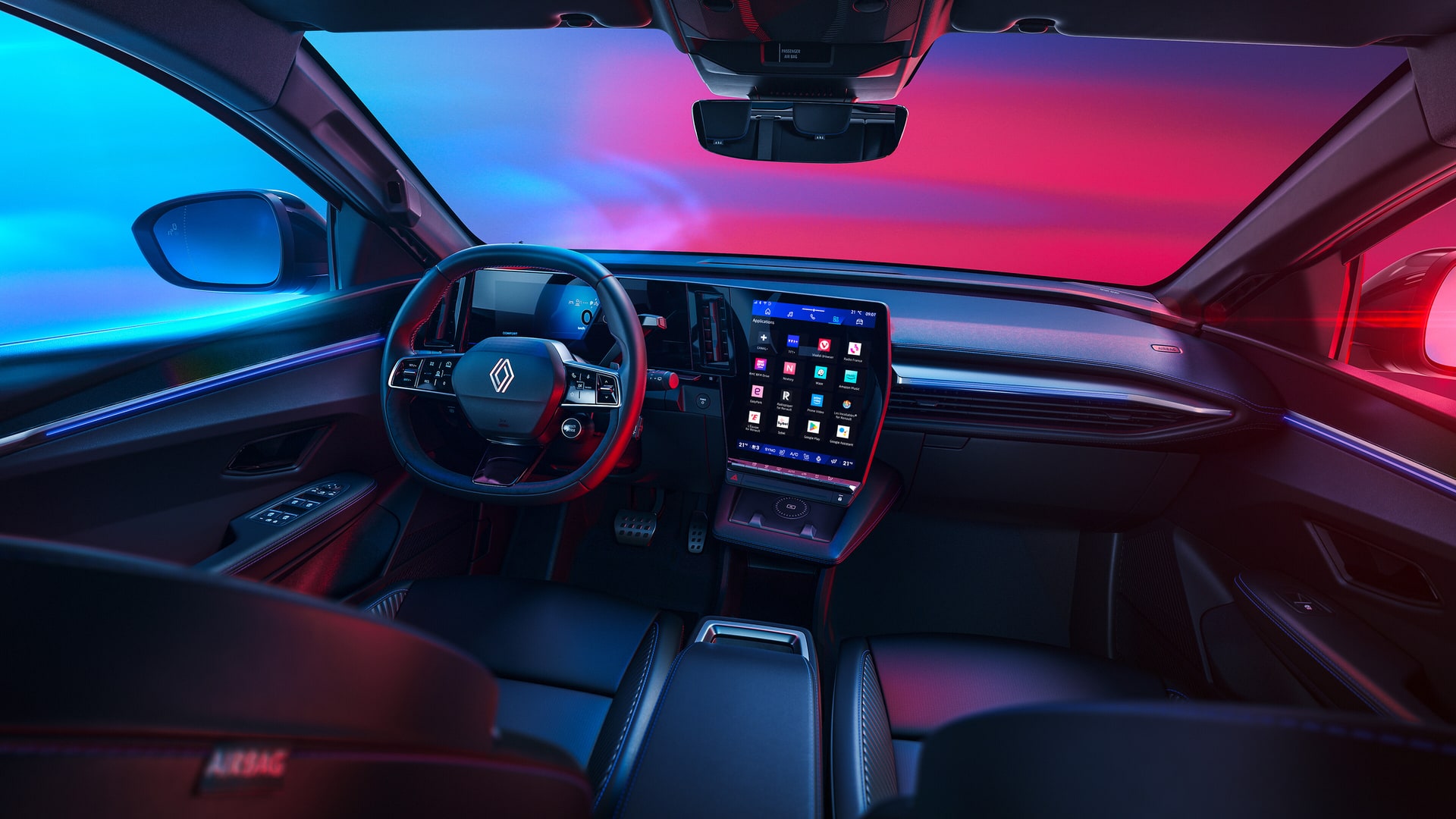
Choosing an electric compact for long trips is not the same as choosing one for city driving. The weight of each figure changes: real-world range matters more than acceleration, and acoustic insulation at 120 km/h matters more than the feel of a button. Renault and Peugeot have been competing in the same segment for years with different philosophies, and in their electric versions that difference is even more noticeable. Let’s put them face to face on what really counts when the journey gets longer.
Renault Megane E-TECH: specs and price from €40,700
The version analysed is the E-Tech Electric Autonomía Confort 220 60kWh Techno 5p Aut., the upper-middle trim of the range. It features a 160 kW (220 CV) motor and a 65 kWh battery that is homologated for around 470 km of range. The starting price is around €40,700 RRP, not including dealer discounts or Plan Auto+ incentives, which should be checked on the official website because they vary by region and income.
| Power (kW) | Power (CV) | Top speed | Range | Battery | Label | Fuel |
|---|---|---|---|---|---|---|
| 160 kW | 220 CV | 160 km/h | 470 km | 65 kWh | CERO | Electric |
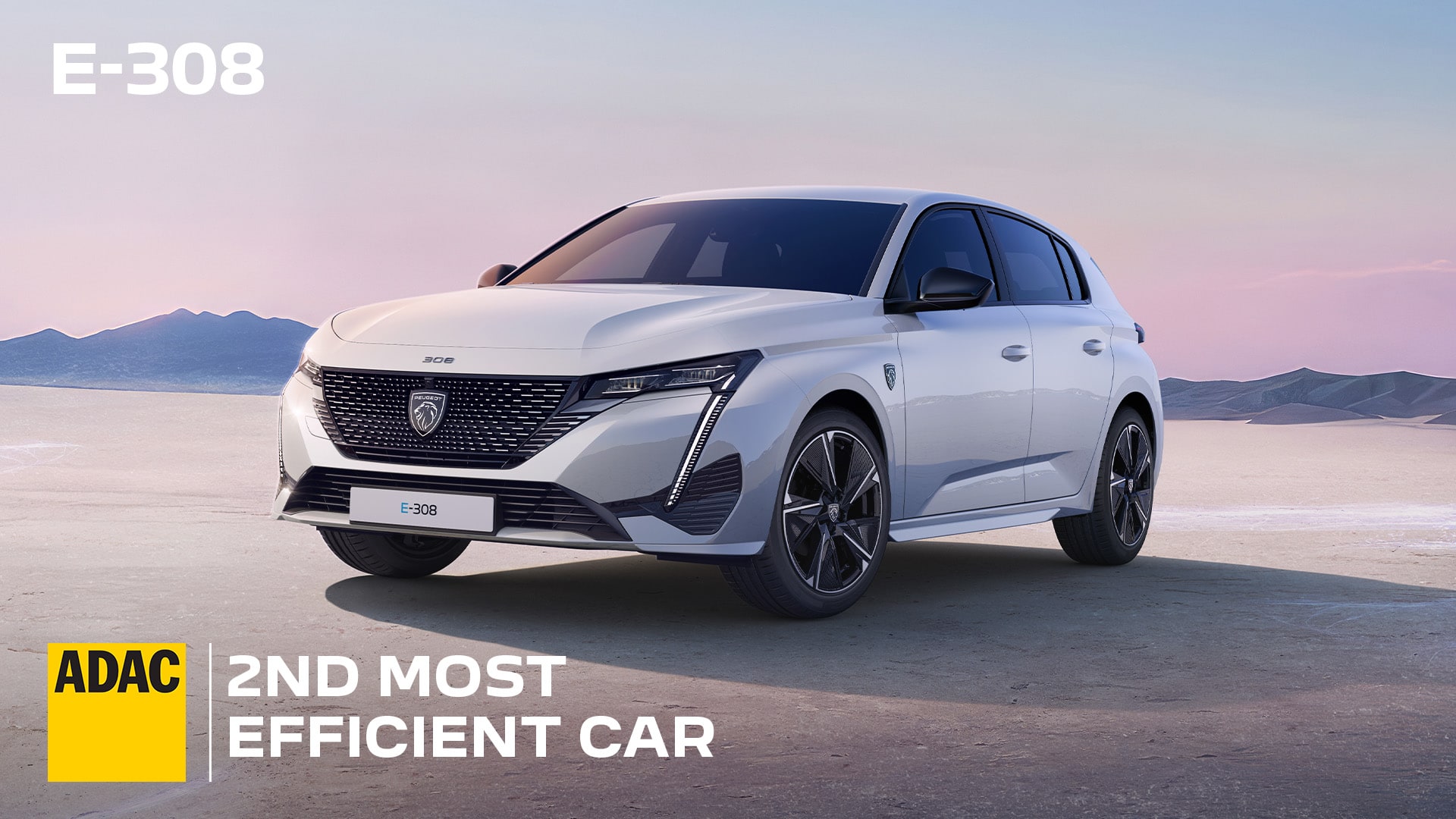
Peugeot e-308: specs and price from €38,400
Peugeot offers its electric compact in the 156 58.3kWh Style 5p Aut. version. It has a 120 kW (160 CV) motor, a 58.5 kWh battery and a homologated range of around 450 km. The entry price is around €38,400 RRP, also indicative and excluding one-off promotions.
| Power (kW) | Power (CV) | Top speed | Range | Battery | Label | Fuel |
|---|---|---|---|---|---|---|
| 120 kW | 160 CV | 170 km/h | 450 km | 58.5 kWh | CERO | Electric |
Range and power: who goes further
Here the Megane E-TECH has a clear advantage. Its 470 homologated km against the e-308’s 450 may not seem like much on paper, but on real motorway driving, where consumption rises sharply above 90-100 km/h, those extra 20 km can make the difference between reaching a comfortable charging point and running the last stretch with the battery in the red. On top of that comes considerably higher power: 220 CV against 160 CV. The Renault pulls ahead with more margin on the motorway and copes better when pulling away fully loaded with passengers and luggage.
The Peugeot, however, offsets part of the difference with a slightly higher top speed, 170 km/h against the Megane’s 160, a figure that matters little in everyday use because the legal limit in Spain is well below both.
Acoustic comfort and ergonomics on long journeys
Renault has paid particular attention to the insulation of the Megane E-TECH: the absence of a combustion engine is noticeable in the silence at steady speed, and the suspension filters the motorway expansion joints well without losing the sense of control. The seats in the Techno trim include adjustments that help on journeys of several hours, something appreciated from around the 200 km mark.
The e-308 is not far behind in interior design, with Peugeot’s distinctive i-Cockpit and a sporty driving position that some drivers find suits them better. But the small steering wheel and the raised instrument display, so praised in the city, can cause some visual fatigue on long trips for those who do not get used to the angle. It is a matter of taste, with no right or wrong answer, but it is worth trying it before deciding whether the car is going to do many motorway kilometres.
Comparison table
| Model | Power | Range | Battery | Price from | Score |
|---|---|---|---|---|---|
| Renault Megane E-TECH Techno | 220 CV | 470 km | 65 kWh | €40,700 | 8.3/10 |
| Peugeot e-308 Style | 160 CV | 450 km | 58.5 kWh | €38,400 | 7.8/10 |
Where each one wins
The Megane E-TECH clearly wins on two fronts: a higher homologated range and power that translates into more relaxed overtaking on the motorway. It is, quite simply, the car that generates the least charging anxiety on a 400 km trip.
The e-308 wins on entry price, almost €2,300 less, and on interior design, where Peugeot remains a reference for perceived quality and materials. For those who prioritise looks and do not plan trips of more than 300 km in one go, that price difference carries weight.
It should be remembered that both prices are indicative RRPs without dealer discounts, campaigns or public aid applied. Anyone wanting to refine the final calculation should also review our guide on how to choose an electric compact according to the type of charging you have at home, because real-world range depends as much on the car as on where and how it is charged.
Verdict: which to choose based on your use
For long journeys and frequent motorway driving, the Renault Megane E-TECH Techno is the most sensible option: more range, more power and better insulation at cruising speed. For mixed use with predominantly urban driving and a tighter budget, the Peugeot e-308 Style is more than adequate and costs 6% less. In terms of price-performance for those who make few long trips, the Peugeot wins; in real road comfort, the Renault wins without argument. If your use case includes regular journeys of more than 300 km, don’t hesitate: the Megane justifies the price difference. For those reviewing competitor models before deciding, our selection of electric compacts with the best real-world motorway range can help put both cars in context.
Frequently asked questions
Which has more real-world range, the Renault Megane E-TECH or the Peugeot e-308?
The Megane E-TECH is homologated for around 470 km against the e-308’s 450 km. The gap widens on the motorway thanks to its higher power, which allows it to maintain steady speed with less consumption penalty.
Is the Megane E-TECH much more expensive than the e-308?
The Megane starts at around €40,700 against the e-308’s €38,400, a difference of roughly 6%, below the threshold that usually tips the balance on price alone.
Which car is more comfortable for long motorway journeys?
The Megane E-TECH stands out for better acoustic insulation and greater power for overtaking. The e-308 offers a more sporty driving position, although less relaxed on journeys of several hours for some drivers.
Do the prices include public aid such as Plan Auto+?
No. Both prices are indicative manufacturer RRPs, without dealer discounts or incentives applied. To find out the current amount of Plan Auto+ it is advisable to check the official website, as it varies by autonomous community and income level.
