

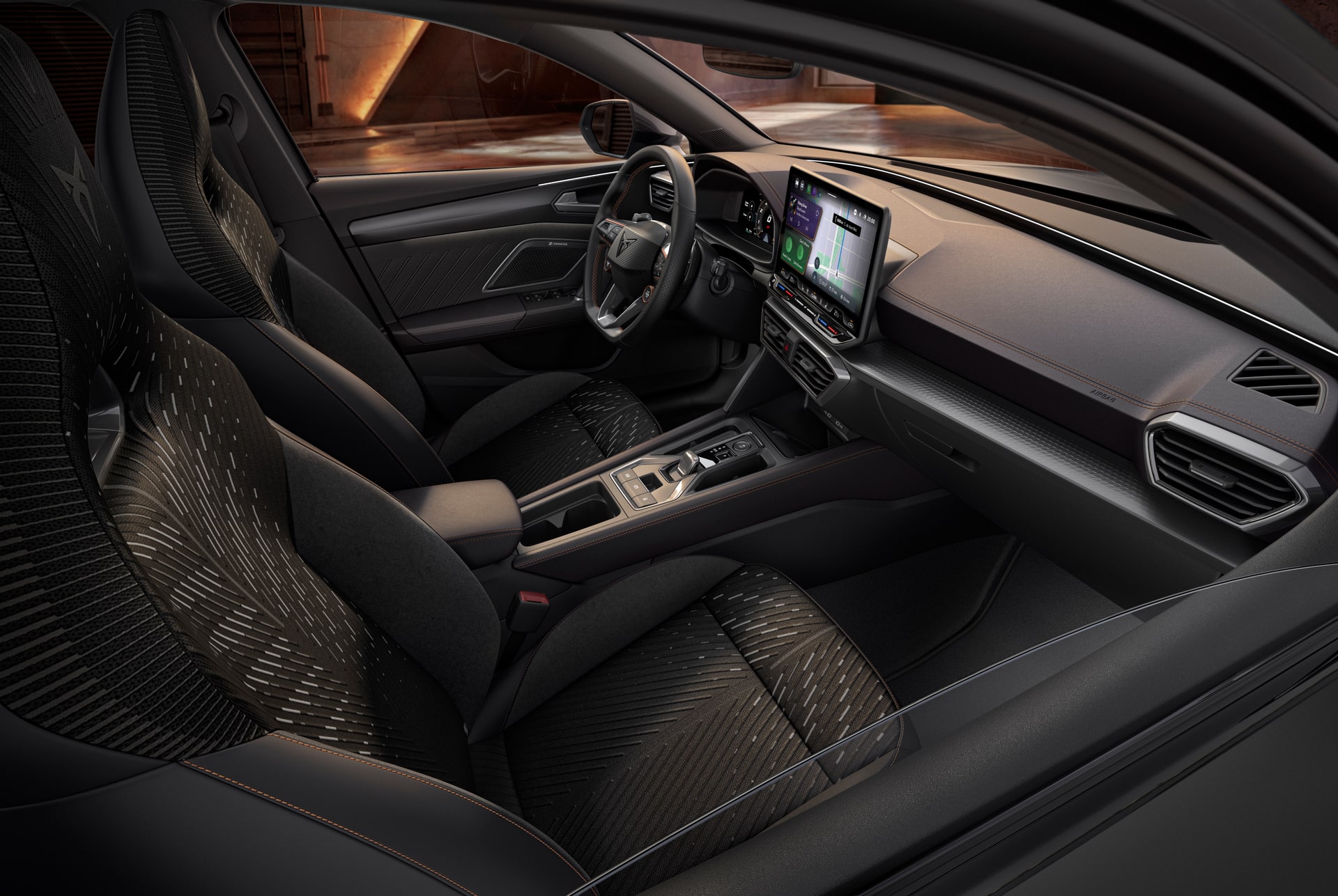
The Cupra Leon e-Hybrid has been playing at being two cars in one for a few years now: an electric city car during the week and a front-wheel-drive compact with quick response at weekends. In 2026 that dual life remains its best asset and also its main condition of use: it works wonderfully if you plug in every day, and becomes a mediocre car in terms of consumption if you don’t.
What the Cupra Leon e-Hybrid is and who it is aimed at in 2026
It is the plug-in version of Cupra’s compact, with a 1.5 TSI engine plus an electric motor, a 25.5 kWh battery and a 6-speed DSG gearbox. It is aimed at those who cover short journeys during the week (office, school, errands) but don’t want to give up a car with plenty of range for the long trip without depending on a charger. The ideal profile: home or work with a wallbox or accessible plug, and less than 40 km a day on average.
Full technical specifications: power, electric range and consumption
| Model | Power | Top speed | Electric range | Consumption | Label | Fuel |
|---|---|---|---|---|---|---|
| Cupra Leon e-Hybrid | 150 kW / 204 CV | 220 km/h | ≈130 km | ≈1.5 l/100 km | 0 | PHEV (petrol/electric) |
The combined 204 CV delivers a response that is most noticeable in town: the electric motor masks the turbo lag and the car pulls away from the traffic lights with the punch Cupra likes to sell as “sporty”. It is, within reason for a PHEV weighing a good 1,600 kilos.
Real-world electric range: the 130 homologated km put to the test
Here we must be honest: 130 km is the WLTP figure, and in real winter conditions, with the climate control running and a mix of motorway driving, the figure drops. With purely urban use and gentle driving, it comes fairly close. On the motorway at 120 km/h, electric consumption soars and the range runs out sooner than one would expect. For a daily commute of 25-30 km each way, the 25.5 kWh battery is more than enough to avoid using any petrol throughout the working week.
Combined consumption: when the PHEV makes sense and when it doesn’t
The figure of ≈1.5 l/100 km only makes sense if you charge almost every day. If you don’t plug in, the Leon e-Hybrid carries a 25.5 kWh battery and a combustion engine that is not optimised to work alone: real consumption in that scenario is closer to that of a high-power petrol compact than to that of a conventional hybrid. It is the classic PHEV trap, and the Leon does not escape it. For anyone without a place to charge, this car loses its economic sense, however good the official figures look in the brochure.
Boot space and interior room with the battery on board
The battery under the boot floor reduces capacity compared with the petrol or diesel versions of the Leon, which is common across all PHEVs in the segment. It is not a dramatic drawback for daily use, but if your plans regularly include large family holiday luggage, it is worth testing physically before signing.
Cupra Leon e-Hybrid vs Volkswagen Golf eHybrid: the dilemma within the VW group
They share a platform, PHEV mechanics and much of their engineering. The difference lies in character and in brand positioning: the Cupra opts for a firmer chassis, a more daring exterior and interior design and a sporty image that the Golf does not pursue. The Volkswagen Golf eHybrid prioritises ride comfort and a more understated image, which matters to anyone using a company car or who doesn’t want to attract attention.
Where the Cupra Leon wins
It wins on steering feel and front-axle response in corners, which is noticeable on secondary roads. It also wins on the perception of sportiness from the first metre, with an exhaust note and an interior staging (seats, steering wheel, screens) that is more eye-catching.
Where the Volkswagen Golf eHybrid wins
It wins on suspension comfort on the motorway and on visual discretion, two things that are not minor if the car is used daily for work or long journeys without wanting to stand out.
Price from €44,600 RRP: what is included and what is not
The Cupra Leon e-Hybrid starts at approximately €44,600 RRP, according to the official price list without dealer discounts, one-off campaigns or public aid. If your purchase qualifies for the Plan Auto+, the final outlay drops, but conditions vary and you should check the current amount on the official plan website before doing any calculations.
Comparative summary table
| Model | Power | Electric range | Consumption | Price from | Score |
|---|---|---|---|---|---|
| Cupra Leon e-Hybrid | 150 kW / 204 CV | ≈130 km | ≈1.5 l/100 km | ≈€44,600 | 7.8/10 |
We have not included a row here with figures for the Volkswagen Golf eHybrid because its technical data is not part of the verified specifications for this piece: the qualitative analysis against it is covered in the previous section.
Verdict: who the Cupra Leon e-Hybrid makes sense for as a single car
For urban use with a wallbox at home or a charger at work, the Cupra Leon e-Hybrid wins clearly: almost the entire week is driven in electric mode and petrol consumption is reduced to weekend trips. For anyone who cannot plug in every day, this car loses its raison d’être: better to look at a conventional hybrid than to carry a battery you don’t charge. And for anyone seeking more sporty character than a Golf offers, the Cupra wins the decision without argument, though you pay for it with a somewhat firmer suspension.
Frequently asked questions
How much real electric range does the Cupra Leon e-Hybrid have?
The homologated figure is around 130 km, although on the motorway with the climate control running the figure drops noticeably compared with the official data.
How much does the Cupra Leon e-Hybrid consume if it is never plugged in?
The official figure of ≈1.5 l/100 km only applies when charging regularly. Without plugging in, consumption approaches that of a powerful petrol compact, not that of an efficient hybrid.
What is the price of the Cupra Leon e-Hybrid in 2026?
It starts at approximately €44,600 RRP, the official factory price without discounts or public aid such as the Plan Auto+, which may reduce the final outlay depending on current conditions.
Is the Cupra Leon e-Hybrid better than the Volkswagen Golf eHybrid?
They share PHEV mechanics, but the Cupra offers firmer, sportier driving while the Golf prioritises comfort and discretion. The choice depends on the character you are looking for, not on a fundamental technical difference.

1 Comment
Pingback: Cómo elegir un compacto PHEV en 2026 según si cargas en casa o dependes de la red pública – Comparativa de Coches