

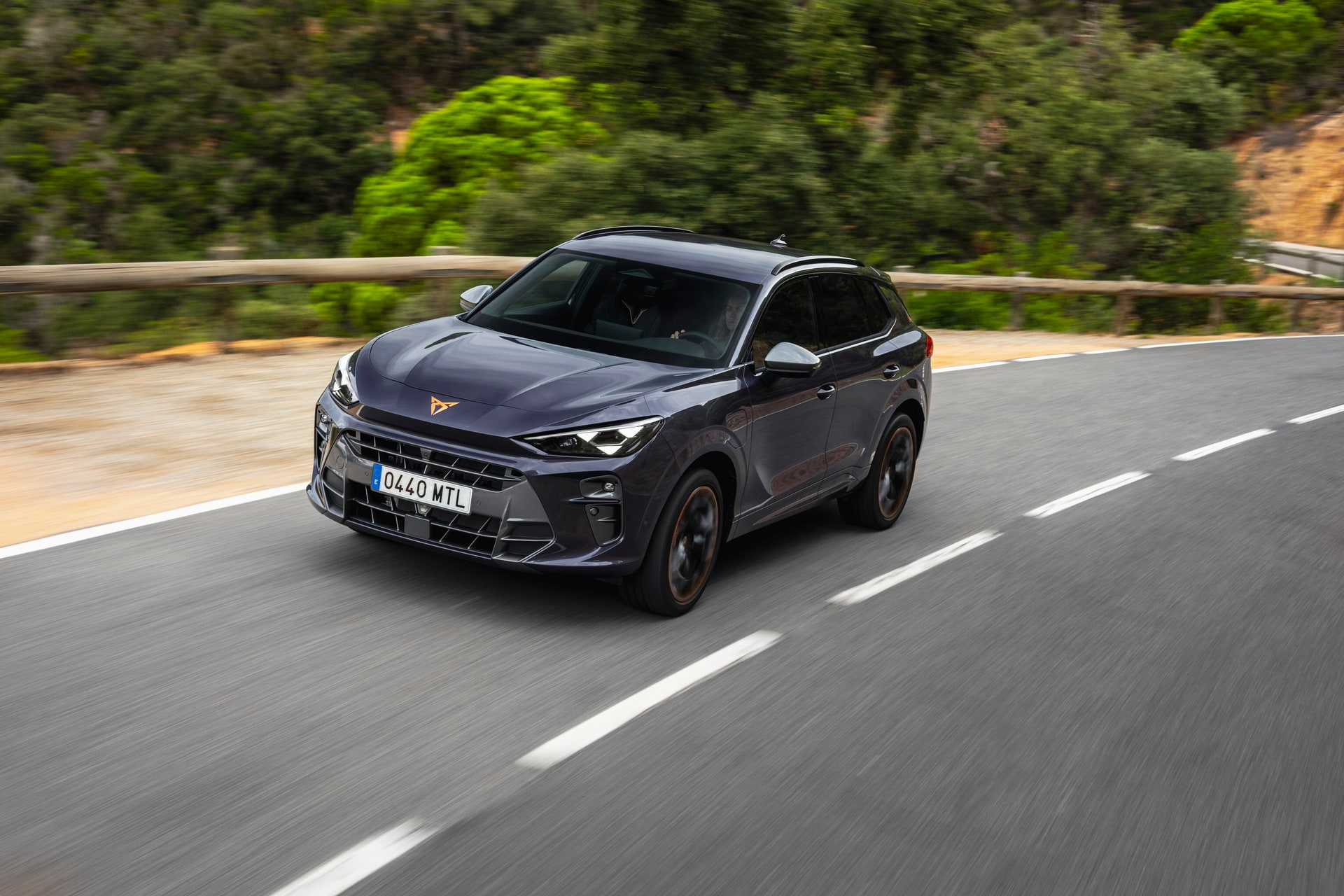
Buying a PHEV without knowing where you’re going to charge it means throwing away half the money of the powertrain change. If you have a wallbox at home, a plug-in compact can cover 80% of your day-to-day driving in electric mode. If you rely on the public network, that same car becomes an ordinary hybrid carrying extra battery weight that you never really take advantage of. The difference isn’t a nuance: it’s the reason why one of these three models will suit you and the other two won’t.
Why charging pattern matters more than power in a compact PHEV
Manufacturers sell horsepower and acceleration, but in a PHEV what determines your real savings is how many electric kilometres you cover before petrol kicks in. A Volkswagen Golf eHybrid with 204 CV may seem more appealing than a Peugeot 308 Hybrid with shorter electric range, yet if you never plug the car in, you end up paying the battery surcharge without enjoying the advantage that justifies it.
What electric range you need depending on whether you charge at home
With a home wallbox, an overnight charge at 7.4 kW leaves the car ready every morning. Here the larger battery always wins: more electric kilometres mean fewer trips to the petrol station and, on urban journeys of under 50 km a day, zero petrol consumption. This is the scenario where the Cupra Leon e-Hybrid and the Golf eHybrid, with higher-capacity batteries, get the most out of their price.
If you rely on the public network: what to check before buying
Without a wallbox, the question changes. Maximum electric range matters less than how easily you can charge quickly at a public AC point, something these three models support with an optional higher-power charger. Here, consumption in pure hybrid mode weighs more than the CERO label, because you’ll be driving with the combustion engine running for a good part of the time.
Volkswagen Golf eHybrid (from €41,000): electric range and fast AC charging
The Golf eHybrid combines a 1.5 TSI with an electric motor for a total of 204 CV (150 kW). With the enlarged battery of the facelift, its WLTP electric range is around 140 km, enough to cover a week of urban journeys without touching the fuel tank.
| Power | Electric range | Combined consumption | Label | Fuel |
|---|---|---|---|---|
| 150 kW / 204 CV | ~140 km | ~1.1 l/100 km (WLTP) | CERO | PHEV |
Cupra Leon e-Hybrid (from €39,500): the sporty PHEV with the largest battery in the VW Group
It shares its platform and mechanics with the Golf, but with a sportier character in its steering and suspension tuning. The larger-capacity battery gives it a similar electric range, around 120-130 km WLTP depending on trim, and it accepts AC charging of up to 11 kW with the optional charger, something the buyer without a wallbox will appreciate at a fast public point.
| Power | Electric range | Combined consumption | Label | Fuel |
|---|---|---|---|---|
| 150 kW / 204 CV | ~120-130 km | ~1.2 l/100 km (WLTP) | CERO | PHEV |
Peugeot 308 Hybrid (from €38,900): shorter electric range, but restrained hybrid consumption
The 308 Hybrid uses a smaller 12.4 kWh battery, which translates into about 60 km of WLTP electric range. It is the least flashy of the three in that respect, yet when its electric charge runs out, its consumption in pure hybrid mode stays more restrained than its large-battery rivals, which carry more dead weight when running on petrol alone.
| Power | Electric range | Combined consumption | Label | Fuel |
|---|---|---|---|---|
| 165 kW / 225 CV | ~60 km | ~1.3 l/100 km (WLTP) | CERO | PHEV |
Comparison table: electric range, power, consumption and price
| Model | Power | Electric range | Consumption | Price from | Warranty |
|---|---|---|---|---|---|
| Volkswagen Golf eHybrid | 204 CV | ~140 km | ~1.1 l/100 km | €41,000 | 3 years / 100,000 km |
| Cupra Leon e-Hybrid | 204 CV | ~120-130 km | ~1.2 l/100 km | €39,500 | 3 years / 100,000 km |
| Peugeot 308 Hybrid | 225 CV | ~60 km | ~1.3 l/100 km | €38,900 | 2 years (extendable) |
Where each one wins: objective strengths
The Golf eHybrid wins on real electric range, the figure that matters most if you charge every night at home. The Cupra Leon e-Hybrid wins on driving dynamics and on price-to-equipment value within the VW Group itself, something we already analysed by comparing it head-to-head with the Volkswagen Golf eHybrid. The Peugeot 308 Hybrid wins on raw power (225 CV versus 204) and on consumption when the battery is depleted, the typical scenario for someone who can’t plug in daily.
Public aid and real running cost with Plan Auto+
All three models meet the minimum electric range requirements to access Plan Auto+, the current state aid for buying electrified vehicles. The exact amount and deadlines change with each call, so it’s worth checking the official website before closing a budget: it can tip the balance between two models with a similar RRP.
Verdict: which compact PHEV to choose based on your case
For home charging with a wallbox and mainly urban journeys: Volkswagen Golf eHybrid, for its greater real electric range. For those who want that same usage profile but with more character behind the wheel and slightly less outlay: Cupra Leon e-Hybrid. For those who rely on the public network and cannot guarantee a daily charge: Peugeot 308 Hybrid, because its higher-power engine and restrained hybrid consumption offset the shorter electric range. The price gap between the three doesn’t reach 6%, so the real decision lies in your home socket, not your wallet. If you’re still torn between full electrification and a plug-in, the analysis of compact electric cars according to the type of charging available can help you rule out the PHEV outright if your case fits a pure electric better.
Frequently asked questions
Is it worth buying a compact PHEV without a wallbox at home?
It’s worth less. Without daily charging, the car spends most of its time running as a conventional hybrid and you never recover the battery surcharge. In that case, a model with shorter electric range but good hybrid consumption, such as the Peugeot 308 Hybrid, usually makes more financial sense than one with a large battery you rarely fill.
How long does a compact PHEV take to charge at a public point?
With a 7.4 kW AC charger or the optional 11 kW unit, these three models complete a full charge in roughly 1.5 to 2.5 hours. None of them supports DC fast charging, which is common among compact PHEVs in this segment.
What electric range do I need to make a compact PHEV pay off?
If your daily journeys don’t exceed 50-60 km, even the smallest battery in the group, such as that of the Peugeot 308 Hybrid, lets you do almost everything in electric mode. For longer trips without an intermediate charge, it’s worth looking at models with range above 120 km, such as the Golf eHybrid or the Leon e-Hybrid.
Do compact PHEVs get the DGT CERO label?
Yes, all three models in this comparison have it, as they exceed the minimum electric range required. That label grants access to low-emission zones and parking benefits in most Spanish cities.
