

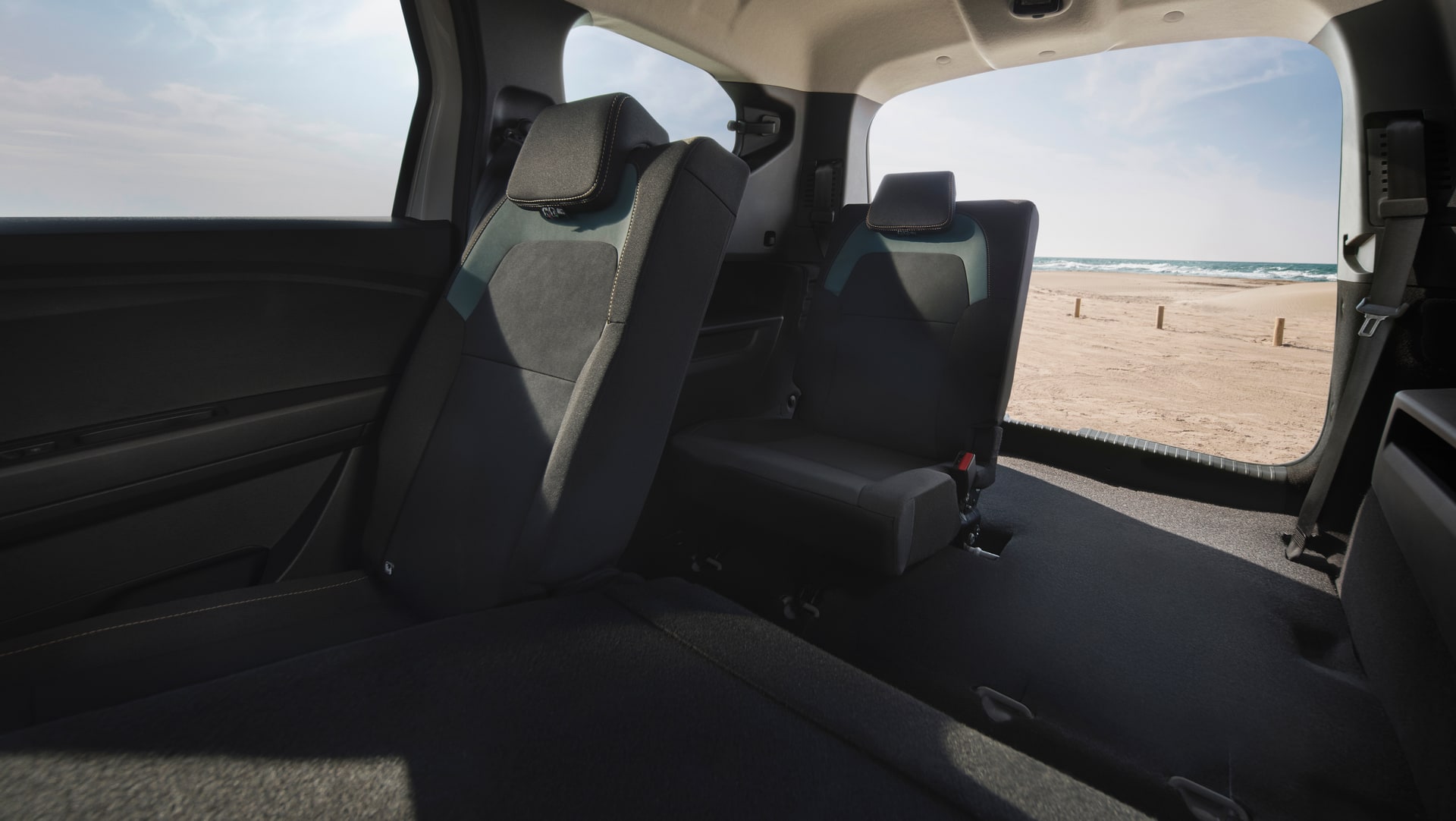
A wide cabin, a flat second row and a modest price. Those three ingredients are what really matter when a family needs to fit three child seats in the back and still use the car every day without it turning into a daily game of Tetris. The market has largely emptied of traditional MPVs, but three survivors deserve a serious comparison: the Dacia Jogger (the cheap LPG one), the Citroën Berlingo and the Peugeot Rifter, the latter two now electric, with 136 CV and a battery of around 52 kWh.
This is not a like-for-like comparison. The Jogger plays in a different price and powertrain league. But it is exactly the decision many families are facing: do I pay 18,900 € and be done with it, or double the investment to go electric with the Berlingo or the Rifter? Let’s settle it.
Why three child seats in the second row change the car you need
The problem is not the number of seats. It is the usable width of the rear bench and the geometry of the ISOFIX anchorages. A group 1/2/3 seat is around 44-48 cm wide at its base; three of them side by side require roughly 140 cm of clear space, without the shells colliding with each other or encroaching on the neighbouring seat belts.
Most 7-seat SUVs fall short here: a three-seat second row, yes, but the middle position is a narrow emergency seat with improvised ISOFIX. Van-derived MPVs, by contrast, come with three genuinely independent seats. That detail changes everything, and it is the reason this trio still makes sense in 2026. If you want to dig deeper into the criteria for real width, we explain it in the guide on three ISOFIX seats on the rear bench.
Dacia Jogger 1.0 Eco-G 100 Essential — from ≈18,900 €
The Jogger is the obvious candidate on price. It measures 4.55 m, costs less than many supermini hatchbacks, and its second row has three independent seats with two side ISOFIX points. The middle seat has no ISOFIX, but it does have a three-point belt and its own head restraint: a child seat fitted with the belt goes in without drama.
| Power kW | Power CV | Top speed | Consumption | CO₂ | Label | Fuel |
|---|---|---|---|---|---|---|
| ≈70 kW | ≈100 CV | ≈180 km/h | ≈4.5 l/100 km | ≈120 g/km | ECO | Petrol/LPG |
The LPG is its secret weapon: an ECO label without plugging anything in, and a combined range of around 1,000 real-world km across both tanks. The obvious drawback is the 100 CV three-cylinder engine moving a car of almost 4.6 metres with five people and luggage on board: enough for national roads, just about adequate for motorways with gradients. If you want pace, look elsewhere.
Citroën Berlingo Talla M 136 50 kWh You! — from ≈36,000 €
Same Stellantis platform, with a trim oriented towards urban family use. The Talla M measures 4.40 m and offers the third row as an option in some configurations — confirm the trim before signing anything. The second row remains the car’s best feature: three independent seats, individually folding backrests, and enough space between the shells to accommodate three Group 1 seats without trouble.
| Power kW | Power CV | Top speed | Range | Battery | Label | Fuel |
|---|---|---|---|---|---|---|
| ≈100 kW | ≈140 CV | ≈130 km/h | ≈340 km | ≈52 kWh | CERO | Electric |
The 340 km WLTP figure drops to 230-250 real-world km with the car loaded with family and baby kit. It is not a long-distance car if you don’t plan charging stops. For everyday urban driving and metropolitan commuting, however, it is almost perfect: CERO label, smooth driving, and an unbeatable cost per kilometre if you have a charger at home.
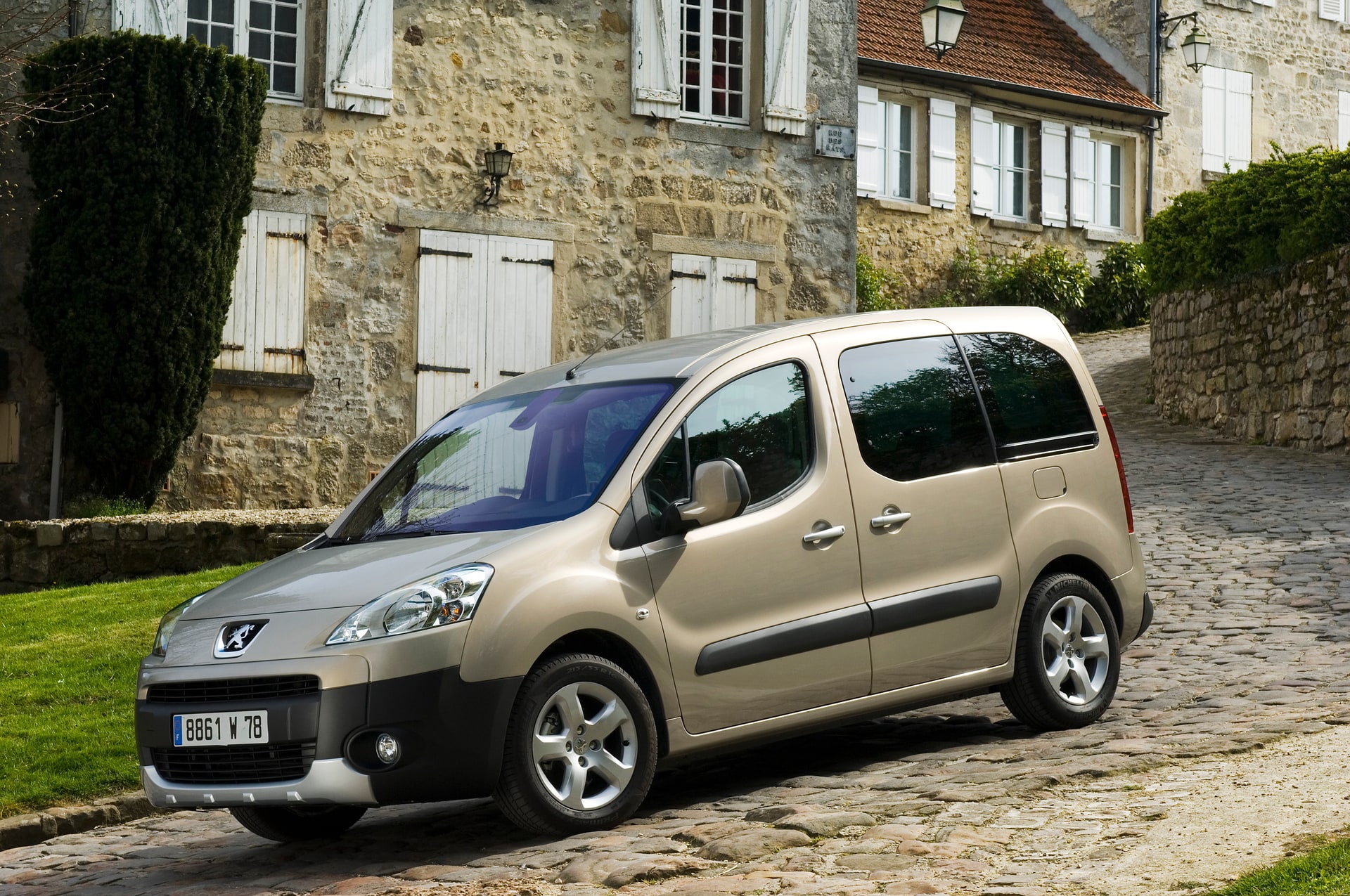
Peugeot Rifter Long 136 50 kWh Allure — from ≈39,700 €
The Rifter Long is the card to play if you genuinely need the third row. It measures 4.75 m, leaves a usable boot behind the second row (and keeps some space with all seven seats in use, something compacts can’t do), and shares its entire electric drivetrain with the Berlingo.
| Power kW | Power CV | Top speed | Range | Battery | Label | Fuel |
|---|---|---|---|---|---|---|
| ≈100 kW | ≈140 CV | ≈140 km/h | ≈330 km | ≈52 kWh | CERO | Electric |
The Allure steps up from the Berlingo’s You! trim: better upholstery, i-Cockpit with a compact steering wheel, and more standard driver-assistance systems. Is it worth paying around 3,700 € more than the Berlingo for the same drivetrain? If you will actually use the third row, yes. If not, the Berlingo gives you 90% of the car for less money.
Comparison table: the three dimensions that matter
| Model | Length | Seats | Boot (5 seats) | 2nd row ISOFIX | Range/Consumption | Label | RRP from |
|---|---|---|---|---|---|---|---|
| Dacia Jogger Eco-G 100 | 4.55 m | 7 | ~700 L | 2 side | ≈4.5 l/100 km | ECO | ≈18,900 € |
| Citroën Berlingo 136 electric | 4.40 m | 5/7 | ~775 L | 2 side | ≈340 km | CERO | ≈36,000 € |
| Peugeot Rifter Long 136 electric | 4.75 m | 7 | ~1,050 L | 2 side | ≈330 km | CERO | ≈39,700 € |
RRP prices recommended by the manufacturer, excluding dealer discounts, one-off campaigns and Plan Auto+ grants.
Where each one wins (without false equivalence)
The Jogger wins on absolute price (less than half the cost of the other two) and on total range thanks to LPG: 1,000 real km without refuelling is a real advantage for families who travel.
The Berlingo wins on urban manoeuvrability (35 cm less than the Rifter Long) and on RRP among the electric models: 3,700 € less for the same drivetrain.
The Rifter Long wins on usable interior space with all seven seats occupied and on interior finish. It is the only one that keeps a decent boot with the third row deployed.
Verdict: which one to buy depending on your case
For a large family on a tight budget with frequent long journeys: Dacia Jogger Eco-G 100. The price gap with the Stellantis models exceeds 90% — it is not just that it is cheaper, it is that the money you save buys you a different car. Accept the 100 CV as they are and move on.
For urban/metropolitan use with your own garage and charger: Citroën Berlingo 136 You! The perfect everyday car for a family with three young children who rarely touch the motorway. Minimum cost per kilometre and a CERO label.
For a family that genuinely uses the third row: Peugeot Rifter Long 136 Allure. It is the only one of the three that doesn’t force you to choose between passengers and boot space. The 3,700 € difference with the Berlingo is justified by the extra 35 cm of bodywork.
If your case is “three child seats in the second row for sure and seven real seats and no hassle with charging”, the Jogger remains the rational answer in 2026. If you have made the switch to electric and your routine fits within 200 km a day, the Berlingo is the best balance of the three.
Frequently asked questions
Can three child seats really fit in the second row of all three cars?
Yes, in all three. The three second-row seats are independent and of similar width (around 44-46 cm of usable width per seat), enough for three standard Group 1/2/3 seats. The ISOFIX points are the two side ones in all three models; the middle seat uses the three-point belt.
Is the Dacia Jogger really comparable with the electric Berlingo and Rifter?
In space and versatility, yes: same MPV concept with three real seats at the back. In powertrain, no: 100 CV LPG versus 136 CV electric. The comparison makes sense because many families choose between paying 18,900 € and 36,000-39,700 €, and the decision depends more on use than on the car itself.
Is the 330-340 km range of the Berlingo and Rifter enough for family trips?
For journeys of up to 200-250 real km with the car loaded, yes. For 500+ km holiday trips you will need to plan 30-40 minute charging stops. If you travel long distances often and have no time to spare, the Jogger LPG is more practical.
What grants can I apply to the purchase of the electric Berlingo or Rifter?
The current framework is the Plan Auto+ for electric vehicles. The specific amounts and conditions change, so it is advisable to check the official website of the current plan before calculating the final cost. The Jogger, being LPG with an ECO label, falls outside the specific electric vehicle grants.

1 Comment
Pingback: Dacia Jogger vs Ford Tourneo Connect vs Peugeot Rifter: qué monovolumen de 7 plazas ofrece más espacio útil para familia numerosa por menos de 30.000€ – Comparativa de Coches