

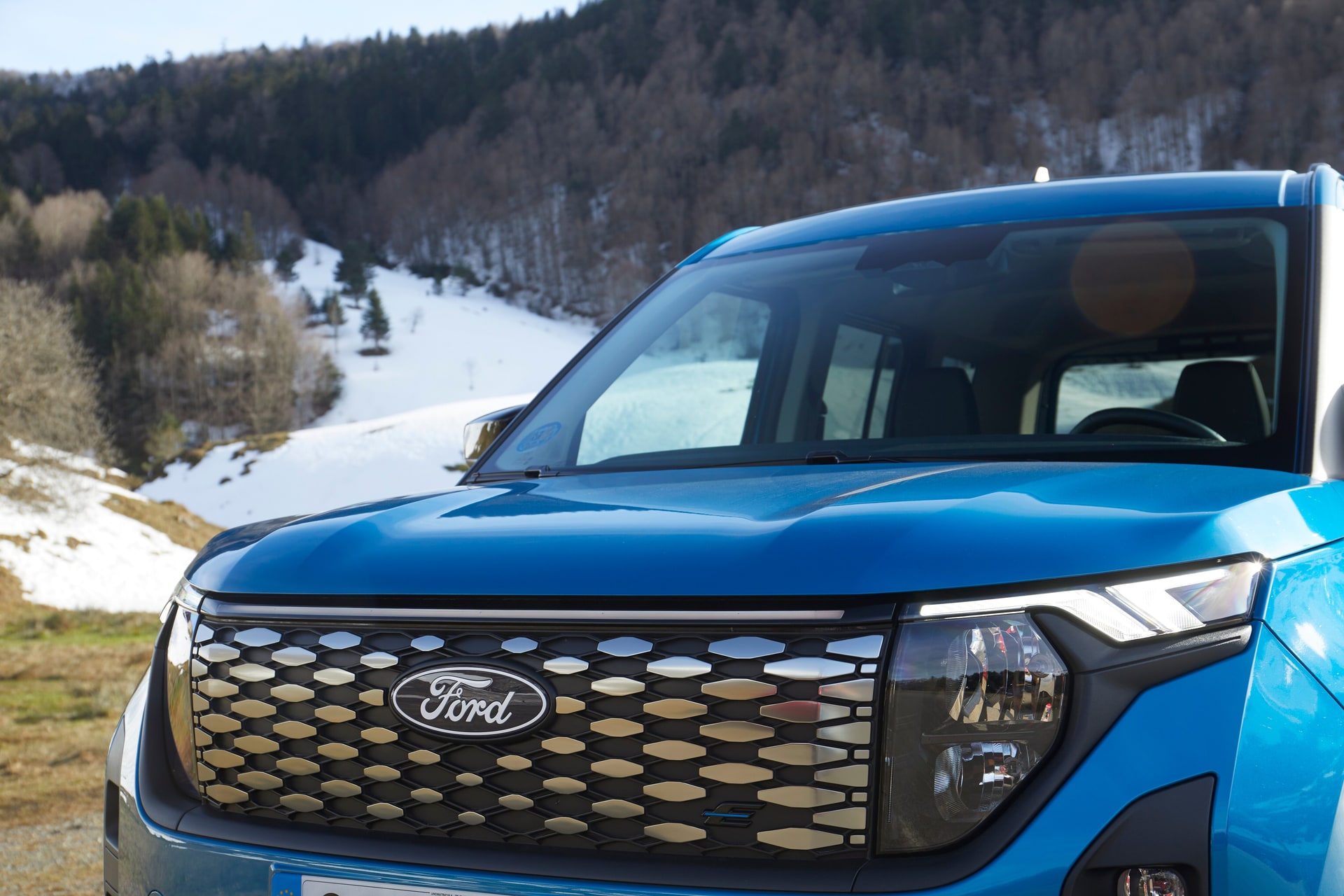
Buying a van-derived family MPV is not a romantic decision. You do it for cubic metres, for sliding doors that your children won’t smash into the car next to you in the supermarket car park, and for a boot that swallows the pushchair, the big shopping bag and the folding bike without playing Tetris. On that specific ground, Ford and Volkswagen have been crossing swords for years. And the matter, right now, is more interesting than it seems: both models share a platform — yes, the current Ford Tourneo Connect is built on the Caddy’s underpinnings — but they are sold with different engines, prices and finish philosophies.
Let’s put them face to face, honestly. No diplomatic technical draw.
Ford Tourneo Connect 1.5 EcoBoost 115 Trend — from ≈34,300 €
The current-generation Tourneo Connect is born at the Poznan factory alongside the Caddy, shares its chassis and a good part of the invisible engineering, but Ford markets it in Spain with a narrower range and, for this comparison, with the 115 CV 1.5 EcoBoost petrol engine as the entry option. It is a well-known, dependable engine, with the tax advantage of the C label and without the filter regeneration problems typical of diesels in urban use.
| Power | Top speed | Consumption | Fuel | Label |
|---|---|---|---|---|
| ≈90 kW / 120 CV | ≈180 km/h | ≈6.5 l/100 km | Petrol | C |
What does the Trend trim offer as standard? Climate control, a central screen with wireless Apple CarPlay and Android Auto, a rear camera, parking sensors and the usual basic-level ADAS package. Sliding doors on both sides, five seats in the SWB version and a boot that swallows whatever you throw at it. The long version (LWB), if you need it with seven genuine seats, exists, but it costs more and falls outside the scope of this analysis.
In our view, the EcoBoost suits urban-metropolitan families who cover 12,000-15,000 km a year better. If you are going to fill the car with motorway miles, diesel still makes economic sense — and that’s where the rival comes in.
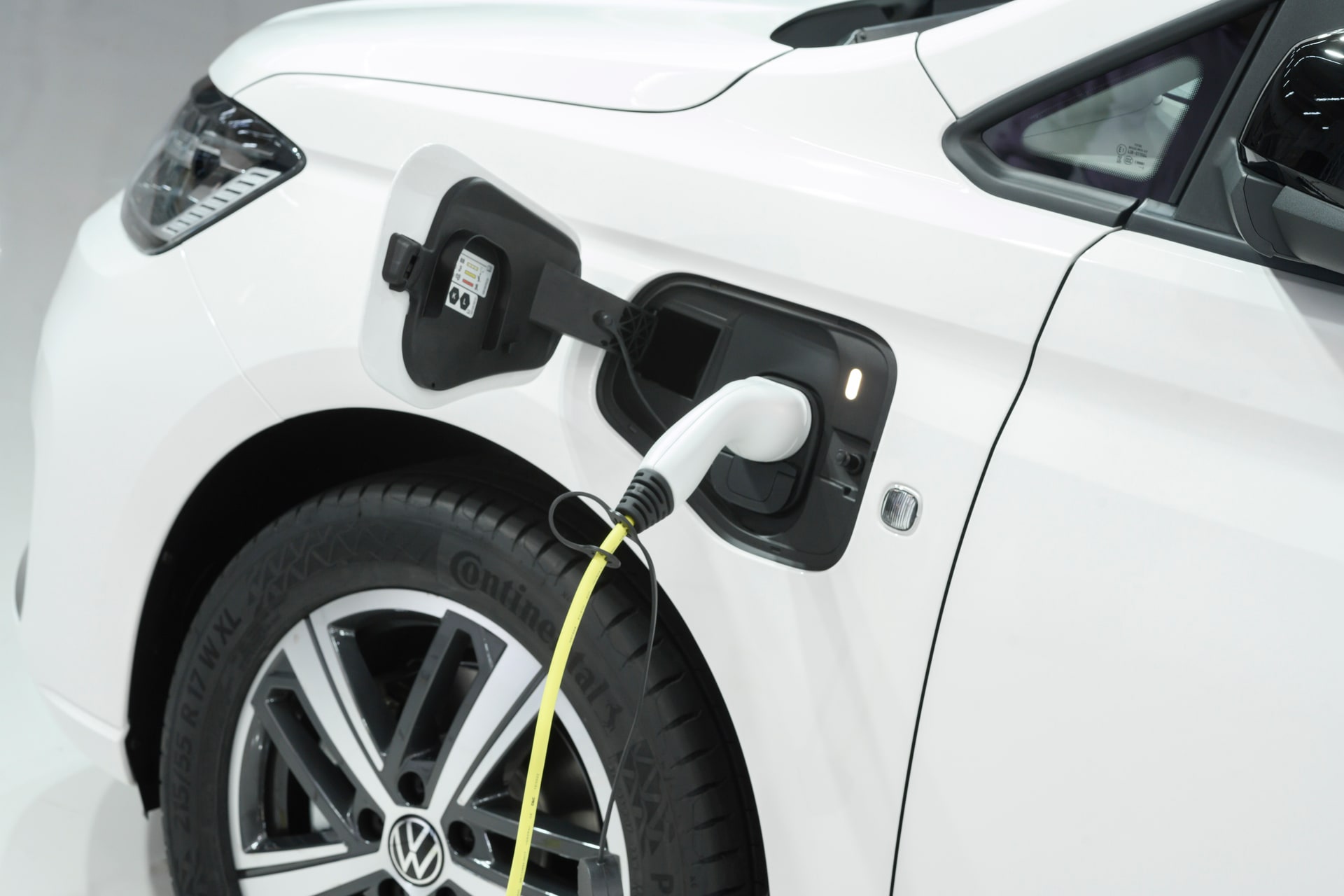
Volkswagen Caddy 2.0 TDI 102 — from ≈28,900 €
The Caddy plays its classic game: diesel, pragmatism and a notably lower entry price. The 102 CV Cargo version is, strictly speaking, the commercial configuration, but it sets the price floor of the range and defines the model’s DNA: functionality first, luxury afterwards (or never). The family versions with five or seven seats (Caddy and Caddy Maxi in Origin or Life trims) climb quickly in list price, something to bear in mind when comparing apples with apples.
| Power | Top speed | Consumption | Fuel | Label |
|---|---|---|---|---|
| ≈80 kW / 102 CV | ≈170 km/h | ≈5.5 l/100 km | Diesel | C |
The TDI delivers torque low down, is frugal in real-world consumption — on a steady motorway run it hovers around 6 l/100 km without effort — and retains the well-known reliability of the VW group’s 2.0 TDI. That said, the label is still C, with the implications that has in Madrid Central and similar ZBE zones. If you live inside the urban ring of a big city, that detail matters more than the fuel savings.
What sets them apart on what really decides the purchase
They share bodywork and machining, but they are not the same car:
- Entry price: the difference exceeds 15% between the diesel Caddy and the petrol Tourneo Connect. It is the first variable that weighs.
- Powertrain: mature diesel versus turbo petrol. A pure choice of annual mileage.
- Dealer network and aftersales: Volkswagen Commercial Vehicles has dealerships with an industrial focus — useful if you also plan to use it for work. Ford bets on the passenger car channel, with a more standard family-oriented approach.
- Equipment in the base trim: Trend on the Ford comes better equipped than the Caddy’s Cargo, but when you move the Caddy up to Origin or Life, things even out — and so does the price.
Ford wins on standard equipment compared with the comparable trim and on better suitability for urban use thanks to the EcoBoost. Volkswagen wins on entry price and on real-world motorway consumption with the TDI, plus a dealer network more specialised in mixed professional-family use.
Summary table and score
| Model | Engine | Power | Consumption | Price from | Score |
|---|---|---|---|---|---|
| Ford Tourneo Connect 1.5 EcoBoost 115 Trend | Petrol | 120 CV | ≈6.5 l/100 | ≈34,300 € | 7.8/10 |
| Volkswagen Caddy Cargo 2.0 TDI 102 | Diesel | 102 CV | ≈5.5 l/100 | ≈28,900 € | 7.5/10 |
Prices are the manufacturer’s recommended list price, without dealer discounts, one-off campaigns or public incentives such as the Plan Auto+. At a dealership, the real picture can change by several thousand euros.
And if you need more car? The Ford Tourneo Custom alternative
There are families for whom neither the Connect nor the Caddy measure up: genuine seven seats, luggage for a week, occasional towing. There the conversation changes segment and the Ford Tourneo Custom appears, a step up in size, seating and load capacity. It doesn’t play in the same league — and the price reflects it — but if your case is "five people + dog + bikes + a weekend in the snow", it is the logical answer within Ford’s own range. To put in context what a vehicle like that gains and loses against a 7-seater SUV, our analysis of the Hyundai Santa Fe versus the Kia Sorento serves as a cross-reference.
Verdict by use case
- Mainly urban use and under 15,000 km/year: Ford Tourneo Connect 1.5 EcoBoost. Petrol without annoying regenerations, Trend equipment that doesn’t force you to move up a trim, and the premium over the base Caddy is offset by what you don’t spend on urban diesel or on mechanical stress.
- Mixed use with lots of motorway (over 20,000 km/year): Volkswagen Caddy 2.0 TDI. The TDI is still the right tool, performs better in real-world consumption and pays back the initial difference within three years.
- Best value for money: Volkswagen Caddy. The list price difference exceeds 15% compared with the Ford, and for anyone seeking pure functionality without showy equipment, that saving weighs heavily.
- Large family that needs 7 real seats and serious load capacity: neither of the two — jump to the Ford Tourneo Custom or a seven-seat mid-size SUV.
Frequently asked questions
Are the Ford Tourneo Connect and the Volkswagen Caddy the same car?
They share a platform and are built at the same plant (Poznan), with many common components. They are not identical: the engine range on sale, the trims, the standard equipment, the suspension tuning on some variants and, above all, the dealer network and aftersales service all differ. In day-to-day driving they feel very similar; in your wallet and at the dealership, they don’t.
Which has better real-world consumption?
The Caddy 2.0 TDI, without question, in motorway and mixed use. It runs at around 5.5-6 l/100 km in real conditions. The Tourneo Connect 1.5 EcoBoost easily climbs to 7-7.5 l/100 km in heavy city traffic and to 6.5-7 on the motorway. If you cover a lot of kilometres, the diesel pays off; if not, the difference doesn’t justify the engine on its own.
Is there a 7-seat version available?
Yes, both models offer a long configuration with seven seats (Tourneo Connect Grand and Caddy Maxi). They are the logical option if you need to carry more than five passengers regularly, although they cost more and may take them out of the range we have used in this comparison.
What environmental label do they have?
Both carry the DGT’s C label in the versions analysed (1.5 EcoBoost petrol and 2.0 TDI diesel). That allows them to circulate in most ZBEs, but with growing restrictions in protected urban areas. For long-term use within Madrid Central or equivalents, it would be worth considering ECO or 0 alternatives, although the choice in this type of bodywork is currently limited.

2 Comments
Pingback: Ford Tourneo Connect vs Volkswagen Caddy vs Peugeot Rifter: qué monovolumen compacto de 7 plazas ofrece mejor relación equipamiento-precio – Comparativa de Coches
Pingback: Dacia Jogger vs Volkswagen Touran: qué monovolumen de 7 plazas ofrece más espacio útil para familia numerosa por su precio – Comparativa de Coches