

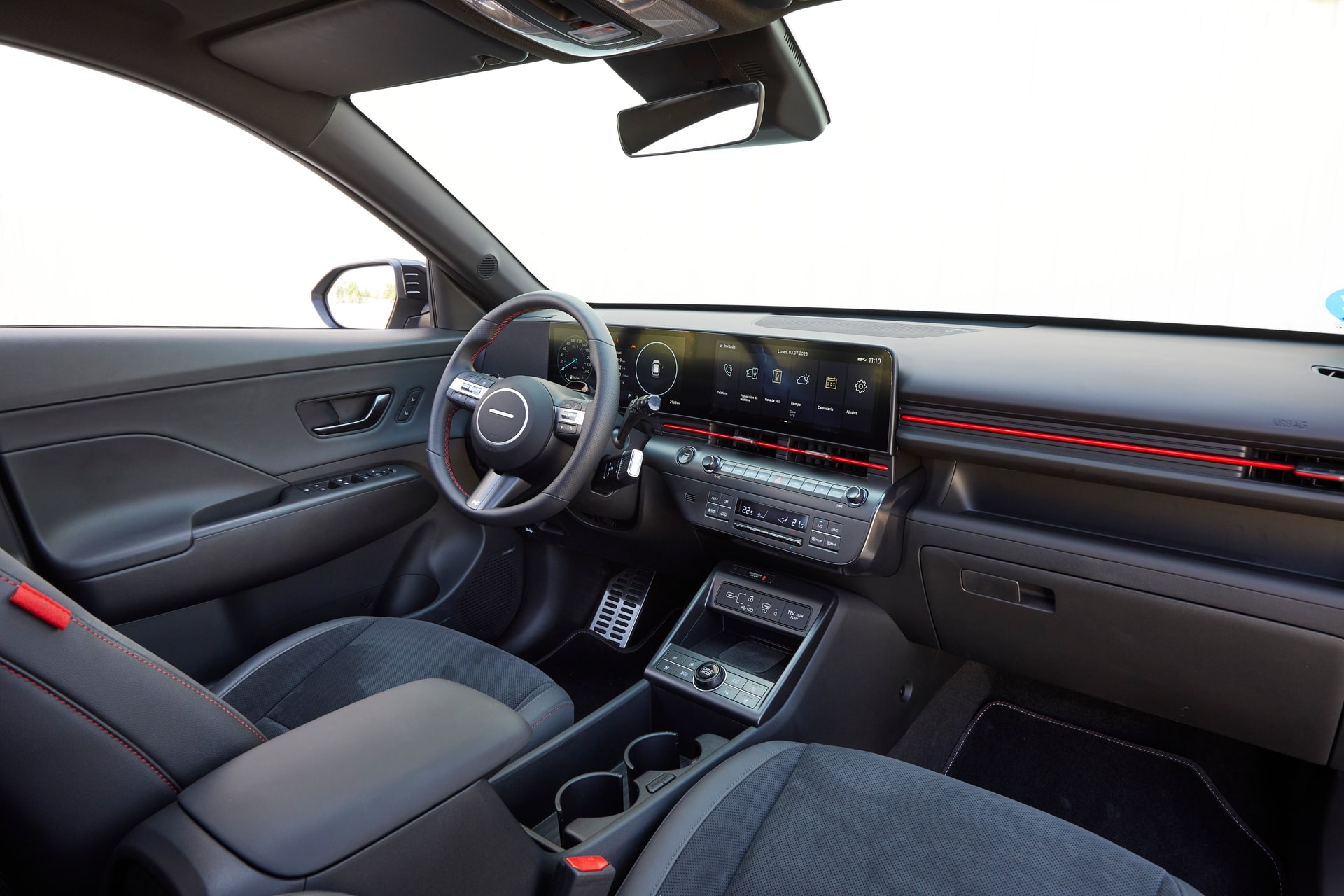
The question most customers ask us at the dealership is not "which one uses less fuel?". It is a different one: does it pay to spend more on a hybrid if I’m going to sell it within five years? The short answer is that it depends on your annual mileage and on whether you live in a low-emission zone. The long answer needs numbers, and here they are.
What "real 5-year cost" means for a compact hybrid SUV
The list price is only the first payment. Over five years you have to add fuel, insurance and maintenance, and subtract what you get for the car when you sell it. In that calculation, a hybrid starts at a disadvantage (between 2,000 and 4,000 € more expensive than its petrol equivalent) and makes that back, or not, depending on real use.
The four factors that move the needle
Combined WLTP consumption, the ECO label (unrestricted access to ZBE zones), battery warranty and residual value when you resell. The first two save you money month after month. The other two determine how much the market gives back when you get out of the car.
Toyota Corolla Cross Hybrid 140H: the benchmark hybrid, from 29,900 €
It is the best-selling compact hybrid SUV in Spain, and that is no coincidence. Toyota’s HEV system has been refined for two decades, and it shows in real-world consumption, not just in the laboratory figure.
| Power | WLTP consumption | Label | Fuel | Warranty |
|---|---|---|---|---|
| 103 kW / 140 CV | 4.3 l/100 km | ECO | Hybrid | 5 years (extendable to 10 with servicing at a Toyota network) |
Mazda CX-30: the petrol equivalent, from 26,500 €
The Mazda CX-30 with its 2.0 Skyactiv-G 150 CV engine and 24V mild hybrid is probably the most honest petrol in the segment: it does not promise to be something it isn’t. It does consume more, but its driving dynamics and interior finish win the sensation contest against the Corolla Cross.
| Power | WLTP consumption | Label | Fuel | Warranty |
|---|---|---|---|---|
| 110 kW / 150 CV | 6.2 l/100 km | C | Petrol (24V mild hybrid) | 3 years / 100,000 km |
Hyundai Kona Hybrid: the third way, from 29,600 €
Sitting in the same price range as the Corolla Cross, the Kona Hybrid offers something the Japanese model does not: seven years of warranty (with unlimited mileage in some network markets; it is worth confirming this at the dealership). That figure carries more weight than it seems when we talk about residual value.
| Power | WLTP consumption | Label | Fuel | Warranty |
|---|---|---|---|---|
| 104 kW / 141 CV | 4.5 l/100 km | ECO | Hybrid | 5 years, unlimited mileage |
Where the petrol wins, plainly
The Mazda CX-30 costs 12% less to get into, and its naturally aspirated engine is mechanically simpler: fewer components that can fail in the long term, and cheaper maintenance at independent workshops. If you drive fewer than 12,000 km a year, the fuel difference against the hybrid will never make up for those 3,400 € of starting price.
Where the hybrids win, plainly
From 15,000 km a year onwards, especially in town, the Corolla Cross and the Kona Hybrid save between 1.7 and 1.9 litres per 100 km compared with the Mazda. With diesel and petrol prices where they are, that comes to several hundred euros a year. And the ECO label, against the Mazda’s C, really matters if you live in Madrid, Barcelona or any city with access restrictions: there, the petrol car loses points that it cannot recover even with better handling.
The role of the Plan Auto+ and the ZBE zones
Plan Auto+ aid continues to favour hybrids and electrified vehicles over pure petrol, although you should check the current amount on the official website before closing the purchase, as it changes frequently. As we explained when choosing a compact hybrid SUV based on consumption and warranty, the environmental label ends up being, in practice, one more economic variable.
Summary table and score
| Model | Price from | Consumption | Label | Warranty | 5-year TCO score |
|---|---|---|---|---|---|
| Toyota Corolla Cross Hybrid | 29,900 € | 4.3 l/100 km | ECO | 5-10 years | 8.5/10 |
| Mazda CX-30 | 26,500 € | 6.2 l/100 km | C | 3 years | 7/10 |
| Hyundai Kona Hybrid | 29,600 € | 4.5 l/100 km | ECO | 5 years, unlimited | 8.8/10 |
Verdict: which car to choose for your case
If you drive fewer than 12,000 km a year and park outside a ZBE zone, the Mazda CX-30 saves you money from day one: its entry price is 12% lower and you will never burn through that margin in fuel. If your journeys exceed 15,000 km a year or you live in a city with restrictions, the Hyundai Kona Hybrid beats the Toyota Corolla Cross by a head thanks to its longer warranty, which pushes residual value upwards. The Corolla Cross remains the safest bet if you prioritise proven reliability above all else. For anyone buying with a view to reselling within five years: the Kona Hybrid.
Frequently asked questions
Is it worth paying more for a compact hybrid SUV compared with its petrol equivalent in 2026?
Only if you exceed 13,000-15,000 km a year or regularly drive through a ZBE zone. Below that figure, the hybrid’s initial extra cost is rarely recovered within five years.
Which compact hybrid SUV has the best battery warranty in Spain?
The Hyundai Kona Hybrid, with 5-year coverage and no mileage limit, ahead of Toyota’s standard warranty (extendable with servicing at an official network).
Does the ECO label really affect resale value?
Yes, increasingly so in cities with an active ZBE. A car with a C label loses appeal in the urban used-car market compared with an ECO one with similar performance.
Does Plan Auto+ still apply to non-plug-in hybrids in 2026?
Conditions vary and you should check them on the official website before signing, but conventional hybrids with an ECO label usually keep access to part of the aid available for pure petrol cars.
