

For less than 28,000 euros, the market for hybrid SUVs in Spain is no longer a territory for second-tier brands. There are Koreans with very long warranties, a Japanese manufacturer that has spent a decade selling reliability as a commercial argument, and a Chinese brand that has made a strong entrance on price. The problem is not finding options: it is knowing what to look at before signing. Here we are not comparing “who has more horsepower”, but three things that affect your wallet over the next ten years: the warranty, what comes as standard without paying extras, and what it really consumes, not what the WLTP spec sheet says.
The three filters you should apply before looking at the price
Official warranty: how many years the hybrid system is actually covered
The general 2-3 year warranty no longer sets anyone apart. What makes the difference is the extended warranty on the hybrid system, which usually depends on servicing the car at an official dealer network. Toyota offers up to 10 years on the battery with its Relax programme, Hyundai covers the hybrid components for 8 years, and both Kia and MG reach 7 years on the general vehicle warranty. These are small print details that, multiplied by the cost of a hybrid battery outside warranty, stop being small.
Standard equipment: what must come as standard for less than €28,000
Automatic climate control, rear parking sensors, a rear camera and at least six airbags should not be optional at this price. Nor should the lane-keeping assist or adaptive cruise control, which are de facto required by the current safety regulations across the entire range. The usual trap lies in alloy wheels or a panoramic roof: those can be kept for the top trim without it being a drama.
Real consumption vs WLTP: the difference you will notice in your wallet
WLTP is a starting point, not a promise. In the city and on short trips, self-charging hybrids come quite close to their homologated figure because the electric motor works for longer. On sustained motorway driving, the difference can rise 15-20% above the spec-sheet figure. If your use is mostly urban, real consumption and WLTP almost coincide; if you drive on the motorway every day, always allow a margin.
Toyota Yaris Cross Hybrid: putting the battery warranty to the test
It is the smallest of the four and the only one not strictly sold as a “compact SUV”, but it enters this comparison because its hybrid mechanics and entry price place it directly against its Korean rivals. Its strong point is not space, it is peace of mind: 10 years of battery warranty if you service it at an official dealer, something no other model on this list matches.
| Power | WLTP consumption | Label | Fuel | Warranty |
|---|---|---|---|---|
| 85 kW / 116 CV | 4.0 l/100 km | ECO | Hybrid | Up to 10 years (battery, Toyota Relax) |
Hyundai Kona Hybrid: standard equipment and the 8 years on the hybrid components
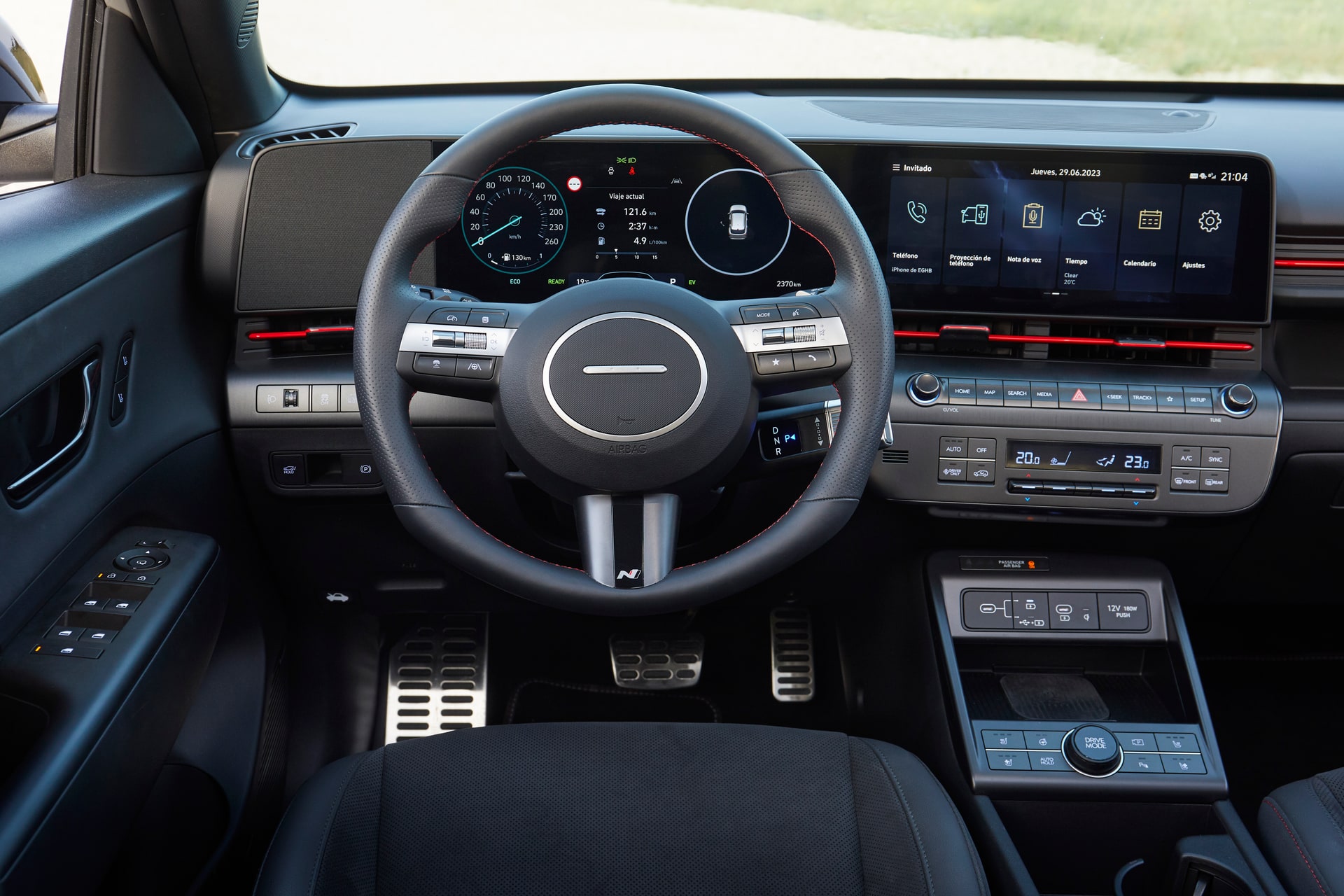
The Kona Hybrid is the one that best balances real size and standard equipment in its entry trim: automatic climate control, rear camera and driver assistance systems come from the factory, not as a pack. We have already analysed this in detail in the Hyundai Kona Hybrid vs Kia Niro Hybrid comparison, and the conclusion holds: the Kona offers more equipment for the same money, although the Niro’s boot wins on floor design.
| Power | WLTP consumption | Label | Fuel | Warranty |
|---|---|---|---|---|
| 104 kW / 141 CV | 4.4 l/100 km | ECO | Hybrid | 8 years on hybrid components |
Kia Niro HEV: the Korean SUV with 7 years of warranty
The Niro shares its mechanical platform with the Kona but plays a different card: 7 years or 150,000 km of general warranty, without servicing conditions as strict as Toyota’s. For anyone who plans to keep the car for more than a decade and does not want to depend on a specific dealer, it is the strongest argument of the four.
| Power | WLTP consumption | Label | Fuel | Warranty |
|---|---|---|---|---|
| 104 kW / 141 CV | 4.4 l/100 km | ECO | Hybrid | 7 years / 150,000 km |
MG ZS Hybrid+: the cheapest in the comparison, what does it sacrifice?
It puts the most horsepower on paper and, by a wide margin, has the lowest entry price. But that advantage comes with small print: the interior finish feels a step below its Korean rivals, and real consumption on the motorway rises more sharply than in the others. For city driving it makes sense; for long journeys, less so.
| Power | WLTP consumption | Label | Fuel | Warranty |
|---|---|---|---|---|
| 139 kW / 189 CV | 4.8 l/100 km | ECO | Hybrid | 7 years / 150,000 km |
Summary table and score
| Model | Price from | Warranty | WLTP consumption | Score (1-10) |
|---|---|---|---|---|
| Toyota Yaris Cross Hybrid | €24,950 | 10 years battery | 4.0 l/100 km | 8.5 |
| Hyundai Kona Hybrid | €27,900 | 8 years components | 4.4 l/100 km | 8.7 |
| Kia Niro HEV | €27,950 | 7 years / 150,000 km | 4.4 l/100 km | 8.4 |
| MG ZS Hybrid+ | €23,990 | 7 years / 150,000 km | 4.8 l/100 km | 7.6 |
The price difference between the MG and the Kona is around 16%, enough that it is not only an equipment decision: it is also a decision about how much the peace of mind of the warranty is worth to you.
The verdict according to your use case
For city driving and low mileage
The Toyota Yaris Cross Hybrid wins here. It consumes less in traffic, its size makes parking easier and the 10-year battery warranty is the longest in the group, provided you keep up with official servicing.
For families with long journeys
The Hyundai Kona Hybrid is the most complete option: more real space, better factory standard equipment and 8 years covering what really fails in a hybrid, the battery pack. If your driving mixes motorway and city in equal parts, it is the one that gives the fewest surprises.
Price-warranty-equipment balance
Here is the technical tie between the Kia Niro HEV and the Kona. If you prefer not to depend on always servicing at the same dealer, the Niro with its 7 years and no added conditions is more flexible. The MG ZS Hybrid+ remains the cheapest point of entry, and as such it does its job, but it is not the car we would recommend to anyone planning to keep it for more than eight years.
We have already covered this same logic of priorities, without focusing solely on price, in our guide on what the entry trim of a hybrid SUV includes as standard, and the conclusions point in the same direction.
Frequently asked questions
What is the cheapest hybrid SUV under €28,000 in 2026?
The MG ZS Hybrid+ starts from €23,990, the lowest entry price of the four models compared, although its real motorway consumption is the highest of the group.
Which brand offers the longest warranty on a hybrid SUV?
Toyota, with up to 10 years of coverage on the hybrid battery through its Relax programme, provided maintenance is carried out in the official network.
Does the real consumption of a hybrid SUV match the WLTP figure?
In the city it comes quite close, because the electric motor takes on more of the work. On sustained motorway driving, real consumption can exceed WLTP by between 15% and 20%.
Are there public subsidies for buying a hybrid SUV in Spain in 2026?
Yes, through the Plan Auto+, although the amounts and conditions vary and you should always check the current amount on the official website before closing the purchase.
