

Buying an electric car by looking only at WLTP range is the most common mistake in 2026. What really determines whether you enjoy the car or curse it every week is something else: how many kW you can draw from your home socket, whether your workplace has charging points, and how often you need a DC fast charger on the motorway. A compact with a huge battery and 11 kW AC charging is wasted if you only have a single-phase 3.7 kW socket in the garage. And the reverse: a car limited to 7 kW AC falls short if you have a three-phase wallbox and want to use it overnight in three hours.
Why the charging type matters more than the range on the spec sheet
Two compact cars with the same 58 kWh battery can take 6 hours or 9 hours to charge from the same domestic socket, depending on whether they accept 11 kW or only 7.4 kW AC. That difference, multiplied by 300 days a year, is what decides whether the car fits your routine or forces you to plan like you’re solving a puzzle.
Single-phase charging at home: the scenario for most people
If you live in a flat with a standard electrical installation (single-phase 16-20 A), your home wallbox will typically deliver around 3.7 kW. Here it doesn’t matter whether the car accepts 11 kW three-phase: you’ll charge at the speed your installation allows, not the car’s. For this profile, what matters is the usable battery capacity and real-world consumption, not the peak AC power.
Three-phase wallbox: when it’s worth installing 11 kW
If three-phase power is available (common in detached houses or communal garages already prepared for it), installing an 11 kW wallbox makes a real difference, but only if the car can take advantage of it. This is where the models separate: not every compact electric car charges at 11 kW as standard.
Charging at work: the scenario that changes the rules
If your company has charging points (increasingly common in business parks and offices), the calculation changes completely. Eight hours of working time at 7 kW gives 56 kWh, enough to fill almost any compact battery without touching the public network. In this case DC power loses relevance: your car never needs a fast charger during the week.
DC fast charging on the road: what really matters
For the occasional long trip, what counts is the sustained charging curve between 10% and 80%, not the peak figure advertised on the spec sheet. A car that boasts 135 kW but holds it for only five minutes performs worse in practice than one with a steady 120 kW.
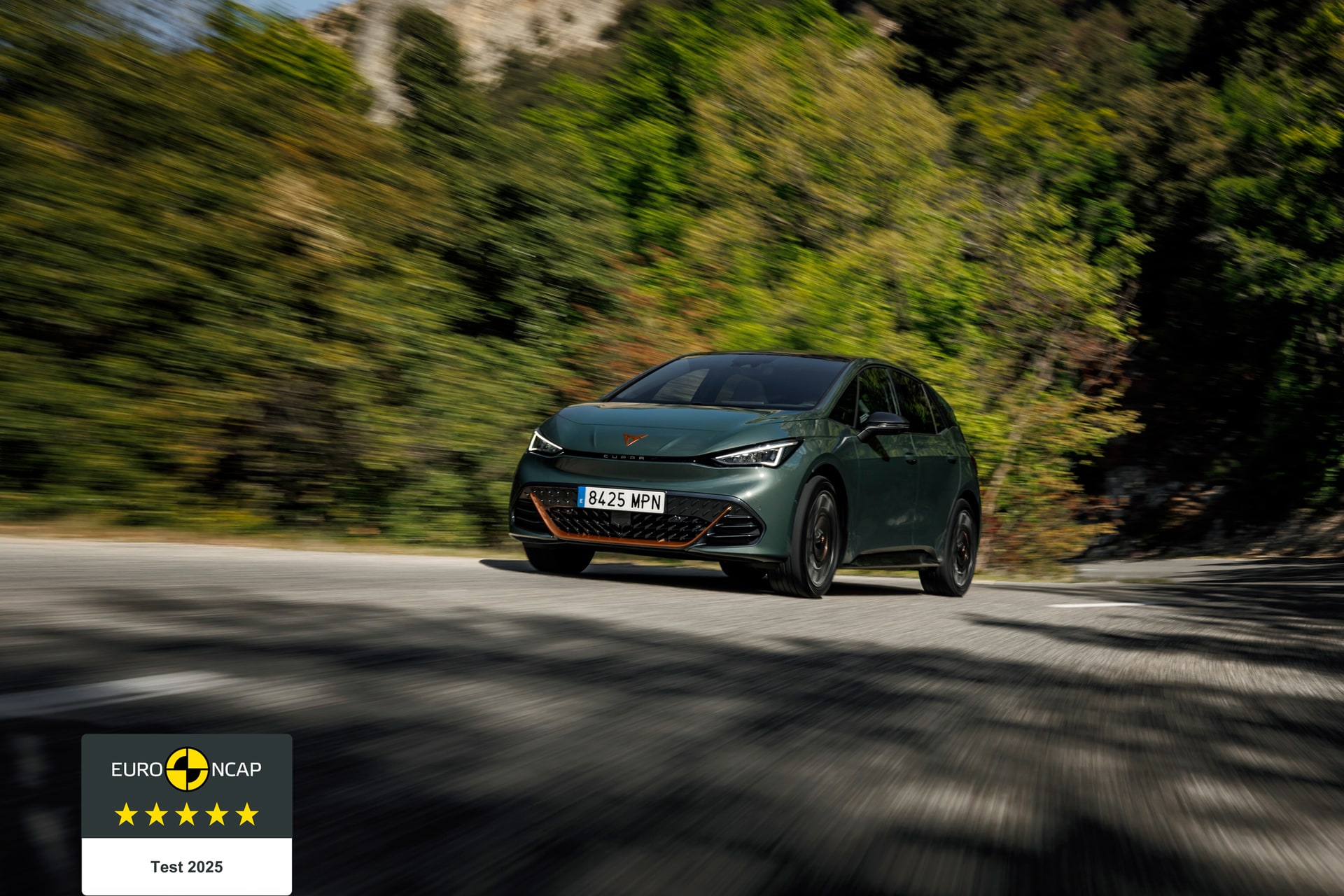
Cupra Born 59 kWh: the most complete on AC
The entry-level large-battery version of the Born comes with 11 kW three-phase AC charging as standard and up to 120 kW DC. It is the ideal profile for anyone with a three-phase wallbox at home who wants to make use of it overnight.
| Power | AC charging | DC charging | WLTP range | Consumption | Label | Fuel |
|---|---|---|---|---|---|---|
| 150 kW / 204 CV | 11 kW | 120 kW | 423 km | 15.8 kWh/100km | 0 | Electric |
Volkswagen ID.3 Pro 59 kWh: the mechanical equivalent, with a different character
It shares the MEB platform with the Born and practically the same charging power: 11 kW AC and up to 120 kW DC. The difference lies in the price and equipment balance, not in the infrastructure it requires.
| Power | AC charging | DC charging | WLTP range | Consumption | Label | Fuel |
|---|---|---|---|---|---|---|
| 150 kW / 204 CV | 11 kW | 120 kW | 428 km | 15.4 kWh/100km | 0 | Electric |
MG4 Electric 51: the most limited on AC, the cheapest entry point
Here is the detail almost nobody reads in the brochure: the entry version of the MG4 is capped at 7 kW AC charging, not 11. If you have three-phase power at home, part of that investment goes unused. In return, the entry price is noticeably lower than that of its two rivals.
| Power | AC charging | DC charging | WLTP range | Consumption | Label | Fuel |
|---|---|---|---|---|---|---|
| 125 kW / 170 CV | 7 kW | 117 kW | 350 km | 16.2 kWh/100km | 0 | Electric |
Other compacts in the segment, such as the Renault Megane E-TECH or the Peugeot e-308, operate with AC and DC charging ranges similar to the Born, with price differences worth checking case by case before signing.
Summary comparison table
| Model | AC charging | DC charging | Range | Price from | Warranty | Score (1-10) |
|---|---|---|---|---|---|---|
| Cupra Born 59 kWh | 11 kW | 120 kW | 423 km | 36,500 € | 3 years / 100,000 km (battery 8 years/160,000) | 8.2 |
| Volkswagen ID.3 Pro 59 kWh | 11 kW | 120 kW | 428 km | 37,200 € | 3 years / 100,000 km (battery 8 years/160,000) | 8.0 |
| MG4 Electric 51 | 7 kW | 117 kW | 350 km | 29,990 € | 7 years / 150,000 km | 7.6 |
The price gap between the MG4 and the Born exceeds 20%: it is not a minor detail, it is half the purchase argument if your use case doesn’t require 11 kW.
Recommendation matrix based on your charging setup
- Single-phase at home, no three-phase wallbox in sight: the MG4 performs just as well as its rivals, because none of them will charge faster than your installation allows. Here price wins.
- 11 kW three-phase wallbox installed or planned: Born or ID.3, without hesitation. Paying for 11 kW and only using 7 is throwing money away.
- Guaranteed eight-hour charging at work each day: any of the three works, but the MG4 makes better use of its smaller battery because you never force it into fast charging.
- Regular traveller with stops on the road: the ID.3 and Born sustain the DC charging curve better than the MG4 in the 50-80% stretch.
Verdict
For those who charge at home on single-phase or depend on their workplace, the MG4 Electric 51 is the most rational option: with a 20% lower price, its 7 kW AC limitation is not a penalty at all. For those who have or will install an 11 kW three-phase supply, the Cupra Born 59 kWh is the most rounded: same mechanics as the ID.3, but with a brand positioning and interior design that feel a step above in perception. The Volkswagen ID.3 remains a valid alternative only if the finish or the VW dealer network weigh more in your decision than that 700-euro difference with the Born.
Frequently asked questions
Do I need a three-phase wallbox to buy a compact electric car in 2026?
It is not mandatory. If you charge overnight with plenty of time (8-10 hours), a single-phase socket of 3.7-4.6 kW is enough for any of these three models.
What is the real difference between charging at 7 kW and 11 kW at home?
For a 58 kWh battery, at 11 kW it takes about 5-6 hours; at 7 kW, about 8-9 hours. If you charge overnight, the practical difference is minimal.
Is it worth paying more for a car with faster DC charging if I rarely travel long distances?
No. If your use is urban and you charge at home or at work, DC power is the factor that should weigh least in your purchase decision.
Are there public grants for buying these compact electric cars in 2026?
Yes, through the Plan Auto+, applicable to the three models mentioned. Amounts and conditions vary by autonomous community, so check the official website before closing the purchase.
