

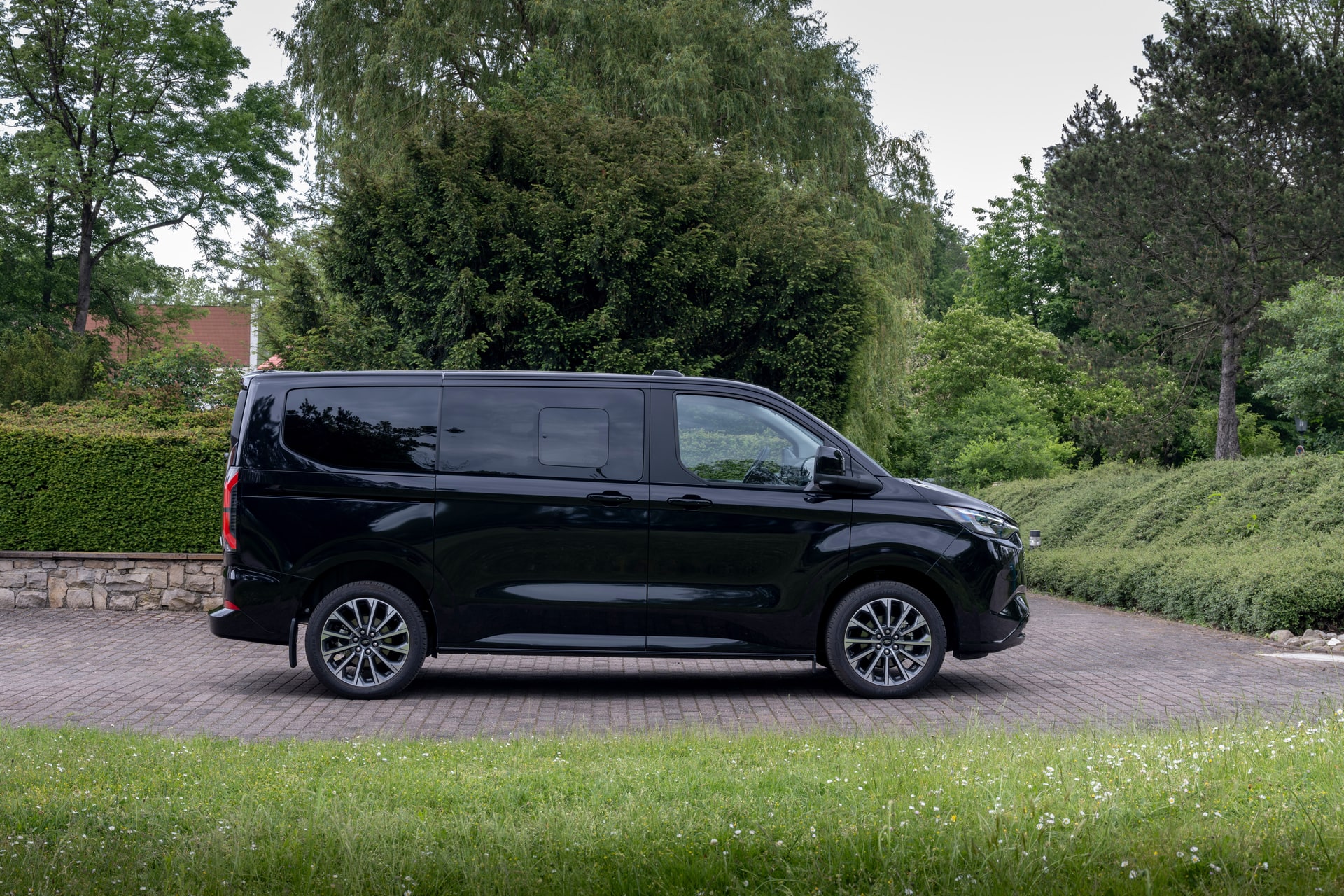
In a transfer fleet, the purchase price is misleading. What decides whether the vehicle makes or loses money is the cost per kilometre over 300,000 or 400,000 km, which is the real mileage demanded of a passenger minivan in VTC, airport shuttle or hotel transfer service. And there, the differences between a Ford Tourneo Custom, a Mercedes Vito Tourer or a Volkswagen Multivan bear no resemblance to what their RRP label suggests.
This guide is aimed at anyone managing a small or medium-sized fleet who needs a replicable methodology for calculating the CPK before signing the purchase order.
What is the cost per kilometre (CPK) and why does it matter more than the RRP
CPK groups together depreciation, fuel, maintenance, tyres, insurance, taxes and residual value, all divided by the actual kilometres driven in operation. A vehicle that is 4,000 € more expensive upfront can be 3 cents/km cheaper if it consumes less, holds up better at service intervals and keeps its residual value over 5 years. Multiply those 3 cents by 350,000 km and you will see why experienced fleet managers do not even look at the RRP until they have the CPK in Excel.
The formula you should enter in Excel
CPK = (Depreciation + Financing + Fuel + Maintenance + Tyres + Insurance + Taxes − Residual value) / Total operating km.
A tip: calculate two scenarios, one optimistic (homologated consumption, zero incidents) and one realistic (real-world consumption +15%, one claim per year). The truth lies in the second.
Items that inflate the CPK in transfer fleets
- Fuel: 35-45% of the total for diesel, more if the route is motorway-based.
- Depreciation: 25-30% depending on residual value.
- Tyres: 8 loaded seats wear out front axles; budget 2 sets every 60-70,000 km.
- Maintenance: official service interval and workshop hourly rate.
- Accidents and bodywork: the big forgotten item. A Class V wing mirror does not cost the same as one from a Zafira Life.
The three real candidates in the professional 8-9 seat segment
Let’s get to the point. There are four models that a Spanish fleet manager should have on the table: Ford Tourneo Custom, Mercedes-Benz Vito Tourer, Volkswagen Multivan and Opel Zafira Life. Each plays a different game.
Ford Tourneo Custom (from ~48,000 €)
In our view, the Tourneo Custom is the pragmatic benchmark of the professional segment. New generation with 2.0 EcoBlue diesel powertrain from 136 to 170 CV, optional 8-speed automatic gearbox and side access on both sides — a detail that makes all the difference in airport shuttle service. Up to 9 seats in L2 configuration, boot space with all seats occupied exceeding 1,000 litres and competitive maintenance costs in the Ford Transit Centre network.
Where it clearly wins: parts and labour costs, stable residual value thanks to fleet volume, and a real diesel consumption of around 7.5-8 L/100 km that holds up well on the motorway when loaded. What doesn’t quite add up: the interior is still a step behind the Multivan in perceived quality, although for professional transfers this matters little.
Official technical data for the model is not included in the specifications block of this article; consult the specific Tourneo Custom sheet in the Ford configurator.
Mercedes-Benz Vito Tourer (from ~52,000 €)
The Vito Tourer is the bet on residual value and perceived prestige. 2.0-litre OM654 diesel with outputs from 136 to 237 CV (in the 124 version), rear-wheel drive or 4×4 depending on trim, and a cabin that the VIP customer recognises as Mercedes at first glance. In 5-star hotel fleets or executive transfer services, that is what customers pay for.
Its real strong point: a 5-year residual value higher than the rest, especially in PRO and SELECT trims. Its weak point: maintenance and bodywork costs are clearly higher. An official service does not cost the same as one on a Ford.
Volkswagen Multivan (from ~55,000 €)
The Multivan plays in a different comfort league — individual sliding seats, central table, ride quality close to a passenger car — but it pays for this in CPK. TDI engines of 150 CV, petrol TSI and eHybrid PHEV. For pure transfer fleets, the PHEV only pays off if you have charging infrastructure at base and short urban routes; in airport shuttle service with 400 km a day on the motorway, diesel still wins.
Strong point: passenger comfort and premium perception without reaching the price of a Class V. Weak point: VW Commercial spare parts pricing and a slower depreciation curve to absorb.
Opel Zafira Life (from ~42,000 €)
The cheap outsider. EMP2 platform shared with the Peugeot Traveller and Citroën SpaceTourer, 2.0 BlueHDi engine of 145 or 180 CV and an entry RRP several thousand euros below the rest. For low-cost transfer fleets or hotel shuttles where the customer does not demand a premium brand, the CPK works out very competitive. Watch the residual value: it drops faster than Ford or Mercedes.
Summary table: CPK score by use case
| Model | RRP from | Estimated CPK (€/km) | 5-year residual | Maintenance cost | Passenger comfort | Overall fleet score |
|---|---|---|---|---|---|---|
| Ford Tourneo Custom | ~48,000 € | 0.38-0.42 | 8/10 | 9/10 | 7.5/10 | 9/10 |
| Mercedes-Benz Vito Tourer | ~52,000 € | 0.42-0.47 | 9/10 | 6.5/10 | 8/10 | 8/10 |
| Volkswagen Multivan | ~55,000 € | 0.45-0.50 | 8/10 | 7/10 | 9/10 | 7.5/10 |
| Opel Zafira Life | ~42,000 € | 0.36-0.40 | 6.5/10 | 8/10 | 7/10 | 7.5/10 |
Indicative CPK assuming 70,000 km/year, diesel, mixed motorway-city use. Prices are recommended RRP without discounts, promotions or grants (Plan Auto+ where applicable).
Verdict by use case
- High-mileage airport shuttle (80,000+ km/year): Ford Tourneo Custom. The most balanced CPK, wide workshop network, accessible parts and a residual value that holds. If you add up 350,000 km over 5 years, the Tourneo Custom comes out several thousand euros below the Vito on TCO.
- VIP hotel or executive transfer: Mercedes-Benz Vito Tourer. It pays for the higher maintenance cost with residual value and with what it lets you charge the end customer.
- Passenger comfort on long journeys and aspirational brand: Volkswagen Multivan, as long as the billed hourly rate absorbs it.
- Low-cost fleet with minimum CPK: Opel Zafira Life, assuming its residual value will fall sooner.
The RRP difference between the Zafira Life and the Multivan exceeds 15%; justifying the Multivan only makes sense if the customer is paying for the experience.
FAQ
What realistic CPK should I expect from a diesel 8-seat minivan in 2026?
Between 0.36 and 0.50 €/km depending on model, route and incident rate, with 70,000-80,000 annual km. Below 0.35 € only with very aggressive financing or leasing with a high guaranteed residual.
Is a PHEV or electric minivan worth it for passenger VTC?
Only if 70% of use is urban/metropolitan with charging at base. In airport shuttle service with long motorway stages, diesel still wins on CPK through 2026.
How much does residual value weigh in the TCO of a fleet vehicle?
Between 25 and 35% of the total 5-year cost. A residual 10 points better can offset a purchase premium of 3,000-4,000 €.
Which items do novice fleet managers usually underestimate?
Tyres (two sets over the service life, not one), bodywork and paint due to minor accidents, and the real cost of downtime when the vehicle is in the workshop. That last one rarely appears in Excel and is the one that hurts most.
