

Buying a passenger van in 2026 is no longer just a matter of seats and boot space. It is a matter of environmental label. If you work in Madrid, Barcelona, Valencia or Seville, the real question that determines which vehicle suits you is not "how many seats do I need?" but "how many times a month will I cross the ring of a ZBE?". That frequency completely changes the purchase equation, and here we treat it as the main criterion, not as a footnote.
What ZBEs change for a passenger van
The low-emission zones of the large capitals restrict access according to the DGT label. Passenger vans, because of their weight and size, usually end up with diesel engines that just make the C label, while electric versions carry the 0 label without exception. For someone who drives in daily, the difference is not cosmetic: it is the difference between driving without a second thought and planning alternative routes, or simply being shut out on days of high-pollution restrictions.
DGT label and Plan Auto+: what to check before signing
Before deciding on a family van with an ECO label or an electric one, check two things. First, the exact label of the specific version you are going to buy: within the same model, the entry-level diesel trim may carry a C label while the plug-in hybrid version carries ECO. Second, whether the vehicle is eligible for the Plan Auto+ aid, which remains the most direct route to reducing the cost of an electric van whose entry price is usually more than 30-40% above its diesel equivalent. The amounts change with each call, so the specific figure should be checked on the official website before closing the budget.
If you drive into the ZBE every day: the electric van is the only option with no restrictions
For daily urban use with constant entries into a restricted zone, the electric passenger van stops being a "green" option and becomes the only one that does not force you to check the restrictions calendar.
Volkswagen ID. Buzz
The benchmark electric MPV in Madrid and Barcelona for those who need image and space in equal measure. With 423 km of WLTP range, it easily covers a day of urban transfers without an intermediate charge.
| Power | WLTP range | Consumption | Label | Fuel | Price from |
|---|---|---|---|---|---|
| 150 kW / 204 CV | 423 km | 21.1 kWh/100 km | 0 | Electric | 64,900 € |
Mercedes-Benz EQV
The premium alternative. Less range than the ID. Buzz, but a cabin that feels a step above in materials and quietness on the move, something that matters if the van is used by a VTC client or a hotel.
| Power | WLTP range | Label | Fuel | Price from |
|---|---|---|---|---|
| 150 kW / 204 CV | 363 km | 0 | Electric | 74,900 € |
Peugeot e-Traveller
The most reasonably priced option among electric passenger vans. It loses range compared with the two above, but for urban routes with overnight charging at base it is not a real problem.
| Power | WLTP range | Label | Fuel | Price from |
|---|---|---|---|---|
| 100 kW / 136 CV | 329 km | 0 | Electric | 54,900 € |
If you enter only a few times a month: the C-label diesel still holds up
Here the calculation changes. If you enter the ZBE only occasionally, paying the premium for an electric van to avoid a few isolated restrictions does not always pay off. A modern C-label diesel can keep entering except during high-pollution episodes, which are the most restrictive days but also the least frequent.
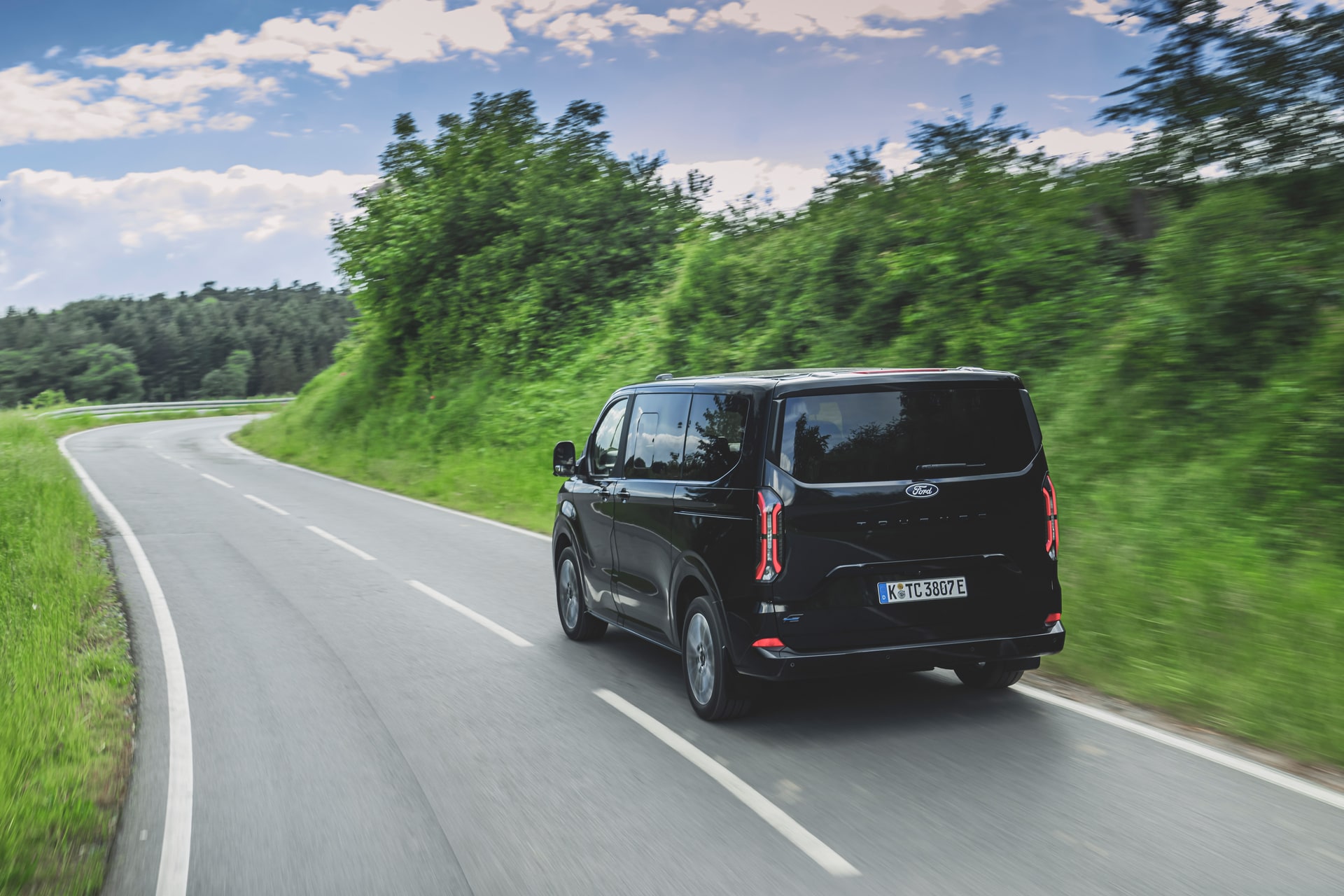
Ford Tourneo Custom
A reference in the segment for those who drive regularly on motorways and enter the city only occasionally. Its real-world motorway consumption offsets the C label compared with any electric van on the list.
| Power | Consumption | Label | Fuel | Price from |
|---|---|---|---|---|
| 100 kW / 136 CV | 7.2 l/100 km | C | Diesel | 42,900 € |
Toyota Proace Verso
The more economical of the two diesels in consumption, with 6.5 l/100 km, which shows in the wallet over 20,000 annual kilometres of professional use.
| Power | Consumption | Label | Fuel | Price from |
|---|---|---|---|---|
| 88 kW / 120 CV | 6.5 l/100 km | C | Diesel | 39,900 € |
Summary table: the five models side by side
| Model | Label | Fuel | Range/Consumption | Price from | Daily ZBE score |
|---|---|---|---|---|---|
| Volkswagen ID. Buzz | 0 | Electric | 423 km | 64,900 € | 9 |
| Mercedes-Benz EQV | 0 | Electric | 363 km | 74,900 € | 8 |
| Peugeot e-Traveller | 0 | Electric | 329 km | 54,900 € | 8 |
| Ford Tourneo Custom | C | Diesel | 7.2 l/100 km | 42,900 € | 5 |
| Toyota Proace Verso | C | Diesel | 6.5 l/100 km | 39,900 € | 5 |
The price gap between the e-Traveller and the EQV exceeds 35%, and it is not only brand image: the Mercedes justifies part of that premium in finish and quietness, but not in range, where it falls below the Peugeot and well below the ID. Buzz. Anyone who has already read our comparison of thermal or electric passenger van based on daily kilometres will know that real range matters more than the star on the bonnet when we talk about daily city use.
Verdict: which van to choose based on how often you enter the ZBE
For those who enter the Madrid or Barcelona ZBE every day, the Volkswagen ID. Buzz wins on range and on never having to check the restrictions calendar again. If the budget is tight but the electric need is real, the Peugeot e-Traveller offers the best price-range balance in the group. And if ZBE entries are occasional, two or three times a month, the Toyota Proace Verso diesel remains the option with the lowest total cost, provided you accept that on high-restriction days it will have to stay out. The Mercedes EQV, honestly, is only justified if the end customer values the brand above the range figure, something that in a corporate transfer service can weigh as much as the technical sheet. If your fleet mixes both uses, it is also worth reviewing the M1 vs N1 homologation before registering, because it changes the taxation depending on the real use you give it.
Frequently asked questions
What label do I need to enter the Madrid ZBE daily with a passenger van?
To enter without restrictions on any day of the year you need a label 0 or ECO. Vans with a C label can be kept out during high-pollution episodes, which are occasional but unpredictable.
Is it worth paying more for an electric passenger van if I only enter the ZBE once a week?
It depends on total mileage. With occasional entries, a C-label diesel usually pays off sooner unless you receive Plan Auto+ aid that reduces the entry price gap.
Do electric passenger vans have enough range for VTC or hotel transfers?
Yes, for short urban and interurban trips. The Volkswagen ID. Buzz with 423 km WLTP covers a full day without an intermediate charge in most urban services.
Which family van with an ECO label exists as an intermediate alternative?
In the current Spanish market, intermediate versions with an ECO label in this segment are limited; the most common option remains choosing between electric 0 for daily ZBE use or C-label diesel for occasional use.
