

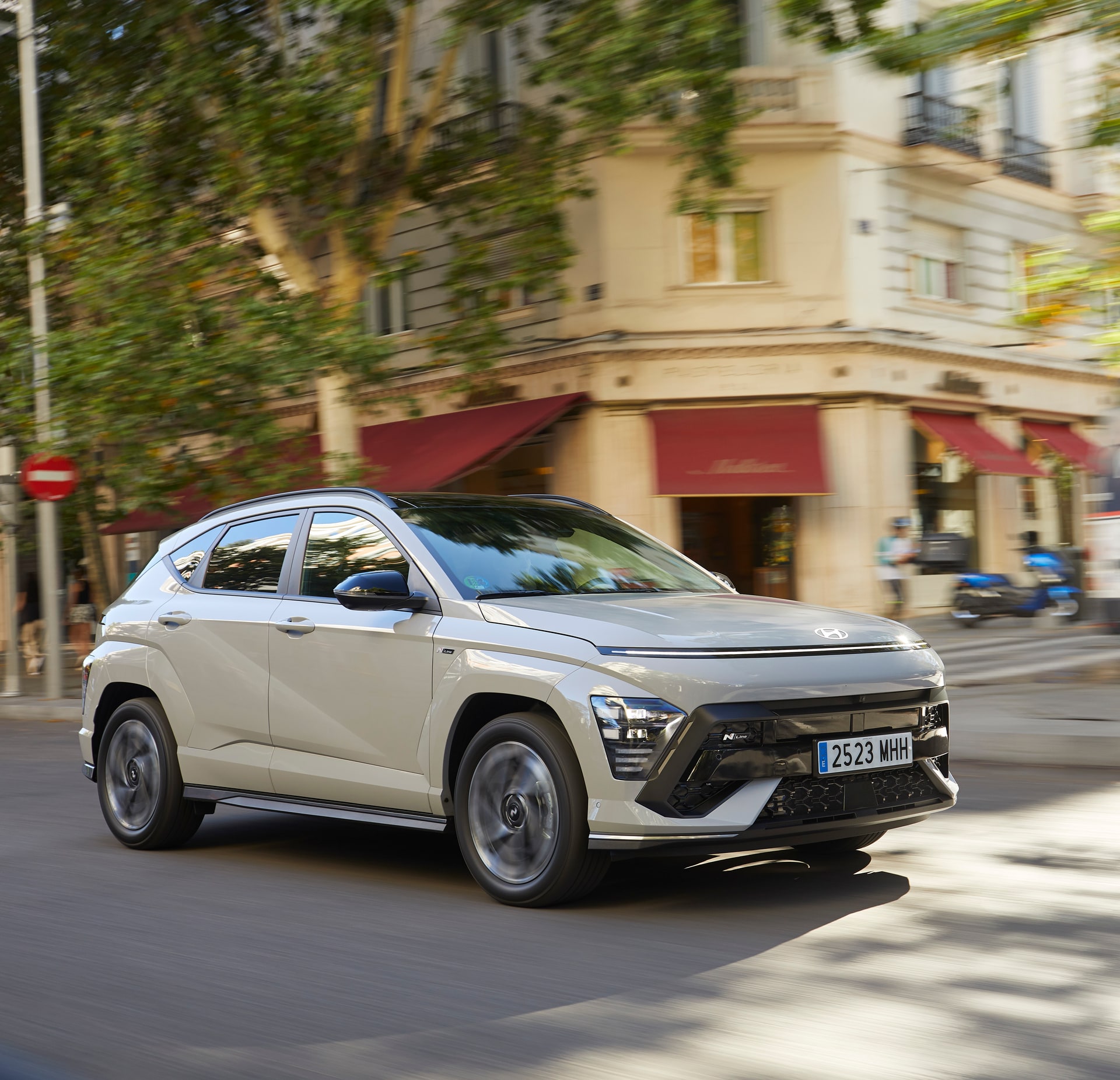
Choosing an SUV-B to get around the city and its surroundings is no longer as simple as looking at the price and being done. Real-world range, the power available for merging onto the A-2 or the M-30, and the type of electrification that best fits your routine all come into play. Here we put the Hyundai KONA Electric, the Jeep Avenger and the Opel Mokka Electric face to face: three proposals that start from different approaches but compete for the same buyer, someone who does city driving during the week and escapes to the outskirts at weekends.
Hyundai KONA Electric: technical specifications and price from €42,400
The Hyundai KONA Electric comes with a 65 kWh battery and an official range of 510 km, the highest figure of this trio by a considerable margin. It features a 150 kW (200 CV) motor and 260 Nm of torque, enough to overtake without planning far ahead. Its official consumption is around 14.5 kWh/100 km, a reasonable figure for a car of its size that also charges fairly quickly on DC fast chargers.
| Power (kW/CV) | Torque | 0-100 km/h | Top speed | Range | Consumption | Battery | Fuel |
|---|---|---|---|---|---|---|---|
| 150 kW / 200 CV | 260 Nm | ≈8 s | 170 km/h | 510 km | 14.5 kWh/100 km | 65 kWh | Electric |

Jeep Avenger: technical specifications and price from €33,700
The Avenger we compare here is the e-Hybrid 1.2 145 Upland eAWD, a petrol mild hybrid with electric assistance, not a pure electric car. It is worth making this clear from the start: it does not compete on driving range with the other two, it competes on tank range and entry price. Its 100 kW (140 CV) and an official consumption of 5.5 l/100 km make it the cheapest option to refuel and the most flexible if you make long journeys without thinking about charging points.
| Power (kW/CV) | Top speed | Consumption | CO₂ emissions | Fuel |
|---|---|---|---|---|
| 100 kW / 140 CV | 190 km/h | 5.5 l/100 km | 120 g/km | Petrol/electric mild hybrid |
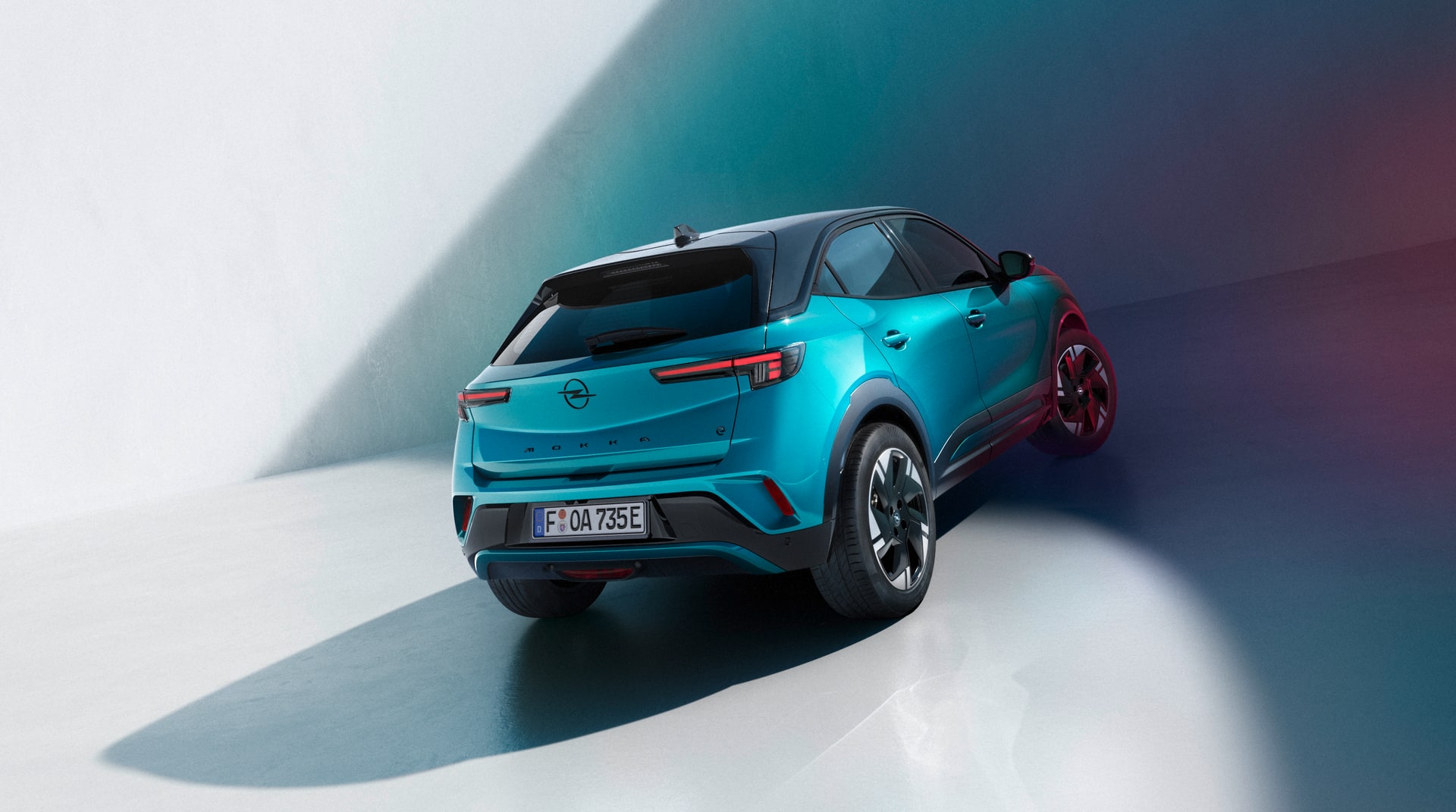
Opel Mokka Electric: technical specifications and price from €46,300
The Mokka Electric in the 156 54kWh Edition trim has a 54 kWh battery that delivers an official range of 400 km, 110 km less than the Hyundai KONA Electric despite having a higher starting price. Its 120 kW (160 CV) motor falls short in power compared to the Korean model, and its top speed of 150 km/h is the most restrained of the trio. Where it does convince is in its interior design, with the so-called Pure Panel that many drivers find more intuitive than the classic instrument cluster.
| Power (kW/CV) | Top speed | Range | Battery | Fuel |
|---|---|---|---|---|
| 120 kW / 160 CV | 150 km/h | 400 km | 54 kWh | Electric |
Real-world range: city vs outskirts
In the city, with constant regenerative braking and low speeds, the Opel Mokka Electric’s 400 km come fairly close to its official figure. The problem appears on the outskirts: at sustained speeds of 100-120 km/h, any electric car loses efficiency, and there the Hyundai KONA Electric’s starting 510 km give it a cushion the Mokka simply does not have. If your daily route includes motorway stretches to the industrial estate or the housing development, that difference of more than 100 official kilometres shows up in how many times you visit the charger each week. The Jeep Avenger, as it does not rely on electricity to move, does not enter this equation: its range is set by the fuel tank, and easily reaches 700-800 km with its consumption of 5.5 l/100 km.
Power and dynamic behaviour
The 200 CV of the Hyundai KONA Electric is noticeable above all when merging: it is the only one of the three that pulls with authority above 80 km/h. The Opel Mokka Electric, with 160 CV, copes in the city but falls somewhat short when overtaking on single-lane interurban roads. The Jeep Avenger, despite its 140 CV, makes up for it with eAWD traction in its Upland version, something neither the Korean nor the German model offers in their usual electric configurations.
Equipment, price and purchase incentives
This is a good moment to stop and look at the numbers. The Hyundai KONA Electric starts from around €42,400 (indicative), the Jeep Avenger from €33,700 and the Opel Mokka Electric from €46,300. The difference between the Avenger and either of the two electric models exceeds 25%, so if budget is the deciding factor, that gap weighs more than any technical argument. All these figures are the manufacturer’s recommended RRP, without dealer discounts or one-off promotions, so it is advisable to request a real quote before deciding. Anyone buying either of the electric models can also check the current conditions of the Plan Auto+ on the official website, because the amount varies and here we prefer not to venture a figure that could be out of date.
In standard equipment, the Hyundai KONA Electric usually comes more complete in the intermediate trims than the Mokka Electric in its Edition version, something we already analysed in detail when comparing the Hyundai KONA Electric against the Jeep Avenger and other rivals in the segment.
Summary comparison table
| Model | Power | Range/Consumption | Price from | Fuel | Score |
|---|---|---|---|---|---|
| Hyundai KONA Electric | 200 CV | 510 km | €42,400 | Electric | 8.7/10 |
| Jeep Avenger e-Hybrid Upland | 140 CV | 5.5 l/100 km | €33,700 | Mild hybrid | 7.8/10 |
| Opel Mokka Electric Edition | 160 CV | 400 km | €46,300 | Electric | 7.2/10 |
Verdict: which electric SUV-B to choose depending on your use
For pure urban use, with a charger at home or near work, the Opel Mokka Electric copes without problems and its size helps when parking on narrow streets. For those who combine city and outskirts driving without wanting to depend on the public charging network every two days, the Hyundai KONA Electric is the most complete option: more range, more power and a price that, although not the cheapest of the trio, is below the Mokka despite offering more car. And if what you are looking for is to avoid planning charging stops altogether, with the tightest budget of the three, the Jeep Avenger e-Hybrid is the reasonable alternative, although you give up driving 100% electric.
In terms of price-performance, the Hyundai KONA Electric wins this comparison. It is not the cheapest, but it is the only one that does not make you choose between range and power.
Frequently asked questions
Which electric SUV-B has more range, the Hyundai KONA Electric or the Opel Mokka Electric?
The Hyundai KONA Electric is officially rated at 510 km compared with the 400 km of the Opel Mokka Electric, a difference of more than 100 km that is especially noticeable on outskirts and motorway journeys.
Is the Jeep Avenger a fully electric car?
No. The version compared here, the e-Hybrid 1.2 145 Upland, is a petrol mild hybrid with electric assistance, not a pure electric vehicle like the KONA or the Mokka Electric.
Which is the cheapest electric SUV-B in this group?
Among the electric models, the Hyundai KONA Electric starts from around €42,400 (indicative), compared with €46,300 for the Opel Mokka Electric. The Jeep Avenger, being a mild hybrid, is the most affordable of the trio from €33,700.
Are there public grants for buying these models?
Electric cars such as the Hyundai KONA Electric and the Opel Mokka Electric may benefit from the Plan Auto+ in force in Spain. The amounts and conditions change, so always check the official website before closing the purchase.
