

The question you really need to ask before buying an electric SUV is not "how many kilometres of range does it have". It is "how many kilometres do I drive a week, and how many of those are motorway at 120 with the heating on". These are different questions, and confusing them is why so many people end up with an oversized car (paying for a 77 kWh battery they barely use) or an undersized one (charging every two days because they miscalculated their real journey). Let’s solve it with numbers, not with the brochure spec.
The calculation that matters: from your km/week to the battery you need
The sum is simple. Divide your weekly mileage by seven to get the daily average, and multiply it by a realistic consumption: 16-17 kWh/100 km in urban and mixed use, 20-22 kWh/100 km if you regularly include motorway driving at high speed. This tells you how many kWh you use each week and, therefore, how often you would need to charge depending on battery size.
A quick example: 300 km a week, mostly city and some secondary road, comes to roughly 50 kWh of consumption. A 60-65 kWh battery covers that whole week with a comfortable margin and one home charge at the weekend. If instead you do 700 km a week with long motorway stretches, consumption rises to 140-150 kWh, and then you need either a large battery (77-80 kWh) or a fast-charging stop midweek. It’s not dramatic, but you have to work it out with your head, not with the dealership’s slogan.
WLTP vs real range: the difference that decides the purchase
The WLTP cycle measures under controlled conditions that do not resemble driving in Spain with the air conditioning or heating running full blast. The usual loss on the motorway is around 20-25% compared with the homologated figure; in winter, with temperatures below 5 degrees and the heating on continuously, that loss can reach 30%. A car advertising 500 km WLTP may drop to 370-400 real motorway kilometres in summer and 330-350 km on a January day. We have already covered this in more detail in our analysis of the real range loss in winter with the heating on, and it is worth keeping in mind before trusting any catalogue figure.
Urban use and short trips (under 300 km/week): Hyundai Kona Electric, from €34,900
If your week is school, work and shopping, with no long trips, you do not need a 77 kWh battery paying for range you will never use. The Hyundai Kona Electric in its 48.4 kWh battery version covers that profile with ease, with the advantage of a much more modest entry price than the large-battery compact SUVs.
| Power | WLTP range | Consumption | Label | Fuel |
|---|---|---|---|---|
| 114 kW / 156 CV | 377 km | 14.3 kWh/100 km | CERO | Electric |
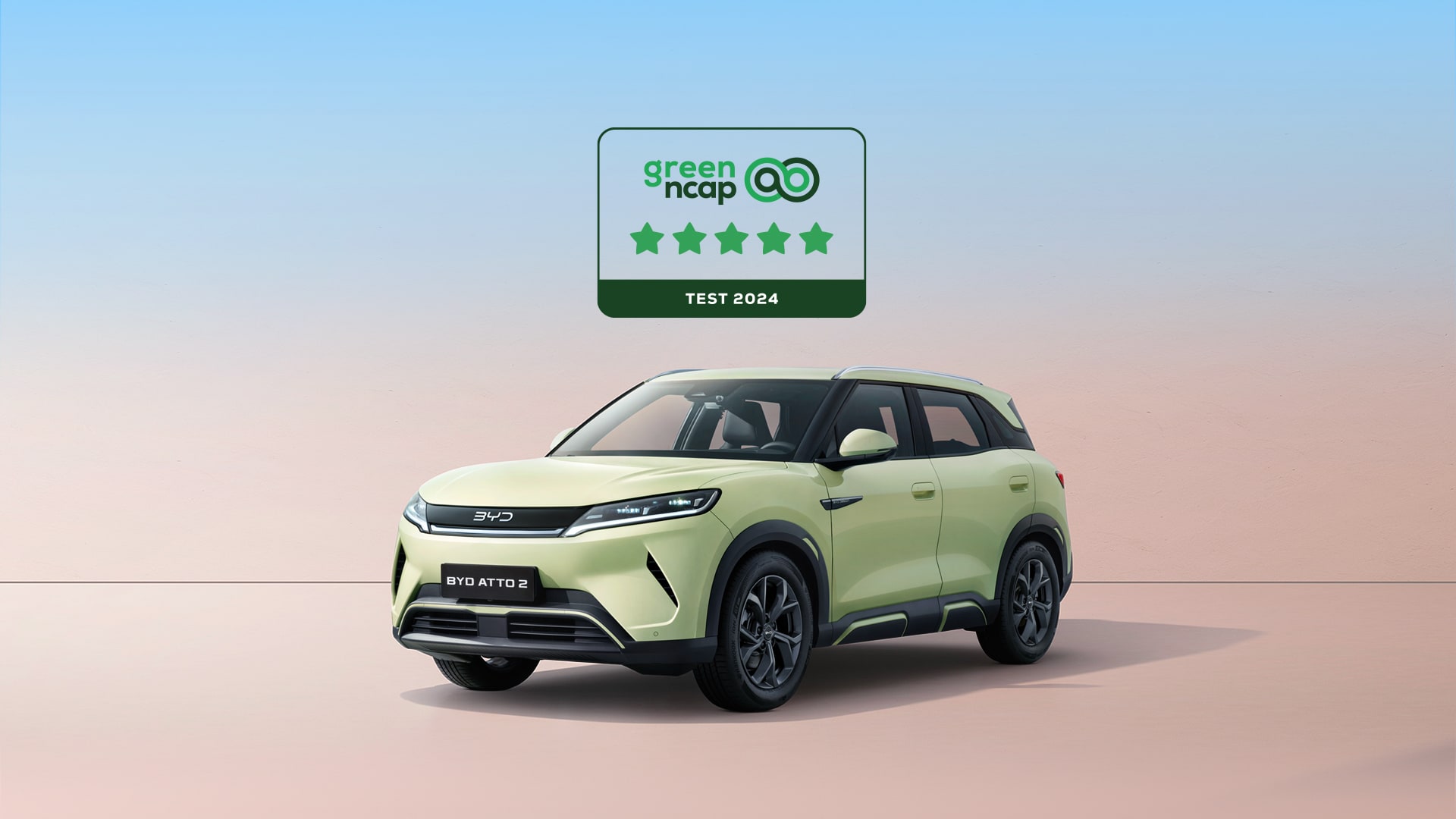
Other valid options at this level are the MG ZS EV, the Jeep Avenger and the BYD Atto 2, all with WLTP ranges between 310 and 400 km and prices from €28,000-30,000. They are honest cars for short-distance use, but that is as far as they go: once the journey gets longer, real range pinches them sooner than the Kona.
Mixed city-road use (300-600 km/week): Skoda Enyaq iV, from €42,590
This is where most people get it wrong, either by excess or by shortfall. The mixed profile needs a margin for an unplanned weekend trip without having to plan the route around chargers, but it does not need the largest battery on the market. The Skoda Enyaq iV with the 150 kW motor and 77 kWh battery offers that middle ground: enough cushion for a full week without charging away from home, and a 585-litre boot that offsets the lack of urban agility of a 4.65-metre car.
| Power | WLTP range | Consumption | Label | Fuel |
|---|---|---|---|---|
| 150 kW / 204 CV | 559 km | 16.8 kWh/100 km | CERO | Electric |
The Opel Mokka Electric sits one step below in this profile: valid, but with a real motorway range that is tighter and requires better planning for long stops.
Regular travellers and frequent motorway driving (over 600 km/week): Tesla Model Y, from €44,990
For those who drive long distances constantly, what decides the purchase is not just the homologated range but charging speed and the charging network available en route. The Tesla Model Y in its rear-wheel-drive version combines a WLTP range of 500 km with access to the Supercharger network which, in practice, reduces stop time compared with many rivals relying on third-party fast charging.
| Power | WLTP range | Consumption | Label | Fuel |
|---|---|---|---|---|
| 220 kW / 299 CV | 500 km | 14.5 kWh/100 km | CERO | Electric |
That said, the price jump from the Kona is around 29%, and from the Enyaq around 6%: peace of mind on the road is not free.
Comparison table: the three profiles side by side
| Model | Power | WLTP range | Estimated real range (motorway/winter) | Boot | Price from | Warranty | Score |
|---|---|---|---|---|---|---|---|
| Hyundai Kona Electric | 156 CV | 377 km | 280-300 km | 407 l | €34,900 | 5 years/100,000 km (battery 8 years/160,000 km) | 7.5/10 |
| Skoda Enyaq iV | 204 CV | 559 km | 400-420 km | 585 l | €42,590 | 2 years (battery 8 years/160,000 km) | 8.3/10 |
| Tesla Model Y | 299 CV | 500 km | 380-400 km | 854 l (incl. front boot) | €44,990 | 4 years/80,000 km (battery 8 years/192,000 km) | 8.6/10 |
Tesla’s general warranty falls behind Hyundai’s in kilometres covered, a detail not to be overlooked if you plan to keep the car for many years.
Verdict: which electric SUV to choose for your case
For urban use and short trips, with fewer than 300 km a week and no frequent long journeys: Hyundai Kona Electric. You pay less for a battery you will not run down anyway, and the battery warranty at 160,000 km is one of the longest in the segment.
For mixed use, the most common profile in Spain, with the occasional weekend trip: Skoda Enyaq iV. It strikes the balance between real range and family boot space, and its price sits halfway between the Kona and the Model Y.
For those who drive long distances constantly and value charging speed above all: Tesla Model Y. It justifies its higher price with a fast-charging network that, on long trips, shows up on the clock more than any figure on the spec sheet.
If your question is less about range and more about which other electric SUVs compete below €60,000, our review of the electric SUVs with the greatest real range completes this comparison with more alternatives on the Spanish market.
Frequently asked questions
How do I know what real range I need for my weekly use?
Add up your kilometres for a normal week, multiply by a consumption of 16-17 kWh/100 km in mixed use (or 20-22 kWh/100 km if you do a lot of motorway), and compare the result with the usable capacity of the battery you are considering, leaving a 15-20% margin for the unexpected.
How much real range does an electric SUV lose compared with the WLTP figure?
Between 20% and 25% on the motorway at high speed, and up to 30% in winter with the heating on continuously. A car with 500 km WLTP may drop to 350-370 real km on a cold day on the road.
Is it better to buy the largest battery available “just in case”?
No, if your weekly use does not justify it. You pay more upfront, charge proportionally slower and carry extra weight that raises consumption. The right battery is the one that covers your typical week with a margin, not the biggest in the catalogue.
Which electric SUV is best if I regularly make long trips?
The one that best combines real motorway range with access to a reliable fast-charging network. In this comparison, the Tesla Model Y handles that scenario best thanks to its Supercharger network, although the Skoda Enyaq iV is a solid alternative if you prefer more usable boot space for a somewhat lower price.

1 Comment
Pingback: MG4 review: hasta dónde llega el compacto eléctrico chino como coche único para familia con plaza de garaje en 2026 – Comparativa de Coches