

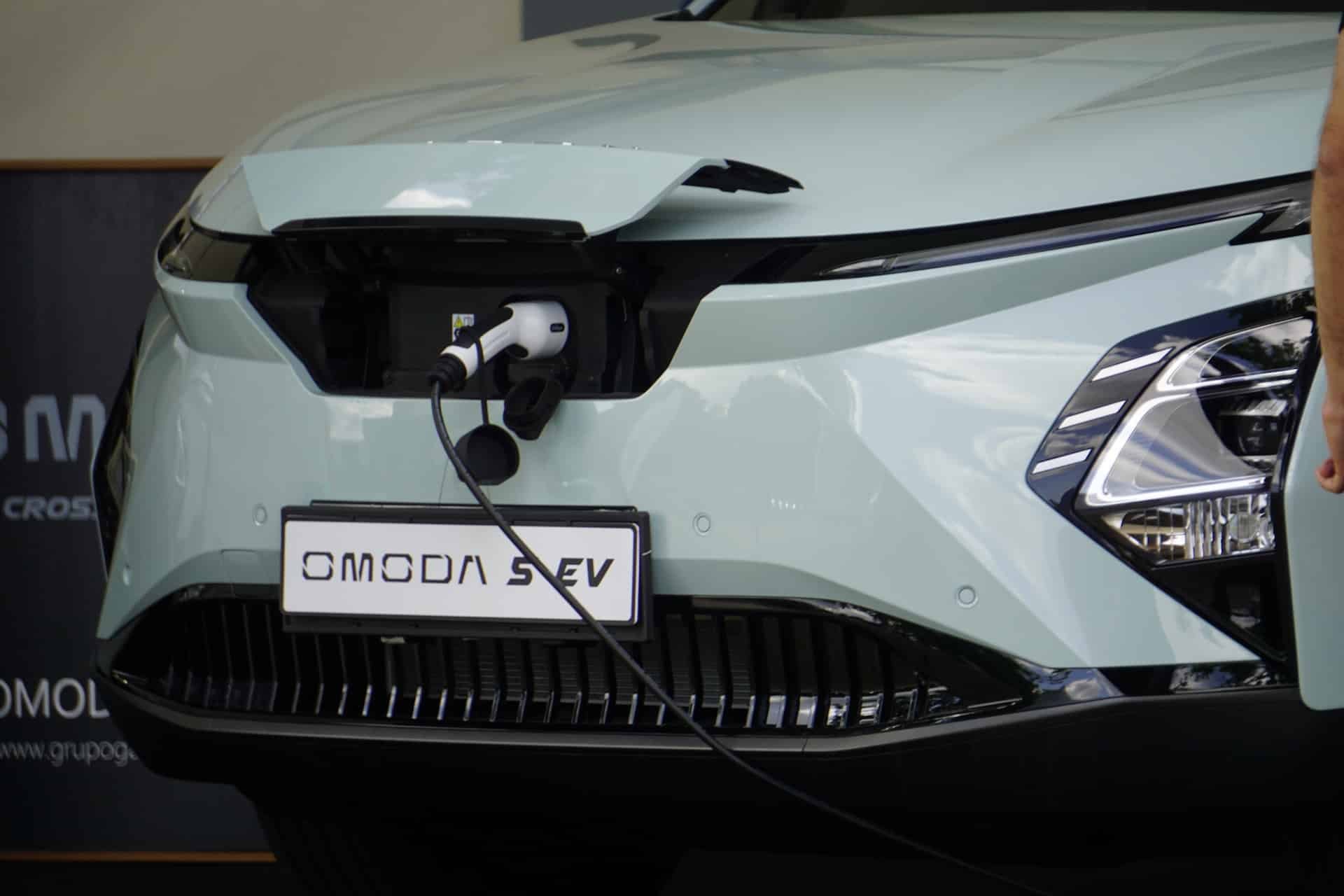
For months we have been watching Chinese brands fight over the same niche: the sub-€30,000 hybrid SUV-B that doesn’t need a plug. Omoda and MG are two of the names making the most noise in that segment, and their offerings, the Omoda 5 SHS and the MG ZS Hybrid+, target the same buyer. But there is a difference in origin worth clarifying first: only one of the two actually falls under the €25,000 barrier that gives this comparison its title.
Omoda 5 SHS: power, technology and prices from €29,400
The Omoda 5 SHS uses a hybrid system with a 1.5 TGDI engine that combines petrol and electric power to deliver around 220 CV (110 kW) and 220 Nm of torque. These figures place it above almost everything in its segment, with a 0-100 km/h time of around 8 seconds and a top speed close to 180 km/h. It carries a small battery of just 2 kWh, enough for the energy recovery typical of a full hybrid, but not for running in pure electric mode for more than a few metres.
| Power (kW) | Power (CV) | Top speed | Consumption | Label | Fuel |
|---|---|---|---|---|---|
| 110 | 220 | 180 km/h | 5.5 l/100 km | ECO | Hybrid |
The fact that sets the tone of this comparison: the recommended retail price (PVP) of the Omoda 5 SHS starts from approximately €29,400. That puts it outside, and by a considerable margin, the €25,000 budget that many SUV-B buyers have in mind.
MG ZS Hybrid+: efficiency and prices from €23,300
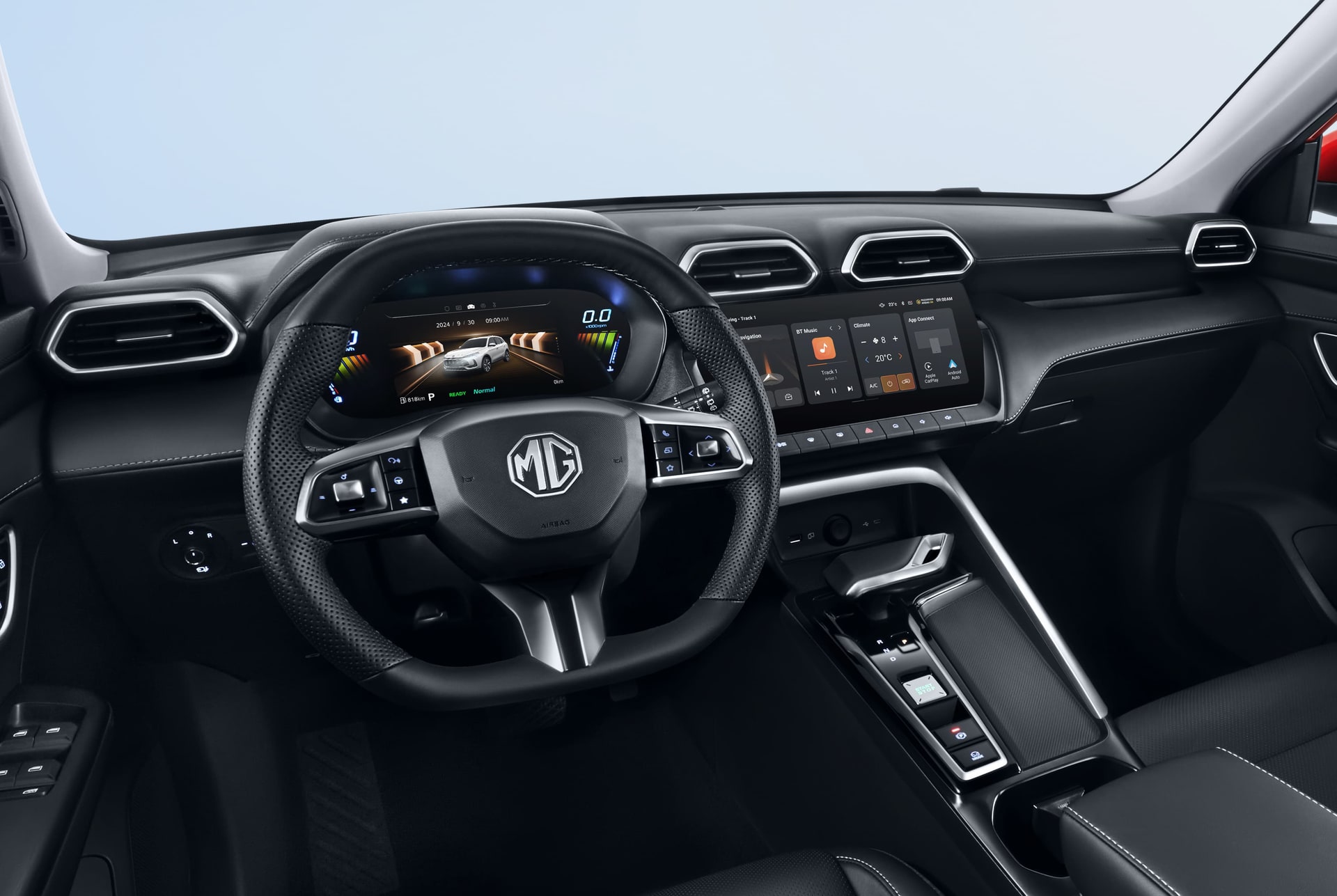
The MG ZS Hybrid+, in its 1.5 194 5-door Automatic version, plays a different game. Its petrol-electric hybrid engine delivers around 190 CV (140 kW), somewhat less than the Omoda, but it compensates with a homologated consumption of 5 l/100 km, half a litre below its rival, and a top speed of 170 km/h.
| Power (kW) | Power (CV) | Top speed | Consumption | Label | Fuel |
|---|---|---|---|---|---|
| 140 | 190 | 170 km/h | 5 l/100 km | ECO | Hybrid |
And here is the key to it all: the MG ZS Hybrid+ starts from approximately €23,300 PVP. It is the only one of the two that truly falls under the €25,000 set by the title. The price difference between them is around 26%, a jump that is not a nuance but a different budget category altogether.
Price and what really fits under €25,000
Let’s be clear from the outset, without beating around the bush: if your limit is €25,000, the Omoda 5 SHS is not an option, it is an aspiration. The MG ZS Hybrid+ does meet the brief, and does so with room to spare, leaving space for some trim-level extras without exceeding the budget.
These prices are the manufacturer’s recommended retail prices (PVP), excluding dealer discounts, one-off campaigns and purchase aid. If your purchase qualifies for the Plan Auto+, check the plan’s official website for the current amount, as it may change the final outlay for either model.
Power, consumption and environmental label
The Omoda clearly wins on performance: 220 CV versus 190 CV, and a top speed 10 km/h higher. This is noticeable when overtaking on country roads and in the sense of power reserve on motorways. The MG, however, consumes half a litre less every 100 km, a difference that over an annual use of 15,000 km amounts to a fuel saving that is not to be sniffed at. Both carry the DGT ECO label, so there is no real difference in access to low-emission zones.
Equipment and onboard technology
This is where the MG ZS Hybrid+ shines. For almost €6,000 less, its standard equipment (automatic climate control, digital instrument cluster, driver assistance systems, rear-view camera) comes very close to what the Omoda offers in its entry-level trim. The Omoda 5 SHS makes up for it with a somewhat more refined interior presentation and a larger central screen, but that leap in perceived quality does not always justify the extra cost for someone who simply wants a functional car.
Dimensions and interior space
The Omoda 5 SHS measures around 4,450 mm in length and weighs around 1,620 kg kerb, figures typical of a SUV-B at the upper end of the segment. Exact dimensions for the MG ZS Hybrid+ are not given in the official specification sheet, but its concept is comparable: seating for five occupants and a boot designed for everyday family use in town and short getaways, without aiming to compete with a compact SUV-C.
Summary comparison table
| Model | Power | Consumption | Price from | Equipment/price score (1-10) |
|---|---|---|---|---|
| Omoda 5 SHS | 220 CV (110 kW) | 5.5 l/100 km | €29,400 | 7 |
| MG ZS Hybrid+ | 190 CV (140 kW) | 5 l/100 km | €23,300 | 9 |
Warranty and after-sales
Both brands compete on warranty as a commercial argument, a common trait among Chinese manufacturers seeking to win the trust of Spanish buyers. Before signing, it is worth checking the exact conditions in force at the dealership, as they may vary by campaign and are not always detailed in the same way across all commercial materials.
Verdict: which to choose depending on your case
If your budget is firm and you don’t want to exceed €25,000, the decision is made: the MG ZS Hybrid+ is the only one of the two that meets that requirement, and it does so with lower consumption and equipment that doesn’t fall short. For urban use and moderate road journeys, it is the option with the best price-performance ratio of this pair.
If what you want is more power, more margin for overtaking, and you can stretch the budget to €29,000-30,000, the Omoda 5 SHS offers a more complete mechanical package, with 30 extra CV and a somewhat more premium interior presence. But to be honest, that 26% jump in price is only justified if you value that performance above the saving.
For those comparing purely on value for money, the MG ZS Hybrid+ wins without question. For those who want the Chinese hybrid SUV-B with the most horsepower on the market and don’t mind paying the difference, the Omoda 5 SHS is their car.
Anyone wishing to widen the field before deciding can review the SUV-Bs with the best standard equipment under €25,000, where more alternatives appear in that same price bracket. And if the Omoda 5 SHS interests you but you want to see it measured against a different rival, the analysis of Omoda 5 SHS versus the Hyundai Kona Hybrid offers another perspective on its real positioning.
Frequently asked questions
Does the Omoda 5 SHS fit within a €25,000 budget?
No. Its recommended retail price starts from approximately €29,400, 26% above that figure. Anyone with that fixed limit should look at the MG ZS Hybrid+.
Which consumes less, the Omoda 5 SHS or the MG ZS Hybrid+?
The MG ZS Hybrid+ is homologated at 5 l/100 km versus the 5.5 l/100 km of the Omoda 5 SHS, half a litre less for every 100 km driven.
Which has more power of the two Chinese hybrid SUV-Bs?
The Omoda 5 SHS, with around 220 CV (110 kW), surpasses the 190 CV (140 kW) of the MG ZS Hybrid+.
Which Chinese hybrid SUV offers the best price-to-equipment ratio in 2024?
For the buyer on a tight budget, the MG ZS Hybrid+ offers the best price-to-equipment ratio by coming in under €25,000 with a level of standard equipment similar to the Omoda’s entry-level range.

1 Comment
Pingback: Omoda 5 SHS vs MG ZS Hybrid+ vs Jaecoo 5: qué SUV híbrido asiático ofrece mejor equipamiento por menos de 27.000€ – Comparativa de Coches