

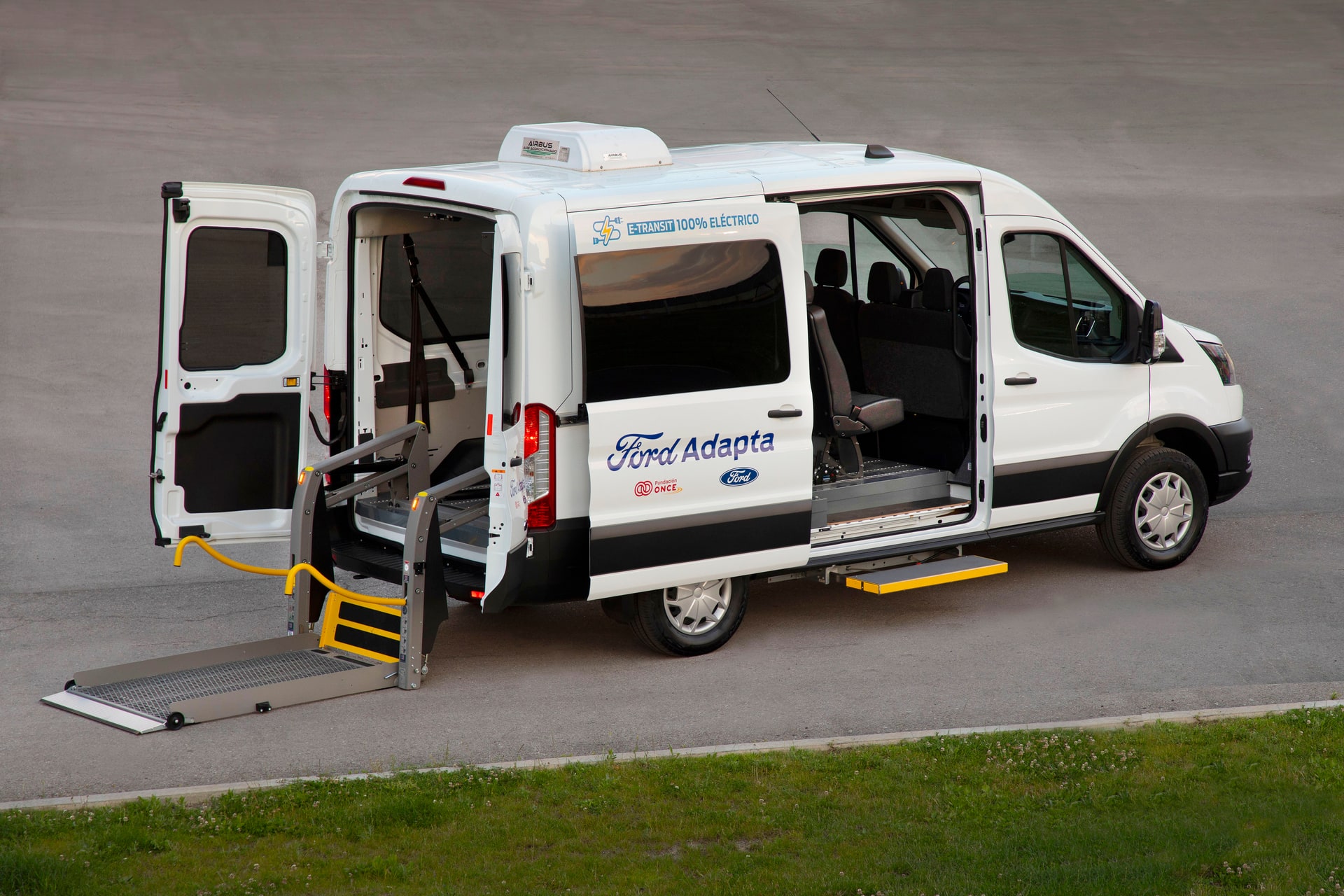
The self-employed driver who makes a living moving passengers doesn’t buy on a whim. They buy a tool that has to last 300,000 km, pass the ITV (roadworthiness test) without surprises, cope with the airport run at six in the morning and, on top of that, not sink the operating account under financing. In that context, M1-approved 8-9-seat combi vans are a curious market: few players, high starting prices and enormous differences between a base trim and one designed for VTC work.
We have taken the five models with real presence in the Spanish dealer network in 2026 and ranked them by what truly matters to a professional: useful standard equipment divided by the entry price including VAT. No catalogue versions that the dealer doesn’t even know how to configure.
What a passenger transport self-employed driver expects from their van in 2026
The VTC or transfer customer forgives none of three things: having their knees squeezed in the third row, rear air conditioning that doesn’t reach them, and a boot that can’t swallow the luggage of a family of four heading to Barajas T4. Beyond that, everything else is extras: electric sliding doors, 360° camera, ADAS that prevent a friendly fender-bender on Gran Vía, and connectivity that doesn’t force the driver to wrestle with cables.
Prices start at around 45,000 € for the entry rung and can climb above 70,000 € in well-equipped long-wheelbase trims. Anyone who doesn’t run the numbers on cost per kilometre — including warranty, service network and residual value — is making the wrong purchase. If you want to go deeper into the criteria, there is a dedicated guide on how to choose a passenger van for VTC that complements this ranking well.
1. Ford Tourneo Custom Titanium L2 2.0 EcoBlue 150 CV — from 54,900 €
The new-generation Tourneo Custom is, in our view, the combi that has best understood the professional. The Titanium trim on the L2 wheelbase comes as standard with tri-zone climate control, electric sliding door on both sides (a very affordable option), individual sliding seats in the second and third rows, a 13-inch SYNC 4 screen and an ADAS package that includes autonomous emergency braking, adaptive cruise control and lane keeping. Real Level 2, not marketing.
The 150 CV 2.0 EcoBlue diesel moves 9 passengers without strain and returns combined consumption of 7.5-8 l/100 km in real motorway use. The Ford Pro warranty runs to 5 years or 160,000 km in professional fleet use, which matters when you plan to amortise the vehicle at 400,000 km.
| Potencia kW | Potencia CV | Consumo | Etiqueta | Combustible |
|---|---|---|---|---|
| 110 kW | 150 CV | 7.5 l/100 km | C | Diesel |
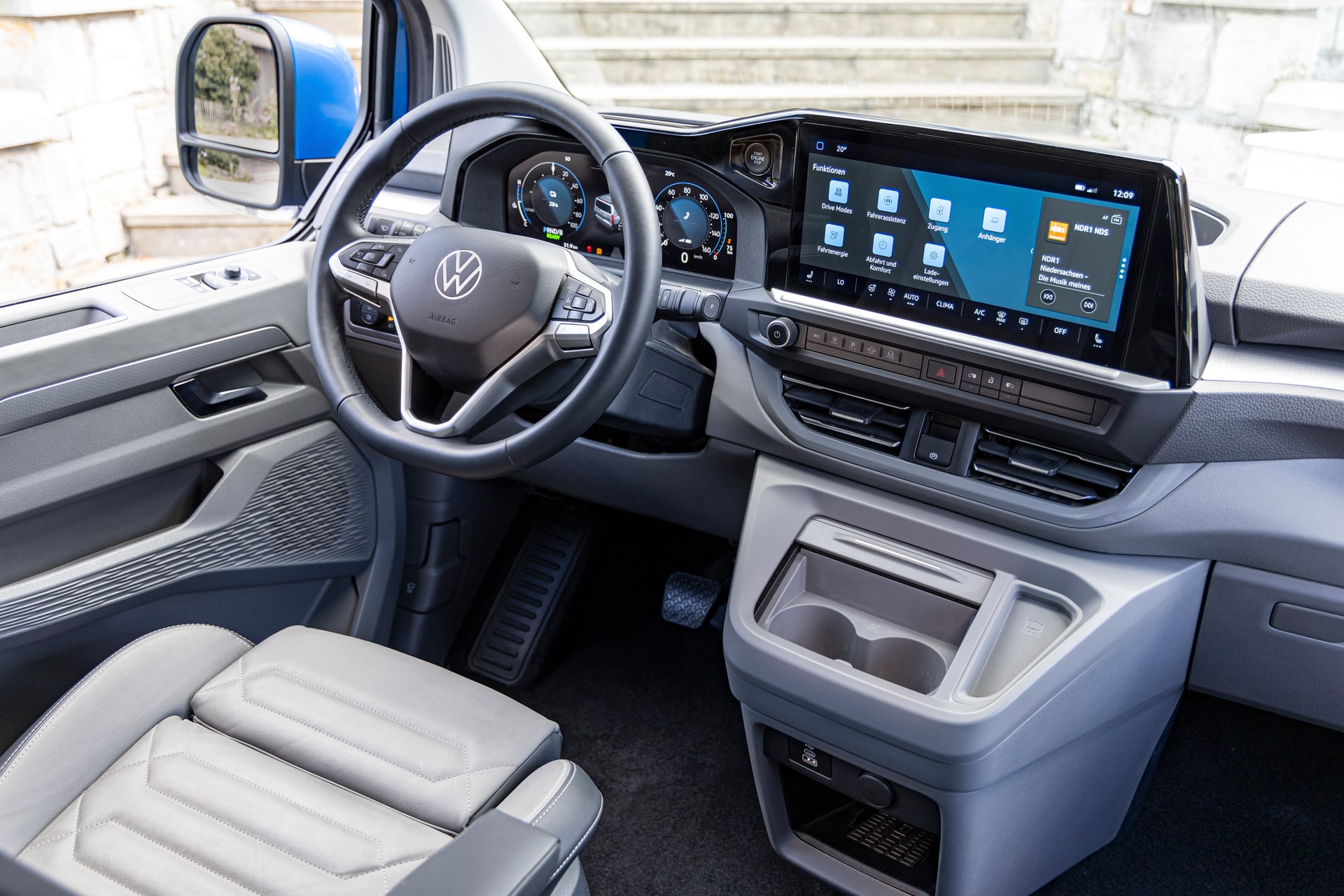
2. Volkswagen Caravelle 2.0 TDI 150 CV DSG long wheelbase — from 58,200 €
The Caravelle (Transporter T7 in passenger form) is the conservative choice, the one everyone recognises when you pull up at the five-star hotel. Its finish feels a notch above the Tourneo to the touch, with a 7-speed DSG that makes city driving effortless, and a second row with optional swivelling seats that turns the cabin into a lounge.
That said, you pay for it. Standard equipment is stingier than the Ford’s: tri-zone climate control is usually charged extra, as is a second electric sliding door. In the end, a Caravelle properly specified for VTC easily reaches 65,000 €. For buyers who prioritise brand image and resale, the premium makes sense; for those who crunch the pure numbers, it doesn’t quite justify itself against the Ford.
| Potencia kW | Potencia CV | Consumo | Etiqueta | Combustible |
|---|---|---|---|---|
| 110 kW | 150 CV | 7.8 l/100 km | C | Diesel |
3. Mercedes-Benz Vito Tourer Pro long 116 CDI 163 CV — from 56,800 €
The star on the nose still opens doors. Literally: there are corporate transfer clients who insist on a Vito or a Clase V and won’t accept substitutes. The long-wheelbase Vito Tourer Pro offers habitability similar to the Caravelle, with the advantage of rear-wheel drive — better weight distribution when loaded — and a 163 CV 2.0 CDI engine paired with the 9G-Tronic automatic gearbox, which in my view is the most refined in the segment.
Its weak point is standard equipment: Mercedes sells the car, not the package. LED headlights, a large MBUX screen, 360° camera and a decent-level ADAS push the ticket up easily. And the standard warranty stays at 2 years with unlimited mileage, which is short for a professional covering 80,000 km a year.
| Potencia kW | Potencia CV | Consumo | Etiqueta | Combustible |
|---|---|---|---|---|
| 120 kW | 163 CV | 7.9 l/100 km | C | Diesel |
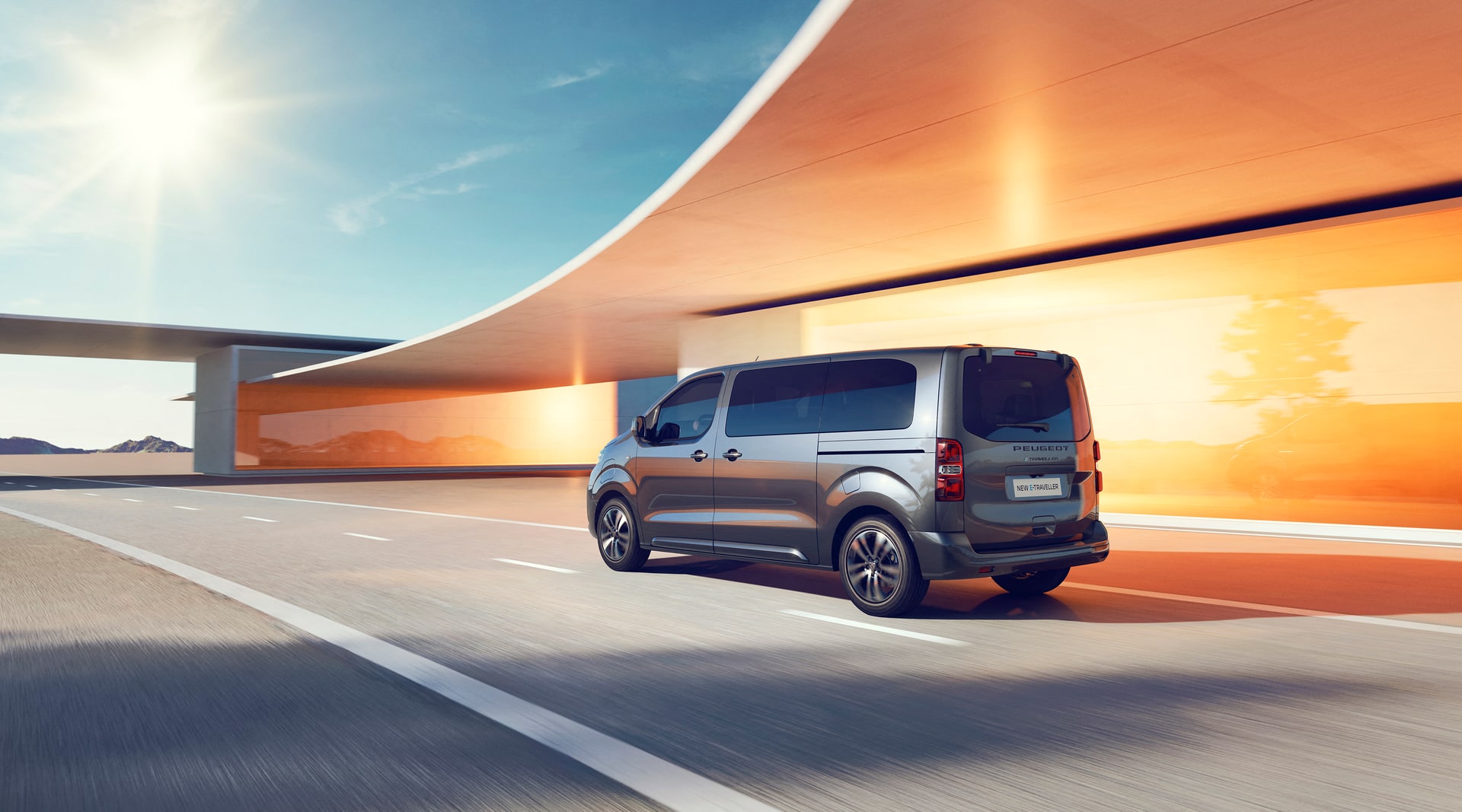
4. Peugeot Traveller Business VIP Long BlueHDi 180 EAT8 — from 52,400 €
The Traveller is the rational bet from the Stellantis group. In Business VIP Long trim it comes as standard with considerably more than its French rivals: tri-zone climate control, panoramic roof, leather seats, a double electric sliding door as an affordable option, and a rear-view camera you’ll be grateful for in the airport car park. The 180 CV 2.0 BlueHDi with EAT8 gearbox is the most powerful engine in the comparison and it shows on gradients with 9 passengers on board.
What costs it points: the dashboard feels a step below the Ford in materials, and the Peugeot network for fleets isn’t as finely tuned as Ford Pro or Mercedes Pro. For a single self-employed driver, perfect. For a fleet of 10 units, I’d think twice.
| Potencia kW | Potencia CV | Consumo | Etiqueta | Combustible |
|---|---|---|---|---|
| 130 kW | 180 CV | 7.2 l/100 km | C | Diesel |
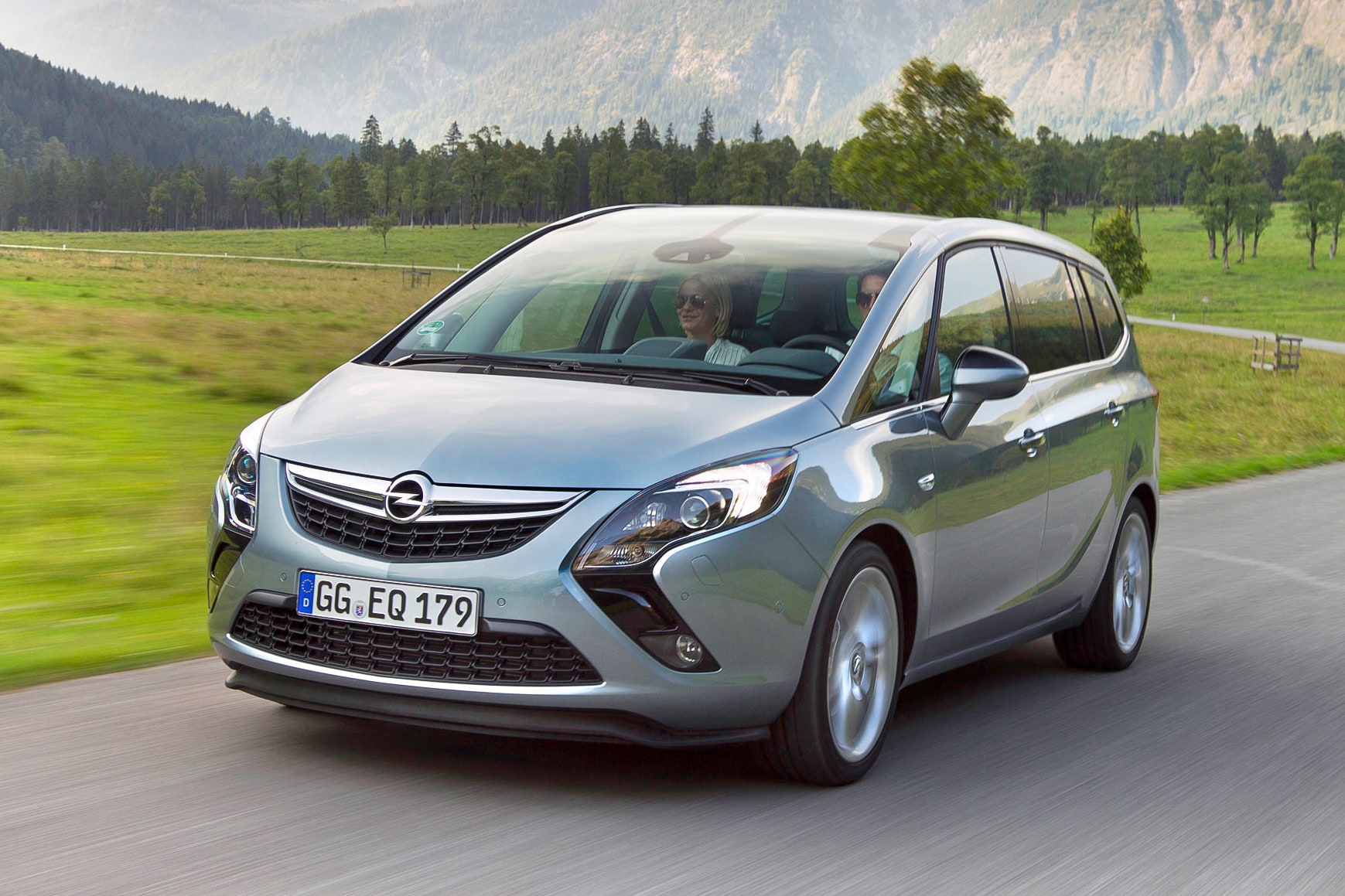
5. Opel Zafira Life Business Elegance L BlueHDi 145 — from 49,900 €
Same platform as the Traveller, a noticeably lower entry price and a clear proposition: the one that asks the least in exchange for a serious 9-seat combi. The Business Elegance trim brings tri-zone climate control, a 10-inch screen with wireless CarPlay, autonomous braking and traffic sign recognition. With the 145 CV 2.0 BlueHDi it moves with dignity and returns real-world figures of 6.8-7 l/100 km.
The trade-off? A less premium brand image and a more plasticky interior finish. For budget VTC, school transport or no-frills airport transfers, it is unbeatable per euro invested.
| Potencia kW | Potencia CV | Consumo | Etiqueta | Combustible |
|---|---|---|---|---|
| 107 kW | 145 CV | 6.9 l/100 km | C | Diesel |
Summary table and scoring
| Modelo | Precio desde | CV | Consumo | Equipamiento serie | Red/Garantía | Nota global |
|---|---|---|---|---|---|---|
| Ford Tourneo Custom Titanium L2 | 54,900 € | 150 | 7.5 | 9/10 | 9/10 | 9.0 |
| Peugeot Traveller Business VIP | 52,400 € | 180 | 7.2 | 8/10 | 7/10 | 8.2 |
| Opel Zafira Life Business Elegance | 49,900 € | 145 | 6.9 | 7/10 | 7/10 | 8.0 |
| Mercedes-Benz Vito Tourer Pro | 56,800 € | 163 | 7.9 | 6/10 | 8/10 | 7.8 |
| Volkswagen Caravelle TDI 150 DSG | 58,200 € | 150 | 7.8 | 6/10 | 8/10 | 7.7 |
Verdict by use case
For premium VTC and corporate transfers with demanding clients: Ford Tourneo Custom Titanium L2. It offers the most complete standard package, the Ford Pro network works well, and the 5-year professional warranty is a hard argument to rebut. Overall winner.
For the self-employed driver who wants the most car for the least money: Opel Zafira Life Business Elegance. 5,000 € less than the Ford on the same platform as the Traveller, with equipment that is more than decent. The RRP gap with the Caravelle exceeds 15% and shows in the monthly renting payment.
For long inter-provincial transfers and sustained gradients at full load: Peugeot Traveller BlueHDi 180 EAT8. The 180 CV with EAT8 gearbox work the least with 9 passengers and luggage, and its real-world consumption is the best in the group.
For brand image in luxury hotels: Mercedes-Benz Vito Tourer or Volkswagen Caravelle. You pay for the star or the VW badge, and some clients require it by contract. If your niche doesn’t ask for it, don’t take on that premium.
If you need to extend the analysis to 7-seat models with a VIP focus, the Multivan vs Clase V comparison is the natural complement to this piece.
FAQ
Which 9-seat van is best for a self-employed driver starting in VTC in 2026?
The Opel Zafira Life Business Elegance offers the best entry price, with enough equipment to provide professional service. If the budget allows, the Ford Tourneo Custom Titanium amortises better over the long term thanks to its warranty and network.
Does the price premium of the Volkswagen Caravelle or Mercedes Vito Tourer over the Ford Tourneo Custom pay off?
Only if your client niche demands a premium brand (corporate transfers, luxury hospitality). For standard VTC and airport transfers, the 3,000-4,000 € difference is not recovered through fares.
What approval does a 9-seat van need for VTC in Spain?
M1 approval (passenger car with up to 9 seats including the driver). All models in this ranking meet it in their passenger combi versions. Do not confuse it with N1 (light commercial).
Are electric 8-9 seat vans viable for VTC in 2026?
The Ford E-Tourneo Custom and the Volkswagen ID. Buzz are available in Spain, but their real range with 9 occupants (around 250-300 km) limits their use to short urban services. For long airport transfers, diesel remains the rational choice today.
