

If what you’re looking for is real space for a large family, a big dog and proper luggage, the hybrid SUV segment has become tricky. Many manufacturers use “hybrid” as a selling point and then the boot ends up at 400 litres because the battery eats the space under the floor. Others, on the other hand, keep classic MPV-level volumes. Here are the five that best solve the equation in the Spanish market in 2026, ranked by usable litres with the rear seats in normal use.
A preliminary note: we include both HEV and PHEV because both count as “hybrids” for the average buyer, but the PHEV usually penalises boot space due to the battery. You will see this reflected in the ranking.
How the ranking was made
Main criterion: boot litres homologated by the manufacturer with the second row in its usable position (not folded) and, in seven-seat models, with the third row folded down. Trick configurations such as “up to the roof” are discarded unless they are comparable official figures. All models are on sale in Spain with an official dealer network in 2026.
1. Kia Sorento Hybrid — from €49,000
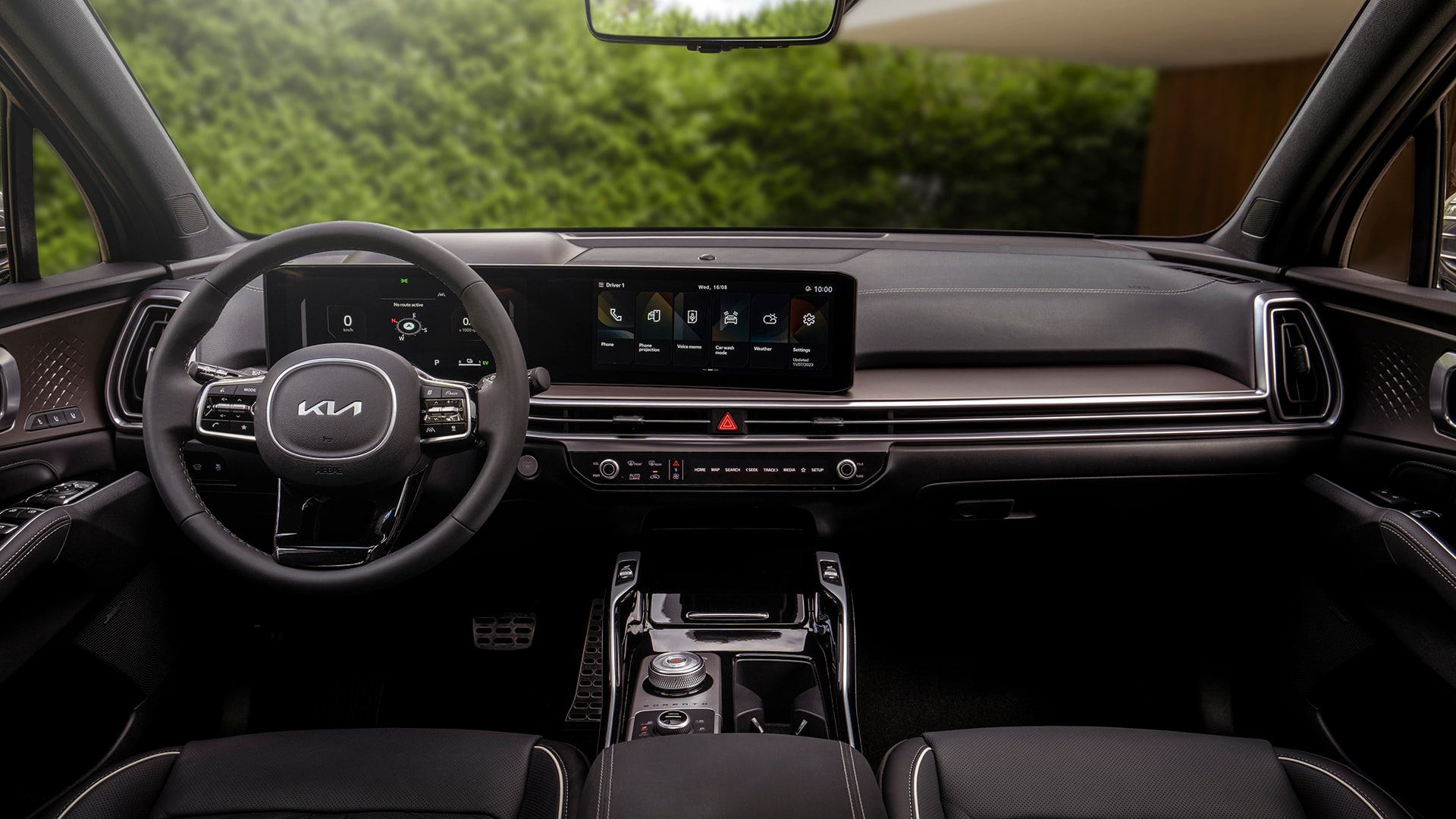
The Sorento HEV takes first place almost by a landslide: 813 litres with the third row folded and the second row in use, a figure that already approaches pure MPV territory. With all seven seats occupied it drops to 187 litres, which is normal for a three-row mid-size SUV. Hybrid 1.6 T-GDi powertrain of 215 CV, ECO label and front-wheel drive or 4×4 depending on the trim.
In our view it is the most sensible large hybrid on the market if you are going to genuinely use the three rows. Real-world consumption on the motorway is around 7.5–8 l/100 km — it’s not a Toyota, but it’s not a drama for two tonnes.
| Power kW | Power CV | Fuel | Label |
|---|---|---|---|
| 158 kW | 215 CV | Hybrid HEV | ECO |
2. Hyundai Santa Fe Hybrid — from €48,500
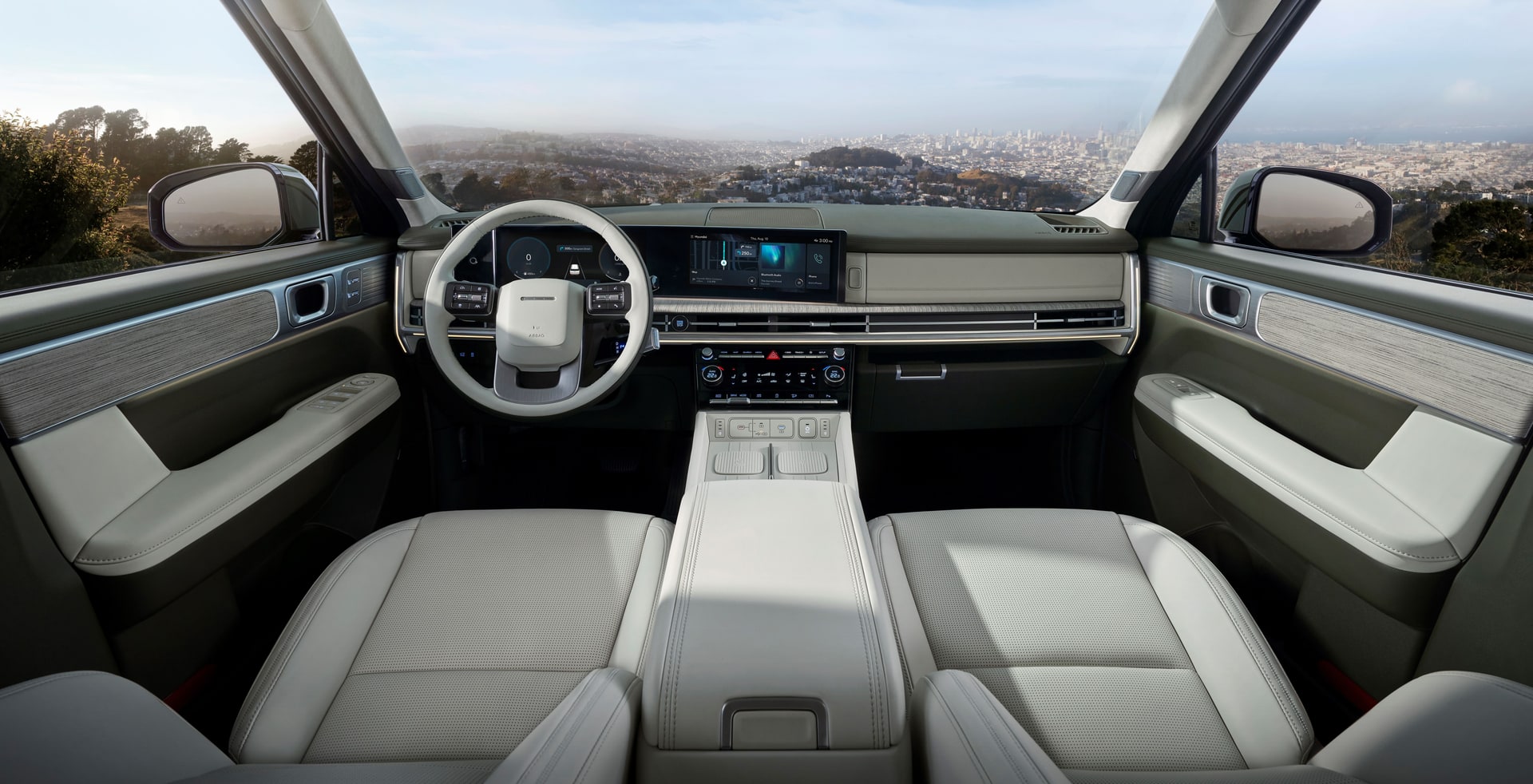
The Sorento’s cousin, with the new angular bodywork that divides opinion, offers 725 litres with five seats in use (5+2 configuration) and 628 litres in the 7-seat version with the third row folded. It shares the 1.6 T-GDi HEV powertrain of 215 CV and ECO label.
The Santa Fe beats the Sorento on one key point: the square tailgate makes every declared litre more usable than in the Kia, where the loading opening is somewhat narrower. That said, the entry-level Maxx trim falls short in equipment compared with the equivalent Sorento Drive. If the choice is between the Koreans, we have covered it in detail in the direct Santa Fe vs Sorento hybrid comparison.
| Power kW | Power CV | Fuel | Label |
|---|---|---|---|
| 158 kW | 215 CV | Hybrid HEV | ECO |
3. Nissan X-Trail e-Power — from €42,300
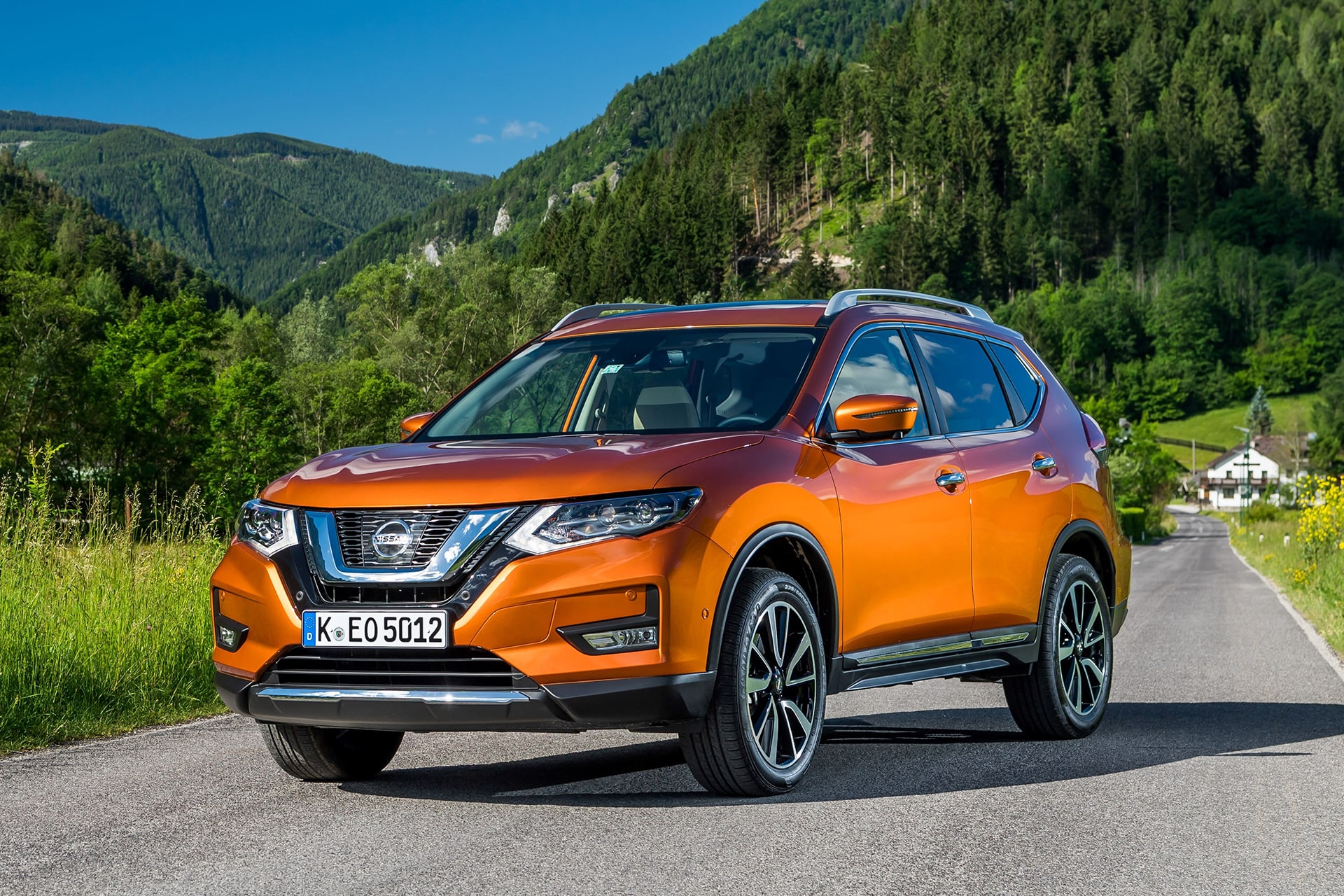
Here we drop a category (extended C-SUV with an optional 7-seat layout), but the X-Trail e-Power homologates 585 litres in its 5-seat configuration and 465 litres with the third row folded in the 7-seat version. Its e-Power system — a 1.5 petrol engine acting as a generator, with 100% electric traction — is the only one in the ranking that drives like an EV without ever being plugged in. 204 CV in the front-wheel-drive version, 213 CV in the e-4orce with dual motors. ECO label.
The objective advantage: much more refined driving than the rest in the city and urban consumption below 6 l/100 km. The disadvantage: on the motorway at 130 km/h the petrol engine revs high and consumption climbs above 8 litres. If your use is mostly city and secondary roads, it adds up. If you live on the motorway, it subtracts — something we already detailed when comparing the X-Trail e-Power with the RAV4 Hybrid.
| Power kW | Power CV | Fuel | Label |
|---|---|---|---|
| 150 kW | 204 CV | Hybrid HEV (series) | ECO |
4. Honda CR-V Hybrid — from €44,900
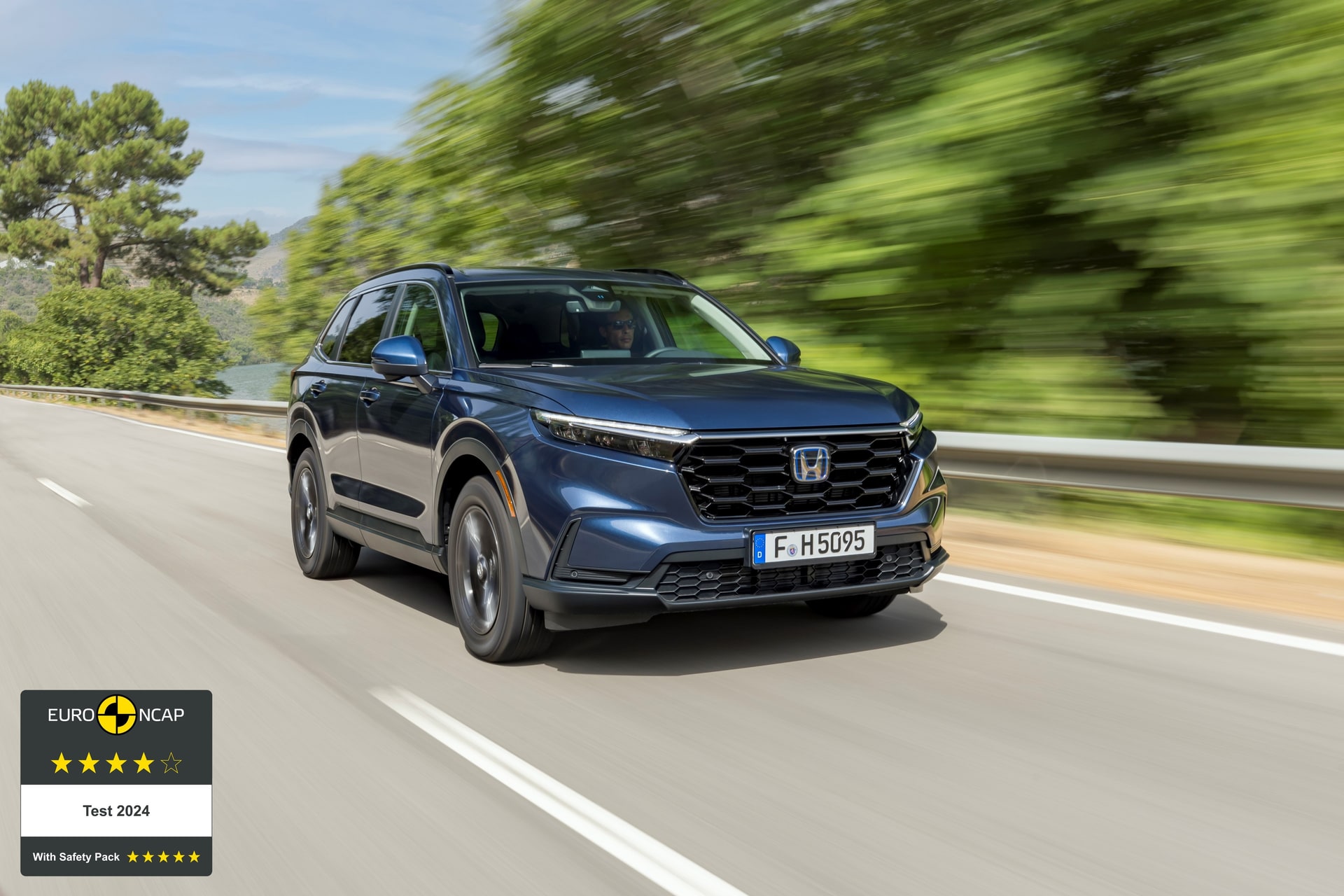
The CR-V e:HEV homologates 579 litres in the front-wheel-drive self-charging hybrid version and 587 in some specific configurations. 2.0 i-MMD powertrain of 184 CV, ECO label. There is also an e:PHEV version with 150 km of electric range, but there the declared boot drops to 617 litres… yes, it declares more than the HEV because Honda redesigned the space under the floor.
The best thing about the CR-V is the rear centre seat: flat, wide, genuinely comfortable for an adult. The worst, in my view: a dashboard that feels a step below the Hyundai and a multimedia system that has improved but still isn’t a benchmark. If you value proven reliability above technology, the Japanese model plays that card like no other.
| Power kW | Power CV | Fuel | Label |
|---|---|---|---|
| 135 kW | 184 CV | Hybrid HEV | ECO |

5. Toyota RAV4 Hybrid — from €39,900
The bestseller closes the ranking: 580 litres in the front-wheel-drive HEV version (520 litres in the AWD-i due to the rear electric motor housing). 218 CV in FWD, 222 CV in 4×4. ECO label. Real motorway consumption clearly better than the rest of the group: 6–6.5 l/100 km without effort.
It is the cheapest of the quintet and the one that will give you the fewest worries ten years down the line. Its boot is smaller than the Koreans’, but the interior space is well used and the reliability of the Toyota hybrid system remains the segment benchmark. Does it win on space? No. Does it win on total cost of ownership? Almost certainly yes.
| Power kW | Power CV | Fuel | Label |
|---|---|---|---|
| 160 kW | 218 CV | Hybrid HEV | ECO |
Summary table and score
| Model | Boot (l) | Power | Price from | Seats | Score /10 |
|---|---|---|---|---|---|
| Kia Sorento Hybrid | 813 | 215 CV | €49,000 | 7 | 9.0 |
| Hyundai Santa Fe Hybrid | 725 | 215 CV | €48,500 | 5 or 7 | 8.8 |
| Nissan X-Trail e-Power | 585 | 204 CV | €42,300 | 5 or 7 | 8.0 |
| Honda CR-V Hybrid | 579 | 184 CV | €44,900 | 5 | 7.8 |
| Toyota RAV4 Hybrid | 580 | 218 CV | €39,900 | 5 | 8.2 |
Verdict by use case
For a large family that genuinely uses all 7 seats: Kia Sorento Hybrid. Nobody else offers more than 800 litres with the second row in use and an ECO label. The price difference with the Santa Fe is minimal; the Sorento justifies it with more standard equipment in equivalent trims.
For recurring long-distance travel with a family of 4–5: Toyota RAV4 Hybrid. The lowest real motorway consumption in the group and 580 litres of boot space are enough for most people. It is also the cheapest in the ranking — the difference with the Sorento exceeds 20%, a fact that tips the balance if you don’t need a third row.
For mixed city-outskirts use without daily motorway driving: Nissan X-Trail e-Power. Its electric driving without plugging in is a luxury in traffic jams and urban areas, and the boot is more than sufficient.
If you prioritise refined interior space and proven reliability above all else: Honda CR-V Hybrid, although its boot is not the largest.
Frequently asked questions
Which hybrid SUV has the largest boot available in Spain in 2026?
The Kia Sorento Hybrid, with 813 declared litres with the third row folded and the second row in normal use. It is the only one in the segment that exceeds 800 litres while keeping an ECO label.
Does a PHEV SUV lose much boot space compared with the same HEV model?
Generally yes, between 50 and 150 litres depending on the model, because the traction battery sits under the boot floor. There are exceptions such as the Honda CR-V e:PHEV, where the redesigned space avoids a significant penalty.
What DGT labels do these five hybrid SUVs have?
All five have an ECO label (green-blue). None is a PHEV with 40+ km of homologated electric range, so none qualify for the blue ZERO label.
Is it worth paying the extra €9,000 for the Sorento over the RAV4 just for the boot?
Only if you will use the third row often or regularly transport bulky cargo. For a family of four that travels long distances, the RAV4 Hybrid offers better consumption, a lower price and sufficient boot space — the difference is hard to justify.
